

 News & Tips
More than 60 percent of American and British families say trip planning has become the hardest part of organizing a European vacation. Family travel today goes far beyond ticking destinations off a list and now aims to deliver authentic experiences for every age group. This guide explains how modern family tours connect generations, engage curious minds, and create unforgettable memories across the best European sites.
Table of Contents
- Family Tours Defined For Modern Travelers
- Types Of Family Tours Across Europe
- What Makes A Tour Family-Friendly
- Safety And Legal Requirements For Families
- Cost Factors And Budget Planning Tips
Key Takeaways
| Point | Details |
|---|---|
| Modern Family Tours | Family tours now focus on creating significant experiences that foster connections and personal growth across generations. |
| Variety of Tour Types | European family tours offer diverse experiences, including cultural immersion, historical exploration, and adventure activities tailored to all ages. |
| Family-Friendly Features | Effective family tours prioritize age-appropriate activities, flexible itineraries, and interactive learning opportunities to engage every family member. |
| Budgeting for Tours | Strategic financial planning is essential, with an emphasis on choosing affordable destinations, managing costs, and optimizing budget allocations for a memorable experience. |
Family Tours Defined for Modern Travelers
Modern family travel has transformed dramatically, evolving from simple vacations into meaningful experiences that strengthen connections and create lasting memories. Family tours now represent far more than traditional sightseeing trips—they are deliberate opportunities for shared exploration, learning, and personal growth across generations.
Today’s family tours reflect complex social dynamics, recognizing diverse family structures and travel preferences. Emerging tourism research indicates that family travel serves critical psychological and emotional needs, providing essential bonding time in our increasingly fragmented, technology-driven world. These tours prioritize experiences that engage multiple age groups, from grandparents to young children, ensuring everyone finds meaningful moments of connection and discovery.
Understanding modern family tours requires recognizing their multifaceted nature. Family tourism research highlights that these trips are strategic investments in family relationships—opportunities to create shared narratives, develop communication skills, and escape daily pressures. Successful family tours now emphasize interactive experiences, cultural immersion, and activities that foster intergenerational understanding and personal growth.
Pro tip: When planning a family tour, prioritize destinations and experiences that offer flexible activity options to accommodate different ages and interests, ensuring everyone feels engaged and excited about the journey.
Types of Family Tours Across Europe
European family tours offer an extraordinary range of experiences that cater to diverse interests and age groups, transforming traditional travel into immersive educational adventures. Family tour types have dramatically expanded beyond simple sightseeing, now encompassing cultural, educational, historical, and adventure-based experiences that engage every family member in meaningful ways.

The European family tour landscape includes several distinctive categories designed to meet different family preferences. Cultural immersion tours focus on interactive experiences like cooking classes in Italy, medieval reenactments in Germany, and art workshops in France. Historical tours take families through ancient sites, allowing children and adults to walk through living history in destinations like Greece, Rome, and Croatia. Family-Friendly Trips Europe highlight adventure tours that combine outdoor activities with educational components, such as Alpine hiking in Switzerland, wildlife safaris in Slovenia, and coastal exploration in Portugal.
Additionally, European family tours now specialize in thematic experiences that cater to specific interests. Science and technology families might explore interactive museums in Germany, while nature enthusiasts could embark on ecological expeditions in Scandinavia. Educational tours blend learning with entertainment, offering language immersion programs, historical walking tours, and cultural exchange experiences that transform travel into a dynamic, enriching journey for all ages.
Here’s how popular types of European family tours compare across core features:
| Tour Type | Typical Activities | Age Group Appeal | Educational Value |
|---|---|---|---|
| Cultural Immersion | Cooking classes, art workshops | Kids, teens, adults | High: Local customs |
| Historical | Ancient site visits, reenactments | All ages | Very High: History |
| Adventure | Hiking, safaris, water sports | Older kids, teens, adults | Moderate: Nature focus |
| Educational | Museums, language programs | Kids, teens | High: Interactive |
Pro tip: When selecting a European family tour, prioritize itineraries that offer flexible scheduling and age-appropriate activities to ensure every family member remains engaged and excited about the adventure.
What Makes a Tour Family-Friendly
Defining a truly family-friendly tour goes far beyond simply accommodating children. These specialized travel experiences require carefully crafted approaches that address the unique dynamics of multigenerational groups, balancing entertainment, education, safety, and comfort for every family member. Modern family tours must create environments where both parents and children feel equally engaged and excited about their shared adventure.
Family experience research reveals critical components that transform a standard tour into a remarkable family experience. Key characteristics include age-appropriate activities that challenge and entertain different developmental stages, flexible itineraries that allow spontaneity, and interactive learning opportunities that make destinations come alive. Successful family tours integrate carefully designed experiences that cater to varied interests, ensuring no family member feels overlooked or bored.
The most effective family-friendly tours incorporate several strategic elements. These include professional guides trained in family group dynamics, accommodation options with connecting rooms or family suites, meal plans that accommodate dietary variations, and activity schedules that provide a balance between structured group experiences and personal exploration time. Child-friendly tour research emphasizes the importance of creating positive group interactions where each family member feels valued and included, transforming travel from a logistical challenge into a meaningful bonding opportunity.
Pro tip: When evaluating family tours, request detailed activity breakdowns and age recommendations to ensure the experience matches your family’s unique composition and interests.
Safety and Legal Requirements for Families
Navigating the complex landscape of international family travel requires meticulous attention to legal documentation and safety protocols. Families embarking on European tours must understand the intricate web of regulations that govern cross-border travel, particularly when minors are involved. These requirements extend far beyond simple passport checks, encompassing detailed authorization procedures, medical considerations, and specific transit regulations.
European travel documentation demands comprehensive preparation for families. Each family member, including children, must possess individual travel documents with specific requirements varying by country. Critical documentation includes valid passports, parental consent letters, and potentially additional identification for minors traveling with one parent or without both legal guardians. Airlines and border control agencies enforce these regulations strictly, and incomplete documentation can result in denied entry or significant travel disruptions.
Updated EU travel regulations introduce additional complexities for family travelers. The new Entry/Exit system, scheduled to launch in October 2025, will implement biometric checks that require advanced preparation. Families must anticipate longer border control times and ensure all travel documents are current, matching exact specifications. This includes verifying passport validity, understanding stay limits (typically 90 days within a 180-day period), and preparing appropriate consent documents for minors traveling in various configurations.
Pro tip: Create a dedicated travel folder with color-coded copies of all family members’ travel documents, including passports, consent letters, and medical insurance information, to streamline border crossings and emergency situations.
Cost Factors and Budget Planning Tips
Planning a European family tour requires strategic financial management and thoughtful budgeting strategies that balance experience quality with fiscal responsibility. Travel expenses can quickly escalate when multiple family members are involved, making comprehensive financial planning crucial for creating memorable yet affordable adventures across Europe’s diverse destinations.
Budget-friendly European travel strategies focus on selecting destinations that offer rich experiences without excessive costs. Cities like Prague, Lisbon, Athens, and Krakow provide incredible historical and cultural immersion at more affordable price points. Families can optimize their budget by choosing accommodations with family rooms, utilizing public transportation, traveling during off-peak seasons, and planning meals that balance dining out with cost-effective local market purchases.
Family tour cost analysis reveals significant variation in daily expenses, with average costs ranging from $193 for budget tours to over $400 for luxury experiences. Understanding these price ranges helps families make informed decisions about tour inclusivity, accommodation quality, and activity selections. Factors like group size, included amenities, and destination complexity dramatically influence overall trip expenses. Smart travelers can manage costs by prioritizing experiences over luxury, selecting multi-day tour packages with bundled services, and remaining flexible with travel dates and destinations.
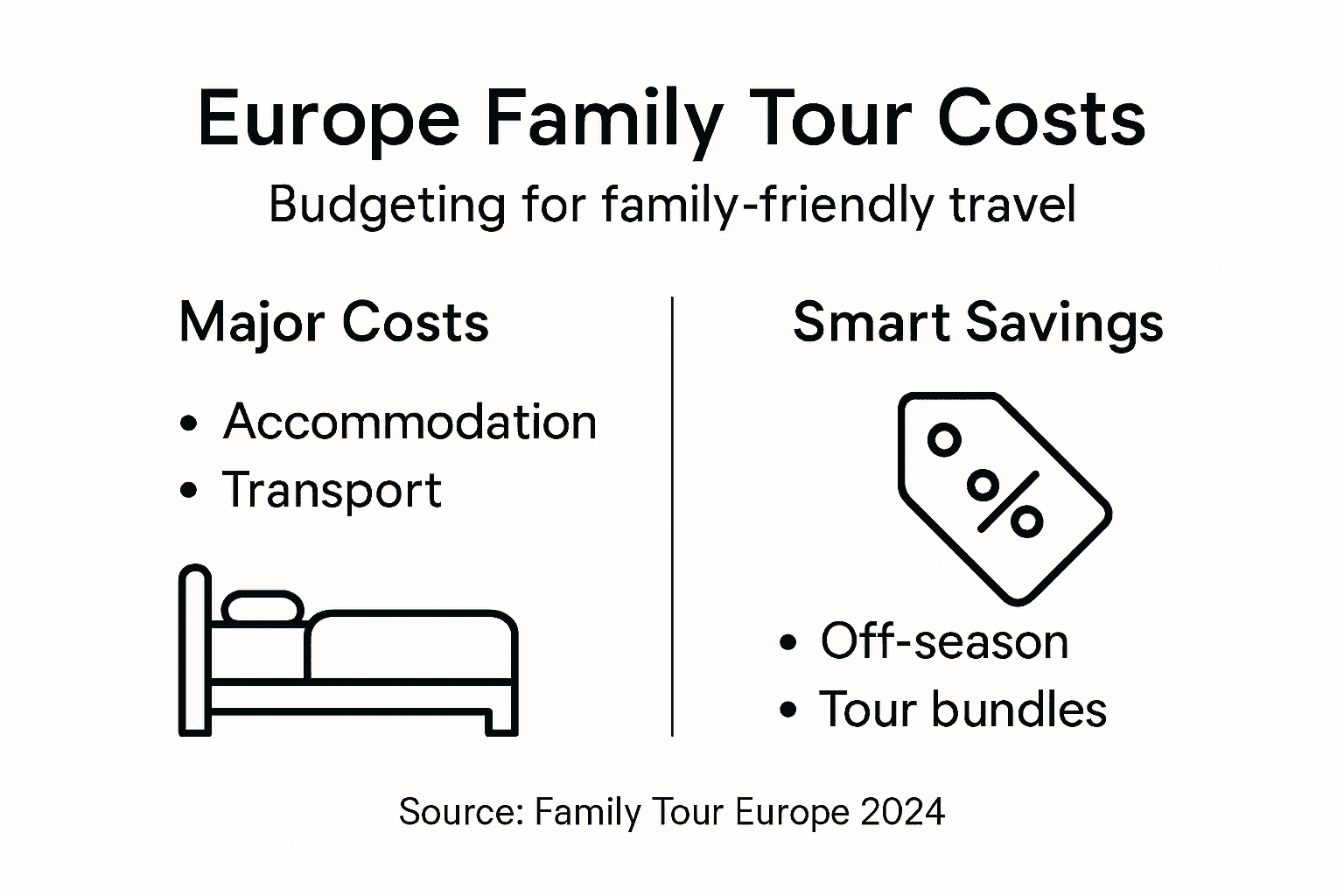
Review these typical cost factors for European family tours and their impact:
| Cost Factor | Impact on Total Expense | Planning Tip |
|---|---|---|
| Group Size | Larger groups increase costs | Book early for discounts |
| Accommodation Type | Suites cost more than rooms | Consider apartment rentals |
| Included Activities | Premium tours raise pricing | Prioritize must-do events |
| Travel Timing | Peak season boosts expenses | Opt for shoulder seasons |
Pro tip: Create a detailed spreadsheet tracking potential expenses, allocating specific budget categories for transportation, accommodation, meals, activities, and emergency funds to maintain financial control throughout your European family adventure.
Discover Family-Friendly Adventures with Next View Tours
Planning a memorable family tour that balances cultural immersion, educational experiences, and age-appropriate activities can feel overwhelming. The challenge is finding flexible and engaging tours designed to meet the unique needs of every family member while ensuring safety and comfort. Next View Tours understands these complexities and offers specialized Family Tours across iconic European destinations like Vienna, Salzburg, and Prague. Our expert guides and tailored itineraries focus on creating meaningful shared moments that strengthen family bonds and deliver unforgettable memories.
Whether you want a city exploration or an immersive cultural experience, browsing our City Tour selections is a great place to start.
Take the stress out of planning your European family adventure. Explore our full range of options at Next View Tours and find the perfect tour that keeps everyone engaged and excited. Book your family journey now to secure your spot and create stories that will be cherished for a lifetime.
Frequently Asked Questions
What are family tours, and how do they differ from traditional travel?
Family tours focus on creating shared experiences that strengthen family bonds, offer educational opportunities, and cater to diverse age groups, unlike traditional travel that may prioritize sightseeing alone.
What types of activities are typically included in family tours?
Family tours often include cultural immersion experiences, historical site visits, adventure activities, and interactive learning opportunities designed to engage all family members across various age groups.
How can I ensure a tour is truly family-friendly?
Look for tours that offer age-appropriate activities, flexible itineraries, and professional guides trained to cater to family dynamics, ensuring that everyone feels included and engaged throughout the travel experience.
What should I consider when budgeting for a family tour?
Consider factors like group size, accommodation options, included activities, and travel timing to create a detailed budget that balances memorable experiences with financial constraints.


Comments are closed