
 Adventure Tours
Planning a multi-day adventure across Europe often starts with excitement but quickly shifts to questions about where to go and how to make your trip meaningful. Setting purposeful travel goals is the first step in transforming dreams into real experiences, helping you connect your journey with personal motivation and clarity. This guide walks you through creating a trip vision that adapts to both solo and group exploration, ensuring your itinerary fits your interests while making the process simple and rewarding.
Table of Contents
- Step 1: Set Travel Goals And Establish A Trip Vision
- Step 2: Select Destinations And Customize Itineraries
- Step 3: Arrange Accommodations And Transportation Details
- Step 4: Organize Daily Activities And Group Logistics
- Step 5: Verify Plans And Prepare Essential Documents
Quick Summary
| Key Point | Explanation |
|---|---|
| 1. Define clear travel goals | Establish specific objectives to connect your journey with personal growth and cultural understanding. |
| 2. Customize your itinerary carefully | Choose destinations and activities that align with your travel goals, allowing for both exploration and spontaneity. |
| 3. Organize group travel logistics | Use collaborative planning tools and clear communication to balance individual preferences with group activities. |
| 4. Prepare essential documentation | Verify passports, insurance, and medical records, and create digital backups for convenience and security. |
| 5. Review goals and stay motivated | Regularly revisit your travel goals to maintain focus and enthusiasm throughout your planning process. |
Step 1: Set travel goals and establish a trip vision
Defining clear travel goals transforms vague wanderlust into an actionable adventure plan. By establishing a purposeful trip vision, you create a roadmap that transforms your European journey from a generic vacation into a deeply meaningful personal experience.
To craft an effective travel goal strategy, start by defining specific travel objectives that resonate with your deeper motivations. This means moving beyond surface-level destination choices and connecting your trip to personal growth, cultural understanding, or specific experiences you want to encounter.
Begin your goal-setting process with these strategic approaches:
- Identify personal motivations: Understand why you want to travel to Europe
- Select meaningful destinations: Choose locations aligned with your interests
- Define concrete experiences: Outline specific activities or encounters you want
- Set realistic timeframes: Establish achievable timelines for your trip
- Create measurable milestones: Track progress toward your travel vision
A powerful trip vision requires balancing logistical planning with personal aspirations. Think about what truly excites you – whether that’s exploring historical sites, experiencing culinary traditions, or challenging yourself with new cultural interactions.
Your travel goals should reflect your authentic self, not just a checklist of tourist attractions.
By developing a clear, purposeful vision, you transform your European adventure from a simple trip into a transformative journey of personal discovery.
Pro tip: Write down your travel goals and review them periodically to maintain motivation and clarity throughout your planning process.
Step 2: Select destinations and customize itineraries
Customizing your European travel itinerary requires strategic planning that balances exploration with realistic expectations. Selecting destinations with intentional precision ensures you create a meaningful journey that matches your personal travel goals and interests.
To build an effective multi-destination itinerary, consider these critical strategies:
- Research destination connections: Identify geographically proximate locations
- Evaluate travel times: Calculate realistic transit durations between destinations
- Match destinations to interests: Align locations with your specific travel objectives
- Consider seasonal variations: Factor in climate and peak tourism periods
- Build flexible routing: Allow space for spontaneous discoveries
The key to a successful European trip is creating a balanced and adaptable itinerary. This means understanding that not every moment needs to be planned, but you should have a foundational framework that guides your adventure.
Your ideal itinerary should feel like a conversation with possibility, not a rigid schedule.
Start by mapping out your primary destinations, then create buffer zones that allow for unexpected experiences and personal exploration. Consider your total trip duration, transportation options, and the depth of experience you want in each location.
Pro tip: Create a digital spreadsheet to track potential destinations, including estimated travel times, costs, and personal interest ratings to help prioritize your final selections.
Step 3: Arrange accommodations and transportation details
Coordinating accommodations and transportation requires strategic planning to ensure a smooth and stress-free European adventure. Your goal is to create a seamless travel experience that minimizes logistical challenges while maximizing comfort and exploration opportunities.
When arranging your multi-destination trip, focus on these essential strategies:
- Diversify transportation methods: Mix trains, planes, and local transit
- Book accommodations strategically: Choose locations near transportation hubs
- Compare transit options: Analyze cost, time, and convenience for each route
- Consider transit passes: Investigate regional and multi-country transportation packages
- Plan buffer times: Allow extra time between transportation connections
Understanding the intricate details of transportation and accommodation logistics can dramatically improve your travel experience. This means looking beyond simple point-to-point connections and creating a holistic travel strategy that supports your overall trip vision.
Flexibility is the secret weapon of successful multi-destination travelers.
Prioritize accommodations that offer central locations, easy access to public transportation, and flexibility in booking. Research local transportation options in each destination to understand the most efficient ways of moving around.

Pro tip: Create a digital travel folder with all transportation and accommodation confirmations, including screenshots and booking references, to ensure quick access during your trip.
Step 4: Organize daily activities and group logistics
Managing group travel logistics requires strategic planning and flexible communication to ensure everyone’s interests and expectations are met. Your goal is to create a collaborative travel experience that balances individual preferences with collective enjoyment.
To effectively organize daily activities and group dynamics, implement these key strategies:
- Create shared digital itineraries: Use collaborative planning apps
- Assign group roles: Distribute responsibilities among travelers
- Set clear communication channels: Establish primary group communication method
- Build consensus on daily activities: Vote or rotate activity selection
- Plan individual and group time: Balance shared experiences with personal exploration
Successful group travel hinges on dynamic and inclusive planning approaches. This means creating frameworks that allow for spontaneity while maintaining enough structure to keep everyone engaged and comfortable.
Effective group travel is an art of balancing structure with spontaneity.
Consider using collaborative digital tools that allow real-time updates, location sharing, and group decision-making. Prioritize transparency and open communication to navigate potential challenges and maintain group harmony.
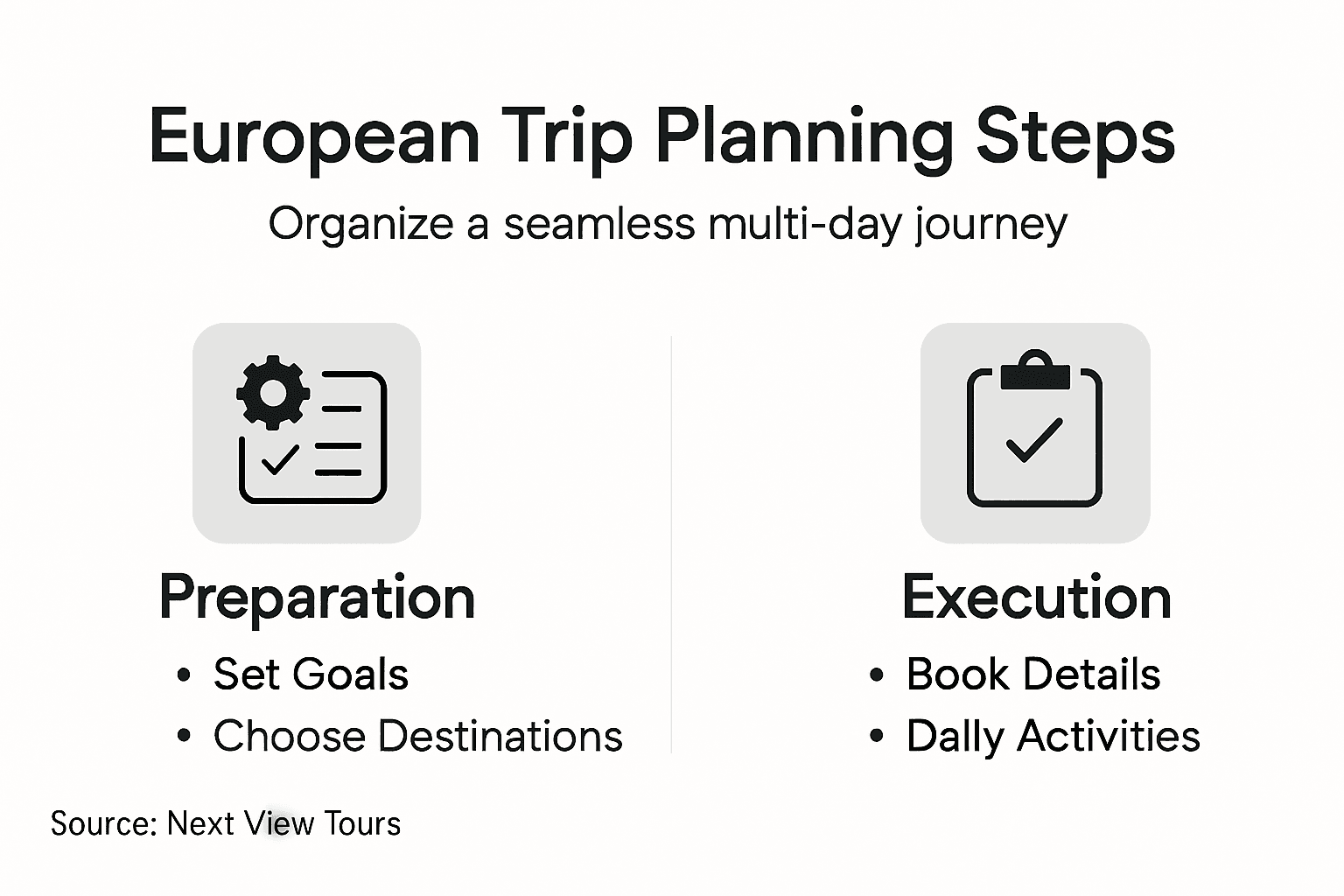
Here is a comparison of digital tools that can enhance your group travel planning experience:
| Tool Type | Example Platform | Key Benefit |
|---|---|---|
| Itinerary Planning | Google Sheets | Real-time updates for all |
| Communication | Fast group messaging | |
| Polling & Voting | Doodle | Easy consensus on activities |
| Navigation & Maps | Google Maps | Shared location tracking |
Pro tip: Create a shared digital document where each group member can contribute activity suggestions and vote on daily plans to ensure collective engagement and excitement.
Step 5: Verify plans and prepare essential documents
Final travel document preparation demands meticulous attention to ensure a smooth European adventure. Your goal is to create a comprehensive document strategy that covers all legal and logistical requirements before departure.
Prepare your essential travel documentation with these critical steps:
- Passport verification: Check expiration dates and visa requirements
- Travel insurance: Confirm comprehensive coverage for your destinations
- Medical documentation: Prepare vaccination records and prescriptions
- Financial preparations: Notify bank of international travel
- Emergency contact information: Create multiple backup copies
Effective travel preparation requires systematic document management that anticipates potential challenges. This means creating redundant systems to protect your critical information and ensure quick access during unexpected situations.
Documentation is your passport to a stress-free travel experience.
Digital backups are as crucial as physical documents. Scan and store copies of important papers in secure cloud storage, and keep physical copies in separate, secure locations during your trip.
This summary highlights crucial document types and their recommended storage methods for secure travel preparation:
| Document Type | Physical Copy Location | Digital Backup Method |
|---|---|---|
| Passport | Locked luggage pocket | Encrypted cloud folder |
| Travel Insurance | Day bag with essentials | Secure PDF in cloud storage |
| Emergency Info | Separate wallet insert | Shared access with contact |
Pro tip: Create a digital travel folder with encrypted copies of all essential documents, and share access with a trusted emergency contact for added security.
Transform Your European Multi-Day Trip Planning Into Seamless Adventures
Organizing a multi-day trip across Europe can feel overwhelming with its many moving parts from setting clear travel goals to managing group logistics and securing transportation and accommodations. This guide highlights the challenge of creating a balanced and adaptable itinerary that respects your personal aspirations while reducing stress. Key pain points include coordinating travel connections, customizing daily activities, and ensuring essential travel documentation is ready so you can enjoy every moment fully.
At Next View Tours, we understand these challenges deeply. Our City Tour and Mountain Tours provide expertly crafted experiences that align with your travel goals while offering flexibility and comfort. Whether you seek cultural immersion or adventure in nature, our customized tours relieve the burden of detailed planning so you can focus on discovery and meaningful encounters.

Discover how our personalized service can turn your ultimate multi-day European journey into a smooth and memorable adventure. Visit Next View Tours now to explore options designed to meet your precise travel vision. Take control of your trip today and ensure your European travels exceed every expectation.
Frequently Asked Questions
How can I set effective travel goals for my multi-day trip in Europe?
To set effective travel goals, start by identifying your personal motivations for traveling and the specific experiences you want to have. Create a list of these goals, and review them regularly during your planning process to ensure your trip aligns with your aspirations.
What strategies should I use to customize my European itinerary?
Customize your itinerary by researching destination connections and evaluating travel times between locations. Prioritize destinations that align with your interests and create buffer zones in your schedule for spontaneous activities.
How do I arrange accommodations and transportation for my trip?
Arrange accommodations by choosing locations close to transportation hubs and diversifying your travel methods between trains, planes, and local transit. Create a digital folder with all booking confirmations and related transportation details to streamline access while traveling.
How can I effectively organize daily activities for group travel?
To effectively organize daily activities for group travel, create a shared digital itinerary where all travelers can contribute and vote on activities. Balance group activities with individual exploration time to accommodate everyone’s preferences and enjoy a collaborative experience.
What essential documents should I prepare before traveling in Europe?
Before traveling, verify your passport and visas, ensure you have appropriate travel insurance, and prepare any required medical documentation. Create a digital folder with backups of these documents, and keep physical copies stored securely in different locations during your trip.
Recommended
- 7 Expert Tips for Planning a Day Trip Itinerary Europe – Next View Tours
- Adventure Trip Planning Guide for Epic European Tours – Next View Tours
- Europe Adventure Trip Workflow: Plan Your Ultimate Journey – Next View Tours
- dynamic-content-megamenu-menuitem1700 – Next View Tours
- Best Day Trips from Lisbon for Tourists and Groups


Comments are closed