

 Adventure Tours
Over half of American travelers have misconceptions about what guided tours truly offer. Many expect rigid schedules and generic commentary, yet modern tours deliver an entirely new level of personal engagement and flexibility. Understanding the evolution of guided tours can help you avoid disappointment and make smarter choices that turn every trip into a rewarding learning adventure.
Table of Contents
- Guided Tour Meaning and Common Misconceptions
- Types of Guided Tours Across Europe
- How Guided Tours Typically Operate
- What to Expect When Booking a Tour
- Comparing Self-Guided and Guided Travel Experiences
Key Takeaways
| Point | Details |
|---|---|
| Expert Guidance | Guided tours provide professional insights and in-depth knowledge, enhancing the travel experience. |
| Personalized Experiences | Modern guided tours offer flexibility and customization, catering to individual preferences and interests. |
| Misconceptions Addressed | Many believe guided tours are restrictive; however, they often enrich cultural understanding for all traveler types. |
| Structured Operations | Guided tours follow a comprehensive framework for seamless experiences, balancing structured planning with personal exploration. |
Guided Tour Meaning and Common Misconceptions
A guided tour is a structured travel experience where a knowledgeable professional accompanies travelers, providing in-depth commentary and insights about specific locations, historical sites, cultural landmarks, or natural environments. Unlike self-guided explorations, these tours offer curated narratives that transform ordinary sightseeing into immersive learning journeys.
Modern guided tours challenge traditional perceptions by offering unprecedented flexibility and personalization. Detailed travel insights reveal that contemporary tours are far from the rigid, impersonal group experiences many imagine. Travelers can now expect:
- Intimate group sizes with personalized attention
- Flexible itineraries that accommodate individual preferences
- Expert guides with deep local knowledge
- Customizable experiences across various interests
Pro Travel Tip: Research your tour guide’s credentials and background before booking to ensure you’ll receive an engaging, informative experience that matches your expectations.
Common misconceptions about guided tours often stem from outdated stereotypes. Some travelers mistakenly believe these experiences are restrictive or exclusively for novice travelers. In reality, guided tours provide sophisticated, nuanced perspectives that even seasoned travelers find enriching. By combining professional expertise with immersive storytelling, these tours offer deep cultural understanding that goes far beyond surface-level sightseeing.
Here’s a summary of how guided tours benefit different types of travelers:
| Traveler Type | Key Benefit | Potential Challenge |
|---|---|---|
| First-time Visitor | Expert orientation and support | Less unstructured time |
| History Enthusiast | Deep historical insights | Fixed schedule constraints |
| Independent Explorer | Access to hidden gems | Less autonomy |
| Luxury Traveler | Personalized experiences | Higher costs |
Types of Guided Tours Across Europe
Europe offers an extraordinary diversity of guided tours that cater to various interests, preferences, and travel styles. The historical tradition of cultural exploration reveals that touring has always been about more than mere sightseeing, but a profound journey of discovery and understanding.
The most prominent types of guided tours across Europe include:
- Cultural Heritage Tours: Exploring historical landmarks, museums, and architectural sites
- Historical Walking Tours: Detailed explorations of cities with deep historical significance
- Art and Museum Tours: Specialized experiences focused on artistic movements and collections
- Culinary and Wine Tours: Immersive experiences highlighting regional gastronomy
- Nature and Landscape Tours: Exploring national parks, mountain ranges, and scenic landscapes
- Theme-Based Historical Tours: Focused experiences like World War II historical routes
Cultural Routes of the Council of Europe demonstrate how modern tours transcend traditional boundaries, creating interconnected experiences that showcase the continent’s rich, shared heritage. These routes connect travelers not just to physical locations, but to deeper narratives of human experience and cultural exchange.
Modern European guided tours have evolved from the classical Grand Tour concept, transforming from exclusive educational journeys for wealthy young men to accessible, comprehensive experiences for global travelers. They now offer specialized, in-depth explorations that combine expert knowledge, personal storytelling, and immersive cultural encounters.

Pro Travel Tip: Research tour themes and specialized interests before booking to ensure you select an experience that matches your specific curiosity and learning objectives.
How Guided Tours Typically Operate
Structured tour experiences represent a carefully choreographed journey that transforms ordinary travel into an immersive, educational adventure. These meticulously planned experiences go far beyond simple sightseeing, offering travelers a deep, contextual understanding of destinations through professional guidance and expert narrative.
Typical guided tour operations follow a comprehensive framework that ensures a seamless, engaging experience:
- Preparation Phase: Pre-tour research and itinerary planning
- Introduction: Group orientation and initial briefing
- Narrative Delivery: Detailed historical and cultural explanations
- Interactive Engagement: Opportunities for questions and discussions
- Logistical Management: Transportation, timing, and group coordination
- Documentation: Providing supplementary materials and context
Professional tour guides serve as the critical bridge between travelers and destinations, interpreting cultural and natural heritage through engaging storytelling techniques. Their expertise transforms static locations into living narratives, helping travelers understand the deeper significance of each site they visit.
Modern guided tours incorporate advanced technologies and personalized approaches, allowing for greater flexibility and customization. Guides now use multimedia presentations, mobile apps, and real-time translation tools to enhance the visitor experience, making complex historical and cultural information accessible and engaging.
Pro Travel Tip: Always verify a tour guide’s professional credentials and read recent reviews to ensure you’ll receive a high-quality, informative experience that meets your expectations.
What to Expect When Booking a Tour
Comprehensive tour booking involves understanding the intricate details of travel experiences beyond simple ticket purchases. Modern travelers can anticipate a sophisticated process that balances structured planning with personalized adventure, ensuring every aspect of their journey is carefully considered and professionally managed.
When booking a guided tour, travelers should expect several key components:
- Detailed Itinerary: Comprehensive day-by-day travel plans
- Inclusions and Exclusions: Clear breakdown of what is and isn’t covered
- Group Size Information: Expected number of participants
- Difficulty Level: Physical requirements and accessibility details
- Cancellation and Refund Policies: Transparent terms and conditions
- Equipment and Preparation Recommendations: Specific guidance for the tour
Modern travel experiences now offer unprecedented flexibility, allowing travelers to enjoy a perfect balance between structured group activities and personal exploration time. This approach ensures that each participant can customize their experience while benefiting from professional guidance and logistical support.
Today’s tour bookings often include digital tools and communication platforms that enhance the pre-travel experience. Many tour operators provide mobile apps, virtual orientation sessions, and personalized communication channels that allow travelers to ask questions, receive updates, and feel connected to their upcoming adventure well before the actual tour begins.
Pro Travel Tip: Always request a comprehensive pre-tour information packet and thoroughly review all details, including physical requirements, cultural expectations, and specific tour guidelines before making your final booking.
Comparing Self-Guided and Guided Travel Experiences
Self-guided travel experiences represent a unique approach to exploration that allows travelers unprecedented independence and personal control over their journey. Unlike traditional guided tours, these experiences empower individuals to navigate destinations using digital resources, printed materials, and personal intuition, creating a more personalized travel narrative.
Key differences between self-guided and guided travel experiences include:
- Expertise Level:
- Guided Tours: Professional insights and historical context
- Self-Guided Tours: Personal interpretation and independent research
- Flexibility:
- Guided Tours: Structured itineraries
- Self-Guided Tours: Completely customizable pace and direction
- Cost:
- Guided Tours: Higher initial investment
- Self-Guided Tours: Generally more budget-friendly
- Depth of Understanding:
- Guided Tours: Expert narrative and comprehensive explanations
- Self-Guided Tours: Personal discovery and independent learning
Comparative travel experiences demonstrate that each approach offers unique advantages depending on a traveler’s preferences, expertise, and comfort level. Modern travelers increasingly seek hybrid models that combine the best elements of both guided and self-guided experiences, leveraging technology and personal curiosity to create more dynamic and engaging journeys.
The choice between guided and self-guided travel ultimately depends on individual learning styles, comfort with navigation, language skills, and desired depth of cultural immersion. Some travelers thrive on structured experiences with expert commentary, while others prefer the freedom to explore at their own pace, discovering hidden gems through personal exploration.
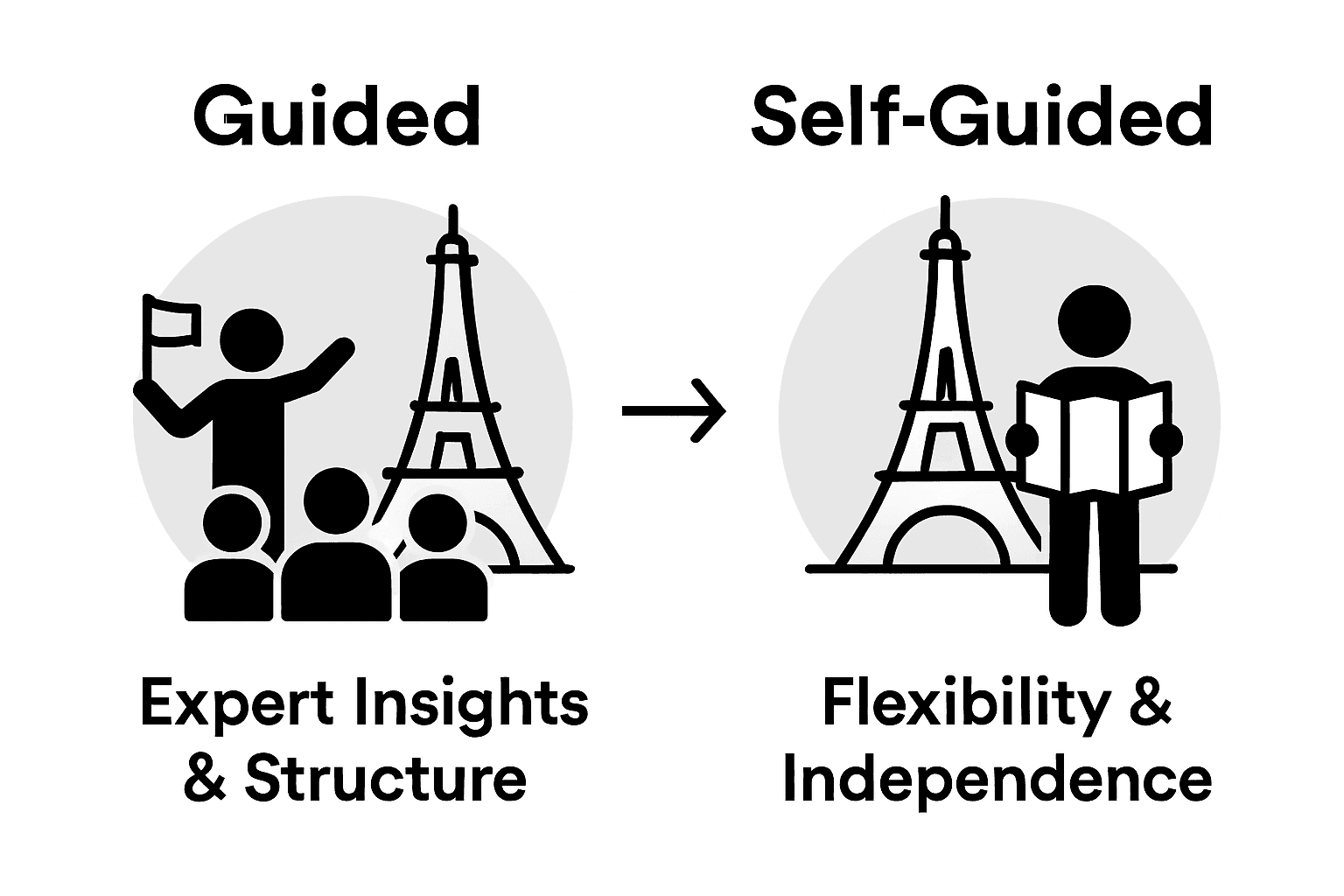
Compare how guided and self-guided travel experiences address core travel needs:
| Travel Need | Guided Tour Approach | Self-Guided Approach |
|---|---|---|
| Navigation | Expert handles logistics | Traveler self-manages route |
| Language Barriers | Guide interprets/localizes | Traveler manages communication |
| Social Experience | Group interaction facilitated | Solo or with chosen companions |
| Learning Depth | Structured, narrative-driven | Personal discovery pace |
Pro Travel Tip: Consider your personal travel style, language proficiency, and comfort with navigation when selecting between guided and self-guided experiences to ensure the most enjoyable and enriching journey possible.
Discover the True Value of Guided Tours with Next View Tours
Understanding the real meaning of a guided tour reveals how it can transform your travel experience beyond typical sightseeing. If you seek expert-led insights into rich local histories and cultures combined with the flexibility to customize your journey, you will appreciate what professional guidance offers. Rather than feeling restricted, you will gain deeper context and avoid common challenges like navigating language barriers or missing hidden gems.
Start your authentic European adventure today by exploring our thoughtfully curated City Tour – Next View Tours for immersive cultural experiences or venture into unique Wildlife Tours – Next View Tours for nature encounters. Every tour we offer is designed to provide you personalized expert storytelling and seamless logistics so you enjoy travel on your own terms. Visit Next View Tours now to find your perfect guided tour and unlock a deeper connection to the destinations you love.
Frequently Asked Questions
What is a guided tour?
A guided tour is a structured travel experience where a knowledgeable guide accompanies travelers to provide insights and commentary about specific locations, enhancing the overall learning experience.
How do guided tours differ from self-guided tours?
Guided tours offer expert guidance and structured itineraries, while self-guided tours allow travelers to explore at their own pace without a professional guide.
What are the benefits of taking a guided tour?
Guided tours offer personalized attention, access to expert knowledge, and the opportunity to learn about cultural and historical contexts, making them enriching experiences for travelers of all levels.
Are guided tours suitable for seasoned travelers?
Yes, guided tours can provide sophisticated insights and nuanced perspectives that even experienced travelers may find enriching, transforming typical sightseeing into deep cultural understanding.


Comments are closed