
 Uncategorized
TL;DR:
- Adventure travel combines physical activity, cultural immersion, and natural environments to create active, immersive experiences. It ranges from accessible soft adventures to high-risk hard expeditions, emphasizing participation over passive observation. Proper preparation and expert guides ensure safety and maximize the transformative potential of each journey.
Adventure travel is defined as a form of tourism that combines at least two of three core elements: physical activity, cultural immersion, and engagement with a natural environment. The Adventure Travel Trade Association sets this as the industry standard definition, and it separates adventure tourism from conventional sightseeing in a fundamental way. A typical adventure trip runs about 8 days and costs around $3,000 per person. That price reflects the specialized guides, remote locations, and active programming that define the experience. Whether you are hiking through the Austrian Alps, kayaking along a coastal river, or joining a cultural immersion in rural Slovakia, the adventure travel definition centers on active participation rather than passive observation.
What are the main characteristics that define adventure travel?
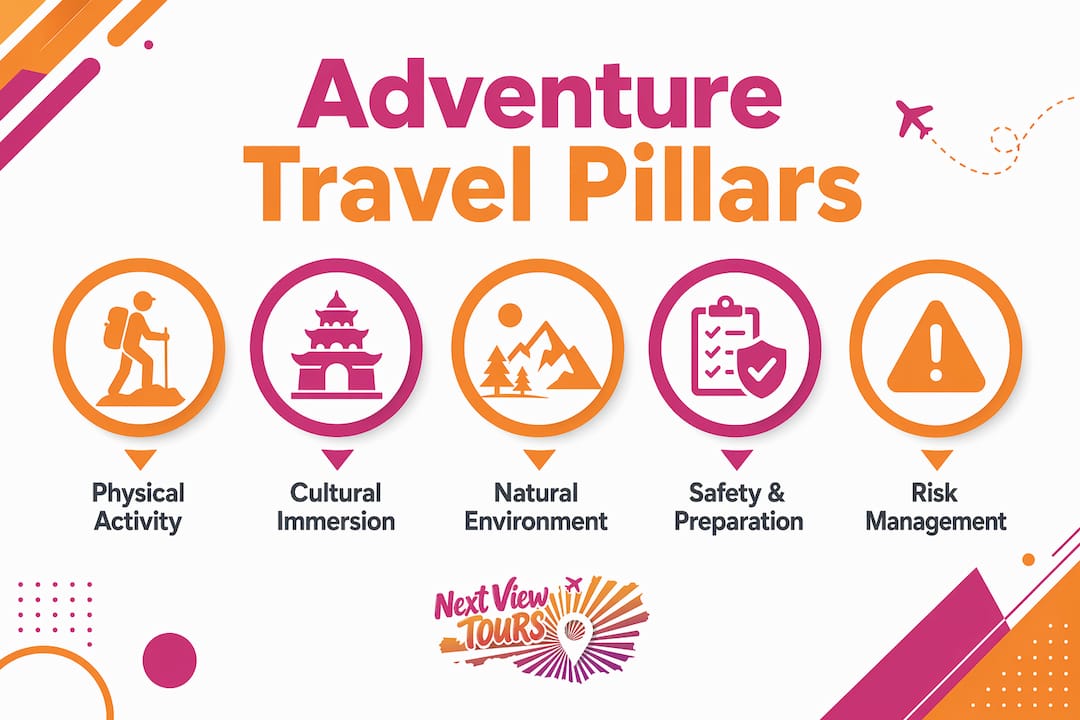
Adventure travel rests on three pillars: physical activity, cultural immersion, and a natural environment. Most trips combine at least two of these, and the strongest experiences weave all three together. A guided trek through the Bohemian countryside, for example, delivers physical exertion, contact with local villages, and immersion in a living landscape simultaneously.
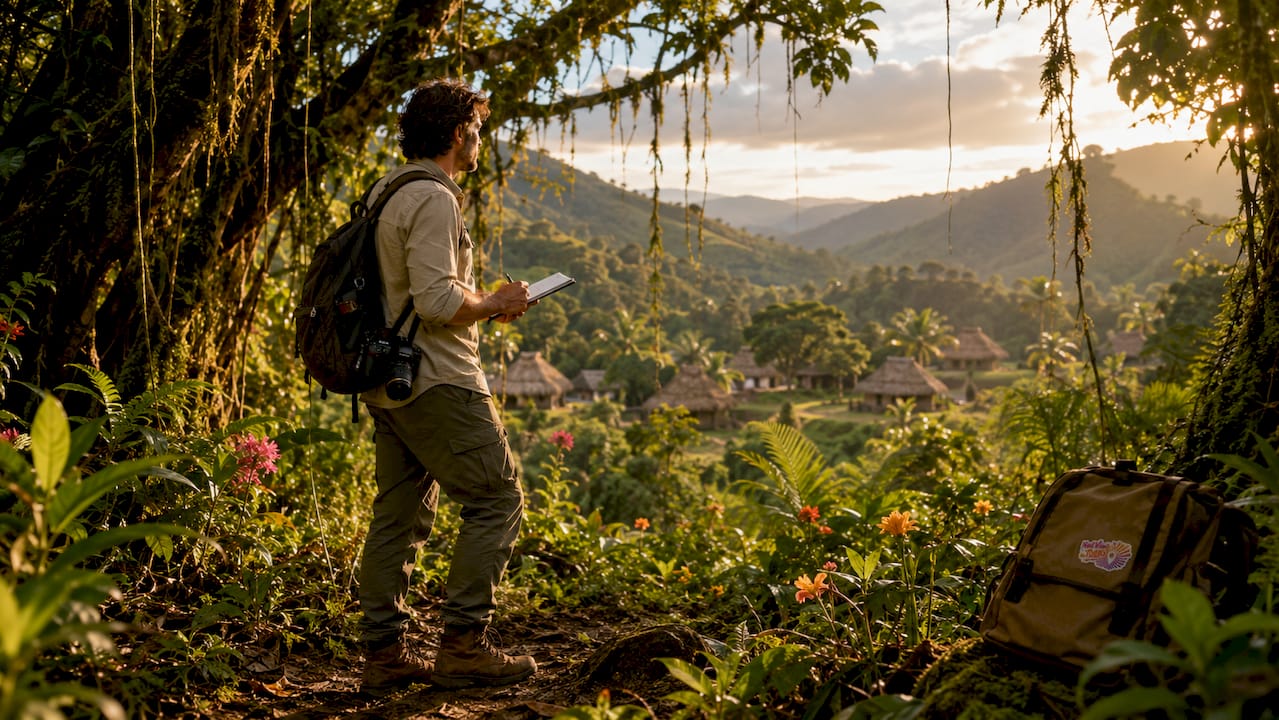
Physical activity is the most visible pillar. Activities like hiking, kayaking, white-water rafting, and trekking require your body to engage with the terrain directly. This is not a bus tour with a window view. You feel the altitude, the current, and the gradient underfoot.
Cultural immersion adds depth that pure outdoor sports cannot provide. Adventure success is measured by the quality of authentic local interactions, not just by physical challenge. Sharing a meal with a local family in the Czech countryside or visiting a working farm in the Slovak highlands creates connections that no museum exhibit can replicate.
Risk and challenge are also defining features, though they vary widely. Adventure is subjective; what feels thrilling to one traveler feels routine to another. A first-time hiker may find a moderate trail genuinely adventurous, while an experienced mountaineer needs technical climbs to feel the same edge.
- Physical activity: Hiking, trekking, kayaking, rafting, skiing, surfing, and diving are all common examples.
- Cultural immersion: Visits to local communities, participation in traditional practices, and guided historical experiences.
- Natural environment: Remote landscapes, national parks, coastlines, mountains, and river systems.
- Element of challenge: A degree of physical or mental effort that pushes you beyond your comfort zone.
- Active participation: You are a participant in the experience, not a spectator.
Pro Tip: Before booking, ask your operator which two or three of the ATTA’s core pillars the trip covers. A trip that hits all three delivers the richest adventure travel experience.
How does adventure travel differ from other types of travel?
Adventure travel replaces passive observation with active participation, and that shift changes everything about how you experience a destination. Mass tourism places you in front of landmarks. Adventure tourism places you inside the landscape, the culture, and the challenge.
The contrast with luxury travel is equally sharp. Luxury travel prioritizes comfort, service, and predictability. Adventure travel accepts and even welcomes uncertainty. Weather changes, trails shift, and plans adapt. That flexibility is a feature, not a flaw.
Adventure travel also differs from extreme sports, though the two overlap at the hard end of the spectrum. Extreme sports focus on athletic performance and technical skill. Adventure travel focuses on the destination, the culture, and the experience as a whole. A mountaineer summiting a peak for a personal record is doing extreme sport. A traveler summiting the same peak to witness a remote landscape and connect with local guides is doing adventure travel.
| Travel type | Focus | Risk level | Participation |
|---|---|---|---|
| Mass tourism | Popular landmarks | Low | Passive |
| Luxury travel | Comfort and service | Very low | Passive |
| Extreme sports | Athletic performance | Very high | Active |
| Soft adventure | Accessible nature and culture | Low to moderate | Active |
| Hard adventure | Remote terrain and challenge | Moderate to high | Highly active |
The soft vs. hard adventure spectrum is one of the most useful frameworks for understanding types of adventure travel. Soft adventure includes guided safaris, coastal kayaking, and cultural walking tours. Hard adventure includes mountaineering, multi-day wilderness expeditions, and technical white-water rafting.
Pro Tip: If you are new to adventure travel, start with a soft adventure trip that includes a professional guide. You get the active participation and cultural depth without the elevated risk of hard adventure.
What types of adventure travel exist?
Adventure travel spans a wide spectrum, from low-risk soft adventures to high-intensity hard adventures, and the right type depends entirely on your fitness level, interests, and appetite for challenge. The most important insight here is that you do not need elite fitness to qualify as an adventure traveler.
Soft adventure is accessible to most travelers in reasonable health. It prioritizes experience and discovery over physical extremity. Hard adventure demands greater preparation, physical conditioning, and tolerance for genuine risk. Both are legitimate and rewarding forms of adventure tourism.
Common adventure travel activities include:
- Hiking and trekking: From day walks in the Austrian Alps to multi-week routes through remote mountain ranges.
- Kayaking and canoeing: Coastal paddling and river routes that range from calm to technical.
- White-water rafting: River expeditions graded by difficulty, from family-friendly to expert-only.
- Skiing and snowboarding: Winter mountain experiences that combine sport with dramatic natural settings.
- Diving and snorkeling: Underwater exploration in marine environments, from tropical reefs to cold-water wrecks.
- Cultural immersion tours: Guided visits to local communities, historical sites, and traditional practices.
- Wildlife safaris: Guided observation of animals in their natural habitat, often in Africa or Central Europe’s rewilded regions.
- Mountaineering: Technical ascents requiring specialized equipment and training.
Popular adventure destinations include remote and diverse locations worldwide, from the Himalayas and Patagonia to the river valleys of Central Europe. Nextviewtours operates across Austria, the Czech Republic, Slovakia, Hungary, and beyond, offering adventure experiences that range from guided Alpine hikes to cultural immersion day trips from Vienna, Salzburg, and Prague.
What are the risks and safety considerations in adventure travel?
Adventure travel carries significantly higher health and safety risks than standard leisure travel. That is not a reason to avoid it. It is a reason to prepare for it properly.
Risks fall into two categories: objective and subjective. Objective hazards include terrain difficulty, weather conditions, altitude, and remoteness from medical care. Subjective hazards include fatigue, dehydration, poor nutrition, and overconfidence. Both require active management.
The CDC recommends assessing risk based on three variables: the probability that something goes wrong, the consequence if it does, and your own cognitive biases that may cause you to underestimate either. A traveler who has done ten easy hikes may underestimate the demands of a high-altitude trek. Recognizing that bias is the first step toward managing it.
| Risk factor | Example | Precaution |
|---|---|---|
| Terrain | Unstable mountain paths | Hire a certified local guide |
| Weather | Sudden storms at altitude | Check forecasts and carry emergency gear |
| Remoteness | Distance from medical facilities | Carry a first aid kit and travel insurance |
| Fatigue | Overexertion on multi-day treks | Build rest days into your itinerary |
| Nutrition and hydration | Dehydration in heat or altitude | Carry sufficient water and high-energy food |
Professional guides play a central role in managing these risks. They know the terrain, monitor group health, and make real-time decisions that keep travelers safe. Sustainable adventure tourism also requires that guides support local communities and minimize environmental impact.
Pro Tip: Always purchase travel insurance that specifically covers adventure activities. Standard travel policies often exclude activities like rafting, mountaineering, and trekking above a certain altitude.
How to plan your first adventure travel experience
Planning an adventure trip requires a different mindset than booking a standard vacation. You are not selecting a resort. You are choosing a level of challenge, a type of terrain, and a depth of cultural engagement.
- Assess your fitness and experience honestly. A first-time trekker should not book a technical mountaineering expedition. Start with a soft adventure that stretches you without overwhelming you.
- Match the activity to your interests. If you love history and culture, choose a trip that combines hiking with guided visits to local villages or historical sites. If you crave physical challenge, prioritize terrain and distance.
- Choose a reputable operator with expert guides. Expert guides do more than navigate. They connect you with local culture, manage safety, and turn a good trip into a memorable one.
- Budget realistically. The average adventure trip costs around $3,000 per person for an 8-day experience. Factor in travel insurance, gear, and any pre-trip training.
- Research your destination’s specific risks. Remote locations in Central Europe, Africa, or South America each carry distinct health and terrain considerations. Check CDC travel advisories before you book.
- Embrace the mindset shift. Adventure travel replaces passive tourism with active discovery. Go in expecting to be challenged, surprised, and changed by the experience.
For travelers based in or visiting Europe, multi-day adventure trips through Austria, Slovakia, and the Czech Republic offer an accessible entry point. You get dramatic natural landscapes, rich cultural history, and professional guiding without the logistical complexity of intercontinental travel. You can explore multi-day adventure options in Europe to find a trip that fits your starting point and ambitions.
Key Takeaways
Adventure travel is defined by active participation across physical, cultural, and natural dimensions. Preparation and the right guide make the difference between a good trip and a genuinely transformative one.
| Point | Details |
|---|---|
| Core definition | Adventure travel combines physical activity, cultural immersion, and a natural environment. |
| Soft vs. hard adventure | The spectrum runs from accessible guided experiences to high-intensity expeditions requiring specialized skills. |
| Risk is real but manageable | Terrain, weather, and remoteness create elevated risks that preparation and expert guides can address. |
| Fitness myth | Soft adventure is accessible to most travelers in reasonable health, not just elite athletes. |
| Planning matters | Match your activity to your fitness level, budget around $3,000 for an 8-day trip, and always hire a certified guide. |
Why the adventure travel spectrum changes everything
The most common mistake travelers make is treating adventure travel as a single category. It is not. It is a spectrum, and where you enter that spectrum should be determined by your current fitness, your curiosity, and your willingness to be uncomfortable.
I have seen travelers arrive expecting a moderate hike and leave having had the most meaningful experience of their lives. I have also seen overconfident travelers underestimate a route and spend the trip managing discomfort instead of absorbing the place around them. The difference is almost never physical fitness. It is self-awareness and honest preparation.
What strikes me most about adventure travel is how quickly it dissolves the distance between traveler and destination. When you are breathing hard on a trail above Hallstatt or paddling through a river valley in Slovakia, you are not observing the landscape. You are inside it. That shift from spectator to participant is where the real value of adventure tourism lives.
The cultural immersion component is the most underrated element. Physical challenge gets all the attention, but the conversations with local guides, the meals in small villages, and the unscripted moments of connection are what travelers remember years later. Local experiences are not a bonus feature of adventure travel. They are its core.
My honest view is that nearly every traveler is ready for some form of adventure travel right now. The spectrum is wide enough to include a first-time hiker on a guided day walk and an experienced mountaineer on a technical ascent. The question is not whether you qualify. The question is where on that spectrum you belong today.
— Next
Adventure travel experiences with Nextviewtours
Nextviewtours offers a range of active and immersive travel experiences across Europe, from day trips out of Vienna and Prague to multi-day adventures through Austria, Slovakia, and Hungary.

Whether you are looking for a soft adventure that combines hiking with cultural discovery, or a more demanding multi-day expedition through dramatic Central European landscapes, Nextviewtours builds trips around active participation and expert local guidance. Browse the full range of adventure trip types to find an experience that matches your fitness level and interests. Every trip is designed to move you from observer to participant, which is exactly what adventure travel is built to do.
FAQ
What is the official adventure travel definition?
The Adventure Travel Trade Association defines adventure tourism as any trip that includes at least two of three elements: physical activity, cultural immersion, and engagement with a natural environment. Most industry operators use this framework as the standard.
How is adventure travel different from extreme sports?
Adventure travel focuses on the destination, culture, and overall experience, while extreme sports prioritize athletic performance and technical achievement. The two overlap at the hard end of the adventure spectrum but serve different motivations.
Do I need to be very fit to try adventure travel?
Soft adventure is accessible to most travelers in reasonable health. The misconception that adventure travel requires elite fitness applies only to hard adventure activities like mountaineering or technical white-water rafting.
What are the most common adventure travel activities?
Popular activities include hiking, trekking, kayaking, rafting, skiing, diving, surfing, and wildlife safaris. These range from beginner-friendly to expert-level depending on the location and operator.
How much does a typical adventure trip cost?
The average adventure trip costs around $3,000 per person for an 8-day experience. Costs vary based on destination, activity type, guide services, and whether the trip is private or group-based.


Comments are closed