
 Adventure Tours
European travelers are discovering that small group adventures in Austria and Central Europe offer something an American road trip cannot match—authentic cultural connections. With most tours involving fewer than 20 travelers, these journeys promise unique experiences far beyond crowded sightseeing routes. Expect richer conversations, true local encounters, and the freedom to follow curiosity instead of a rigid schedule. This approach transforms ordinary holidays into meaningful adventures where every moment feels personal and memorable.
Table of Contents
- Defining Small Group Travel Experiences
- Common Types of Small Group Tours
- Key Features That Set Small Groups Apart
- Benefits For Travelers Seeking Authenticity
- Typical Costs, Group Size, And Safety
Key Takeaways
| Point | Details |
|---|---|
| Limited Group Size | Small group travel typically accommodates 5 to 20 participants, allowing for personalized experiences and interactions. |
| Authentic Cultural Engagement | These tours emphasize genuine connections with locals and immersive experiences, moving beyond superficial sightseeing. |
| Flexible Itineraries | Travel plans can be adapted in real-time based on group interests, enhancing the exploration experience. |
| Diverse Tour Options | Various small group tour types exist, such as adventure, cultural immersion, and educational tours, catering to different interests. |
Defining Small Group Travel Experiences
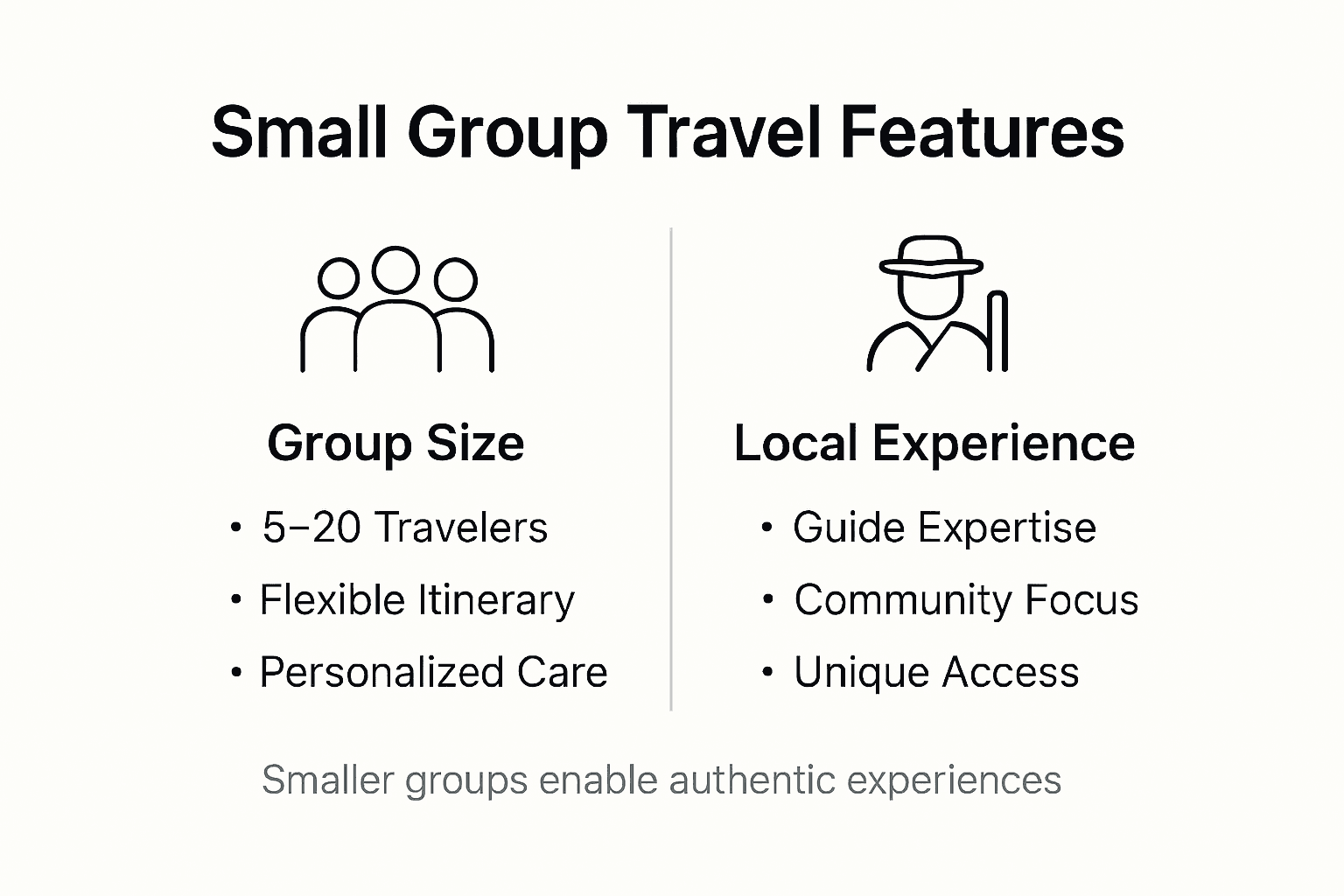
Small group travel represents a transformative approach to experiencing destinations that goes far beyond traditional tourism models. By limiting participant numbers and focusing on immersive interactions, these travel experiences offer travelers a unique pathway to understanding cultures more deeply. Researchers have found that small group travel typically involves fewer than 20 participants, enabling more personalized and authentic engagement with local environments.
The core characteristics of small group travel center around intentional connection and meaningful exploration. Unlike mass tourism, which often feels impersonal and rushed, small group experiences prioritize genuine interactions, cultural understanding, and flexible itineraries. Travelers can expect more intimate settings that allow for deeper conversations with local guides, opportunities to participate in community activities, and a sense of shared adventure with fellow travelers who have similar curiosity and passion for exploration.
Key elements that define small group travel include:
- Limited group size (typically 10-20 participants)
- Focus on immersive cultural experiences
- Opportunities for personalized interactions
- Flexible and adaptable itineraries
- Enhanced potential for meaningful connections with destinations
Pro tip: When selecting a small group travel experience, prioritize tours that emphasize local guide expertise and provide opportunities for genuine cultural immersion rather than superficial sightseeing.
Common Types of Small Group Tours
Travelers today have access to a diverse array of small group tour experiences that cater to different interests, ages, and travel styles. Research reveals multiple specialized tour categories designed to provide unique and targeted travel experiences for various demographics and preferences. These carefully curated tours transform traditional travel by offering intimate, focused journeys that go well beyond standard tourist routes.
The most prevalent types of small group tours include:
- Adventure Tours: Designed for active travelers seeking physical challenges and outdoor experiences
- Cultural Immersion Tours: Focused on deep engagement with local traditions, customs, and community interactions
- Educational/Learning Tours: Structured around academic or skill-based experiences like language learning or historical exploration
- Senior Specialty Tours: Tailored for mature travelers with age-appropriate pacing and accessibility considerations
- Nature and Wildlife Tours: Targeting environmental enthusiasts and wildlife photography lovers
- Special Interest Tours: Catering to specific passions like culinary experiences, art exploration, or photography expeditions
Each tour type offers unique advantages by creating opportunities for meaningful connections and personalized exploration. Specialized small group experiences allow travelers to delve deeper into destinations, interact more authentically with local cultures, and enjoy more flexible, intimate travel experiences compared to traditional mass tourism models.
Here’s a summary comparison of common small group tour types and their typical audience:
| Tour Type | Typical Traveler Profile | Distinctive Experience |
|---|---|---|
| Adventure | Active, thrill-seekers | Outdoor challenges, hiking |
| Cultural Immersion | Culture enthusiasts | Local customs, traditions |
| Educational/Learning | Students, lifelong learners | Language, history, skills |
| Senior Specialty | Mature adults, retirees | Relaxed pace, accessibility |
| Nature & Wildlife | Nature lovers, photographers | Wildlife sightings, flora |
| Special Interest | Hobbyists, niche groups | Culinary, art, photography |
Pro tip: When selecting a small group tour, carefully review the itinerary and group size to ensure the experience matches your personal travel style and interests.
Key Features That Set Small Groups Apart
Small group travel distinguishes itself through a unique set of characteristics that fundamentally transform the travel experience. Understanding the distinctive features of small groups reveals how these intimate travel formats create more meaningful and personalized journeys. Unlike traditional mass tourism, small group experiences prioritize connection, flexibility, and depth of engagement.
Key features that set small group travel apart include:
- Intimate Group Dynamics: Typically limited to 10-15 participants
- Enhanced Personal Interaction: More opportunities for direct communication with guides and fellow travelers
- Flexible Itineraries: Ability to adapt and respond to group interests in real-time
- Deeper Cultural Immersion: Access to experiences not available to larger tour groups
- Collaborative Decision-Making: More democratic approach to travel planning and daily activities
- Stronger Social Connections: Increased potential for forming meaningful relationships with travel companions
Specialized small group experiences offer travelers unprecedented access to authentic local encounters. The reduced group size enables more spontaneous interactions, allows for exploring off-the-beaten-path destinations, and creates a sense of shared adventure that transforms traditional tourism into a more intimate, personalized journey. These tours break down the barriers between travelers and destinations, offering a more genuine and immersive travel experience.
Pro tip: Select small group tours that explicitly highlight their group size limit and emphasize personalized experiences to ensure the most authentic travel adventure.
Benefits for Travelers Seeking Authenticity
Authenticity has become the holy grail of modern travel experiences, transforming how adventurers approach exploration and cultural engagement. Contemporary research on tourism reveals that travelers increasingly value genuine, unfiltered interactions over standardized, commercial tourism models. Small group travel emerges as the perfect solution for those seeking meaningful connections with destinations beyond superficial sightseeing.
The key benefits for authenticity-driven travelers include:
- Direct Cultural Interaction: More opportunities for genuine conversations with local residents
- Flexible Exploration: Ability to modify itineraries based on unexpected cultural discoveries
- Personalized Experiences: Tailored activities that reflect genuine local lifestyles
- Intimate Learning Environments: Close interactions with expert local guides
- Reduced Tourism Impact: Smaller footprint that minimizes disruption to local communities
- Deeper Contextual Understanding: Opportunities to learn about local customs, traditions, and social dynamics
Small group travel fundamentally reimagines the tourism experience by prioritizing depth over breadth. Unlike massive tour groups that move through destinations like mechanical units, these intimate travel experiences allow travelers to engage more meaningfully with local cultures. Participants can explore hidden corners, participate in community activities, and develop genuine relationships that transcend traditional tourist interactions.

Pro tip: Research small group tours that emphasize local guide expertise and community engagement to maximize your authentic travel experience.
Typical Costs, Group Size, and Safety
Small group travel represents a nuanced balance between affordability, intimate experiences, and personal security. Global industry research highlights that these tours typically involve 5 to 15 participants, creating an optimal environment for both cost-effectiveness and travel safety. Understanding the financial and logistical dynamics helps travelers make informed decisions about their adventure experiences.
Typical cost and group size characteristics include:
- Group Size Range: 5 to 15 participants
- Price Points: Generally 10-30% more expensive than large group tours
- Cost Factors: Includes guide expertise, transportation, accommodations, and activity access
- Safety Metrics: Smaller groups enable more personalized risk management
- Budget Variations: Options from budget-friendly to luxury experiences
- Inclusive Pricing: Many tours include meals, local transportation, and activity fees
Financial considerations for small group travel extend beyond raw pricing. While these tours might appear more expensive initially, they often provide significant value through comprehensive experiences, expert guidance, and reduced logistical stress. The intimate group size allows for more personalized attention, enhanced safety protocols, and flexibility in adapting to unexpected travel circumstances. Travelers can expect a more curated, secure, and potentially transformative journey compared to traditional mass tourism models.
For travelers planning a small group trip, here’s a quick reference comparing costs, group size, and safety benefits:
| Factor | Small Group Travel | Large Group Tours |
|---|---|---|
| Group Size Range | 5-15 participants | 40+ participants |
| Price Variability | Moderately higher, inclusive | Often lower, fewer inclusions |
| Safety Management | Personalized attention | Broad, less tailored |
| Flexibility | High, adaptable plans | Limited, rigid itineraries |
Pro tip: Compare small group tour inclusions carefully, as higher upfront costs often translate to more comprehensive and hassle-free travel experiences.
Discover Authentic Small Group Adventures with Next View Tours
Small group travel offers adventurers the chance to truly connect with destinations through intimate, flexible, and culturally immersive experiences. If you crave personalized journeys away from rushed mass tourism that prioritize safety, genuine interaction, and meaningful discovery then exploring our Mountain Tours – Next View Tours and City Tour – Next View Tours options is the ideal next step. These carefully crafted tours align perfectly with the small group travel benefits of adaptable itineraries and expert local guides highlighted in this article.

Start your authentic European adventure now with Next View Tours. Visit https://nextviewtours.com to find the perfect small group experience that matches your passion for discovery. Don’t miss your chance to engage deeply with local cultures in a safe and personal setting. Book your next transformative trip today.
Frequently Asked Questions
What are the benefits of small group travel?
Small group travel offers personalized experiences, deeper cultural immersion, opportunities for genuine interactions with locals, and flexible itineraries that can adapt to group interests.
How does small group travel differ from traditional mass tourism?
Unlike mass tourism, small group travel focuses on intimate settings with limited participants, allowing for meaningful connections, authentic cultural experiences, and a more relaxed pace.
What types of tours are available in small group travel?
Small group tours can include adventure tours, cultural immersion experiences, educational trips, senior specialty tours, nature and wildlife excursions, and special interest tours tailored to specific hobbies or passions.
How much does small group travel typically cost?
Small group travel usually costs 10-30% more than larger group tours, reflecting the added value of limited group sizes, expert guides, and inclusive experiences, such as meals and activities.


Comments are closed