

 Uncategorized
TL;DR:
- Hallstatt’s salt mine is the world’s oldest and offers a unique underground experience.
- The village combines stunning Alpine lake scenery with outdoor activities like boating and hiking.
- Its cultural sites, including the Bone House and Market Square, reflect a rich UNESCO-listed heritage.
Hallstatt has been quietly captivating travelers for millennia, and for good reason. This small Austrian village, home to 7,000 years of salt mining, sits on the edge of a glassy Alpine lake with mountains rising sharply on every side. It is a place where ancient industry and breathtaking scenery exist side by side, creating an experience unlike anything else in Europe. In this guide, we walk you through the history, the landscapes, the cultural sites, and the insider strategies that will make your Hallstatt visit genuinely unforgettable.
Table of Contents
- Hallstatt’s ancient salt heritage: The world’s oldest mine
- Alpine lake scenery and outdoor adventures
- Unique culture: UNESCO status, Bone House, and Market Square
- Expert strategies for a memorable Hallstatt tour
- What most travel guides miss about Hallstatt
- Explore Hallstatt and Europe with tailored tours
- Frequently asked questions
Key Takeaways
| Point | Details |
|---|---|
| Ancient salt mine | Touring Hallstatt means exploring the world’s oldest salt mine, with interactive and scenic experiences. |
| Alpine lake magic | Hallstatt offers breathtaking views, diverse lake activities, and nature adventures surrounded by the Dachstein Alps. |
| UNESCO cultural heritage | Hallstatt’s unique blend of history and tradition, including the Bone House and Market Square, is recognized globally. |
| Smart tour planning | Authentic Hallstatt experiences are best enjoyed with early visits, off-peak timing, and combining main attractions strategically. |
| Mindful, memorable travel | Embracing slower, quieter moments in Hallstatt reveals the village’s true charm beyond the crowds. |
Hallstatt’s ancient salt heritage: The world’s oldest mine
Having previewed Hallstatt’s extraordinary story, let’s start with its oldest treasure: salt. Long before the Roman Empire rose to power, people were already extracting salt from the mountains above Hallstatt. This is not a small claim. Salt was so valuable in the ancient world that it shaped trade routes, funded civilizations, and gave the village its very name. “Hallstatt” comes from the Celtic words for salt and place, a linguistic reminder of just how deeply this mineral is woven into local identity.
The Salzwelten Hallstatt is the world’s oldest salt mine, and it remains one of Austria’s most extraordinary visitor experiences. Tours take you deep into the mountain through timber-lined tunnels, past ancient wooden tools preserved by the salt itself, and down exhilarating miners’ slides that have become a signature highlight. At the top, the Skywalk platform offers sweeping panoramic views across the lake and valley below.
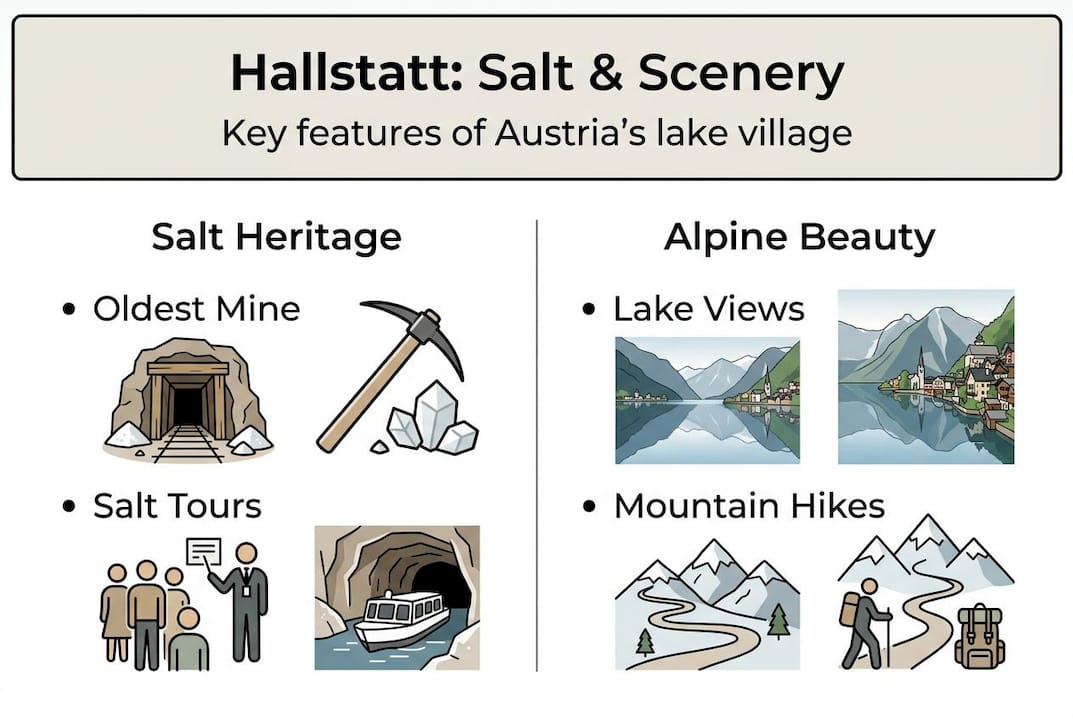
Here is a quick look at what the salt mine experience includes:
| Feature | Details |
|---|---|
| Tour duration | Approximately 2 hours |
| Miners’ slides | Two slides, up to 64 meters long |
| Skywalk height | 360 meters above the village |
| Archaeological finds | Preserved Bronze Age tools and clothing |
| Accessibility | Suitable for most ages and fitness levels |
To make the most of your visit, consider this sequence:
- Arrive at the salt mine early, ideally before 9 a.m., to secure your spot before tour groups fill up.
- Take the funicular (check current 2026 status before visiting) or hike up to the mine entrance.
- Complete the underground tour, including the slides and the prehistoric lake exhibit.
- Head directly to the Skywalk while the morning light is still soft and the crowds are thin.
- Descend back to the village for a lakeside breakfast before exploring Market Square.
Pro Tip: Combining the mine visit with an early Skywalk trip gives you two of Hallstatt’s biggest highlights before the midday rush arrives. This single strategy alone transforms a crowded tourist experience into something genuinely special.
You can plan your full route and logistics through the Hallstatt overview page, which covers transport options, ticketing, and seasonal considerations in detail.
Alpine lake scenery and outdoor adventures
Beyond Hallstatt’s underground wonders, its surface offers equally stunning Alpine sights. The village sits directly on the western shore of Lake Hallstatt, with the Dachstein Alps forming a dramatic backdrop that changes color and mood throughout the day. At sunrise, the water turns a deep gold. By midday, it reflects the sharp white of the mountain peaks. In winter, the entire scene becomes a study in silver and blue.
Lake Hallstatt is surrounded by the Dachstein Alps and is ideal for boating, kayaking, and hiking. Rowing boats are available for rent directly from the village, and a short paddle out onto the water gives you the iconic view of Hallstatt’s colorful facades stacked against the cliffside. It is the perspective that has appeared on countless postcards, and experiencing it from the water makes it feel entirely your own.
For those who prefer to stay on land, the hiking trails around Hallstatt range from gentle lakeside walks to more demanding alpine routes. The trail to the Waldbachstrub waterfall is a favorite, offering lush forest scenery and a dramatic cascade within a manageable walk from the village center.
Here is how the summer and winter experiences compare:
| Experience | Summer | Winter |
|---|---|---|
| Crowds | High, especially midday | Significantly lower |
| Lake activities | Boating, kayaking, swimming | Frozen or calm, scenic walks |
| Skywalk access | Funicular closed until summer 2026 | Check seasonal schedule |
| Scenery | Green mountains, blue lake | Snow-dusted rooftops, misty peaks |
| Photography | Bright and vivid | Moody, atmospheric, magical |
Note: The Hallstatt funicular remains closed through summer 2026. If you are planning to reach the Skywalk, factor in the hiking route or check for updated transport alternatives before your trip.
For a deeper look at lake sightseeing in Hallstatt, including boat rental details and the best vantage points around the shoreline, we have a dedicated guide that covers it all.
Unique culture: UNESCO status, Bone House, and Market Square
Besides natural attractions, Hallstatt’s cultural sites truly set it apart. The village earned its UNESCO World Heritage status in 1997, recognized for both its extraordinary landscape and its role in early European history. That recognition is not just a badge. It reflects a living community that has maintained its traditions, architecture, and identity across thousands of years of change.
“Hallstatt and the Dachstein Salzkammergut Cultural Landscape represent an outstanding example of the interaction between people and their natural environment, shaped over millennia by the salt industry.”
Among Hallstatt’s most unusual cultural sites is the Bone House, known locally as the Beinhaus. Located within the grounds of the village church, this small ossuary holds painted skulls and bones of former residents, some dating back centuries. The skulls are decorated with flowers, names, and dates, a tradition born from the village’s limited burial space. Far from being morbid, the Bone House is a deeply human place, a reminder that even in death, Hallstatt’s residents found ways to express individuality and connection.
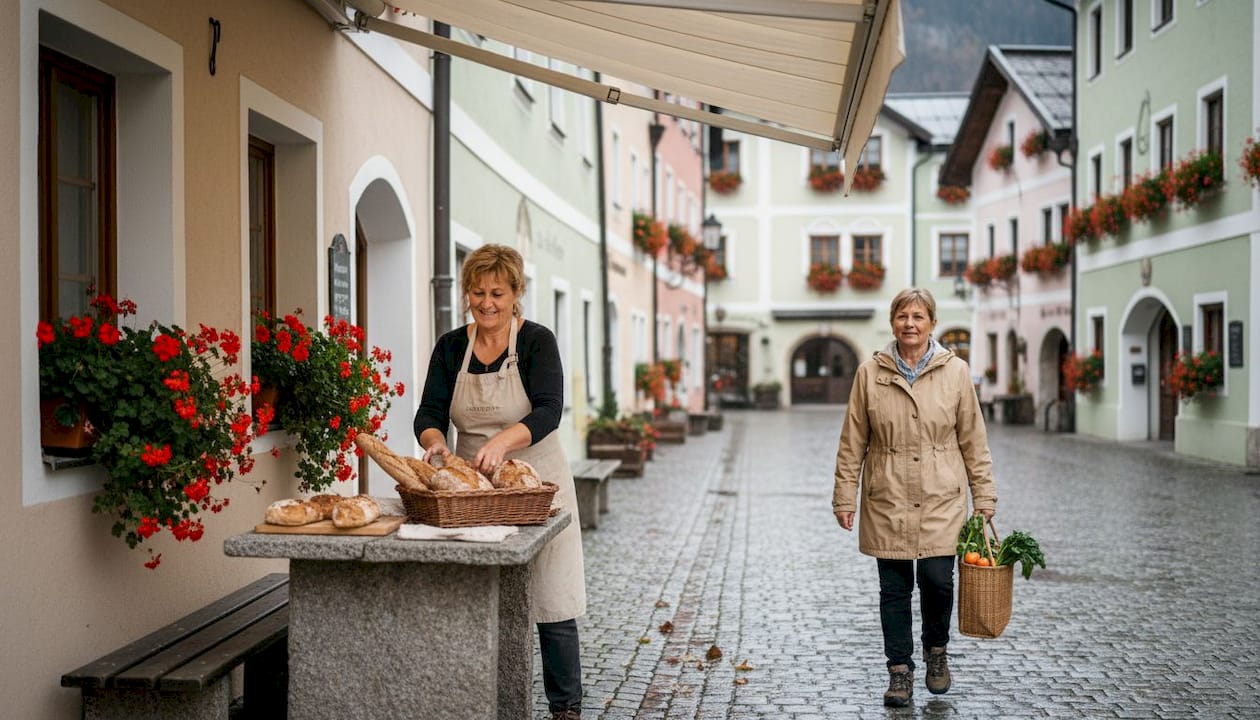
Market Square, or Marktplatz, is the beating heart of the village. Key features include:
- A Renaissance-era fountain at the center, still in its original position
- Colorful historic buildings that frame the square on all sides
- Seasonal markets and local events that bring the community together
- Cafes and small shops offering locally made goods and traditional Austrian food
- The parish church of Maria am Berg, visible from the square and dating to the 14th century
Hallstatt’s cultural authenticity is something you feel rather than simply observe. Even as tourism has grown, the village retains a sense of genuine community life. To see this at its most vivid, visit in the quieter shoulder seasons. The winter scenes of Hallstatt are particularly striking, with snow settling on the church spire and lantern light reflecting off the lake surface.
Expert strategies for a memorable Hallstatt tour
With Hallstatt’s wonders explored, knowing how to experience them best ensures your trip stands out. The village is small, roughly 800 permanent residents, and its popularity means that without a clear plan, you can spend more time navigating crowds than actually enjoying the place.
The most effective approach combines timing, sequencing, and a willingness to slow down. Expert travelers recommend starting with the salt mine and Skywalk early in the morning, then taking a boat out on the lake for unique perspectives of the village from the water, and saving the cultural sites like the Bone House and Market Square for the late afternoon when day-trippers begin to leave.
Here are the strategies that make the biggest difference:
- Arrive before 8 a.m. The village is genuinely peaceful in the early morning, and the light on the lake is extraordinary.
- Stay overnight. Hallstatt after dark, when the tour buses have left, feels like an entirely different place.
- Book the salt mine in advance. Spots fill quickly, especially in peak summer months.
- Choose winter if possible. Fewer visitors, magical snow scenery, and a more authentic atmosphere.
- Walk the full lakeside path. Most visitors stick to the main square. The path north of the village is quieter and offers equally beautiful views.
It is also worth knowing that locals are pushing for visitor controls, including bus slot systems and ticketed entry, to manage the volume of day-trippers. This is not yet in place, but it signals that Hallstatt’s capacity is genuinely under pressure. Planning your visit thoughtfully is both a practical and a respectful choice.
For a fully planned experience, the Hallstatt day trip from Vienna takes care of logistics so you can focus entirely on the experience. If you want to add the Skywalk and Schloss Ort to your itinerary, the Vienna to Hallstatt Skywalk tour is an excellent option.
What most travel guides miss about Hallstatt
Going beyond practical tips, a deeper perspective illuminates Hallstatt’s core appeal. Most guides focus on what to see and when to arrive. What they rarely address is why Hallstatt feels so different from other beautiful European villages, and what that difference asks of you as a visitor.
Hallstatt became a global tourism icon partly through social media, with its image shared millions of times across platforms. That visibility brought economic benefit to a small community, but it also brought pressure that a village of 800 people was never designed to absorb. The overtourism debate here is not just a logistical problem. It is a signal that the most beautiful places in the world require a different kind of attention from travelers.
The visitors who leave Hallstatt most moved are rarely those who rushed through in three hours. They are the ones who sat by the lake at dusk, who spoke with a local shopkeeper, who noticed the way the mist moves through the valley at dawn. Hallstatt rewards slowness. It rewards curiosity over efficiency. If you approach it that way, through an expert Hallstatt tour or a carefully planned independent visit, you will find a place that stays with you long after you leave.
Explore Hallstatt and Europe with tailored tours
Ready to see Hallstatt your way? The experiences described in this guide are even richer when you have expert local knowledge guiding every step. At Next View Tours, we design customised tours in Europe that go beyond the standard itinerary, connecting you with the history, landscapes, and culture that make each destination genuinely meaningful.

Whether you are drawn to Hallstatt’s ancient salt heritage, its Alpine lake scenery, or its quiet cultural depth, our multi-day adventure trips give you the time and structure to experience it fully. From Vienna day trips to extended European journeys, we handle the logistics so you can focus on the moments that matter most.
Frequently asked questions
Why is Hallstatt considered so special among European destinations?
Hallstatt uniquely blends ancient salt mining heritage with UNESCO cultural status and unmatched Alpine lake scenery, creating a combination found nowhere else in Europe.
What are the must-see attractions when touring Hallstatt?
Don’t miss the world’s oldest salt mine, the Skywalk panoramic platform, Lake Hallstatt, the Bone House ossuary, and the historic Market Square.
How can travelers avoid crowds in Hallstatt?
Visit during off-peak hours, stay overnight, or plan a winter trip for fewer visitors and magical snow scenery that most day-trippers never see.
Is the funicular to the Skywalk open in 2026?
The Hallstatt funicular remains closed until summer 2026; plan your visit with the hiking route in mind or check for updated transport options closer to your travel date.
What makes Hallstatt’s Bone House unique?
The Bone House features centuries-old painted skulls decorated with names, dates, and flowers, reflecting a local tradition born from limited burial space and a deeply human desire to be remembered.


Comments are closed