

 News & Tips
Every american traveler dreams of exploring Europe’s legendary landscapes and storied cities, but the world of European tours offers much more than postcard views. With more than 700 million international visitors choosing Europe each year, these journeys blend history, art, and adventure into experiences that captivate all kinds of explorers. From the roots of the Grand Tour to today’s personalized adventures, you will discover how modern tours reveal centuries of culture while making travel accessible, seamless, and truly unforgettable.
Table of Contents
- Defining European Tours And Travel Experiences
- Types Of Tours Offered Across Europe
- How European Tour Booking Processes Work
- Costs, Inclusions, And Payment Details Explained
- Legal, Safety, And Travel Regulations For Tours
- Common Mistakes And Essential Tips For Travelers
Key Takeaways
| Point | Details |
|---|---|
| Origins of European Tours | The concept of European tours dates back to the Grand Tour of the 17th to 19th centuries, where wealthy youth were exposed to cultural and artistic education across Europe. |
| Diverse Tour Options | Modern European tours provide various options such as group, private, themed, and adventure tours that cater to different preferences and interests. |
| Streamlined Booking Processes | Digital technology has transformed tour booking, offering travelers flexible and user-friendly platforms to research, compare, and reserve experiences with ease. |
| Important Travel Considerations | Travelers should plan carefully, addressing common mistakes like overpacking and budgeting adequately to ensure enjoyable and hassle-free experiences. |
Defining European Tours and Travel Experiences
European tours represent a sophisticated journey of cultural exploration and historical discovery that goes far beyond typical tourist experiences. Travel experiences in Europe have deep roots tracing back centuries, evolving from aristocratic Grand Tours to modern, accessible adventures for global travelers. According to Oxford Academic, the evolution of European tourism reflects complex historical, cultural, and social transformations.
The concept of European tours originated with the Grand Tour, a traditional travel experience for wealthy young Europeans and Americans during the 17th to 19th centuries. Research from Dergipark highlights how these journeys were educational pilgrimages designed to expose elite youth to art, architecture, and cultural sophistication across European destinations like France, Italy, and Greece. These early tours were formative experiences that shaped intellectual and cultural understanding.
Modern European tours have democratized travel, making incredible experiences accessible to diverse travelers. These journeys now offer multiple formats to suit different preferences:
- Group Tours: Structured itineraries with professional guides
- Private Tours: Personalized experiences tailored to individual interests
- Themed Tours: Focused on specific interests like history, art, or cuisine
- Adventure Tours: Active experiences involving hiking, cycling, or outdoor exploration
Today’s European tours blend historical richness with contemporary travel convenience, allowing visitors to explore centuries of cultural heritage through immersive, engaging experiences. Whether wandering through medieval cities, exploring alpine landscapes, or discovering hidden cultural gems, European Summer Tours Guide offers travelers unprecedented opportunities to connect with the continent’s diverse landscapes and traditions.
Types of Tours Offered Across Europe
Europe offers an extraordinary diversity of tour experiences catering to different traveler preferences, interests, and travel styles. From historical journeys to adventure expeditions, the continent provides an unparalleled range of exploration opportunities. Tour types have evolved significantly from traditional travel models, offering travelers unprecedented flexibility and immersion.
According to Wikipedia, historical travel experiences like the Grand Tour were primarily educational journeys for young wealthy Europeans, focusing on cultural and artistic exploration. Modern European tours have dramatically expanded this concept, creating multiple specialized categories that appeal to diverse traveler demographics.
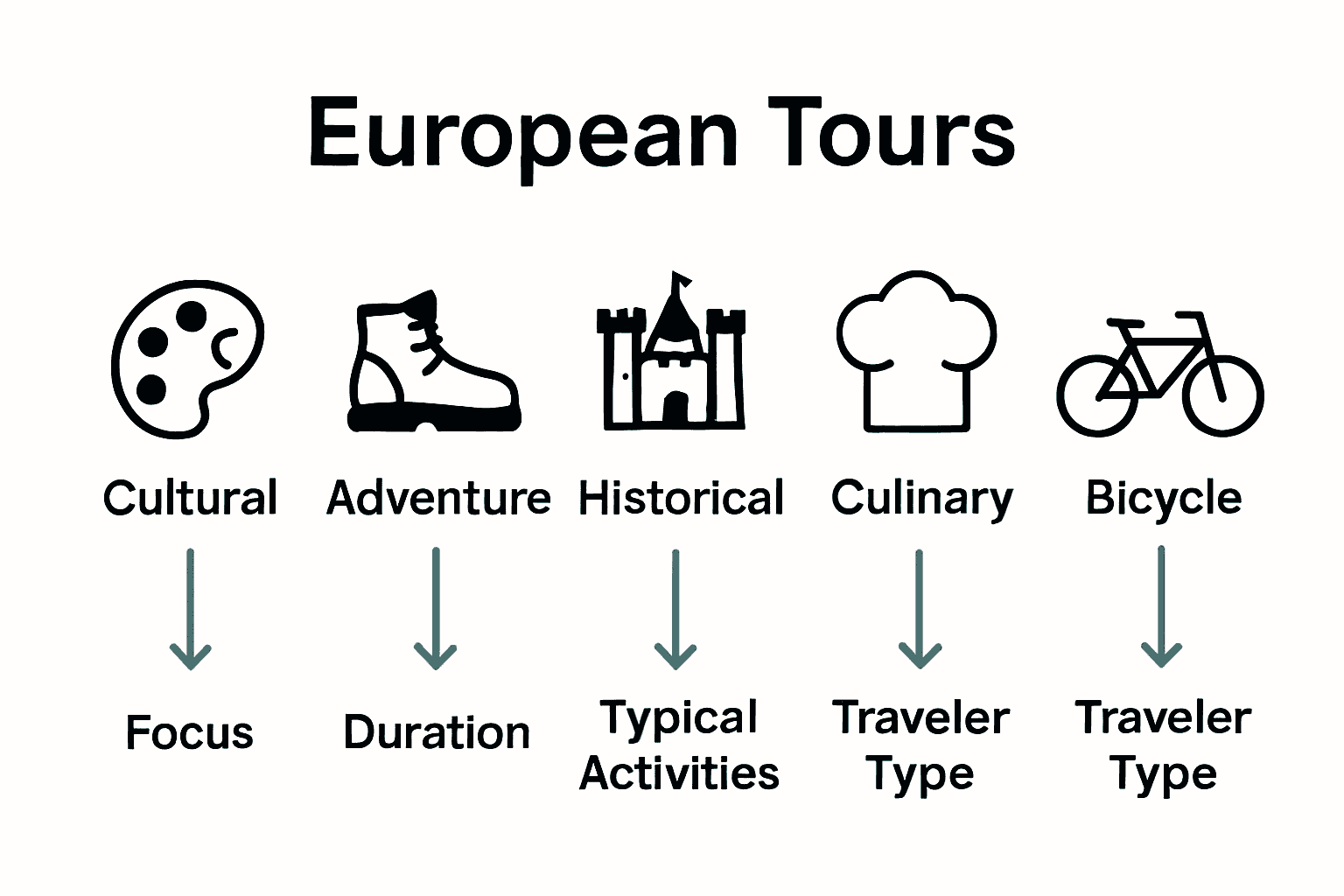
Key tour types available across European destinations include:
- Cultural Tours: Immersive experiences exploring art, history, and local traditions
- Adventure Tours: Active journeys involving outdoor activities and exploration
- Multi Day Trips: Extended travel experiences covering multiple destinations and experiences
- Historical Tours: Focused explorations of significant historical sites and landmarks
- Culinary Tours: Gastronomic journeys exploring regional cuisines and food traditions
Bicycle touring, as highlighted by Wikipedia, represents another fascinating tour category, offering travelers autonomous and deeply personal exploration experiences. These self-contained cycling trips range from single-day excursions to extensive multi-country journeys, providing an intimate and environmentally conscious way to experience European landscapes.
Modern European tours emphasize personalization, flexibility, and deep cultural engagement. Whether travelers seek structured group experiences or independent adventures, the continent offers remarkable diversity to satisfy every travel style and interest. From alpine hiking trails to Mediterranean coastal routes, European tours provide transformative journeys that connect travelers with centuries of rich cultural heritage.
How European Tour Booking Processes Work
European tour booking has transformed dramatically with digital technology, offering travelers unprecedented convenience and flexibility in planning their travel experiences. Booking processes now encompass multiple channels, from traditional travel agencies to sophisticated online platforms that streamline the entire reservation journey.
According to World Travel Monitor, outbound travel behavior has significantly shifted towards digital booking platforms that provide comprehensive travel information and instant reservation capabilities. Modern travelers expect seamless, user-friendly experiences that allow them to customize and book tours with minimal friction.
The typical European tour booking process involves several key stages:
- Research and Destination Selection
- Tour Type Identification
- Itinerary Comparison
- Price and Availability Check
- Reservation Confirmation
- Payment Processing
Platforms like Musement have revolutionized how travelers book European experiences by aggregating third-party activities, museums, shows, and tours into centralized booking systems. These innovative platforms enable travelers to explore and reserve multiple experiences through a single interface.
Modern booking processes prioritize transparency, flexibility, and customer support. Travelers can now access comprehensive tour information including detailed itineraries, pricing breakdowns, cancellation policies, and real-time availability. The integration of mobile technologies and responsive design has further simplified the booking experience, allowing travelers to plan and reserve tours from smartphones, tablets, or computers with equal ease and convenience.
Costs, Inclusions, and Payment Details Explained
European tour pricing represents a complex ecosystem of transparent cost structures, comprehensive service inclusions, and flexible payment options designed to meet diverse traveler needs. Tour costs encompass multiple elements that go beyond simple transportation and accommodation, reflecting the sophisticated nature of modern European travel experiences.
According to research from Euroreg, tourism destination development involves intricate economic considerations that significantly impact tour pricing strategies. These considerations include local infrastructure, seasonal variations, destination popularity, and the complexity of planned experiences.
Typical tour cost inclusions generally cover:
- Transportation: Buses, trains, or specialized tour vehicles
- Accommodation: Hotels or designated lodging
- Guided Experiences: Professional tour guide services
- Entry Fees: Tickets to museums, historical sites, and attractions
- Meals: Some tours include select meals or dining experiences
Insights from comparative tourism studies highlight the importance of transparent pricing models that provide travelers with clear expectations. Next View Tours offers detailed pricing information to ensure travelers understand exactly what their tour package includes and excludes.
Payment options have also evolved to provide maximum flexibility, with most European tour operators now offering multiple methods including credit cards, bank transfers, and installment plans. Travelers can typically expect secure online payment systems, transparent cancellation policies, and the ability to customize their booking experience to match their specific budget and travel preferences.
Legal, Safety, and Travel Regulations for Tours
European tour regulations represent a comprehensive framework designed to protect travelers, ensure safety, and maintain high-quality travel experiences across multiple countries. Travel regulations are intricate systems that balance tourist mobility with national security, environmental protection, and individual traveler rights.
According to research exploring smart tourism frameworks, legal considerations in European travel extend far beyond traditional boundary regulations. These sophisticated systems now incorporate digital technologies, data protection protocols, and adaptive safety mechanisms that respond to evolving global travel dynamics.
Key legal and safety considerations for European tours include:
- Travel Documentation: Valid passports, necessary visas
- Health Requirements: Vaccination records, travel insurance
- Personal Safety: Emergency contact protocols
- Liability Protection: Tour operator responsibility frameworks
- Consumer Rights: Transparent cancellation and refund policies
Digital tourism research emphasizes the growing importance of understanding travelers’ digital footprints and associated regulatory frameworks. Next View Tours provides comprehensive safety guidelines to help travelers navigate these complex legal landscapes effectively.
Modern European tour regulations prioritize a holistic approach to traveler safety, combining rigorous legal standards with flexible, technology-enabled protection mechanisms. Travelers can expect comprehensive support systems that address everything from medical emergencies to unexpected travel disruptions, ensuring a secure and professionally managed travel experience.

Common Mistakes and Essential Tips for Travelers
European travel requires careful planning and awareness to ensure a smooth, enjoyable experience. Travel preparation involves more than simply booking tickets and packing bags, demanding strategic insights that can dramatically improve overall trip quality and minimize potential complications.
Research examining tourist experiences reveals that senior travelers and first-time European tourists often encounter similar challenges that can be preemptively addressed through informed preparation. Understanding these potential pitfalls is crucial for creating memorable and stress-free travel experiences.
Common mistakes travelers frequently make include:
- Overpacking: Bringing excessive luggage that complicates transportation
- Insufficient Documentation: Neglecting to verify visa and passport requirements
- Poor Budget Planning: Underestimating daily expenses in different European countries
- Ignoring Local Customs: Failing to research cultural nuances and etiquette
- Limited Language Preparation: Not learning basic local language phrases
According to walking tour research, many travelers underestimate the importance of comfortable walking gear and proper physical preparation for extensive city explorations. Next View Tours offers comprehensive traveler guidance to help visitors navigate these potential challenges effectively.
Successful European travel requires a combination of careful planning, cultural sensitivity, and flexible adaptability. Experienced travelers understand that preparation, open-mindedness, and willingness to learn about local contexts transform potential challenges into enriching, unforgettable experiences across diverse European destinations.
Discover How European Tours Work with Next View Tours
Understanding how tours work in Europe can feel overwhelming with so many booking steps, tour types, and legal details to consider. If you want to avoid common travel mistakes and experience well-planned, seamless adventures, Next View Tours offers exactly what you need. We specialize in customized and group journeys that match your travel style, whether you seek cultural discoveries, thrilling nature excursions, or multi-day tours across iconic European cities.
Explore our range of Adventure Tours – Next View Tours to experience Europe beyond the usual sights. Ready to simplify your trip planning and enjoy expert-guided excursions starting from hubs like Vienna, Salzburg, or Prague? Visit Next View Tours now. Dive into hassle-free booking, clear pricing, and unbeatable local insights. Your unforgettable European journey starts here.
Frequently Asked Questions
How can I choose the right type of European tour for my needs?
To choose the right type of tour, consider your interests and travel style. Options include cultural tours, adventure tours, multi-day trips, historical tours, and culinary tours. Determine what experiences you want and select a tour type that aligns with those interests.
What should I expect to include in the cost of a European tour?
Typically, the cost includes transportation, accommodation, guided experiences, entry fees to attractions, and sometimes meals. It’s important to review the details provided by the tour operator to understand what is included in your package.
What is the usual booking process for a European tour?
The booking process generally involves researching destinations, identifying the tour type, comparing itineraries, checking availability and pricing, confirming the reservation, and processing payment. Many travelers use online platforms that streamline this process for convenience.
Are there any essential tips for first-time travelers on European tours?
First-time travelers should prepare by packing light, ensuring all necessary documentation is in order, budgeting for daily expenses, researching local customs, and familiarizing themselves with basic language phrases. Proper planning significantly enhances the travel experience.


Comments are closed