

 News & Tips
Every american traveler dreams of exploring Europe’s iconic cities, yet most overlook the role of a skilled guide in shaping the experience. Over 80 percent of travelers find guided tours more memorable when led by certified experts. Whether wandering ancient streets or uncovering local traditions, professional tour guides unlock the real stories behind each landmark. Understanding who these guides are and what sets them apart helps travelers choose truly enriching journeys.
Table of Contents
- Defining Tour Guides In Europe
- Types And Variations Of Tour Guides
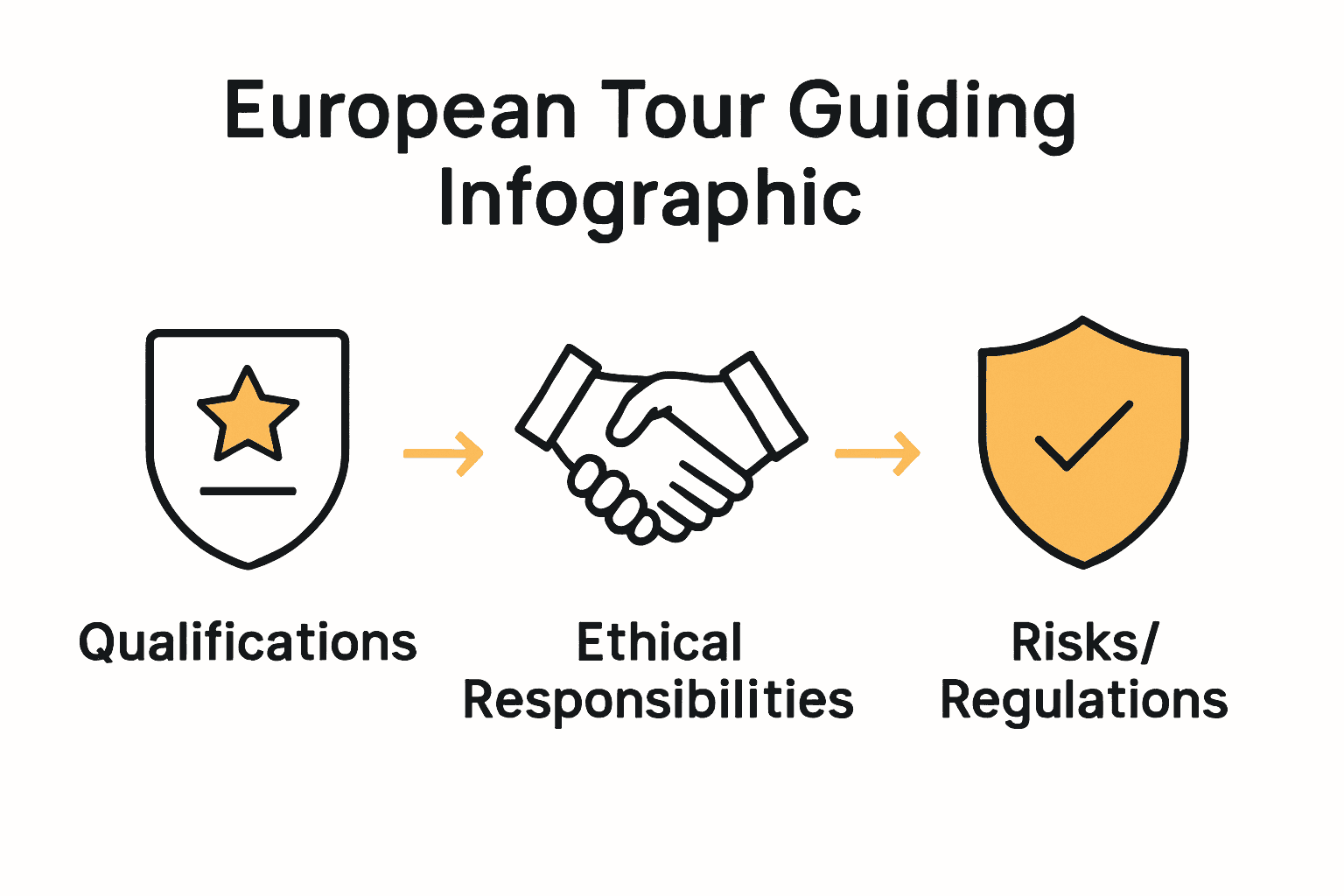
- Qualifications And Legal Requirements
- Key Duties And Ethical Responsibilities
- Risks, Regulations And Professional Support
Key Takeaways
| Point | Details |
|---|---|
| Role of Tour Guides | Tour guides are cultural storytellers, enhancing travel experiences by connecting visitors with local history and traditions. |
| Types of Guides | The profession includes various specializations such as urban, museum, and adventure guides, each offering unique insights. |
| Qualifications Required | Professional tour guides typically need formal education, language proficiency, and specific certifications based on regional standards. |
| Ethical Responsibilities | Guides must maintain ethical standards, ensuring respectful representation of cultures and prioritizing traveler safety and understanding. |
Defining Tour Guides in Europe
Tour guides are specialized professionals who transform ordinary travel experiences into extraordinary journeys of discovery across Europe. According to the European Tourism Association (ETOA), a tour guide is fundamentally a cultural storyteller who delivers insightful commentary while guiding visitors through historical sites, museums, landmarks, and diverse landscapes.
The European standard EN 13809:2003 provides a precise definition, describing a tourist guide as a professionally qualified individual who interprets the cultural and natural heritage of an area in the visitor’s preferred language. These professionals are more than simple navigators – they are living bridges connecting travelers with the rich historical, artistic, and social contexts of European destinations.
Key characteristics that distinguish professional European tour guides include:
- Language Expertise: Fluency in multiple languages
- Cultural Knowledge: Deep understanding of local history, traditions, and customs
- Storytelling Skills: Ability to make historical narratives engaging and accessible
- Professional Certification: Recognized qualifications from regional tourism authorities
- Interpersonal Skills: Capability to manage diverse group dynamics
Understanding the role of tour guides is crucial for travelers seeking authentic, immersive experiences. These professionals do far more than point out landmarks – they breathe life into historical sites, translate complex cultural nuances, and create meaningful connections between visitors and the destinations they explore. Their expertise transforms a simple sightseeing trip into an educational and emotionally resonant journey through Europe’s diverse landscapes and rich cultural tapestry.
Learn more about our expert tour guides at Next View Tours.
Types And Variations Of Tour Guides
Tour guiding is a diverse profession with multiple specialized roles that cater to different travel experiences and tourist needs. According to research from Geografia, the profession encompasses a wide range of specialized guide types, each designed to offer unique insights and experiences for travelers across various contexts.
The primary variations of tour guides can be categorized into several distinct professional domains:
- Urban Guides: Specialists in city exploration and metropolitan histories
- Museum Guides: Experts in art, cultural, and historical museum narratives
- Adventure Guides: Professionals leading outdoor and activity-based tours
- Business Guides: Professionals facilitating industry and corporate tourism experiences
- Cultural Interpreters: Experts translating complex local traditions and societal nuances
- Escort Guides: Professionals who accompany travelers throughout entire journeys
- Site-Specific Guides: Experts focused on particular historical landmarks or specialized locations
As Wikipedia notes, each guide type specializes in different aspects of the tourism experience, bringing unique skills and perspectives to travelers. These professionals are not just information providers but storytellers who transform geographic locations into living, breathing narratives that connect visitors with the deeper essence of a destination.
The complexity of modern tour guiding requires professionals to be multilingual, culturally sensitive, and adaptable across various tourist contexts. From leading groups through ancient European cities to providing specialized museum tours or managing adventure expeditions, these guides serve as critical bridges between travelers and the rich, multifaceted experiences of European destinations.
Explore our specialized guide services at Next View Tours.
Qualifications And Legal Requirements
Navigating the professional landscape of European tour guiding requires a complex blend of formal education, specialized training, and region-specific certifications. Wikipedia highlights that tour guide qualifications in Europe are typically embedded within national and regional educational systems, creating a nuanced framework of professional standards that vary across different countries.
The core qualifications for professional tour guides generally encompass:
- Educational Background: Typically a degree in tourism, history, arts, or related cultural studies
- Language Proficiency: Fluency in multiple languages, often including English and the local language
- Specialized Certifications: Region-specific professional credentials
- Cultural Knowledge: Comprehensive understanding of local history, traditions, and social contexts
- Professional Examinations: Formal assessments of guiding skills and knowledge
According to the European Tourism Association (ETOA), establishing widely accepted definitions and qualifications is crucial for maintaining professional standards across Europe. This means that while requirements might differ between countries, there is a growing trend towards standardization and recognition of professional competencies.
Legal requirements for tour guides often include mandatory registration with local tourism authorities, background checks, and ongoing professional development. Some countries require specific insurance coverage, health certifications, and regular recertification to ensure guides maintain high professional standards. These regulations not only protect tourists but also elevate the overall quality of travel experiences across European destinations.

Learn more about our professional guide certification process.
Key Duties And Ethical Responsibilities
Tour guides play a pivotal role in bridging cultural understanding and creating meaningful travel experiences. Wikipedia emphasizes that their primary responsibility extends far beyond simple information delivery, encompassing a comprehensive approach to interpreting cultural and historical heritage for visitors.
The core duties of professional tour guides include:
- Cultural Interpretation: Translating complex historical and social narratives
- Safety Management: Ensuring group safety and managing potential risks
- Communication: Adapting communication styles to diverse audience needs
- Historical Context: Providing accurate and engaging historical insights
- Conflict Resolution: Mediating potential misunderstandings or group dynamics
- Accessibility Support: Accommodating travelers with different physical and cognitive needs
According to the European Tourism Association (ETOA), ethical responsibilities are paramount in the profession. Tour guides must maintain a delicate balance between professional knowledge and personal integrity, which includes respecting local cultures, avoiding cultural stereotypes, and presenting information objectively and sensitively.
Ethical considerations extend to broader professional conduct, including maintaining confidentiality, respecting client privacy, and representing destinations authentically. Guides serve as cultural ambassadors, with a profound responsibility to foster mutual understanding, respect, and appreciation between travelers and local communities. Their role transcends mere information sharing, becoming a critical mechanism for cross-cultural dialogue and global understanding.
Discover our commitment to ethical guiding practices.
Risks, Regulations And Professional Support
The tour guiding profession involves navigating complex regulatory environments and managing inherent professional risks. European Tourism Association (ETOA) highlights the significant challenges faced by tour guides, particularly non-EU professionals working across European destinations, where immigration rules and service regulations create intricate professional landscapes.
Professional risks and challenges for tour guides typically include:
- Legal Compliance: Navigating diverse international work regulations
- Insurance Requirements: Maintaining comprehensive professional liability coverage
- Health and Safety: Managing group dynamics and potential emergency scenarios
- Cultural Sensitivity: Avoiding potential misunderstandings or legal complications
- Immigration Restrictions: Understanding work permit and cross-border service limitations
- Technological Disruptions: Adapting to changing digital travel landscapes
According to Wikipedia, professional support organizations like the World Federation of Tourist Guide Associations (WFTGA) play a crucial role in providing resources, advocacy, and professional development opportunities for guides worldwide. These organizations help mitigate risks by offering standardized training, legal guidance, and collective representation for tour guide professionals.
Regulatory frameworks across Europe continue to evolve, focusing on maintaining high professional standards, ensuring tourist safety, and protecting both guides and travelers. Professional associations work closely with local tourism authorities to develop comprehensive guidelines that address emerging challenges, support continuous learning, and promote ethical practices in the tour guiding profession.
Explore our professional support resources.
Experience Europe Through Expert Tour Guides Who Bring History to Life
Traveling across Europe demands more than just visiting landmarks it requires a guide who can unlock the rich stories, cultural insights, and hidden gems that give each destination its unique soul. This article reveals the vital role tour guides play, highlighting their expertise in cultural interpretation, language skills, and ethical responsibilities. If you want a truly immersive journey, relying on professional guides who understand these complexities is essential.

Discover how Next View Tours solves common traveler challenges by providing expert guides across diverse experiences such as city tours, adventure tours, and nature explorations. Whether you dream of uncovering European history in Vienna, Prague, or Budapest, or prefer an active outdoor trip, our guides are trained to create memorable, authentic moments that go beyond the usual sightseeing. Start your adventure today by exploring our City Tour – Next View Tours for urban delights or dive into thrilling landscapes with our Adventure Tours – Next View Tours. Your next unforgettable European journey begins now at Next View Tours. Book your guided experience and see Europe through the eyes of true experts.
Frequently Asked Questions
What is the role of a tour guide in Europe?
Tour guides in Europe serve as cultural storytellers, providing insightful commentary and guiding visitors through historical sites, landmarks, and diverse landscapes. They connect travelers with the rich historical, artistic, and social contexts of European destinations.
What qualifications are typically required to become a tour guide in Europe?
To become a professional tour guide in Europe, individuals usually need a degree in tourism, history, or related cultural studies, fluency in multiple languages, specialized regional certifications, and comprehensive cultural knowledge that includes local customs and history.
What types of tour guides are there in Europe?
There are several types of tour guides in Europe, including urban guides, museum guides, adventure guides, business guides, cultural interpreters, escort guides, and site-specific guides, each offering unique insights and experiences related to their specialization.
What are the ethical responsibilities of tour guides?
The ethical responsibilities of tour guides include respecting local cultures, presenting information objectively, maintaining confidentiality, and fostering mutual understanding between travelers and local communities. Tour guides serve as cultural ambassadors who enhance the travel experience through sensitivity and awareness.


Comments are closed