

 Adventure Tours
Booking a multi-day European adventure for your group or family can quickly become overwhelming without a clear plan in place. When each traveler has different interests and you want to make every moment count, the challenge of organizing routes, accommodations, and must-see stops grows. A tour itinerary acts as your practical roadmap, combining detailed scheduling, transportation plans, and curated activities to turn travel dreams into a seamless, memorable journey. Discover how strategic itinerary planning delivers confidence and unforgettable experiences across Europe.
Table of Contents
- What Is A Tour Itinerary And Why It Matters
- Main Types Of Tour Itineraries For Europe
- Key Components Of A Detailed Itinerary
- How Tour Itineraries Are Created And Customized
- Common Mistakes In Tour Planning And How To Avoid Them
- Comparing Standard And Tailor-Made Tour Itineraries
Key Takeaways
| Point | Details |
|---|---|
| Importance of Itineraries | A well-structured tour itinerary enhances the travel experience by reducing uncertainty and maximizing enjoyment. |
| Types of European Itineraries | Tailor your itinerary type (such as Regional Tours or City-Hopping) to match personal interests and travel styles for optimal experiences. |
| Key Components to Include | Ensure your itinerary covers transportation, accommodation, daily activities, and contact information for comprehensive planning. |
| Common Planning Mistakes | Avoid overscheduling, budget miscalculations, and logistical oversights by allowing flexibility and building in a contingency budget. |
What Is a Tour Itinerary and Why It Matters
A tour itinerary is your comprehensive travel roadmap, detailing every aspect of your journey from departure to return. At its core, an itinerary is more than just a schedule – it’s a strategic blueprint that transforms scattered travel plans into a cohesive, enjoyable experience. Travel logistics research defines it as a precise schedule outlining destinations, transportation methods, and specific timings for each segment of your trip.
Understanding tour itineraries goes beyond mere planning. They serve critical functions for travelers, especially in complex multi-destination adventures like European tours. An effective itinerary helps you maximize limited travel time, minimize logistical stress, and ensure you experience the most meaningful attractions. Consumer journey management suggests that well-crafted itineraries are instrumental in creating memorable travel experiences by providing structure and reducing uncertainty.
Successful tour itineraries typically include several key components that transform abstract travel dreams into actionable plans:
- Detailed daily schedules
- Transportation arrangements
- Accommodation information
- Planned activities and attractions
- Estimated travel times between locations
- Flexibility for spontaneous experiences
While some travelers prefer rigid schedules, modern itineraries increasingly emphasize adaptability. They’re living documents that can accommodate unexpected opportunities or personal preferences while maintaining an overarching strategic framework.
Pro tip: Always keep a digital and physical copy of your itinerary, and share key details with a trusted contact for added safety and peace of mind.
Main Types of Tour Itineraries for Europe
European travel offers diverse itinerary options designed to suit every traveler’s preferences and interests. European travel routes showcase remarkable variety, ranging from regional explorations to expansive multi-country journeys that capture the continent’s rich cultural tapestry. Understanding these different itinerary types can help travelers choose experiences that align perfectly with their travel goals and personal travel style.
The primary types of European tour itineraries can be categorized into several distinctive formats:
- Regional Tours: Focused trips exploring specific geographic areas like Scandinavia, Mediterranean countries, or Central Europe
- Thematic Itineraries: Specialized tours centered around specific interests such as:
- Historical and cultural experiences
- Culinary and wine tours
- Art and architectural journeys
- Musical and festival circuits
- Long-Distance Paths: Extensive multi-country hiking routes covering thousands of kilometers across national boundaries
- City-Hopping Adventures: Fast-paced itineraries connecting major European metropolitan centers
- Specialized Exploration Tours: Niche experiences targeting specific traveler interests like photography, wildlife, or academic research
Modern European tour itineraries increasingly emphasize flexibility and personalization. Unlike traditional rigid travel plans, contemporary approaches allow travelers to blend structured experiences with spontaneous discoveries. This adaptive approach ensures travelers can enjoy comprehensive destination coverage while maintaining the freedom to explore unexpected opportunities.

To help you decide which European itinerary style best fits your goals, here is a side-by-side summary:
| Itinerary Type | Who It Suits Best | Planning Complexity | Experience Style |
|---|---|---|---|
| Regional Tour | First-time visitors | Moderate | In-depth in one region |
| Thematic Itinerary | Passionate enthusiasts | High | Focused on a specific interest |
| City-Hopping | Urban explorers | Moderate | Fast-paced, iconic cities |
| Long-Distance Path | Adventurous travelers | High | Immersive, challenging journey |
| Specialized Tour | Niche interest seekers | High | Highly tailored experiences |
Pro tip: Consider mixing structured tour segments with independent exploration to create a more dynamic and personalized European travel experience.
Key Components of a Detailed Itinerary
Creating a comprehensive tour itinerary requires careful planning and attention to detail. Travel documentation guidelines outline the essential elements that transform a basic travel plan into a robust, actionable roadmap for your European adventure. A well-constructed itinerary serves as your personal travel blueprint, ensuring smooth navigation through complex travel logistics and maximizing your experience.
The core components of a detailed European tour itinerary typically include:
- Transportation Details
- Specific flight and transit information
- Ticket numbers and confirmation codes
- Transportation schedules and connections
- Backup transportation options
- Accommodation Information
- Hotel or lodging addresses
- Reservation confirmation numbers
- Check-in and check-out times
- Contact information for accommodations
- Daily Activity Scheduling
- Precise timing for planned activities
- Location details for each experience
- Duration of each planned event
- Alternative activity options
- Critical Contact Information
- Emergency contact numbers
- Local embassy or consulate details
- Travel insurance contact information
- Local transportation service numbers
Effective itinerary planning goes beyond simple documentation. Modern travelers need flexible frameworks that accommodate unexpected changes while providing structured guidance. This means creating a living document that balances detailed planning with spontaneous exploration, allowing you to adapt to real-world travel dynamics.
Digital tools have revolutionized itinerary management, enabling travelers to create dynamic, easily updatable plans that sync across multiple devices. Cloud-based platforms and mobile apps now allow real-time modifications, making your travel documentation more responsive and user-friendly than ever before.
Pro tip: Create digital and physical backup copies of your itinerary, storing them in separate locations to ensure you always have access to critical travel information.
How Tour Itineraries Are Created and Customized
Today’s tour itineraries represent a sophisticated blend of technology and human expertise, transforming travel planning into a highly personalized experience. Advanced algorithmic approaches now enable travel professionals to craft dynamic itineraries that adapt to individual traveler preferences, constraints, and interests with unprecedented precision.
The modern itinerary creation process involves multiple sophisticated stages:
Traveler Preference Analysis
- Comprehensive questionnaires about travel interests
- Assessment of previous travel experiences
- Understanding personal comfort levels and adventure thresholds
- Evaluation of budget and time constraints
Technology-Driven Customization
- Recommender systems analyzing user preferences that rank potential destinations
- Machine learning algorithms that predict optimal travel routes
- Real-time data integration for dynamic route adjustments
- Personalization based on traveler demographics and historical travel patterns
These advanced techniques allow tour creators to design itineraries that are simultaneously structured and flexible. By combining data-driven insights with human creativity, travel professionals can now construct journeys that feel both meticulously planned and wonderfully spontaneous.
The most successful itineraries balance algorithmic precision with human intuition. They account for logistical details while leaving room for unexpected discoveries, transforming travel from a rigid schedule into an adaptive, personalized adventure.
Pro tip: Always provide multiple preference indicators when booking a customized tour to help creators design an experience that truly resonates with your travel style.
Common Mistakes in Tour Planning and How to Avoid Them
European tour planning requires strategic thinking and careful consideration to avoid potential pitfalls that can derail an otherwise exciting adventure. Large-scale event planning research reveals that most travel planning mistakes stem from unrealistic expectations and inadequate preparation.
The most critical tour planning mistakes travelers frequently encounter include:
- Overscheduling
- Cramming too many activities into limited time
- Failing to account for travel fatigue
- Ignoring necessary rest and transition periods
- Removing flexibility from the itinerary
- Budget Miscalculations
- Underestimating total trip expenses
- Neglecting emergency fund allocations
- Overlooking hidden costs like local transportation
- Forgetting currency exchange rate fluctuations
- Logistical Oversight
- Inadequate transportation time between destinations
- Ignoring local transportation complexities
- Failing to research visa and entry requirements
- Not considering seasonal variations in travel
Scheduling best practices emphasize the importance of building buffer time and maintaining itinerary flexibility. Successful tour planning requires a delicate balance between structured experiences and spontaneous exploration, allowing travelers to adapt to unexpected opportunities while maintaining a coherent travel framework.
Here is a quick-reference guide to the most common itinerary planning pitfalls and how to proactively address them:
| Mistake | Typical Consequence | Best Prevention Tactic |
|---|---|---|
| Overscheduling | Burnout, missed sites | Schedule rest and realistic travel times |
| Budget Underestimation | Unexpected expenses | Build a 20% contingency fund |
| Logistical Oversight | Delays, extra costs | Double-check transport and entry needs |
Modern travelers should approach tour planning as a dynamic process, continuously refining their approach based on real-world insights and personal preferences. Technology and professional guidance can significantly mitigate planning risks, transforming potential challenges into opportunities for memorable experiences.
Pro tip: Create a contingency budget representing 15-20% of your total trip cost to handle unexpected expenses and maintain travel peace of mind.
Comparing Standard and Tailor-Made Tour Itineraries
Travel experiences are not one-size-fits-all, and understanding the differences between standard and tailor-made tour itineraries can dramatically impact your European adventure. Personalized travel research reveals significant distinctions between these two approaches, each offering unique advantages for different types of travelers.
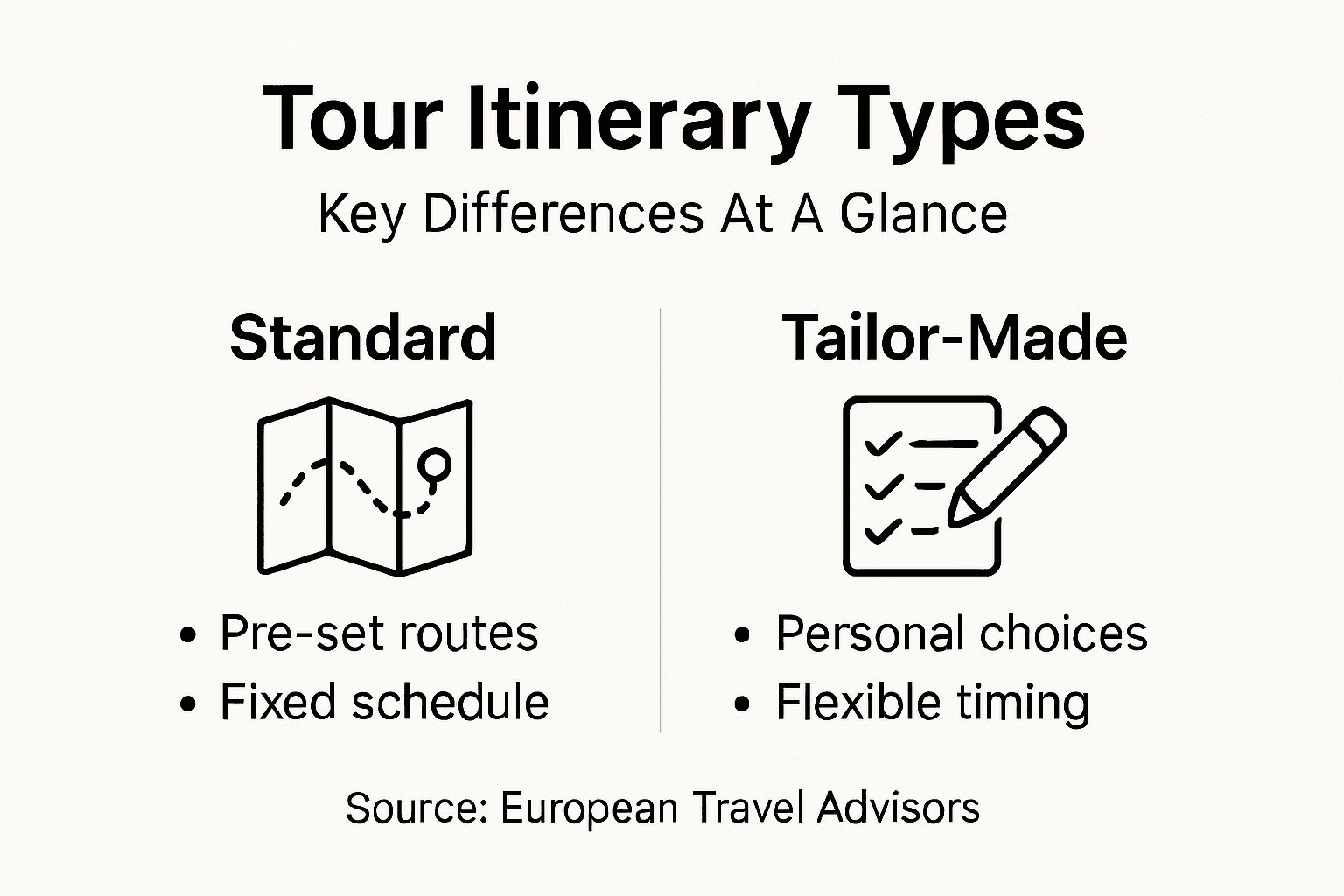
Key differences between standard and tailor-made tour itineraries include:
Standard Tour Itineraries
- Predetermined routes and schedules
- Fixed group departure dates
- Lower overall cost
- Limited personalization
- Structured group experiences
- Efficient logistics management
Tailor-Made Tour Itineraries
- Completely customizable experiences
- Flexible routing and scheduling
- Personalized activity selection
- Higher individual attention
- Adaptable to specific traveler interests
- Potential for unique, off-the-beaten-path experiences
Personalized itinerary recommendation systems demonstrate that custom tours can significantly enhance traveler satisfaction by aligning experiences with individual preferences. While standard tours offer convenience and affordability, tailor-made itineraries provide unparalleled flexibility and personal connection to the travel experience.
Modern travelers increasingly seek experiences that reflect their unique interests and travel styles. The evolution of tour planning technologies now enables more sophisticated, personalized journey design, bridging the gap between structured group travel and completely independent exploration.
Pro tip: Consider a hybrid approach by selecting a standard tour with built-in optional customization points to balance structure and personal preference.
Plan Your Perfect European Journey with Expert Tour Itineraries
Navigating the complexities of a European adventure can feel overwhelming, especially when trying to balance detailed schedules with spontaneous exploration. This article highlights common challenges like overscheduling, budget miscalculations, and logistical hurdles that can drain the joy from your trip. At Next View Tours, we understand the importance of a well-crafted itinerary that provides structure yet adapts to your unique travel style. Whether you seek immersive city experiences or scenic nature escapes, our City Tour and customized options offer the flexibility and expert guidance needed to maximize your time.

Discover handpicked adventures across Vienna, Salzburg, Prague, and beyond that turn your travel dreams into reality. Don’t wait to transform complex planning into effortless enjoyment. Visit Next View Tours now to explore tailored tours and start designing your unforgettable European itinerary today.
Frequently Asked Questions
What is a tour itinerary?
A tour itinerary is a comprehensive travel roadmap that outlines every aspect of your trip, including destinations, transportation methods, and specific timings for each segment.
Why is a tour itinerary important for travelers?
A tour itinerary helps travelers maximize their time, minimize logistical stress, and ensures they experience meaningful attractions, creating a more enjoyable and memorable travel experience.
What are the key components of a detailed itinerary?
Key components include transportation details, accommodation information, daily activity scheduling, and critical contact information for emergencies.
How can I customize my tour itinerary?
Tour itineraries can be customized based on traveler preferences through the use of technology and personal insights, allowing for flexibility in routing, activity selection, and scheduling.
Recommended
- 7 Expert Tips for Planning a Day Trip Itinerary Europe – Next View Tours
- Travelling Europe From Asia: Custom Adventures Unlocked – Next View Tours
- Europe Adventure Trip Workflow: Plan Your Ultimate Journey – Next View Tours
- 7 Smart Customised Tour Ideas for Your Next European Adventure – Next View Tours


Comments are closed