

 Adventure Tours
Most advice about travelling from Asia to Europe focuses on american or Western perspectives, yet more than 80 million Asian travelers visit European countries each year. Younger generations from Asia now have unprecedented access to unique cross-border adventures, thanks to relaxed visa rules and technological advances reshaping trip planning. If you want to design a truly affordable, custom European itinerary blending authentic culture with adventure, this guide reveals practical insights to help you create your own multi-country experience.
Table of Contents
- Travelling Europe From Asia Explained
- Visa Schemes And Entry Requirements Updated
- Popular Itinerary Types And Experiences
- Budgeting, Money, And Local Costs
- Safety, Health, And Common Mistakes
- Tech, Social Trends, And Sustainability
Key Takeaways
| Point | Details |
|---|---|
| Seamless Travel | The Schengen area allows Asian travelers to move freely across 27 European countries without complex checkpoints. |
| Visa Awareness | Research specific Schengen visa requirements and secure documentation at least three months before travel. |
| Diverse Itineraries | Explore various itinerary types that focus on culture, adventure, and wellness to enhance your European experience. |
| Financial Planning | Create a detailed budget and utilize digital tools to manage costs effectively during your travels in Europe. |
Travelling Europe From Asia Explained
Travelling from Asia to Europe has become increasingly seamless, thanks to evolving travel infrastructure and streamlined international policies. With the Schengen area expanding to include 27 countries, Asian travelers now enjoy unprecedented freedom of movement across European borders without complex internal checkpoints.
The European travel landscape offers remarkable advantages for Asian tourists. Currency simplification through the euro, used in 20 European Union countries, eliminates multiple currency exchange challenges. Moreover, cultural attractions like European Capitals of Culture provide immersive experiences that make these journeys memorable. Long-haul travel trends demonstrate growing interest, with destinations becoming more accessible and welcoming to Asian travelers seeking diverse experiences across historical and modern European landscapes.
Navigating European travel requires understanding key logistical considerations. Visa requirements, transportation networks, and regional variations can significantly impact trip planning. Asian travelers should research specific country entry requirements, consider multi-country rail passes, and familiarize themselves with local transportation systems. Budget airlines and comprehensive train networks like Eurail offer cost-effective and flexible travel options that can transform a standard vacation into an extraordinary adventure.
Pro Tip: Research and secure a Schengen visa at least three months before your planned trip to ensure smooth entry and minimize potential travel complications.
Visa Schemes and Entry Requirements Updated
Understanding the European visa landscape is crucial for Asian travelers planning their European adventures. The EU Schengen visa policy standardizes entry requirements across 29 countries, establishing clear guidelines for non-EU nationals seeking to explore the continent. This comprehensive framework mandates specific documentation and travel authorizations for visitors from Asia.
The visa requirements for Asian travelers involve several key considerations. Passport validity is paramount – documents must be less than 10 years old and remain valid for at least three months beyond the planned departure date. Different visa categories exist depending on travel purpose, including tourist, business, and transit visas. Most Asian travelers will need a Schengen visa for stays up to 90 days within any 180-day period, which requires submitting detailed documentation to the relevant embassy or consulate.
Starting in late 2026, a significant change is coming with the European Travel Information and Authorisation System (ETIAS). This new electronic travel authorization will be mandatory for visa-exempt travelers, adding an additional layer of pre-travel screening. Asian travelers will need to complete an online application, provide biometric data, and obtain approval before entering the Schengen area. This system aims to enhance border security while streamlining entry processes for legitimate travelers.
Pro Tip: Always check the specific visa requirements for each Schengen country you plan to visit, as individual nations may have unique additional entry stipulations beyond the general Schengen regulations.
Popular Itinerary Types and Experiences
European travel offers Asian travelers an extraordinary range of experiences that go far beyond typical tourist routes. Guided tours covering iconic cities like Paris, Rome, London, and Prague provide immersive cultural journeys that blend historical exploration with contemporary insights. These multi-country adventures allow travelers to experience the rich tapestry of European landscapes, traditions, and urban environments in a comprehensive and meaningful way.

Diverse itinerary types cater to different interests and travel styles. Cultural heritage tours explore UNESCO World Heritage Sites, offering deep dives into historical landmarks and local traditions. Adventure seekers can enjoy outdoor experiences ranging from hiking in alpine landscapes to exploring national parks across different European regions. Specialized tours also focus on specific themes like art, history, business, and educational exchange, providing targeted experiences that go beyond standard sightseeing.
Modern European travel emphasizes responsible and immersive experiences. Travelers can engage with local communities, participate in festivals, explore modern and historical architecture, and discover regional folklore. Wellness retreats, gastronomic journeys, and cultural exchange programs offer unique opportunities for Asian travelers to connect deeply with European destinations. From Northern European fjords to Southern European coastal towns, each region presents distinct experiences that challenge and expand travelers’ understanding of European culture.
Here’s a summary of the most common itinerary types for Asian travelers exploring Europe:
| Itinerary Type | Key Features | Ideal For |
|---|---|---|
| Cultural Heritage Tours | Visits to UNESCO sites, museums | History and art lovers |
| Adventure Experiences | Hiking, national parks, outdoor | Adventure enthusiasts |
| Thematic Tours | Art, business, educational focus | Special interest groups |
| Wellness & Gastronomy | Spas, food tastings, retreats | Wellness and food seekers |
Pro Tip: Design a flexible itinerary that balances structured guided experiences with spontaneous exploration, allowing for unexpected discoveries and personal connections with local cultures.
Budgeting, Money, and Local Costs
Navigating the financial landscape of European travel requires strategic planning and deep understanding of regional cost variations. Daily budgets across Europe range dramatically from €50 in Eastern European countries to over €150 in Western European destinations, presenting Asian travelers with complex financial considerations. Understanding these cost disparities becomes crucial for crafting a realistic and enjoyable travel experience.
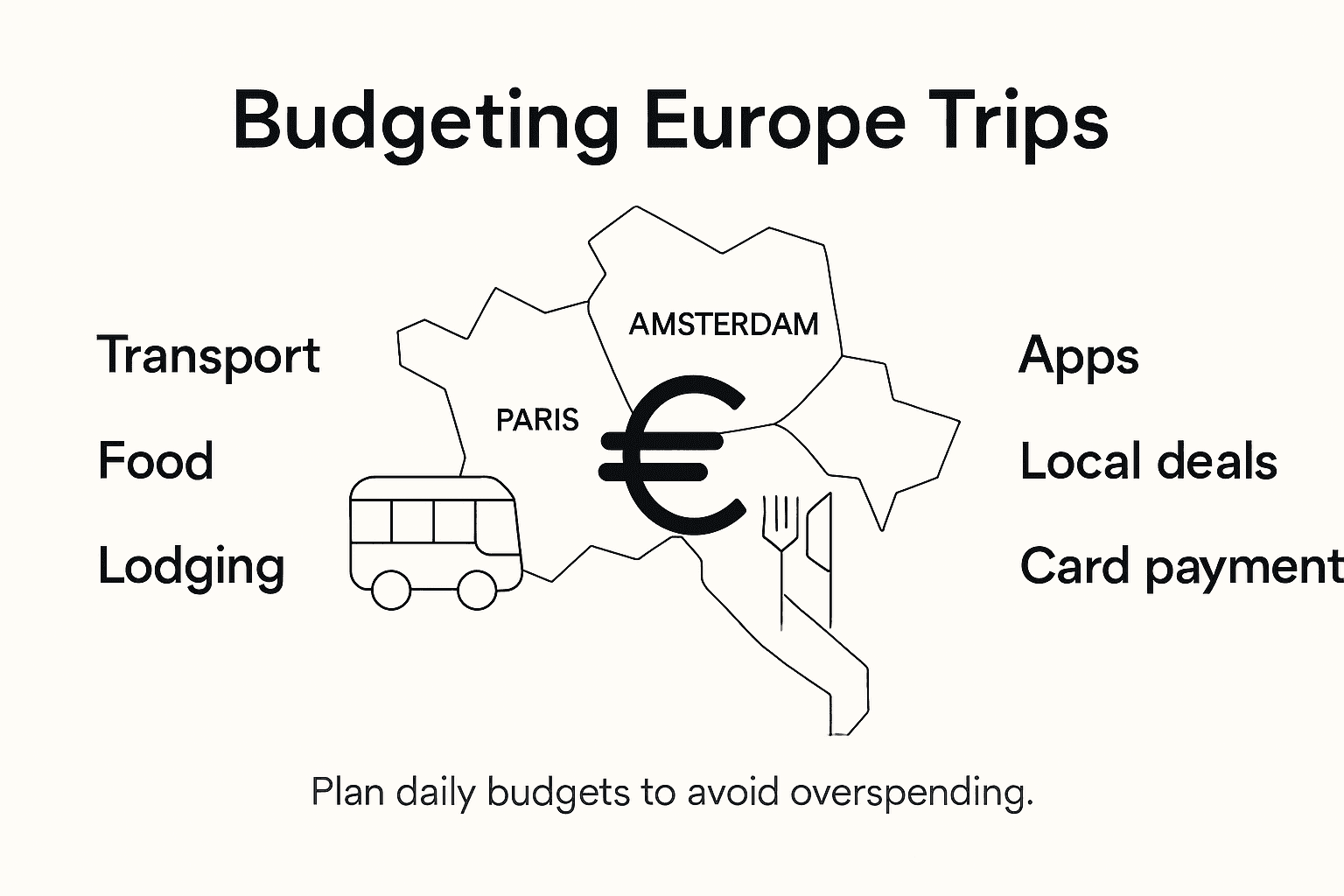
Each European country presents unique financial challenges and opportunities. Switzerland stands out as the most expensive destination, with weekly budgets potentially reaching $2,513, while countries like Russia offer more budget-friendly experiences around $592 per week. Key expense categories include accommodation, local transportation, food, and attraction entry fees. Smart travelers can optimize their budgets by selecting affordable destinations, utilizing public transportation, booking accommodations in advance, and traveling during off-peak seasons.
Digital financial tools and strategic planning can significantly reduce travel expenses. Recommended strategies include purchasing multi-country train passes, using budget airlines, staying in hostels or budget accommodations, and eating at local eateries instead of tourist-oriented restaurants. Currency exchange considerations, including understanding euro usage and potential transaction fees, are also critical for Asian travelers. Credit cards with low international transaction fees, prepaid travel cards, and mobile payment apps can help manage expenses more effectively and securely.
This table highlights spending ranges and budgeting tips for different parts of Europe:
| Region | Typical Daily Budget | Best Cost-Saving Tip |
|---|---|---|
| Western Europe | €120-150+ | Use rail passes and budget airlines |
| Eastern Europe | €50-80 | Choose local eateries and hostels |
| Switzerland | €300+ | Book in advance and buy city cards |
| Southern Europe | €60-100 | Travel off-season for lower expenses |
Pro Tip: Create a detailed daily budget spreadsheet before traveling, allocating specific amounts for transportation, accommodation, food, attractions, and emergency funds to maintain financial control during your European adventure.
Safety, Health, and Common Mistakes
European travel demands careful preparation and awareness, particularly for Asian travelers navigating unfamiliar territories. Common risks involve pickpocketing, scams, and travel-related mishaps, especially in crowded tourist areas, making proactive safety strategies essential. Understanding potential challenges and implementing preventive measures can significantly enhance overall travel security and peace of mind.
Health considerations play a crucial role in successful European travel. Comprehensive travel insurance is non-negotiable, covering potential medical emergencies, trip cancellations, and unexpected health issues. Asian travelers should complete recommended vaccinations, carry necessary medications, and understand local healthcare systems. Important preventive steps include obtaining European Health Insurance Card (EHIC) equivalents, researching local emergency numbers, and carrying copies of critical medical documents.
Preventing common travel mistakes requires strategic planning and cultural awareness. Critical errors Asian travelers often make include neglecting travel insurance, ignoring local customs and laws, and underestimating the importance of securing personal documents. Practical strategies involve using anti-theft bags, keeping digital and physical copies of passports and important documents in separate locations, avoiding displaying expensive electronics or jewelry, and maintaining situational awareness in public spaces. Additionally, understanding local transportation systems, being cautious with street vendors, and respecting regional cultural norms can significantly reduce potential risks.
Pro Tip: Download offline maps, emergency contact apps, and translation tools before departing, ensuring you can navigate and communicate effectively even without consistent internet access.
Tech, Social Trends, and Sustainability
European travel is undergoing a transformative revolution driven by technological innovation and evolving traveler expectations. Next-generation travel trends emphasize sustainability, personalized experiences, and advanced technology integration, reflecting a profound shift in how Asian travelers approach international tourism. Artificial intelligence, virtual reality, and digital platforms are reshaping traditional travel experiences, offering unprecedented levels of customization and engagement.
Sustainability has emerged as a critical consideration for modern travelers, particularly among younger generations seeking meaningful and responsible tourism experiences. European destinations are responding by developing eco-friendly travel options, implementing strategies to reduce overtourism, and investing in renewable energy infrastructure. These initiatives not only minimize environmental impact but also provide travelers with opportunities to engage in transformational travel that combines cultural immersion with ecological consciousness.
Technological advancements are revolutionizing travel planning and management. Digital passes, AI-powered recommendation systems, and real-time translation tools are making international travel more accessible and seamless. Travelers can now access personalized itineraries, instant language support, and immersive cultural experiences through sophisticated mobile applications. These technologies are particularly appealing to tech-savvy Asian travelers who value efficiency, connectivity, and rich, authentic travel experiences that go beyond traditional tourism models.
Pro Tip: Download multi-functional travel apps that combine sustainability tracking, local cultural insights, and real-time translation to maximize your European travel experience.
Unlock Your Perfect European Journey From Asia With Next View Tours
Traveling from Asia to Europe presents exciting opportunities yet comes with challenges like navigating visa requirements, managing diverse itineraries, and balancing budgets while seeking authentic experiences. If you want to transform complex planning into effortless adventure, specialize your trip with experts who understand your unique needs. Whether you dream of exploring iconic landmarks or immersing in local culture, Next View Tours offers customizable options including day trips, adventure tours, and city tours across Europe’s most captivating destinations.
Embark on your journey today by visiting Next View Tours to discover tours tailored for Asian travelers. From private excursions in Vienna to group adventures in Prague, now is the time to secure your spot and unlock seamless travel experiences enhanced by local insights and flexible planning. Start crafting your custom European adventure now and step confidently into the extraordinary.
Frequently Asked Questions
What are the visa requirements for Asian travelers visiting Europe?
Asian travelers typically need a Schengen visa for stays up to 90 days within any 180-day period. This requires submitting documentation to the relevant embassy or consulate, including a valid passport and proof of travel arrangements.
How can Asian travelers budget effectively for a trip to Europe?
Travelers should expect daily budgets to vary significantly across Europe. On average, it can range from €50 in Eastern Europe to over €150 in Western Europe. To save on costs, consider using public transportation, booking accommodations ahead of time, and eating at local eateries.
What are some common safety tips for Asian travelers in Europe?
To ensure safety, travelers should stay vigilant in crowded areas, use anti-theft bags, and keep digital and physical copies of important documents. Additionally, having comprehensive travel insurance is crucial for peace of mind during the trip.
How does the European Travel Information and Authorisation System (ETIAS) affect entry for Asian travelers?
Starting in late 2026, ETIAS will require visa-exempt travelers to complete an online application and obtain approval before entering the Schengen area. This new system enhances security and streamlines entry processes for legitimate travelers.
Recommended
- Home City Tour – Next View Tours
- Home Worldwide – Next View Tours
- Travel Smart: Essential Tips for Affordable Adventures Around the Globe – PilotTravelDeals.com
- Complete Guide to Custom Tours: Key Features and Types – Spectrum Ethiopia Tours
- Understanding Why Customized Itineraries Matter | Trinity Concierge


Comments are closed