

 Adventure Tours
Over half of American travelers now seek more than just sightseeing tours, craving authentic, adventure-filled experiences that offer real personal growth. With the rise of adventure tourism, myths about needing elite fitness or extreme survival skills still leave many feeling unsure about what to expect. This guide unpacks the details, debunks common misconceptions, and reveals how adventure tours in Europe and beyond deliver memorable journeys for all kinds of explorers.
Table of Contents
- Defining Adventure Tours And Common Myths
- Types Of Adventure Tours Across Europe
- Key Elements Of The Adventure Tour Experience
- How Adventure Tours Differ From Standard Travel
- Risks, Safety, And Choosing The Right Tour
Key Takeaways
| Point | Details |
|---|---|
| Adventure Tours Offer Transformative Experiences | These tours challenge personal boundaries and provide opportunities for meaningful cultural engagement and self-discovery. |
| Research is Essential | Thoroughly evaluate tour difficulty levels, operator credentials, and safety procedures to ensure a safe and enjoyable experience. |
| Diverse Options for All Skills | Adventure tours cater to varying fitness levels and interests, making them accessible to travelers of all ages and abilities. |
| Personal Preparedness is Key | Travelers should conduct personal risk assessments and disclose any physical limitations to tour operators before booking. |
Defining Adventure Tours and Common Myths
An adventure tour represents more than just a simple vacation. It’s an immersive travel experience designed to challenge personal boundaries, connect travelers with unique environments, and create transformative memories. Unlike traditional tourism, adventure tours push participants beyond their comfort zones through physically engaging, culturally rich, and often unpredictable journeys.
Modern adventure tourism challenges several persistent myths about travel experiences. Travelers often idealize adventure tourism through romanticized narratives, creating expectations that don’t always match reality. Some common misconceptions include believing adventure tours are exclusively for young, extremely athletic individuals or that they require extensive survival skills. In truth, adventure tours come in diverse difficulty levels, catering to various physical capabilities and interests.
The essence of adventure tours lies in their ability to provide authentic, meaningful experiences. These journeys are not about conquering extreme terrain but about personal growth, cultural understanding, and creating lasting connections with new environments. Whether exploring remote landscapes, engaging with local communities, or challenging personal limitations, adventure tours offer participants a chance to expand their perspectives and develop deeper self-awareness.
Pro Tip for Adventure Travelers: Research tour difficulty levels thoroughly and choose experiences that match your physical fitness and comfort zone, ensuring an enjoyable and safe adventure.
Types of Adventure Tours Across Europe
Europe offers an extraordinary range of adventure tour experiences that cater to diverse interests and skill levels. These tours span multiple terrains and activity types, providing travelers with immersive opportunities to explore the continent’s rich landscapes and cultural diversity. From cycling routes to mountain expeditions, European adventure tours represent a dynamic spectrum of exploration and personal challenge.
Cycling enthusiasts can discover incredible opportunities through extensive bicycle touring networks like EuroVelo, which features 17 long-distance cycling routes crisscrossing the continent. These routes enable travelers to experience European landscapes from a unique perspective, ranging from coastal paths in Portugal to mountain trails in the Alps. Mountain lovers can enjoy protected climbing routes called via ferrata, which combine hiking and climbing experiences across various European mountain ranges, offering structured yet adventurous pathways for intermediate and advanced outdoor enthusiasts.
Adventure tours in Europe can be categorized into several distinct types, including active exploration, cultural immersion, wilderness expeditions, and specialized activity tours. Each category offers unique experiences: active exploration might involve hiking through the Scottish Highlands, cultural immersion could mean trekking ancient pilgrimage routes in Spain, wilderness expeditions could include Arctic exploration in Scandinavia, and specialized tours might focus on activities like rock climbing in Greece or sea kayaking along Croatian coastlines. Multi day trips provide travelers with comprehensive experiences that allow deeper engagement with destinations and activities.
The diversity of European adventure tours means there’s an experience for every traveler, regardless of age, fitness level, or previous outdoor experience. Modern tour operators design experiences that balance challenge, safety, and personal growth, ensuring participants can push their boundaries while enjoying professionally managed and supportive environments.
Pro Tip for Adventure Planners: Research tour difficulty ratings and physical requirements carefully, selecting experiences that match your skill level and personal comfort to maximize enjoyment and safety.
Key Elements of the Adventure Tour Experience
The adventure tour experience transcends traditional travel by integrating multiple dynamic components that transform a simple trip into a profound personal journey. These tours are carefully designed to challenge participants physically, mentally, and emotionally, creating opportunities for significant personal growth and transformative experiences.

Research on adventurous practices reveals critical influences on individual and societal development, highlighting several key elements that define adventure tourism. These elements include intentional risk management, skill development, cultural immersion, and personal challenge. Travelers engage in experiences that push their boundaries while maintaining structured safety protocols, allowing for meaningful exploration without compromising personal well-being. Advanced mobility pattern analysis demonstrates how participants interact with different environments, emphasizing the importance of spatial awareness and adaptive skills during adventure experiences.
Adventure tours typically incorporate several core components that distinguish them from conventional travel experiences. These components include:
- Physical engagement and skill-based activities
- Cultural interaction and local community connection
- Environmental consciousness and sustainability
- Personal development and self-discovery
- Structured yet flexible itineraries that allow spontaneity
Modern adventure tours recognize that transformative experiences emerge not just from challenging activities but from the holistic approach to travel that encourages personal reflection, cultural understanding, and sustainable interaction with new environments. The European Summer Tours guide emphasizes the importance of creating meaningful connections between travelers, local communities, and unique landscapes.
Pro Tip for Adventure Seekers: Approach each adventure tour with an open mind and willingness to step outside your comfort zone, understanding that personal growth happens when you embrace uncertainty and challenge.
How Adventure Tours Differ From Standard Travel
Adventure tours represent a radical departure from traditional travel experiences, offering travelers a more immersive, purposeful, and transformative approach to exploring new destinations. Unlike standard tourism, which often focuses on passive sightseeing and surface-level interactions, adventure tours are designed to engage participants deeply with their environment, local cultures, and personal growth potential.
Modern guided travel has evolved far beyond traditional tour models, challenging longstanding misconceptions about structured travel experiences. Where standard travel typically involves predetermined itineraries and minimal interaction, adventure tours prioritize flexibility, meaningful cultural engagement, and personalized experiences. Key differences include:
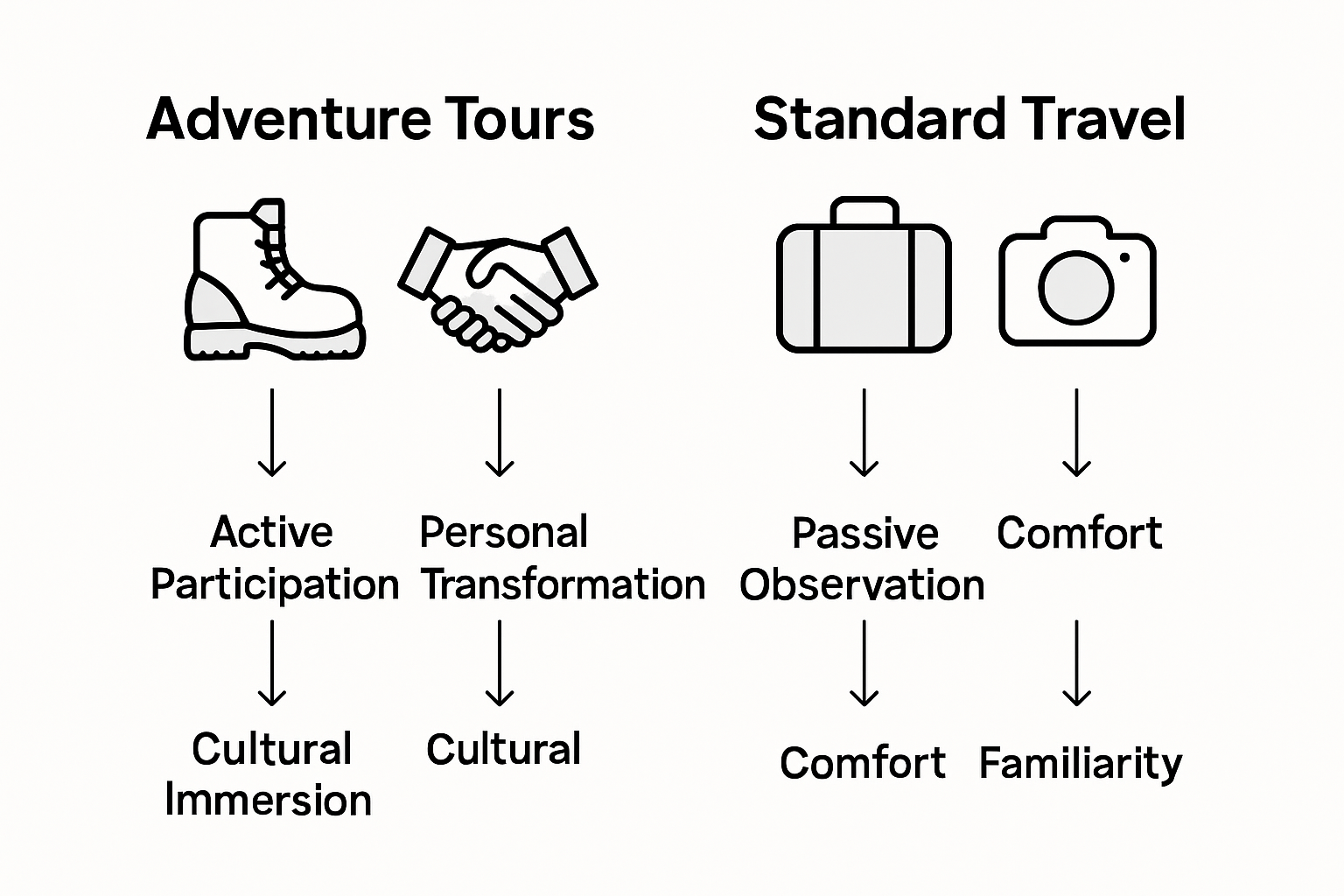
- Active participation versus passive observation
- Deep cultural immersion instead of superficial interactions
- Emphasis on personal challenge and skill development
- Sustainable and responsible travel practices
- Customized experiences tailored to individual interests
Urban experiences and adventure-based day trips have created new competition in the tourism market, highlighting the growing demand for more dynamic travel options. Adventure tours distinguish themselves through unique activities like hiking, cycling, ecological exploration, and community-based experiences that go beyond traditional tourist paths. City tours represent just one facet of this evolving travel landscape, with adventure tours offering more comprehensive and transformative journeys.
The fundamental philosophy of adventure tours centers on personal transformation, learning, and genuine connection. Unlike standard travel, which often treats destinations as mere backdrops for photographs, adventure tours view locations as living, breathing ecosystems with complex cultural and environmental narratives. Participants become active explorers, not passive consumers, creating meaningful memories that extend far beyond typical vacation experiences.
Here’s a concise overview of how adventure tours compare to standard travel:
| Aspect | Adventure Tours | Standard Travel |
|---|---|---|
| Participation Level | Active engagement in activities | Primarily passive sightseeing |
| Interaction With Locals | Frequent, immersive interaction | Limited or surface-level |
| Flexibility | Itineraries often flexible | Fixed schedules, less adaptable |
| Personal Growth | Focus on self-discovery and challenge | Minimal emphasis on self-growth |
Pro Tip for Adventurous Travelers: Prioritize tours that offer genuine cultural interaction and skill-building opportunities over those promising mere scenic views or superficial experiences.
Risks, Safety, and Choosing the Right Tour
Adventure tours demand careful consideration of potential risks and comprehensive safety strategies. Unlike standard vacations, these experiences require travelers to actively engage in personal risk assessment and make informed decisions about their physical and emotional preparedness for unique challenges.
Sustainable adventure travel practices emphasize critical safety protocols and environmental consciousness, providing travelers with comprehensive frameworks for selecting appropriate tours. Effective risk management involves several key strategies:
- Thoroughly researching tour operator credentials
- Understanding personal physical limitations
- Checking comprehensive insurance coverage
- Reviewing detailed tour difficulty ratings
- Assessing equipment and guide qualifications
Tourism diversification strategies reveal important insights into managing adventure travel risks, particularly in environments susceptible to global changes. Tour selection requires careful evaluation of multiple factors beyond basic itinerary descriptions. Critical considerations include guide expertise, group size, emergency response capabilities, and alignment with individual skill levels. Worldwide tour options offer varying difficulty levels and safety approaches, making comprehensive research essential.
Safety in adventure tourism extends beyond physical preparation, encompassing mental readiness, cultural awareness, and responsible travel practices. Professional adventure tour operators prioritize participant safety through rigorous training, advanced equipment standards, and continuous risk assessment. Understanding personal boundaries, maintaining open communication with guides, and staying mentally adaptable are crucial components of a successful and secure adventure experience.
The following table summarizes key factors to consider when choosing an adventure tour:
| Factor | Why It Matters | What To Check |
|---|---|---|
| Operator Credentials | Ensures reliability and safety | Certifications, reviews, industry affiliation |
| Physical Requirements | Matches your fitness level to the tour demands | Difficulty rating, required endurance |
| Safety Procedures | Minimizes risks during activities | Emergency plans, equipment standards |
| Cultural Sensitivity | Promotes respectful interaction with locals | Guide background, local partnerships |
Pro Tip for Adventure Safety: Always disclose your complete medical history and physical limitations to tour operators before booking, ensuring they can provide appropriate accommodations and safety recommendations.
Embrace Real Adventure and Lasting Impact with Next View Tours
Adventure tours are about stepping beyond passive sightseeing to experience true personal growth, cultural immersion, and thrilling challenges. If you seek to break free from routine travel and discover meaningful journeys across Europe, our Adventure Tours – Next View Tours offer exactly this. Designed to match your fitness level and curiosity, these tours connect you deeply with landscapes and local cultures while ensuring your safety and enjoyment.
Take action now to transform your travel into lasting memories with expertly guided day trips and multi day trips throughout iconic European destinations like Vienna, Salzburg, Prague, and beyond. Dive into authentic experiences crafted for all types of travelers at Next View Tours. Explore how adventure tours differ from standard trips by checking out our City Tour – Next View Tours for a blend of cultural engagement and active exploration. Start your journey today and embrace the adventure that changes more than just your itinerary.
Frequently Asked Questions
What defines an adventure tour?
An adventure tour is an immersive travel experience that challenges personal boundaries, encourages cultural connections, and offers opportunities for meaningful growth through physically engaging activities.
Are adventure tours only for young or athletic individuals?
No, adventure tours cater to a wide range of interests and fitness levels. They come in various difficulty levels, ensuring experiences are accessible to diverse participants.
How are adventure tours different from standard travel experiences?
Adventure tours focus on active participation, deep cultural immersion, and personal growth, unlike standard travel, which often emphasizes passive sightseeing and superficial interactions.
What should I consider when choosing an adventure tour?
Consider factors such as the operator’s credentials, physical requirements of the tour, safety procedures in place, and cultural sensitivity to ensure a safe and enjoyable experience.


Comments are closed