
 Adventure Tours
Booking a winter tour often triggers doubts about cost, flexibility, or authenticity—especially for travelers who want more than just a checklist of sights. The reality is that modern winter tours across Europe combine cultural immersion, customizable itineraries, and transparent pricing that appeals to adventurous explorers seeking both memorable experiences and value. This guide cuts through common myths and explores how today’s winter tours offer affordable group options, genuine local encounters, and access to unique cold-weather activities that solo travelers rarely find.
Table of Contents
- Winter Tours Defined And Common Misconceptions
- Types Of Winter Tours Across Europe
- Unique Experiences Only Winter Tours Offer
- How Group And Custom Winter Tours Work
- Costs, Savings, And Common Mistakes
Key Takeaways
| Point | Details |
|---|---|
| Winter tours offer diverse experiences tailored for colder months. | These tours combine guided exploration and cultural immersion, allowing travelers to engage authentically with seasonal landscapes and local traditions. |
| Common misconceptions about winter tours should be corrected. | Many believe these tours lack flexibility and drain budgets, but contemporary options provide customizable itineraries and cost-effective packages. |
| Different winter tour types cater to various interests. | From alpine adventures to cultural city breaks and wellness retreats, understanding your preferences helps in selecting the right tour. |
| Economic advantages of winter tours can be significant. | Winter tours often cost 30-50% less than summer equivalents, particularly when utilizing group pricing and off-peak accommodations. |
Winter Tours Defined And Common Misconceptions
Winter tours are organized travel experiences specifically designed for the cold-weather season, typically running from November through March across Europe. Unlike generic “winter getaways,” these structured experiences combine guided exploration, cultural immersion, and adventure activities tailored to snowy and alpine conditions. From winter tours explained across Europe to multi-day expeditions, winter tours cater to travelers seeking authentic engagement with seasonal landscapes, local traditions, and unique outdoor pursuits. The definition extends beyond simple sightseeing; it encompasses comprehensive packages that handle logistics, safety, expertise, and access to destinations that would otherwise challenge solo winter travelers.
The reality of modern winter tours contradicts what many European and UK travelers assume. One persistent myth suggests that guided winter tours lock you into rigid itineraries with zero flexibility. This misconception stems from outdated travel practices that no longer reflect how tours operate today. Common misconceptions about guided tours reveal that contemporary winter tours actually offer customized options, space for personal exploration, and itineraries that adapt to weather conditions and group interests. You’re not marched through predetermined stops like a museum tour from decades past. Instead, expert guides build in flexible exploration time, suggest optional activities based on your preferences, and adjust plans when conditions warrant changes.
Another widespread misconception claims winter tours drain your budget far more than independent travel. The assumption goes like this: paying for a guided experience automatically means premium pricing with little value. The opposite rings true. Winter tours bundle accommodations, transportation between cities, expert guides, entrance fees, and safety equipment into transparent pricing that eliminates hidden costs. When you calculate what solo winter travel requires, including heated accommodation in peak season, ground transport between towns, navigating language barriers, securing winter-appropriate guides, and purchasing specialized equipment, the economics shift dramatically. Group winter tours spread costs across participants while providing professional expertise you cannot replicate alone. Travelers aged 25-45 often discover that mid-range winter tour pricing delivers better value than assembling equivalent experiences independently.
A third myth suggests winter tours lack authentic cultural experiences, relegating you to tourist traps instead of genuine local engagement. Modern winter tours, particularly those operating from Vienna, Salzburg, Prague, and Budapest, specifically design cultural components around seasonal traditions, local festivals, and authentic community interactions that tourists traveling solo rarely access. You participate in winter markets run by local vendors, learn traditional holiday crafts from artisans, enjoy meals at neighborhood restaurants beyond guidebook recommendations, and connect with locals who share their winter perspectives. Winter itself creates natural opportunities for cultural depth because fewer international tourists compete for attention, allowing you to experience communities as they actually function during the quiet season.
Pro tip: When evaluating a winter tour, request the itinerary breakdown showing specific activities, guide credentials, included meals, and what constitutes “flexible time”—this reveals whether the operator builds in real personalization or simply uses the term as marketing language.
Types Of Winter Tours Across Europe
Winter tours across Europe splinter into distinct categories, each delivering different experiences depending on your interests, fitness level, and travel style. Understanding these types helps you select the right fit for your goals and preferences. The landscape ranges from cultural city explorations to high-altitude alpine adventures, from cozy retreat packages to active outdoor expeditions. Each type attracts different traveler personalities within the 25-45 age range, so knowing what separates one category from another prevents booking disappointment.
Alpine and Mountain Adventure Tours dominate the winter tour market across Austria, Switzerland, and the Czech Republic. These experiences center on snow-based activities like skiing, snowboarding, snowshoeing, and mountaineering in destinations such as the Austrian Alps near Salzburg or the Tatra Mountains in Slovakia. Alpine tours typically include professional guides trained in winter safety, equipment rental, and structured daily activities that build skills progressively. You might start with gentle valley snowshoeing, then progress to more technical alpine routes as your confidence grows. These tours appeal to adventurers seeking physical challenge and natural landscapes, though many operators offer beginner-friendly options alongside advanced routes. The beauty of structured alpine tours lies in safety expertise and access to terrain that solo travelers cannot navigate independently during winter conditions.

Cultural and City Break Winter Tours cater to those drawn to Europe’s historic centers during the quiet season. Cities like Vienna, Prague, Budapest, and Salzburg transform in winter with Christmas markets, holiday decorations, and reduced tourist crowds that reveal authentic local culture. These tours typically feature walking explorations of historic quarters, museum visits with knowledgeable guides, participation in seasonal traditions, and meals at neighborhood restaurants. Many include overnight stays in central locations, eliminating hotel hunting stress and allowing you to explore on foot. Top winter tour options across Europe showcase how heavily cultural tours emphasize human connection and historical depth rather than physical exertion. A typical day involves 2-3 hours of guided walking, museum time, and unstructured exploration where your guide suggests neighborhoods worth discovering independently.
Wellness and Retreat Winter Tours focus on relaxation, rejuvenation, and mental restoration during darker months. These packages typically base you in spa towns or mountain lodges where activities balance gentle movement with restorative practices. You might participate in yoga sessions, thermal spring bathing, meditation, nutrition-focused cooking classes, or forest therapy walks. Hungary’s thermal spas serve as popular hubs for these tours, offering natural geothermal waters combined with modern spa facilities. Wellness tours appeal to travelers seeking stress reduction without adventure risk, making them increasingly popular among professionals working demanding jobs during the year.
Multi-Activity Combination Tours blend different experience types within single packages. A week might include two days exploring Prague’s cultural sites, two days skiing in nearby mountains, and two days relaxing in thermal baths. These hybrid tours suit travelers uncertain about pure adventure or pure culture, allowing you to sample multiple winter travel styles. They work particularly well for couples with varying interests or groups with mixed preferences.
Active Group Tours emphasize community and social engagement alongside outdoor pursuits. Unlike solo or private expeditions, these tours intentionally build group dynamics through shared experiences, group meals, and collaborative challenges. Cross-country skiing expeditions through Scandinavian forests, snowmobile safaris across Icelandic terrain, or group hiking in winter wonderland settings all foster camaraderie. The social component often becomes as valuable as the activity itself, with many participants forming lasting friendships through shared winter adventures.
Each tour type operates year-round from major European gateways. Pricing varies dramatically based on activity intensity, accommodation standards, and included services. Alpine adventure tours command premium pricing due to specialized equipment and guide training, while cultural city tours often offer better value through efficient city-based logistics. European tour benefits span across all types, from safety and logistical convenience to expert knowledge and group dynamics unavailable in independent travel.
Here’s a quick comparison of winter tour types, focusing on their target audience, main features, and typical experiences:
| Tour Type | Ideal For | Main Features | Typical Experience |
|---|---|---|---|
| Alpine & Mountain Adventure | Active travelers | Skill development, guides, equipment | Skiing, snowshoeing, advanced hikes |
| Cultural & City Break | History lovers | Walking tours, museum access, food | City markets, guided explorations |
| Wellness & Retreat | Wellness seekers | Spa visits, meditation, relaxation | Thermal spas, yoga, nutrition classes |
| Multi-Activity Combo | Variety seekers | Mixed activities, balanced schedule | Cultural sites, skiing, spa days |
| Active Group | Social explorers | Group challenges, camaraderie | Team hikes, snowmobile expeditions |
Pro tip: Match your winter tour type to your current fitness level and stress tolerance rather than aspirational abilities, as misalignment between tour difficulty and your capacity creates frustration instead of enjoyment.
Unique Experiences Only Winter Tours Offer
Winter transforms European landscapes into settings that simply don’t exist during other seasons, creating opportunities for experiences impossible to replicate in summer or fall. These aren’t watered-down versions of regular tours adjusted for cold weather. Instead, winter tours unlock entirely different dimensions of European culture, nature, and adventure that solo travelers struggle to access independently. The seasonal shift fundamentally changes what you can see, do, and discover across the continent.
One defining characteristic of winter tours is access to winter-specific activities like snowmobiling, ice climbing, and nocturnal northern lights expeditions that don’t occur outside the cold season. Snowmobiling across Scandinavian wilderness provides speed and coverage that walking or hiking cannot match, allowing you to traverse vast snowy territories in single days. Ice climbing on frozen waterfalls in Austria or the Czech Republic demands seasonal conditions and specialized expertise that tour guides provide. Northern lights viewing in winter months offers genuine astronomical phenomena tied directly to seasonal darkness and atmospheric conditions. These activities demand professional guides trained specifically for winter conditions, equipment designed for extreme cold, and itineraries built around seasonal opportunities. Solo travelers attempting these activities face significant safety risks, equipment costs, and logistical complexity that organized winter tours eliminate entirely.
Cultural winter experiences carry equal weight to outdoor adventures. European cities and towns celebrate winter traditions that vanish once the season ends. Christmas markets transform central European squares from November through December with handcrafted goods, regional foods, mulled wine, and authentic local vendor interactions. These markets operate on fixed seasonal calendars, so visiting during other seasons means missing them entirely. Winter festivals in Austria, Czech Republic, and Hungary blend centuries-old traditions with contemporary celebrations, creating cultural moments that winter tour participants witness alongside locals rather than as isolated tourists. You participate in holiday baking traditions at local homes, attend seasonal concerts in historic churches, and join community celebrations that summer visitors never encounter. Winter tour guides leverage their local knowledge to position you within these celebrations authentically rather than as external observers watching from distance.
Accommodation options unique to winter deserve specific attention. Ice hotels in Scandinavian regions literally construct rooms from frozen water and ice, offering stays impossible any other season. These specialized facilities combine novelty with authentic winter immersion, as sleeping in subzero temperatures designed facilities creates visceral winter memories. Other winter-specific lodgings include mountain lodges with fireplaces and thermal spa access, creating cozy bases for alpine exploration. Traditional winter chalets in the Austrian Alps provide authentic alpine village stays with local hosts, hearty regional meals, and community integration unavailable through standard hotel bookings. These accommodations transform winter tours beyond activity itineraries into complete sensory experiences.
Wildlife encounters shift dramatically in winter. Animal behavior changes seasonally, and winter tours position you to observe species-specific seasonal patterns. Winter bird migrations, hibernation behaviors, and adaptation strategies become observable phenomena that guides explain through expert knowledge. Guided snowshoe walks through silent forests reveal animal tracks, feeding signs, and evidence of survival strategies that naturalists appreciate. Alpine wildlife viewing changes completely when snow covers lower elevations, pushing animals into observable ranges and altering their behavioral patterns.
The absence of peak-season tourist crowds fundamentally changes experience quality during winter. European cities receive perhaps 20-30 percent of summer visitor volumes, meaning shorter lines at museums, more spacious restaurant experiences, and genuine interactions with locals unaccustomed to constant tourist attention. This shift allows winter tour participants to experience European culture as it operates year-round rather than in its summer tourism performance mode. Museums hire multilingual guides specifically for winter visitor groups, often providing deeper educational experiences than summer tours hampered by constant crowd management.
Pro tip: Book winter tours with operators offering seasonal expertise rather than general tour companies, as winter-specific guides understand regional seasonal variations, maintain winter safety certifications, and know which experiences genuinely require winter season versus which simply operate year-round.
How Group And Custom Winter Tours Work
Group and custom winter tours operate differently from standard packaged tours, offering flexibility tailored to your specific interests while maintaining the logistical support that makes winter travel stress-free. Understanding how these two approaches function helps you choose which structure best matches your travel goals, group composition, and budget constraints. Both models eliminate the friction points that plague solo winter travelers, but they achieve this through different organizational structures.
How Group Winter Tours Function
Group winter tours gather multiple independent travelers into organized cohorts, typically ranging from eight to thirty participants. These standardized itineraries run on fixed dates and follow predetermined routes across popular winter destinations like Vienna, Salzburg, Prague, and Budapest. The advantage lies in cost efficiency. By consolidating accommodation bookings, transportation, and guide services across multiple participants, group tours distribute expenses that would devastate solo travelers. Winter group tours typically operate year-round with scheduled departures, meaning you book into existing groups rather than waiting for custom departures.
How group tours work involves a structured hierarchy where professional expedition leaders coordinate logistics, manage group dynamics, and provide expertise throughout the journey. These leaders possess winter-specific training, local destination knowledge, and crisis management experience essential for cold-weather travel. Your daily schedule includes guided activities, group meals, transportation between destinations, and allocated free time for personal exploration. Pricing remains transparent and all-inclusive, covering accommodation, most meals, professional guides, entrance fees, and specialized equipment like snowshoes or ice climbing gear. Hidden costs disappear because operators build everything into advertised pricing.
Group tours deliver unexpected social benefits. Traveling with eight to twenty like-minded adventurers creates friendships, shared experiences, and built-in companionship that solo travelers struggle to achieve. Many participants report that group camaraderie becomes as valuable as the actual activities. You share meals, navigate challenges together, and create collective memories that solo travel cannot replicate. For travelers aged 25-45 seeking both adventure and community, group dynamics often exceed expectations.
How Custom Winter Tours Function
Custom winter tours take an entirely different approach, building itineraries collaboratively between you and travel professionals based on your specific objectives, preferences, and constraints. Rather than fitting into predetermined group structures, custom tours adapt to your vision. This flexibility comes at higher cost, but it eliminates compromise.
The customization process begins with detailed consultation. Travel professionals ask penetrating questions about your interests, fitness level, budget parameters, travel dates, group size, and must-see experiences. They understand regional winter conditions, seasonal availability of activities, and which experiences require specific timing. This collaborative planning ensures itineraries align perfectly with reality rather than aspirational preferences. If your group includes varying fitness levels, custom tours build in activities suitable for everyone simultaneously. If you want to spend extra time exploring Prague’s Old Town instead of rushing to the next destination, custom itineraries accommodate this without compromising other planned experiences.
Custom tour planning emphasizes safety, cultural authenticity, and logistical precision throughout the journey. Providers hold professional accreditations, maintain insurance coverage appropriate for winter travel, and offer 24-hour in-country support for emergencies or changing conditions. Custom tours include all-inclusive pricing with premium accommodations, comprehensive meals, professional transportation, expert guides, and specialized equipment included without hidden fees. Some custom tours assign dedicated expedition leaders who remain with your group throughout, providing continuity and deepening relationships that rotating guides cannot achieve.
Custom tours accommodate niche interests that group tours cannot serve. If your group wants to combine wildlife photography with alpine hiking and cultural immersion, custom itineraries weave these elements together. If you prefer small-group experiences with fewer than eight participants, custom tours eliminate the gregarious group dynamic that some travelers find overwhelming. Families with children, groups with accessibility requirements, or teams seeking corporate retreat experiences all benefit from customization.
Key Operational Differences
- Flexibility: Group tours follow fixed schedules and routes. Custom tours adapt to your preferences and constraints.
- Cost: Group tours offer budget-friendly pricing through shared expenses. Custom tours cost more but eliminate compromise.
- Timing: Group tours operate on set departure dates. Custom tours depart whenever you need them.
- Group Size: Group tours accommodate 8-30 participants. Custom tours work with any group size from two to hundreds.
- Personalization: Group tours provide standard itineraries with minimal adjustments. Custom tours reflect your exact vision.
Both models provide professional expertise, comprehensive logistics, safety assurances, and transparent pricing that independent winter travel cannot match. Your choice depends on whether you prioritize cost savings and community (group tours) or flexibility and personalization (custom tours).
Pro tip: Request detailed itineraries before committing to either group or custom tours, including daily schedules, included activities, guide credentials, accommodation details, and contingency plans for weather disruptions.
Costs, Savings, And Common Mistakes
Winter tour pricing surprises most travelers accustomed to summer travel rates. The good news: winter tours often cost substantially less than summer equivalents. The catch: hidden expenses and poor financial decisions can erase those savings entirely, transforming budget-conscious trips into budget-draining disasters. Understanding winter tour economics prevents expensive mistakes while maximizing the genuine value these experiences deliver.
Understanding Winter Tour Pricing
Winter tours typically cost 30 to 50 percent less than identical summer itineraries because accommodation prices drop dramatically during off-season months. Hotels, mountain lodges, and specialized accommodations reduce rates significantly when tourist demand plummets. Group tours amplify these savings through economies of scale. When operators consolidate eight to thirty participants into single bookings, they negotiate hotel rates, restaurant pricing, and transportation costs that individuals cannot access independently. All-inclusive pricing eliminates the constant small decisions that drain solo traveler budgets. A group tour advertised at 1,200 euros per person already includes accommodation, most meals, professional guides, entrance fees, and specialized equipment. Compare this to solo travel requiring separate bookings for each element, and the mathematical advantage becomes obvious.
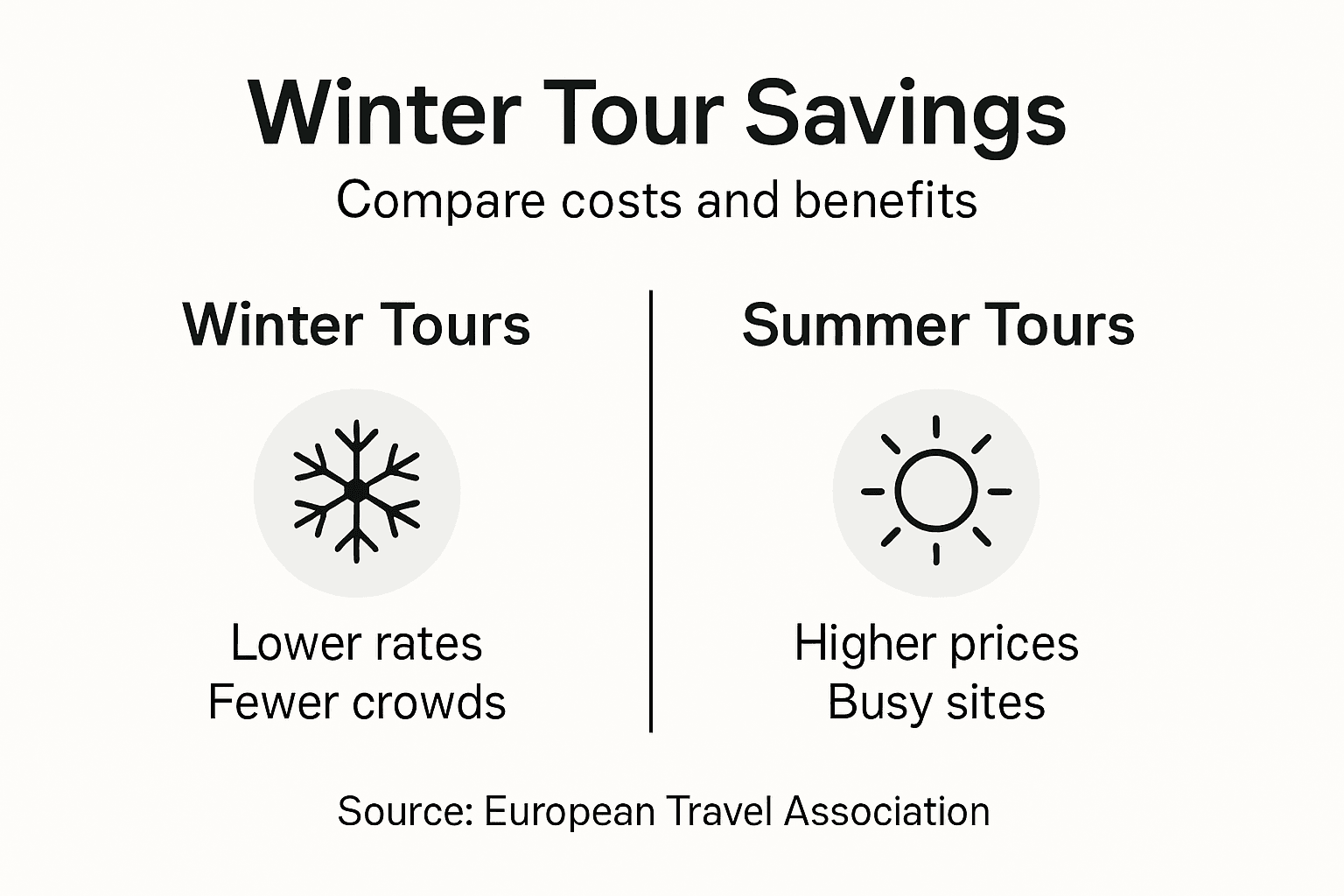
Yet pricing structures vary significantly between operators and tour types. Budget group tours sacrifice premium accommodations for lower prices. Mid-range operators balance comfort and cost effectively. Luxury tours prioritize comfort and exclusive experiences at premium pricing. Custom tours cost more upfront but eliminate compromise on specific interests. Understanding your priorities before comparing prices prevents regrettable booking decisions.
Common Costly Mistakes
Travelers make predictable financial errors that transform budget-friendly winter tours into surprisingly expensive experiences. One widespread mistake involves currency exchange decisions. Common winter travel mistakes reveal that exchanging currency at airport kiosks where rates are abysmal, paying in your home currency abroad resulting in unfavorable dynamic conversions, and withdrawing cash from resort ATMs charging excessive fees all destroy budgets systematically. A traveler exchanging 500 euros at a poor airport rate loses 40 to 60 euros immediately. Resort ATMs charging 5 to 8 euro per withdrawal add up quickly when you need cash frequently. Instead, exchange currency before traveling at competitive rates, use bank ATMs in city centers where fees remain reasonable, and pay in local currency whenever possible.
Another critical mistake involves underestimating weather-appropriate gear costs. Travelers arrive underprepared, then purchase expensive thermal layers, winter boots, and insulated jackets at inflated resort prices. Winter tour operators include basic specialized equipment, but expecting them to provide premium-quality personal gear proves unrealistic. Arriving with proper cold-weather clothing purchased before departure saves hundreds of euros and ensures comfort simultaneously.
Travel insurance represents another area where travelers cut corners shortsightedly. Winter conditions create weather delays, injury risks, and health complications that standard travel insurance excludes. Comprehensive winter-specific insurance costs extra, but claims experience reveals it saves money when weather disrupts flights or injuries require emergency evacuation. The mistake isn’t paying for insurance but purchasing inadequate coverage.
Maximizing Winter Tour Savings
Strategic decisions compound savings significantly. Booking early during shoulder seasons (November or early March) rather than peak holidays (December 22 to January 2) reduces costs by 20 to 35 percent. Tour operators price peak holiday travel at maximum rates because demand exceeds supply. Booking during adjacent periods when weather remains excellent but prices drop substantially represents smart financial strategy.
Selecting lesser-known destinations instead of famous tourist centers delivers enormous savings without sacrificing experience quality. Prague costs substantially less than Vienna. Smaller Slovak mountain towns offer alpine experiences at half Salzburg prices. Hungarian thermal spas cost less than Austrian equivalents while delivering comparable wellness benefits. Experienced European travelers know that authentic cultural experiences often hide in secondary destinations where commercial tourism infrastructure remains underdeveloped.
Group tours consistently deliver better value than private or semi-private alternatives. Winter tour value optimization emphasizes how group tours provide economies of scale through shared accommodation costs, negotiated meal pricing, and divided guide expenses. A private guide charging 100 euros hourly costs 5 euros per person in a twenty-person group. Shared accommodation reduces per-person lodging costs substantially. Group meals at negotiated restaurant rates cost less than individual dining.
Budget Breakdown Realities
Typical winter tour costs break down as follows:
To help you budget effectively, here is a summary of how winter tour expenses are typically allocated:
| Expense Category | Percentage Range | Notable Impact |
|---|---|---|
| Accommodation | 30–40% | Largest single cost driver |
| Meals | 15–25% | Local dining included sometimes |
| Guides & Activities | 20–30% | Covers expert-led experiences |
| Transportation | 10–15% | Includes transfers and shuttles |
| Equipment Rental | 5–10% | Specialized winter gear provided |
- Accommodation: 30 to 40 percent of total cost
- Meals: 15 to 25 percent
- Professional guides and activities: 20 to 30 percent
- Transportation between destinations: 10 to 15 percent
- Specialized equipment rental: 5 to 10 percent
All-inclusive tours embed these percentages into advertised pricing, meaning no surprises emerge mid-trip. Independent travelers often underestimate meal and accommodation costs, discovering too late that their budget proves insufficient.
Pro tip: Budget an additional 10 to 15 percent beyond advertised tour costs for personal expenses like tips, souvenirs, and optional activities not included in base pricing.
Discover the Ultimate Winter Tour Experience with Next View Tours
Winter tours offer incredible adventure, authentic cultural moments, and significant savings yet planning such excursions often feels overwhelming. You want expert guidance that understands winter conditions and flexible itineraries that match your fitness and interests. Next View Tours specializes in providing exactly that with professionally guided Adventure Tours and customizable trip options across Europe. With these trips, you avoid common winter travel pitfalls while unlocking exclusive activities like alpine skiing, holiday market visits, and spa retreats.

Ready to embrace unforgettable winter landscapes and seasonal traditions without the stress and hidden costs? Visit Next View Tours now to explore our winter tour offerings in Austria, Prague, Budapest, and beyond. Whether seeking thrilling mountain adventures or culturally rich city breaks, booking early gives you the best choice and pricing. Start your customized journey today and experience winter travel done right.
Frequently Asked Questions
What are winter tours and what do they offer?
Winter tours are structured travel experiences designed specifically for the cold-weather season. They offer guided exploration, cultural immersion, and adventure activities tailored to snowy conditions, providing comprehensive packages that handle logistics and safety for travelers seeking authentic engagement.
How do winter tours provide value compared to independent travel?
Winter tours often cost less than organizing travel independently. They bundle accommodation, transportation, meals, and expert guidance, eliminating hidden costs and providing significant savings over individual bookings during peak winter months.
What types of activities can I expect on a winter tour?
Activities on winter tours include snow-based adventures like skiing and snowboarding, cultural experiences such as visiting Christmas markets, and wellness options like spa retreats. Tour operators design itineraries that balance physical activities with cultural immersion.
Are winter tours flexible enough for personal preferences?
Yes, modern winter tours incorporate flexibility. Many operators build in free time for personal exploration and adapt the itinerary to weather conditions or group interests, allowing travelers to enjoy a personalized experience rather than adhering to a rigid schedule.


Comments are closed