

 Uncategorized
TL;DR:
- Planning a successful nature tour requires early, deliberate preparation to avoid logistical failures and missed wildlife opportunities. Travelers should define objectives, research permit systems, and book eco-friendly accommodations months in advance, considering seasonality and local regulations. Proper planning ensures a more responsible, enjoyable experience with fewer disruptions and lasting memories.
Planning a nature tour without a clear process is the fastest way to turn an exciting trip into a logistical nightmare. Permits expire, permits get denied, flights land with no accommodation waiting, and wildlife viewing windows close before you realize the season shifted. The nature tour planning process demands deliberate, early action, and this guide walks you through every layer of it. You will learn how to set goals, secure permits, build a responsible itinerary, and sidestep the most common mistakes that derail even experienced travelers.
Table of Contents
- Key takeaways
- The nature tour planning process: where to start
- Step-by-step guide to building your itinerary
- Common mistakes that derail nature tours
- Optimizing your tour for maximum experience
- My honest take on planning nature tours
- Plan your next nature tour with Nextviewtours
- FAQ
Key takeaways
| Point | Details |
|---|---|
| Start planning months ahead | Custom nature tours require lead times of months, sometimes up to a year for permit-heavy destinations. |
| Permits can make or break your trip | Lottery-based and fixed-date permit systems mean late applications often result in canceled plans. |
| Eco-friendly choices matter | Choosing local guides and lodges reduces environmental impact and supports local communities directly. |
| Match your itinerary to your group | Departure dates and daily flow should reflect your group’s pace, not just the route’s geography. |
| Operator quality outweighs price | A low-cost operator without full logistics coverage costs more in stress and missed experiences. |
The nature tour planning process: where to start
Before you open a single booking tab, you need a clear picture of what you actually want from this trip. That sounds obvious, but most planning mistakes trace back to this step being skipped or rushed.
Start by defining your primary objective. Are you chasing a specific wildlife encounter, like brown bears in the Carpathians or chamois in the Austrian Alps? Do you want a physically demanding adventure, or a series of gentle walks with exceptional scenery? Groups traveling together often have conflicting priorities, and surfacing those early saves real friction later.
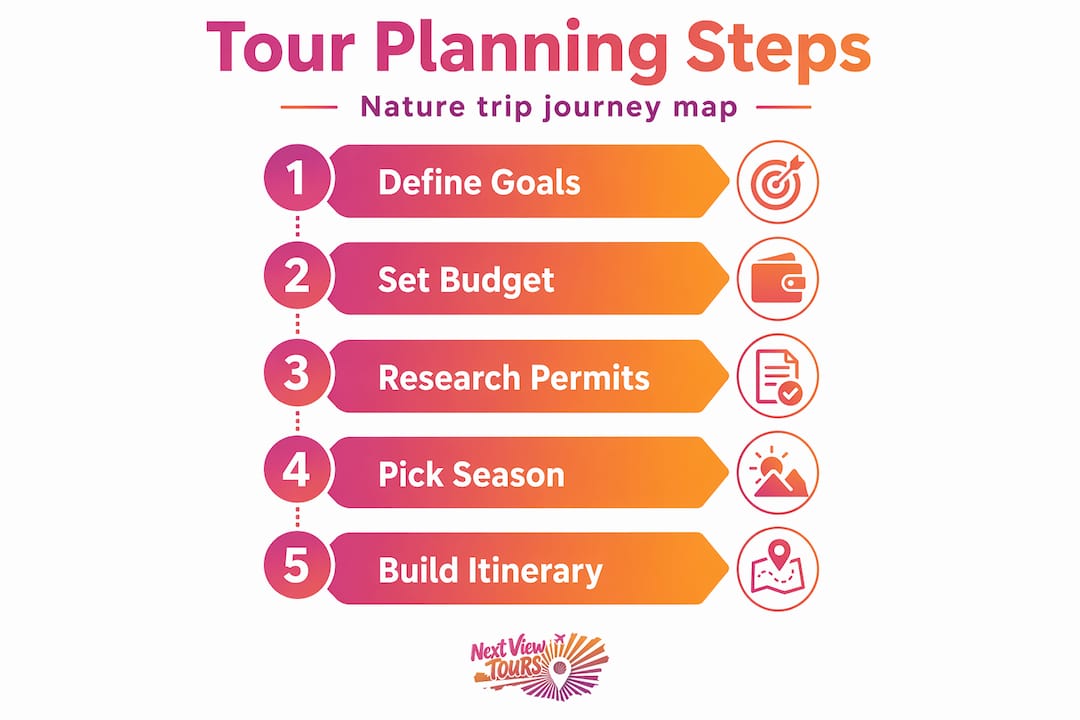
Once you have your objective, set a realistic budget. Custom nature tour fees typically range from $150 to $350 for professional planning alone, with a 30% deposit at booking and the remaining 70% due 30 days before departure. Factoring these costs in early prevents unpleasant surprises when the invoice arrives.
Here is what to assess before you commit to any destination:
- Climate and seasonal windows: Many destinations have narrow windows when conditions are ideal for wildlife viewing or hiking.
- Permit systems: Some parks and reserves operate on lottery or fixed-date release systems, with lead times up to 12 months.
- Accessibility and infrastructure: Remote locations may require additional internal transport or guide-only access.
- Group size and composition: Family groups, couples, and solo travelers each face different logistics around accommodation and tour formats.
- Local regulations: Some destinations have strict rules around noise, trail usage, waste disposal, and photography.
Pro Tip: Research permit release dates before you set your travel dates, not after. Many travelers do this backward and lose an entire season of availability.
Timing relative to seasonality is one of the most underestimated factors in the entire planning cycle. Arriving before sunrise and choosing shoulder seasons can dramatically reduce crowds and improve wildlife encounters. That single shift in timing often matters more than destination choice.
Step-by-step guide to building your itinerary
With objectives and constraints defined, you can build the actual outdoor adventure itinerary. This is where most travelers either gain a real edge or lose hours to disorganized research.
-
Research your destinations in depth. Go beyond tourist blogs. Read park authority websites, recent traveler reports from the last three months, and wildlife observation logs if available. For European nature tours, regional park authority pages often publish up-to-date trail and permit information.
-
Identify all permit requirements early. Make a list of every permit you need, the release date, and the application method. Permit systems vary widely: some use lottery draws, others release on fixed calendar dates, and some are available only through licensed operators. A good operator manages full coordination, not just vehicle transport.
-
Book accommodations with certified eco-lodges or local properties. Selecting local accommodation keeps money in the regional economy and typically places you closer to the natural areas you came to see. Avoid chain hotels on the outskirts when a certified lodge inside the park zone exists.
-
Plan low-impact transport. Train connections, shared shuttles, or local hire cars produce a fraction of the carbon footprint of private transfers or short-haul flights. Tools like ICAO and Atmosfair let you calculate and offset your travel emissions directly.
-
Hire local guides. Local expertise is not just about knowing the trails. It means reading wildlife behavior, understanding weather shifts, and knowing which viewpoints offer the best light at which hour. It also supports the local economy, which is a core principle of responsible nature tourism.
-
Build in safety and insurance. Adventure activities in remote areas require specific coverage. Standard travel insurance rarely covers evacuation from a trail or medical treatment in a remote national park. Confirm your policy covers every activity on your list.
Here is a summary of key planning benchmarks for your nature tour checklist:
| Planning milestone | Recommended timing before departure |
|---|---|
| Define objectives and budget | 9 to 12 months |
| Research permits and apply | 6 to 12 months |
| Book accommodations and guides | 4 to 6 months |
| Finalize transport and transfers | 2 to 3 months |
| Confirm insurance and safety gear | 4 to 6 weeks |
Pro Tip: Planning fees are credited upon booking with reputable operators. They cover genuine local expertise, not just administrative work. Treat them as an investment, not an extra charge.
For European travelers, Nextviewtours offers an excellent nature tour selection guide that covers destination-specific planning nuances across Austria, the Czech Republic, Slovakia, and beyond.
Common mistakes that derail nature tours
Even well-intentioned travelers make planning errors that cascade into serious problems. Knowing these in advance is half the solution.
- Applying for permits too late. This is the single most common cause of trip cancellations. Missing permits at popular sites forces last-minute rerouting or complete cancellation. Set calendar reminders for permit release dates months in advance.
- Choosing operators based on price or photos alone. A low price often signals narrow coverage. Operators who only handle transport leave you managing hotel bookings, timing, and logistics yourself, which defeats the purpose of using a guide service.
- Underestimating weather variability. Mountain weather in Central Europe or alpine zones can shift within hours. Itineraries that leave no buffer days get compressed badly when a trail closes or a storm rolls in.
- Ignoring cultural and environmental respect norms. Loud behavior near wildlife, single-use plastics in protected areas, and off-trail walking are not just ethically problematic. They can result in fines, permit revocations, and damage to the very ecosystems you traveled to experience.
- Failing to build a backup plan. Every itinerary should have at least one alternative route or activity ready. Permits get denied, trails flood, and conditions change.
“Responsible nature tourism balances environmental, economic, and cultural respect. Certifications help identify trustworthy operators, and travelers who do that research arrive better prepared and leave with fewer regrets.” — adapted from Mize responsible tourism research
The travelers who handle these situations calmly are almost always the ones who planned for them. Flexibility is not improvisation. It is a deliberate design choice built into the itinerary from the start.
Optimizing your tour for maximum experience
Once the logistics are in place, the final layer of wildlife tour preparation is structuring the actual flow of your days. This is where nature trip organization crosses into craft.
-
Design your days to alternate intensity. Lead with your most physically demanding activities when energy is highest, then transition toward lighter exploration or scenic experiences. Itineraries flowing from strenuous to relaxing days consistently generate higher satisfaction than back-to-back heavy hiking schedules.
-
Choose your departure dates strategically. This applies especially to multi-day treks and guided walks. The week you depart shapes everything from trail conditions to group pace. Matching your departure to your group’s fitness level and preferences matters more than most travelers realize.
-
Incorporate Leave No Trace principles actively. This goes beyond packing out your trash. It means staying on marked trails, using biodegradable products, and keeping noise levels low in wildlife zones. A nature exploration guide worth following integrates these principles into every day’s activities.
-
Decide on private versus group tour format early. Private tours offer flexibility in timing and pace. Group tours offer social energy and often lower per-person cost. Neither is superior. The right choice depends entirely on your group’s dynamics and expectations.
-
Time wildlife encounters carefully. Early morning and late afternoon are peak activity windows for most European wildlife. Scheduling your best hiking routes around dawn or dusk gives you the highest chance of meaningful encounters without disrupting animal behavior.
Pro Tip: Calculate your carbon emissions using a free tool like Atmosfair before finalizing transport choices. Small adjustments, like swapping one short-haul flight for a train leg, can reduce your footprint significantly without adding meaningful travel time across Europe.
My honest take on planning nature tours

I have spent years observing how different travelers approach this process, and one pattern stands out clearly. The people who invest real time in pre-trip research and work with knowledgeable operators consistently have better experiences. Not because they spent more money, but because they made fewer reactive decisions under pressure.
The part most people underestimate is timing. Not just seasonality, but the internal rhythm of the itinerary itself. A trip that races through five strenuous days leaves most travelers too tired to absorb what they came to see. I have seen groups reach the most spectacular viewpoint of a trip completely exhausted, barely pausing to take it in. That is a planning failure, not a personal one.
There is also a broader dimension to this that I think deserves more attention. Responsible nature tourism is not just an ethical checkbox. It shapes the quality of your own experience. Guides who work in communities they care about bring deeper knowledge. Lodges embedded in ecosystems offer proximity and atmosphere that chain properties simply cannot replicate.
My honest advice is to resist the urge to over-pack the itinerary. Leave room for the unexpected trail, the unplanned wildlife sighting, the afternoon that goes sideways in the best possible way. That is where the memories actually live.
— Next
Plan your next nature tour with Nextviewtours
Nextviewtours specializes in exactly the kind of thoughtful, well-structured nature experiences this guide describes. Whether you want a private single-day escape from Vienna into the Austrian Alps or a multi-day wildlife adventure across Slovakia and the Czech Republic, the team builds each trip around your specific goals, group size, and pace preferences.
Every tour includes local expert guides, eco-conscious accommodation options, and full logistics coordination from arrival to departure. You are not just booking transport. You are accessing years of regional expertise and a network of vetted local partners who make the difference between a good trip and an exceptional one. Explore the full range of trip types available, or browse the customised tours guide to understand how Nextviewtours shapes each experience around what matters most to you. When you are ready to turn a solid plan into a confirmed itinerary, the Nextviewtours team is available to consult and build it with you.
FAQ
How far in advance should I start the nature tour planning process?
For permit-heavy destinations, begin 9 to 12 months before your intended departure. Most permit lottery systems and fixed-date releases require applications well ahead of the travel date.
What is the most common reason nature tours fail?
Late permit applications are the leading cause, followed closely by choosing operators who only manage transport without handling full logistics. Both are avoidable with early, thorough research.
How do I reduce my environmental impact on a nature tour?
Choose local accommodation and guides, avoid single-use plastics, stay on marked trails, and use a carbon calculator like Atmosfair or My Climate to assess and offset your travel emissions.
Should I book a private or group nature tour?
Private tours offer greater flexibility in timing and pace, making them ideal for families or travelers with specific interests. Group tours lower per-person costs and add social energy, working well for solo travelers or larger friend groups.
What should a nature tour checklist include?
Your checklist should cover permits and their deadlines, accommodation bookings, transport logistics, local guide arrangements, safety and evacuation insurance, and backup activities for weather or access disruptions.


Comments are closed