 Uncategorized
TL;DR:
- Europe’s best day trips include fairy-tale castles, coastlines, and historic towns within a single day’s travel from major hubs. Planning early, matching trip difficulty to your energy, and prioritizing one highlight improve the experience dramatically. Guided tours are more beneficial when logistics are complex, while DIY options work best for straightforward destinations.
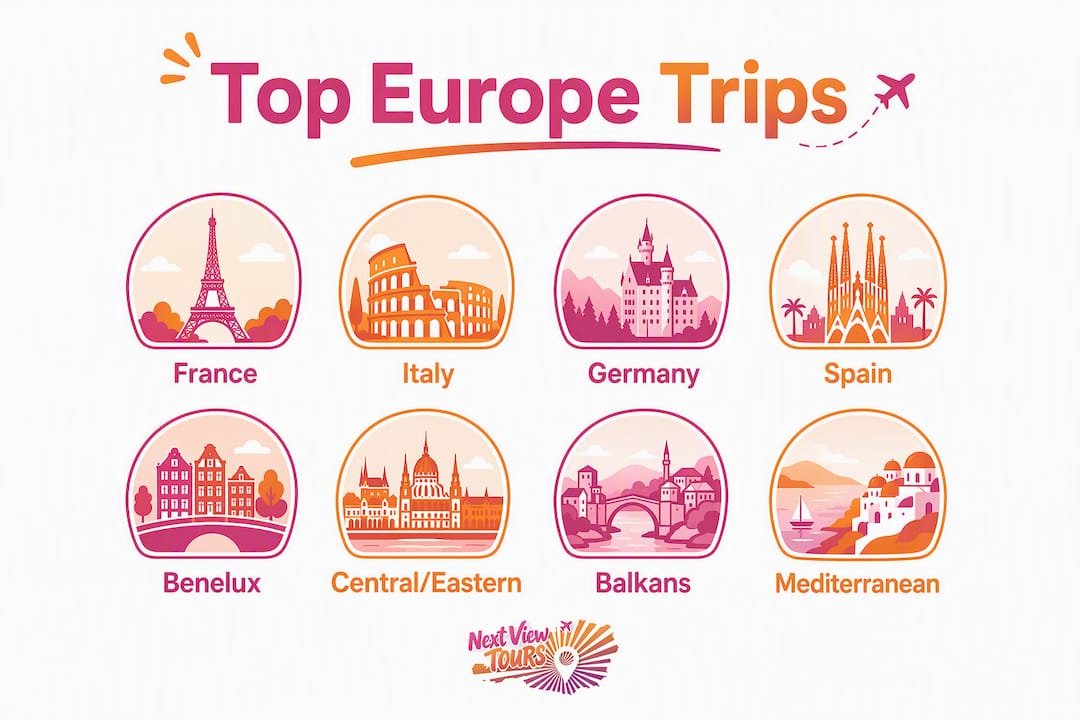
The best Europe day trips include Neuschwanstein Castle from Munich, Lake Como from Milan, Capri and the Amalfi Coast from Naples or Sorrento, Pompeii from Naples, Colmar from Strasbourg, Hallstatt from Salzburg, Burg Eltz from Frankfurt, Mont Saint-Michel from Paris, Cinque Terre from La Spezia or Florence, and Bruges from Brussels or Paris. Each one delivers a genuinely different experience, from fairy-tale castles and medieval wine towns to volcanic ruins and turquoise coastlines, and every trip is reachable within a single day from a major European hub.
Here is your quick-reference shortlist:
- Neuschwanstein Castle (Munich) — scenery and architecture; regional train plus bus; all-day trip with varied duration; self-guided and guided tour options available.
- Lake Como (Milan) — scenery and lakeside villages; reachable by train; suitable for a full day; self-guided and guided tours offered.
- Capri / Amalfi Coast (Naples or Sorrento) — beaches and coastal scenery; accessed by ferry; full-day excursions; self-guided and guided tours available.
- Pompeii (Naples or Sorrento) — history and archaeology; reachable by commuter train; day trip duration varies; self-guided and guided choices exist.
- Colmar (Strasbourg) — architecture, food, and wine; accessible by regional train; half to full day visit; self-guided and guided tours offered.
- Hallstatt (Salzburg) — scenery and Alpine culture; combination of train and ferry; suitable for a day trip; self-guided and guided options.
- Burg Eltz (Frankfurt or Cologne) — medieval history and scenery; train plus bus or car; full-day excursion; self-guided and guided tours available.
- Mont Saint-Michel (Paris) — history and coastal scenery; accessible via high-speed train with shuttle; full-day trips; self-guided and guided tours offered.
- Cinque Terre (La Spezia or Florence) — coastal scenery and hiking; reachable by train; suitable for a day trip; self-guided and guided options available.
- Bruges (Brussels or Paris) — architecture, food, and canals; reachable by train; day-trip duration varies; self-guided and guided tours exist.
The sections below break these down by region, add under-the-radar picks, and give you the logistics to plan each trip confidently.
Table of Contents
- What are the best Europe day trips in 2025, organized by region?
- Which hub city should you use as your base for day trips?
- How do you choose the right day trip for your travel style?
- What are the practical logistics and transport hacks for European day trips?
- How are 2025 travel trends shaping the best day trips in Europe?
- Key Takeaways
- When does a guided day trip actually beat going it alone?
- Plan your Europe day trips with Nextviewtours
What are the best Europe day trips in 2025, organized by region?
Europe’s day-trip catalog is enormous, so the fastest way to narrow it down is by the hub city you are already visiting. Below, each region opens with its headline trips and closes with a few less-obvious picks worth your attention.
France
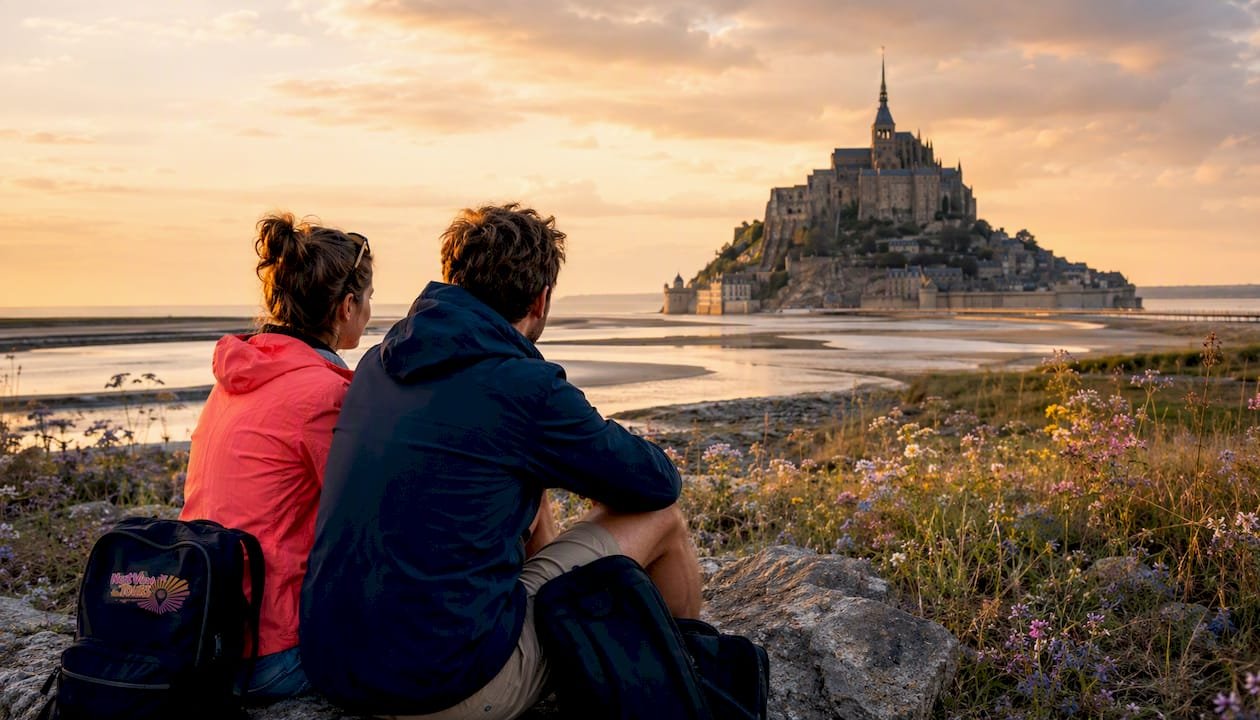
Mont Saint-Michel from Paris stands apart from almost every other day trip on this list. The island abbey rises from a tidal bay off the Normandy coast, and the sight of it at high tide, surrounded by water and reflecting light, is genuinely arresting. Take the TGV from Paris Montparnasse to Rennes (about 1.5 hours), then a connecting bus or shuttle to the island. Budget 8–10 hours total. Entry to the abbey costs €13 for adults. Crowds peak in July and August, so a weekday visit in May, June, or September gives you the same spectacle with far fewer people pressing against you on the ramparts.
Colmar from Strasbourg is a 30-minute regional train ride that drops you into one of the most photogenic towns in Europe. The Alsatian half-timbered houses along the Lauch River (the “Little Venice” quarter) look almost theatrical, yet the town is entirely real and lived-in. Colmar is best for architecture, food, and wine, and the self-guided experience costs very little beyond the train ticket and a glass of Riesling. Strasbourg itself is worth a morning before you depart.
Versailles from Paris is the most-visited day trip from the French capital, and for good reason. The palace gardens alone justify the 40-minute RER C ride. Go on a Tuesday or Thursday when the musical fountains run and the crowds are slightly thinner than on weekends.
Pro Tip: For any Paris-based day trip, buy your train ticket the evening before on the SNCF Connect app. Same-day tickets at Gare Montparnasse or Gare de Lyon often cost 30–50% more, and popular routes to Normandy and the Loire Valley sell out by mid-morning.
Italy
Cinque Terre from La Spezia or Florence is five cliff-hugging fishing villages strung along the Ligurian coast, connected by a regional train that runs every 20–30 minutes. From La Spezia, the first village (Riomaggiore) is 7 minutes away. From Florence, count on about 2.5 hours each way. The Cinque Terre Card (€7.50–€18.50 depending on trail access) covers the train hops between villages and the coastal paths. Arrive before 9:00 AM to walk the Via dell’Amore before the tour groups arrive.
Pompeii from Naples is one of the most historically significant sites in the world. The Circumvesuviana commuter train from Naples Centrale reaches Pompeii Scavi station in about 40 minutes, making this one of the most logistically simple major day trips in Europe. Entry to the archaeological park costs €16. Plan at least 3–4 hours inside the ruins; a guided tour adds essential context to what you are seeing, since the scale of the site can feel disorienting without one.
Lake Como from Milan rewards travelers who resist the urge to stay in the town of Como itself. Take the train to Varenna (about 1 hour from Milan Centrale) and you arrive in a quieter, more beautiful village with direct ferry connections to Bellagio and Menaggio. The ferry network is the real attraction here: a €15–€20 day pass lets you hop between lakeside towns at your own pace.
Capri and the Amalfi Coast from Naples or Sorrento involves a ferry crossing (about 50 minutes from Naples, 20 minutes from Sorrento) and rewards you with sea caves, clifftop gardens, and the famous Blue Grotto. The Amalfi Coast is best approached from Sorrento by ferry or SITA bus. Both options work as day trips, though the Amalfi Coast is better suited to travelers who want to linger over the scenery rather than check off a single landmark.
Germany and Austria
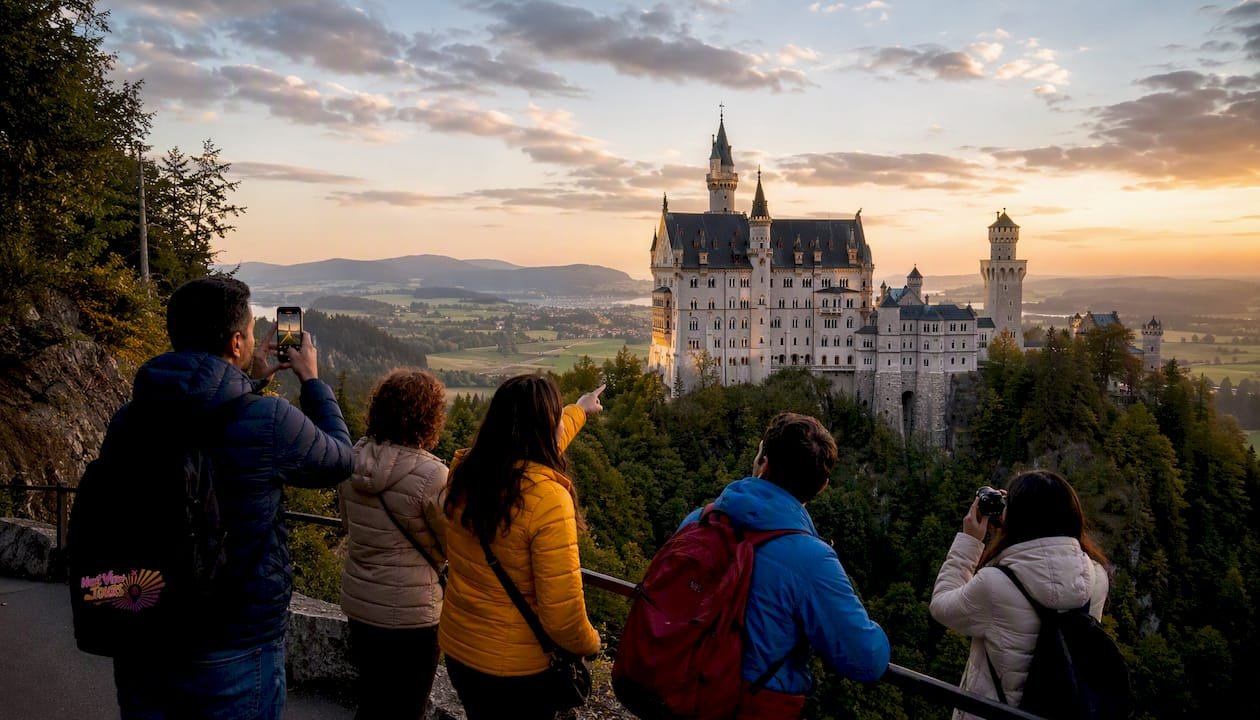
Neuschwanstein Castle from Munich is the quintessential Bavarian day trip. The regional train from Munich Hauptbahnhof to Füssen takes about 2 hours, followed by a 10-minute bus ride to the castle entrance. Timed-entry tickets sell out weeks in advance during summer, so book through the official Bavarian Palace Administration site before you travel. The castle interior tour lasts about 35 minutes; the real payoff is the Marienbrücke bridge above the gorge, which frames the castle against the Alps.
Hallstatt from Salzburg combines a scenic train ride with a short ferry crossing across the Hallstätter See. The village itself is small enough to walk in an hour, but the surrounding Alpine scenery and the Hallstatt Salt Mine (one of the oldest in the world) justify a full day. Guided tours from Salzburg typically run €60–€130 and handle the train, ferry, and mine entry as a package. The Wachau Valley day trip from Vienna follows a similar rail-plus-boat logic: trains run to Melk, where you visit the Baroque abbey (entry ~€16–€20), then board a Danube boat downstream to Krems before returning by train. That loop runs 8–10 hours and guided versions start around €60.
Burg Eltz from Frankfurt or Cologne is one of Germany’s most dramatic medieval castles, rising from a forested valley in the Moselle region. It was never destroyed or rebuilt, so the interior is genuinely medieval rather than a 19th-century reconstruction. Getting there independently requires a train to Moselkern and a 45-minute uphill walk through the forest, which is part of the appeal. Guided tours from Frankfurt or Cologne handle the transfer and add historical depth.
Pro Tip: For rail-and-boat loops like the Wachau or Hallstatt, book the train and boat as a single package through the operator rather than separately. Coordinating two independent tickets on a tight day-trip schedule leaves almost no buffer if the first leg runs late.
Spain and Portugal
Toledo from Madrid is a 30-minute AVE high-speed train ride that deposits you in a UNESCO World Heritage city perched on a granite hill above the Tagus River. The medieval street plan, the Cathedral of Toledo, and El Greco’s masterwork “The Burial of the Count of Orgaz” in the Church of Santo Tomé are all within walking distance of each other. Toledo is best for history and architecture, and a self-guided visit costs €15–€25 in entry fees.
Sintra from Lisbon takes about 40 minutes by train from Rossio station and delivers a cluster of Romantic-era palaces set in forested hills above the Atlantic. The Pena Palace is the most photographed, but the Quinta da Regaleira, with its initiatory well and underground tunnels, is the more memorable experience. Arrive early; the hilltop sites get crowded by 10:30 AM.
Seville from Madrid is a longer stretch at about 2.5 hours by AVE, but the city’s scale and the quality of its monuments (the Alcázar, the Cathedral, the Barrio Santa Cruz) make it one of the most rewarding single-day excursions in Spain.
Benelux and the UK
Bruges from Brussels is a 1-hour direct train ride (€15–€20 each way) into one of Europe’s best-preserved medieval cities. The canal network, the Belfry, and the chocolate shops along Steenstraat are all within a 15-minute walk of the station. From Paris, the journey takes roughly 2.5–3 hours by high-speed train, and organized tours from Paris typically cost €120–€200, while a DIY train round-trip from Paris runs €80–€200 depending on how far in advance you book. Bruges is best for architecture, food, and canals, and it works equally well as a self-guided or guided trip.
Bath from London is 1.5 hours by train from London Paddington and combines Roman history (the Roman Baths) with Georgian architecture (the Royal Crescent, the Circus) in a compact, walkable city. Entry to the Roman Baths costs £22 for adults.
Ghent from Brussels is only 30 minutes by train and often overlooked in favor of Bruges. The Gravensteen castle, the Graslei waterfront, and the St. Bavo’s Cathedral (home to the Van Eyck Altarpiece) make it a stronger choice for travelers who want history and art without the Bruges crowds.
Central and Eastern Europe
Český Krumlov from Prague is a 3-hour bus ride (RegioJet or FlixBus) that brings you to a perfectly preserved Baroque town wrapped in a bend of the Vltava River. The castle complex is the second-largest in the Czech Republic, and the town below it is small enough to cover thoroughly in 4–5 hours.
Wachau Valley from Vienna deserves its own mention here. The combination of Melk Abbey, Danube river scenery, and the wine villages of Dürnstein and Krems makes this one of the most varied single-day experiences in Central Europe. Wien.info provides current timetables for the rail-and-boat loop, which operates May through September.
Bratislava from Vienna is a 1-hour train or bus ride that most travelers underestimate. The Old Town is compact and charming, the Bratislava Castle offers panoramic views over the Danube, and the city has a distinctly different character from Vienna, which makes the contrast itself part of the appeal.
Balkans and Mediterranean
Nafplio from Athens is the most charming Peloponnese day trip available from the Greek capital. The town sits on a small peninsula below the Palamidi Fortress (entry €8), with a Venetian harbor, neoclassical streets, and a small Venetian castle on an islet in the bay. By car, Athens to Nafplio is about 140 km and roughly 1.5 hours; by bus, count on about 2.5 hours. The most efficient version of this trip combines Nafplio with Mycenae and Epidaurus into a 10–12 hour loop, though independent travelers often underestimate how much coordination three separate sites require in a single day.
Kotor from Dubrovnik is a 2-hour drive along the Adriatic coast into Montenegro, rewarding you with a walled medieval city at the head of a fjord-like bay. The city walls climb steeply above the old town, and the views from the top justify the 1,350 steps.
Which hub city should you use as your base for day trips?
The table below gives you a quick reference for the most common hub-to-destination pairings, including round-trip travel time and the sightseeing window you can realistically expect.
| Hub City | Top Day Trips | Transport Mode | Round-Trip Travel | Sightseeing Window |
|---|---|---|---|---|
| Paris | Mont Saint-Michel, Versailles, Bruges | TGV + shuttle / RER / high-speed train | 4–6 hrs / 1.5 hrs / 5–6 hrs | 3–5 hrs / 5–6 hrs / 4–5 hrs |
| Milan | Lake Como, Cinque Terre, Verona | Train | 2–3 hrs / 5 hrs / 2 hrs | 5–6 hrs / 4–5 hrs / 6–7 hrs |
| Naples | Pompeii, Capri, Amalfi Coast | Circumvesuviana / ferry / ferry+bus | 1.5 hrs / 1.5 hrs / 2–3 hrs | 4–5 hrs / 5–6 hrs / 4–5 hrs |
| Munich | Neuschwanstein, Salzburg, Nuremberg | Train + bus / train / train | 3 hrs / 3 hrs / 2 hrs | 4–5 hrs / 5–6 hrs / 6–7 hrs |
| Vienna | Hallstatt, Wachau Valley, Bratislava | Train + ferry / train + boat / train | 5–6 hrs / 4–5 hrs / 2 hrs | 3–4 hrs / 4–5 hrs / 5–6 hrs |
| Prague | Český Krumlov, Karlštejn, Dresden | Bus / train / train | 6 hrs / 2 hrs / 2 hrs | 4–5 hrs / 4–5 hrs / 4–5 hrs |
| Budapest | Eger, Szentendre, Vienna | Train / suburban rail / train | 4 hrs / 1 hr / — | 5–6 hrs / 4–5 hrs / 4–5 hrs |
| Barcelona | Montserrat, Sitges, Tarragona | Train / train / train | 2 hrs / 1 hr / 2 hrs | 5–6 hrs / 5–6 hrs / 5–6 hrs |
| London | Bath, Oxford, Canterbury | Train / train / train | 3 hrs / 2 hrs / 2.5 hrs | 5–6 hrs / 5–6 hrs / 5–6 hrs |
DIY vs. guided, by hub:
- Paris: DIY works well for Versailles and Bruges since trains are direct and frequent. Mont Saint-Michel is better guided because the shuttle connections from Rennes require precise timing.
- Naples: Pompeii is easy DIY. Capri and the Amalfi Coast benefit from a guided or organized option because ferry schedules and bus routes require coordination.
- Vienna: The Wachau rail-and-boat loop is best booked as a package. Bratislava is simple DIY.
- Munich: Neuschwanstein requires advance timed-entry tickets; a guided tour handles this automatically.
- Prague: Český Krumlov is straightforward by bus, but a guided tour adds context to the castle history that most visitors miss.
Accessibility note: Most major European train stations have step-free access and elevator connections, but some day-trip destinations involve significant walking on uneven terrain. Hallstatt’s ferry landing and the Cinque Terre coastal paths are challenging for travelers with limited mobility. Pompeii has improved accessibility with a dedicated wheelchair route covering about 3.5 km of the site. Always check the destination’s official site for current accessibility details before booking.
How do you choose the right day trip for your travel style?
The single most useful question to ask before booking is: What do I actually want to feel at the end of this day? Awe at a landscape? A sense of historical depth? A relaxed lunch by the water? The answer narrows your list faster than any other filter.
Beyond that, here is a practical checklist:
- Duration tolerance. A 10-hour day with 4 hours of round-trip travel is genuinely tiring. If you are mid-trip and already fatigued, choose a destination within 1.5 hours each way.
- Physical demands. Cinque Terre hiking trails, the Palamidi Fortress steps, and the walk to Burg Eltz all require moderate fitness. Colmar, Bruges, and Lake Como are largely flat and walkable.
- Crowd tolerance. Neuschwanstein, Cinque Terre, and Capri are among the most crowded day-trip destinations in Europe during July and August. If crowds drain you, shift to shoulder season (May, June, September, October) or choose less-visited alternatives like Burg Eltz or Nafplio.
- Season and weather. The Wachau boat operates May through September. The Amalfi Coast ferry schedule is reduced in winter. Mont Saint-Michel is accessible year-round but most dramatic at high tide, which varies by date.
- Budget. Self-guided trips cost significantly less than organized tours. The table below gives you a realistic cost breakdown.
- Transport complexity. A trip requiring three separate connections (train + bus + ferry) is harder to manage independently than a direct train. When the logistics are complex, a guided tour often saves more time than it costs.
- Luggage and transfer constraints. If you are traveling between cities on the same day as a day trip, choose a destination where you can store luggage at the hub station (most major European stations have left-luggage facilities for €5–€10 per bag).
Sample budget for a standard 10–12 hour day trip
| Budget Level | Transport (round-trip) | Entry Fees | Food and Drinks | Total Estimate |
|---|---|---|---|---|
| Low (self-guided) | €15–€30 | €10–€20 | €15–€25 | €40–€60 |
| Mid (guided group tour) | Included | Included | €15–€25 | €60–€130 |
| High (private guided tour) | Included | Included | €20–€40 | €120–€200 |
Questions to ask before booking any day trip:
- Does the tour or ticket include skip-the-line access, or will you queue separately?
- What is the cancellation policy if weather disrupts a ferry or outdoor site?
- Is the guide a licensed local expert or a generic city guide?
- Does the price include all transport legs, or just the main one?
Pro Tip: Build your day around one primary highlight and treat everything else as a bonus. Travelers who try to see three major sites in a single day often end up rushing all three. Pompeii alone deserves 3–4 hours; add Herculaneum only if you are staying in Naples for multiple nights.
What are the practical logistics and transport hacks for European day trips?
Getting the logistics right is what separates a memorable day trip from an exhausting one. The mechanics are straightforward once you know the patterns.
Where to book:
- National rail operators (SNCF for France, Trenitalia or Italo for Italy, Deutsche Bahn for Germany, ÖBB for Austria) offer the best prices when booked 30–60 days in advance. Their apps also handle seat reservations, which are mandatory on many high-speed routes.
- Regional ferry operators (Caremar and SNAV for the Bay of Naples, Navigazione Laghi for Lake Como) sell tickets at the dock, but booking online the day before avoids queues during peak season.
- Guided-tour marketplaces aggregate options across multiple operators and are useful for comparing inclusions. Check what is actually included before assuming the price covers entry fees.
- For private transfers between hubs and day-trip destinations, a high-end transfer booking checklist helps you confirm vehicle type, pickup timing, and cancellation terms before you commit.
Sample timeline for a 10–12 hour day trip:
- 7:00 AM — Depart hub city by train or ferry
- 9:00–9:30 AM — Arrive at destination; pick up pre-booked tickets
- 9:30 AM–12:30 PM — Main site visit (3 hours)
- 12:30–1:30 PM — Lunch at a local restaurant away from the main square
- 1:30–3:30 PM — Secondary site or free exploration
- 3:30–4:00 PM — Head to return transport
- 5:30–7:00 PM — Back at hub city
Transport hacks worth knowing:
- On high-speed international routes (Paris to Brussels, for example), adding an “Any Belgian Station” supplement to your Eurostar or Thalys ticket lets you continue to Bruges on the same booking without buying a separate regional ticket at the other end.
- Rail-and-boat loops (Wachau, Hallstatt) are most efficient when booked as a single package. Buying the train and boat separately leaves you exposed to missed connections, and the time buffer on a day trip is thin.
- One-way bike rentals are available in several Cinque Terre villages and along the Loire Valley, letting you ride in one direction and return by train rather than retracing your route.
- For the Amalfi Coast, the SITA bus is cheaper than a private transfer but runs on a fixed schedule. Miss the last bus and you are paying for a taxi back to Sorrento.
Accessibility and safety checklist:
- Carry a portable battery pack; charging points at rural day-trip sites are rare.
- Download offline maps (Google Maps or Maps.me) for destinations with poor cell coverage (Burg Eltz valley, Cinque Terre trails).
- Check the destination’s official website for any timed-entry or reservation requirements before you travel, not the morning of.
- For ferry-dependent trips, check weather forecasts 48 hours out; rough seas cancel Capri and Amalfi services with little notice.
- Keep a photo of your passport and travel insurance on your phone. Most European day-trip destinations are safe, but petty theft at crowded sites (Pompeii, Cinque Terre train stations) is common.
How are 2025 travel trends shaping the best day trips in Europe?
The data from this year’s traveler surveys points clearly toward a shift in where people want to go and how they want to get there.
Travel + Leisure’s 2025 Readers’ Choice Awards placed Porto at the top of European city rankings, ahead of Paris and Athens, reflecting a broader appetite for cities that feel authentic and walkable rather than purely monumental. That same preference is driving day-trip demand toward midsize destinations like Colmar, Nafplio, and Český Krumlov, which offer genuine local character without the infrastructure strain of major capitals.
CN Traveller’s 2025 Readers’ Choice Awards ranked Valletta, Malta highest for overall satisfaction among European cities, followed by Oslo and Vienna. The pattern is consistent: travelers are rewarding cities and destinations that feel manageable, culturally rich, and not overwhelmed by tourism.
Time Out reported that Barcelona, Paris, Mallorca, Madrid, and London were among the most booked destinations in 2025, with Spain showing particularly strong demand. Northern destinations are gaining interest as summer temperatures in southern Europe continue to rise, a trend that affects day-trip seasonality in practical ways: the shoulder months of May, June, and September are increasingly the sweet spot for Mediterranean day trips.
Stat to know: Euronews research based on TUI Musement data identified London, Paris, and Rome as the European cities from which travelers most frequently search for day trips, with island visits from Athens and wine tours from Florence among the most searched specific excursions.
The sustainability angle is increasingly practical rather than aspirational. Choosing public transport over private transfers, combining multiple stops into a single loop rather than making separate out-and-back trips, and booking with local operators rather than international aggregators all reduce the environmental footprint of a day trip without sacrificing the experience. Nextviewtours covers these 2025 tour trends in detail, including how immersive and low-impact experiences are reshaping what travelers actually book.
Key Takeaways
Europe’s top day trips for 2025 reward travelers who book transport early, choose one primary highlight per day, and match the trip’s physical demands to their actual energy level.
| Point | Details |
|---|---|
| Book transport 30–60 days out | Rail tickets and timed-entry slots for Neuschwanstein, Pompeii, and Cinque Terre sell out weeks before peak season. |
| Match trip complexity to your logistics comfort | Multi-leg trips (train + boat + bus) are best handled by a guided tour; direct-train destinations like Bruges and Colmar are easy DIY. |
| Shoulder season beats summer for most trips | May, June, September, and October offer the same scenery with significantly smaller crowds at Capri, Cinque Terre, and Hallstatt. |
| One highlight per day, not three | Rushing three major sites in 10 hours means seeing none of them properly; build your day around one anchor and treat the rest as bonuses. |
| Nextviewtours for guided and private options | Nextviewtours offers guided and customizable day trips across Central and Eastern Europe, including departures from Vienna, Salzburg, Prague, and Budapest. |
When does a guided day trip actually beat going it alone?
The honest answer is: more often than most independent travelers want to admit, and for reasons that have nothing to do with hand-holding.
The trips where guided options genuinely outperform DIY are the ones where logistics complexity is high relative to the sightseeing window. Nafplio combined with Mycenae and Epidaurus is a perfect example. Each site is individually straightforward, but coordinating three separate bus connections across a 10–12 hour day, in a region where schedules are infrequent and taxis expensive, turns a beautiful itinerary into a stressful one. An organized loop handles the timing, the transfers, and the sequencing so you spend your energy on the experience rather than the logistics.
The same logic applies to rail-and-boat combinations like the Wachau Valley. Booking the train to Melk, the Danube boat from Melk to Krems, and the return train from Krems as three separate tickets is possible, but a single package from an operator who knows the timetables removes the risk of a missed connection ruining the whole day.
Where DIY wins is on flexibility and cost. Bruges from Brussels by direct train is so simple that a guided tour adds almost nothing except a commentary track. Colmar from Strasbourg is a 30-minute ride into a town you can navigate intuitively. For those trips, buy the train ticket yourself and spend the savings on lunch.
Nextviewtours has built its European day-trip and private tour programs specifically around the routes where operator expertise makes a measurable difference: multi-stop Peloponnese loops, Central European castle circuits, Alpine lake combinations, and Danube valley excursions. The 2025 trends guide on the Nextviewtours site explains how these itineraries are structured and why the looped, multi-mode format consistently outperforms the out-and-back approach for travelers with limited time.
Pro Tip: When combining stops like Mycenae, Epidaurus, and Nafplio into a single day, sequence them in the order that minimizes backtracking: Mycenae first (closest to Athens), then Epidaurus, then Nafplio for the evening light on the harbor. Reversing this order adds 45 minutes of unnecessary driving.
Plan your Europe day trips with Nextviewtours
Sorting out ferry schedules, timed-entry tickets, and multi-leg rail connections for a single day trip is satisfying when it works and genuinely costly when it doesn’t. Nextviewtours offers a direct alternative: guided and private day trips across Europe that handle every logistical layer, from transport and entry tickets to local expert guides who know the sites deeply.
Departures run from Vienna, Salzburg, Prague, Budapest, and other Central and Eastern European hubs, covering day trips, multi-day circuits, family tours, and fully customized private itineraries. Group tours keep per-person costs accessible; private tours give you the flexibility to adjust the pace, add a stop, or skip a site that doesn’t interest you. Pricing is transparent at the time of booking, with no hidden surcharges for entry fees or transfers on included routes.
If you are still deciding between a single day trip and a longer circuit, the day trips vs. multi-day trips planning guide on the Nextviewtours site walks through exactly that decision. Ready to book? Browse the full range of trip types and check availability at nextviewtours.com/trip-types.
This article provides general travel planning information. Entry fees, transport schedules, and visa requirements change regularly. Confirm current details with official destination sources or a qualified travel professional before booking.


Comments are closed