
 Uncategorized
TL;DR:
- An adventure trip combines at least two of three elements: physical activity, nature immersion, and cultural interaction. It ranges from accessible activities like guided walks to demanding expeditions involving specialized skills, all emphasizing genuine engagement and safety.
An adventure trip is defined as travel that intentionally combines at least two of three core elements: physical activity, connection with nature, and cultural interaction. The Adventure Travel Trade Association (ATTA) recognizes this combination as the standard threshold that separates true adventure travel from passive tourism or simple sightseeing. Contrary to popular belief, adventure trips do not require extreme risk or elite athletic skill. The definition of adventure travel covers a wide spectrum, from a guided wildlife walk in the Austrian Alps to white-water rafting in Slovakia. Understanding the adventure trip meaning helps you choose experiences that match your goals, fitness, and curiosity rather than defaulting to either a beach resort or a dangerous extreme sport.
What is the adventure trip meaning and its core elements?
An adventure trip requires at least two of three defining elements to qualify as genuine adventure travel. Those elements are physical activity, nature immersion, and cultural exchange. A trip with only one element, say a gym-style hike with no cultural context or nature setting, does not meet the threshold. This two-element rule protects the term from marketing inflation and keeps the experience authentic.
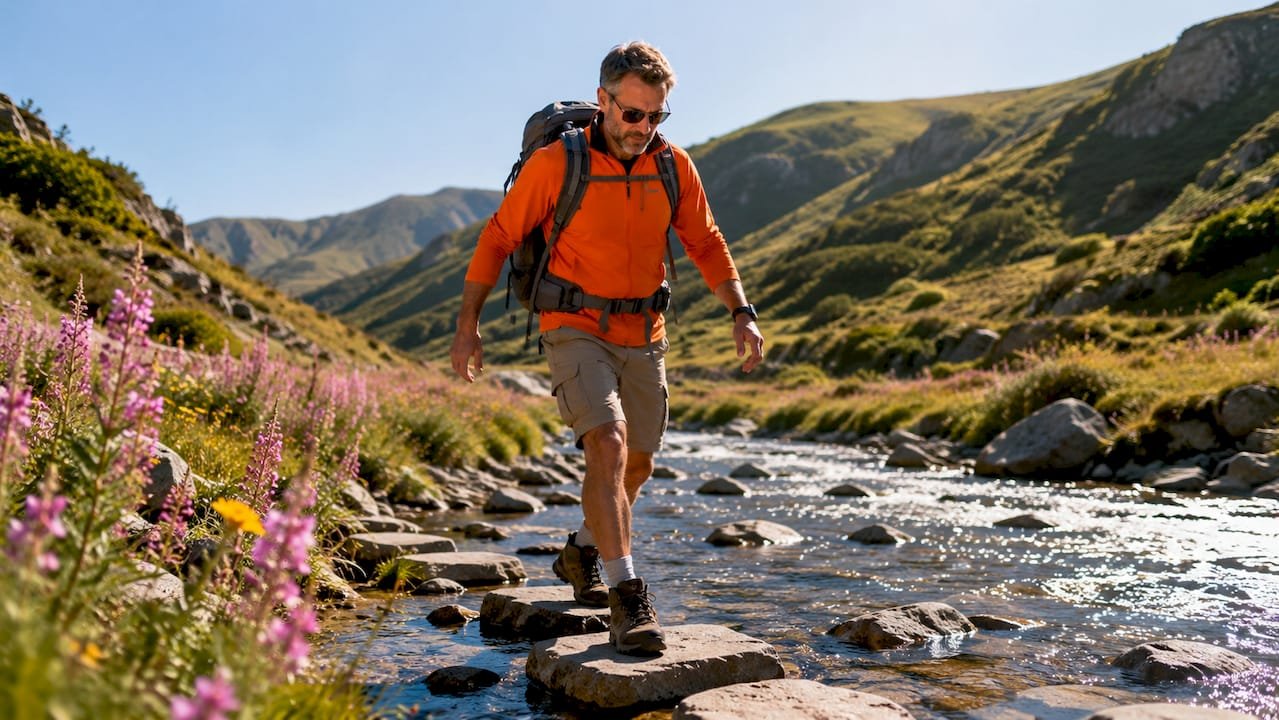
Physical activity is the most visible element. It ranges from moderate hiking and kayaking to technical mountaineering. Nature immersion means the environment itself plays a central role, whether that is a forest, a river, a mountain range, or a coastline. Cultural interaction adds human depth: meeting local communities, learning regional history, or sharing a meal with a local family.
Adventure is also an attitude involving excitement, challenge, and discovery. That framing matters because it shifts the focus from what you do to how you engage. Two travelers on the same trail can have completely different experiences depending on their openness to learning and discomfort.
The ATTA’s framework also clarifies what adventure travel is not. A cultural city tour without physical engagement is tourism. A gym session in a scenic location is exercise. Only when two or more elements combine does the experience earn the label of adventure travel.
What is the soft-to-hard adventure spectrum?
Adventure trips fall along a clear spectrum from soft to hard, and knowing where you sit on that spectrum is the most practical starting point for planning.
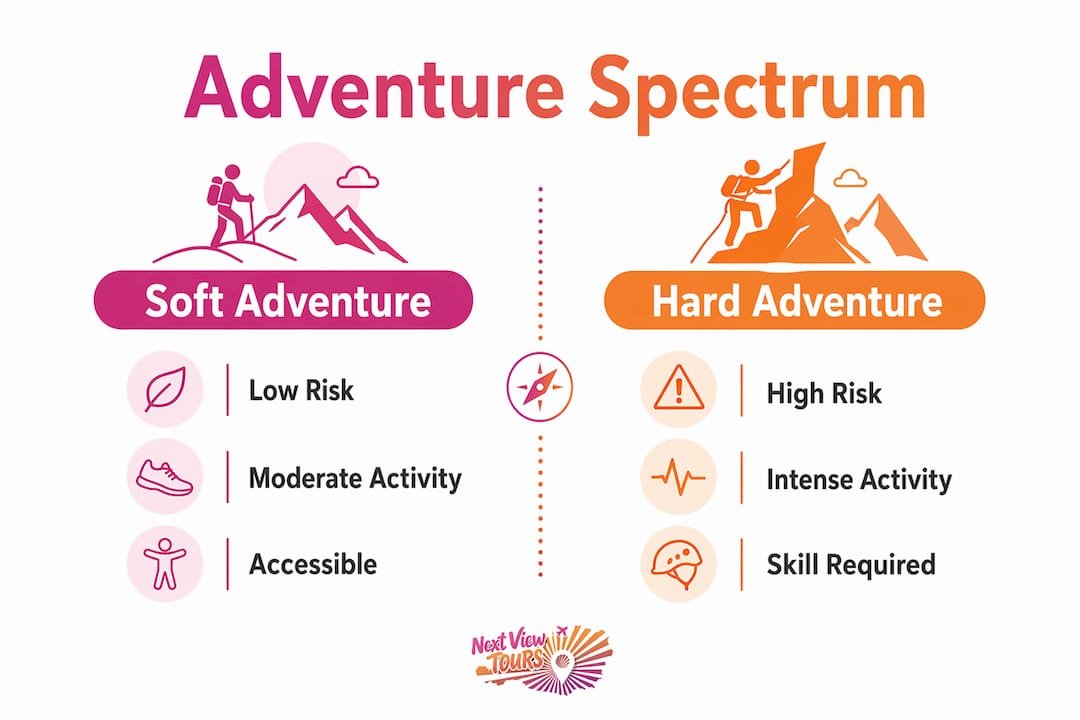
Soft adventure activities deliver meaningful physical and cultural engagement without requiring prior certification or extreme fitness. Examples include guided wildlife walks, horseback riding through national parks, sea kayaking along coastal routes, and cycling tours through rural villages. These experiences are accessible to most travelers and form the majority of the adventure travel market.
Hard adventure activities involve higher risk, greater physical demand, and often require prior skill or training. Examples include mountaineering, multi-day white-water rafting, ice climbing, and technical rock climbing. These trips demand preparation, and responsible operators screen participants before departure.
| Feature | Soft adventure | Hard adventure |
|---|---|---|
| Risk level | Low to moderate | Moderate to high |
| Skill required | None to basic | Intermediate to advanced |
| Physical demand | Light to moderate | High |
| Examples | Wildlife walks, kayaking, cycling | Mountaineering, rafting, ice climbing |
| Audience | Beginners, families, first-timers | Experienced, trained travelers |
The spectrum concept matters because it removes the false idea that adventure travel is only for elite athletes. A first-timer joining a guided nature walk in the Czech Republic and an experienced climber ascending a peak in Austria are both on legitimate adventure trips. They simply occupy different points on the same scale.
Pro Tip: Before booking, rate your fitness level and risk tolerance honestly on a scale of 1 to 10. Choose trips where the activity level sits one or two points above your comfort zone. That gap creates growth without overwhelming you.
How are adventure trips designed and structured for safety?
Professional adventure trips follow a core plus supporting elements model. The core activity, whether that is a rafting run or a mountain trek, provides the challenge and excitement. Supporting elements, including logistics, accommodation, meals, cultural encounters, and contingency plans, make the experience safe and complete. Safety and logistics are not afterthoughts. They are built into the product from the start.
The industry standard for safety management is ISO 21101:2014. This framework requires operators to conduct continuous risk assessment, verify participant competence, manage equipment properly, and maintain emergency response plans. Operators who follow ISO 21101:2014 treat managed risk as a design feature, not an accident waiting to happen.
A well-structured adventure tour typically includes:
- Pre-trip screening: Fitness questionnaires and skill assessments to match participants to appropriate activities
- Safety briefings: Clear instructions on equipment use, emergency procedures, and environmental hazards
- Qualified guides: Certified professionals who manage pacing, group dynamics, and real-time risk
- Contingency planning: Backup routes, weather protocols, and medical response procedures
- Balanced scheduling: Planned activity windows paired with rest periods and cultural exploration time
Guides structure adventure tours to balance safety with flexibility, making the trip rewarding without overwhelming participants. That balance is what separates a professional adventure tour from an unguided, improvised outing.
Pro Tip: When evaluating any adventure tour operator, ask directly whether they follow ISO 21101:2014 or an equivalent national safety standard. A credible operator will answer without hesitation. Check a travel safety checklist before you commit to any booking.
Multi-day tours add another layer of structure. They typically include lodging, transport, meals, deposit requirements, and cancellation policies. These logistics reflect the operator’s commitment to a complete experience rather than just selling an activity slot.
How has adventure travel evolved for modern travelers?
Adventure travel has shifted from a niche pursuit for extreme athletes to a mainstream category attracting a broad range of travelers. The 67% of international travelers who describe themselves as “Open to Adventure” reflect this shift. That figure shows the market is no longer defined by a small group of hardcore enthusiasts.
The early image of adventure travel, often called “granola-crunchy ecotourism,” focused on rugged self-sufficiency and environmental purity. Today, the focus has moved toward meaningful connection with place, culture, and personal wellbeing. Adventure today emphasizes connection and exploration over pure adrenaline, broadening its appeal to diverse traveler profiles.
This evolution has practical consequences for travelers:
- First-timers can enter the adventure market through soft activities without feeling out of place
- Families can book guided nature trips that combine learning, movement, and cultural discovery
- Older travelers find that cultural immersion tours with light physical activity fully qualify as adventure travel
- Urban travelers from cities like Vienna, Prague, and Budapest can access day-long adventure experiences without extensive preparation
The shift also means that adventure trip ideas now include experiences that would have seemed too mild to qualify a decade ago. A guided foraging walk in the Bohemian Forest, a kayak tour along the Danube, or a horseback ride through the Hungarian plains all meet the two-element threshold. Each combines physical activity with either nature immersion or cultural interaction.
What are the main types of adventure trips?
Adventure trips come in formats that range from a single afternoon to multi-week expeditions. Understanding the main types helps you match the experience to your time, budget, and goals.
Day trips and short excursions
Day adventure trips are the entry point for most travelers. They combine one core activity with a cultural or natural setting and return you to your base by evening. Examples include guided hiking in the Salzburg Alps, wildlife tracking in Bohemian Switzerland National Park, and kayaking on the Vltava River near Prague.
Multi-day adventure packages
Multi-day trips allow for deeper immersion and skill progression. Structured adventure tours of this type typically include lodging, meals, transport, and a sequence of activities that build on each other. A three-day cycling tour through the Austrian countryside, for example, might pair daily rides with evening visits to local villages and a guided history session at a regional castle.
Cultural immersion adventure trips
These trips prioritize the cultural interaction element while maintaining physical engagement. A walking tour through the historic districts of Budapest, combined with cooking classes and visits to local markets, qualifies as adventure travel when it includes meaningful physical movement and genuine cultural exchange.
| Trip type | Duration | Key features | Best for |
|---|---|---|---|
| Day excursion | 4–10 hours | Single activity, guided, no overnight | First-timers, urban travelers |
| Multi-day package | 2–7 days | Lodging, meals, activity sequence | Deeper immersion, skill building |
| Cultural immersion | 1–5 days | Local engagement, light activity | History lovers, cultural travelers |
| Hard adventure expedition | 5–14 days | Technical skills, high physical demand | Experienced, trained travelers |
| Customized tour | Flexible | Tailored itinerary, private guide | Families, couples, special interests |
Customized adventure tours allow travelers to build itineraries around their specific fitness level, interests, and schedule. This format has grown significantly as travelers seek experiences that feel personal rather than generic. You can explore the full range of adventure trip types to find the format that fits your goals.
Key Takeaways
An adventure trip is defined by the combination of at least two elements, physical activity, nature immersion, or cultural interaction, and ranges from accessible soft adventures to demanding hard expeditions.
| Point | Details |
|---|---|
| Two-element rule | A trip must combine at least two of physical activity, nature, or culture to qualify as adventure travel. |
| Soft vs. hard spectrum | Soft adventures suit beginners; hard adventures require prior skill and training. |
| Safety is by design | ISO 21101:2014 sets the standard for risk management, screening, and emergency planning. |
| Adventure travel is mainstream | 67% of international travelers identify as open to adventure, reflecting broad market appeal. |
| Trip types vary widely | Day trips, multi-day packages, and customized tours all qualify depending on their elements. |
What adventure travel has taught me about the traveler mindset
Adventure is not a category of activity. It is a way of showing up to a place. I have seen travelers on a gentle guided walk through the Hallstatt lakeside experience more genuine discovery than others on a technically demanding climb. The difference was not the activity. It was the intention they brought to it.
The travelers who get the most from adventure trips are the ones who treat discomfort as information rather than a problem to avoid. A steep trail, an unfamiliar food, a conversation with a local guide in broken English: these are the moments that create lasting memory. They are also the moments that require you to be present rather than passive.
What the industry has gotten right in recent years is the recognition that structure and safety do not diminish authenticity. A well-planned tour with a qualified guide, a clear itinerary, and a safety briefing does not make the experience less real. It makes it more accessible to more people without removing the core challenge. That is a genuine achievement.
My honest observation after years of working with travelers across Europe is this: most people underestimate their own adventure threshold. They assume they need more experience, more fitness, or more courage than they actually do. The soft-to-hard spectrum exists precisely to meet you where you are and move you forward from there. Start one step outside your comfort zone. That is enough.
— Next
Nextviewtours adventure trips: find your fit
Nextviewtours offers a range of guided adventure experiences across Europe, from soft day excursions in Vienna and Salzburg to multi-day trips through Austria, the Czech Republic, Hungary, and Slovakia. Every trip is built around the two-element principle: physical engagement paired with nature or cultural depth.

Whether you are a first-time adventure traveler looking for a guided nature walk or an experienced explorer ready for a multi-day expedition, Nextviewtours handles the logistics, safety planning, and cultural context so you can focus on the experience itself. Browse the full range of available trip formats to find the adventure that matches your skill level and interests. For travelers who want a fully tailored experience, multi-day adventure options across Europe are available for all experience levels.
FAQ
What is the adventure trip meaning in simple terms?
An adventure trip is travel that combines at least two of three elements: physical activity, nature immersion, and cultural interaction. It goes beyond passive sightseeing to create active, immersive, and often personally challenging experiences.
What is the difference between soft and hard adventure travel?
Soft adventure involves accessible activities like guided hiking or kayaking that require no prior certification. Hard adventure involves higher risk and physical demand, such as mountaineering or white-water rafting, and often requires prior training.
Do adventure trips have to be dangerous?
No. The defining feature of adventure travel is managed risk, not recklessness. Professional operators use ISO 21101:2014 safety standards to assess risk, screen participants, and plan for emergencies.
How do I plan an adventure trip for the first time?
Start by identifying your fitness level and which of the three elements, physical activity, nature, or culture, excites you most. Then choose a soft adventure format, such as a guided day trip, and work with an operator who handles logistics and safety planning.
What counts as an adventure trip vs. a regular vacation?
A regular vacation is primarily passive: sightseeing, relaxing, or consuming entertainment. An adventure trip requires active engagement with at least two of the three core elements, making the traveler a participant rather than an observer.


Comments are closed