

 Uncategorized
TL;DR:
- Booking summer tours early ensures access to the best guides and preferred time slots before demand peaks.
- Opt for lightweight clothing, a small carry-on, and strategic planning to stay mobile and comfortable in Europe’s heat.
- Choosing lesser-known destinations, reverse itineraries, and off-peak timing enhances enjoyment amid crowded, hot summer conditions.
Summer in Europe is electric. Markets buzz, festivals overflow, and every cobblestone street tells a story. But peak season also means record-breaking crowds, soaring accommodation prices, and scorching temperatures that can turn a dream vacation into an exhausting ordeal. The good news? With the right strategies, your summer guided tour can be everything you imagined and more. This guide walks you through expert-backed tips on booking, packing, destination selection, and real-time adaptation so you can travel smarter, stay comfortable, and actually enjoy every moment.
Table of Contents
- Book early for top tours and experiences
- Pack smart: Stay light and mobile
- Beat the summer crowds and heat with smart destinations
- Escape and adapt: Handling summer extremes on tour
- Why breaking from the crowd makes summer tours truly memorable
- Ready to plan your next unforgettable summer tour?
- Frequently asked questions
Key Takeaways
| Point | Details |
|---|---|
| Book early | Advance booking for tours and accommodations is essential to guarantee your spot in peak summer. |
| Pack light | A carry-on bag makes European guided tours easier and more enjoyable. |
| Choose cool destinations | Northern Europe and lesser-known cities offer better weather and fewer crowds. |
| Adapt on the go | Smart local hacks and escape strategies can help you beat the heat and enjoy even busy cities. |
| Get creative | Reverse itineraries and offbeat routes transform standard tours into truly memorable adventures. |
Book early for top tours and experiences
With the stage set for peak summer demand, the first step is securing your spot. European summer tours fill up faster than most travelers expect. July and August are the busiest months on the continent, and the ripple effect touches everything: popular guided tours sell out weeks in advance, boutique accommodations disappear months ahead of the season, and transportation options thin out quickly as demand surges.
Waiting until spring to plan a July departure often means settling for second-choice guides, overcrowded group sizes, or routes that skip the highlights you actually wanted to see. As peak demand in July-August makes clear, booking summer guided tours well in advance is not optional — it is the foundation of a smooth experience.
Here is a practical action plan:
- Identify your top destinations first. Lock down the “must-sees” before filling in the gaps. If Santorini, the Amalfi Coast, or Vienna’s historic center are on your list, those spots require the earliest attention.
- Book 3 to 6 months ahead. This window gives you access to the best guides, preferred time slots, and early-bird pricing. For multi-day tours, six months is the safer benchmark.
- Read cancellation policies carefully. Summer plans shift. Choose tours that offer flexible cancellation or rebooking windows so you are protected if your schedule changes.
- Bundle strategically. Many providers offer package discounts when you combine a city tour with a day trip or private experience. This can save both money and planning time.
- Consider starting your planning your group adventure early by mapping out group preferences, so no one on your trip feels left out of the itinerary.
“Booking early is not just about availability. It is about choice. The best guides, the best boats, and the best time slots go first. What remains is what everyone else gets.”
Pro Tip: If you are exploring Greece or coastal destinations, look into reverse itineraries. Instead of following the standard island-hopping route that everyone else takes, begin at the final stop and work backward. You will arrive at each location when the main crowds are departing, giving you a noticeably quieter, more personal experience. This approach works especially well when organizing custom private tours by water or yacht.
Pack smart: Stay light and mobile
Once your tour is booked, get strategic about what you bring for mobility and comfort. One of the most common mistakes summer travelers make is overpacking. It sounds harmless, but a heavy suitcase in Rome’s cobblestone alleys or on a Dubrovnik hillside can genuinely ruin your day.
Guided tours often involve frequent transitions between sites, neighborhoods, and sometimes entire cities.
Pack light for mobility on guided tours, especially in cities with restricted bus access, where you may be walking significant distances between stops. A carry-on sized bag keeps you agile, reduces physical strain, and saves time at every transfer point.
Here is what your summer tour packing list should include:
- Lightweight, quick-dry clothing. Fabrics like nylon or merino wool can be washed at night and worn again by morning, which dramatically reduces how much you need to bring.
- Refillable water bottle. European cities often have public fountains with clean drinking water. Staying hydrated is essential in summer heat, and a refillable bottle cuts plastic waste and costs.
- Sun protection. SPF 50+ sunscreen, a wide-brimmed hat, and UV-blocking sunglasses are not optional in July. Southern Europe in particular delivers intense midday sun.
- One versatile layer. Museums, cathedrals, and air-conditioned buses can be surprisingly cold. A lightweight linen jacket or a packable layer handles the shift from outdoor heat to indoor chill.
- Comfortable, well-broken-in walking shoes. Do not break in new shoes on tour. Blisters on day one will compromise every day that follows.
- A compact day bag. Leave your main bag at the hotel and explore with a small crossbody or backpack for daily use.
Pro Tip: Use laundry services at hotels, hostels, or local laundromats to refresh clothing mid-trip. Many guided tour itineraries have a natural midpoint where a laundry stop fits perfectly. This single habit can cut your packing volume nearly in half and makes your bag far easier to manage. You can also find more ideas for staying organized through custom tour packing strategies that match your specific itinerary style.
Beat the summer crowds and heat with smart destinations
Packing right is only part of the comfort equation; choosing where you go can have an even bigger impact. Not all of Europe swelters in July. While travelers flood Rome, Barcelona, and Athens, entire swaths of the continent offer cultural richness, stunning landscapes, and far more manageable conditions.
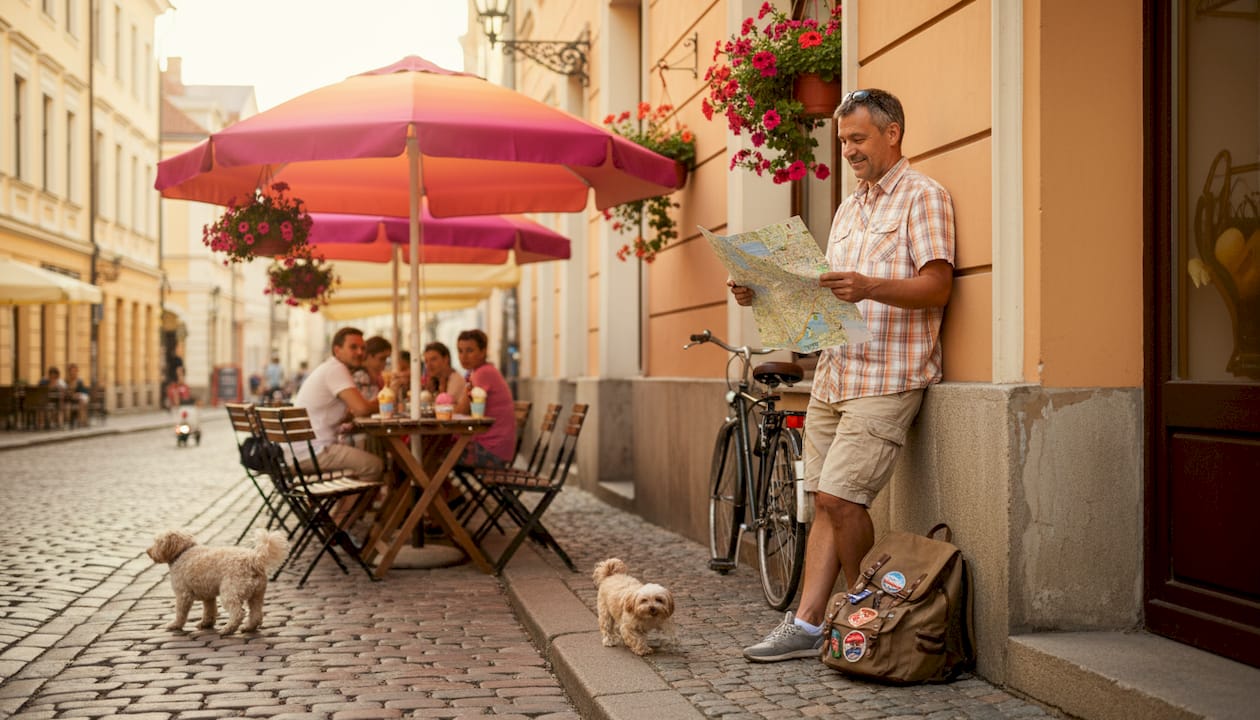
The Baltic states, specifically Vilnius, Riga, and Tallinn, are some of Europe’s best-kept summer secrets. Average July temperatures hover around 65 to 72 degrees Fahrenheit, a world apart from the 95-plus degree heat in southern destinations. Prices for accommodations, meals, and experiences are significantly lower, and the tourism infrastructure is excellent without being overwhelmed. As travel community discussions confirm, Northern Europe like Baltics avoids southern heatwaves and crowds while being genuinely budget-friendly.
Here is a quick comparison of what you can expect:
| Factor | Southern Europe (July/Aug) | Northern Europe (July/Aug) |
|---|---|---|
| Average temperature | 85 to 100°F | 60 to 72°F |
| Crowd levels | Very high | Moderate |
| Accommodation cost | High to very high | Moderate |
| Cultural experiences | Rich and diverse | Rich and underrated |
| Tour availability | Limited, books fast | More flexible |
- Consider multi-country tours that blend a popular stop with a lesser-known city. A Vienna to Bratislava day trip or a Prague to Cesky Krumlov excursion adds variety without the mass-tourist pressure.
- Look at shoulder shoulder timing within summer. Early June and late August offer many of the same perks as peak summer, but with noticeably thinner crowds and better pricing.
- Prioritize experiences over landmarks. Small food tours, local craft markets, or nature hikes often deliver more memorable moments than a rushed visit to a famous monument surrounded by thousands of other visitors.
Explore European summer tour options that include some of these hidden-gem routes, or look deeper into choosing Northern Europe tours for a full breakdown of what each region offers this season.
Escape and adapt: Handling summer extremes on tour
Smart destination choices help, but knowing how to adapt daily ensures a comfortable, memorable trip even during summer extremes. Even the best-planned itinerary will encounter a scorching afternoon or a bottleneck at a famous site. What separates satisfied travelers from exhausted ones is knowing exactly how to respond in the moment.
Take Venice as a perfect example. The city in July can feel suffocating. Narrow lanes trap heat, and tourist density peaks around midday at the Rialto Bridge and Piazza San Marco. But just minutes away, a vaporetto water bus ride delivers you to the Lido, Venice’s beach escape where you can cool off entirely before returning to sightseeing in the late afternoon.
“The secret to summer travel is not avoiding the heat entirely. It is knowing exactly when and where to step out of it.”
Here are the most effective in-trip adaptation strategies:
- Go early, go often. Major sites like the Colosseum, the Eiffel Tower, and the Acropolis are dramatically less crowded before 9 a.m. Book the first entry slot whenever possible.
- Embrace the siesta rhythm. Many southern European cities naturally slow down between noon and 3 p.m. Use this time to rest, eat a leisurely lunch, or visit indoor air-conditioned museums and galleries.
- Schedule outdoor activities for late afternoon. Temperatures drop noticeably after 4 p.m. in most European cities, and the golden hour light makes sightseeing genuinely beautiful.
- Carry a portable fan or cooling mist spray. These small items sound trivial but make a real difference during long walking tours.
- Use local transit creatively. Beyond Venice’s vaporetto, cities like Athens have coastal tram lines, Rome has nearby lakes, and Paris has the Seine riverside paths. Each offers a cooler alternative when central areas become oppressive.
| City | Summer challenge | Local adaptation |
|---|---|---|
| Rome | Intense heat, tourist density | Morning visits, Tivoli day trip |
| Paris | Crowds at major monuments | Early entry, Seine riverside walks |
| Venice | Heat trapped in narrow lanes | Lido beach via vaporetto |
| Athens | Extreme heat, Acropolis crowds | Dawn visits, coastal tram escape |
For more ideas on staying comfortable across different tour formats, browse more summer travel tips or look into innovative yacht options that put the breeze of the open sea between you and the summer heat.
Why breaking from the crowd makes summer tours truly memorable
Here is something most travel advice will not tell you directly: the standard European summer itinerary is not designed for enjoyment. It is designed for familiarity. The same iconic stops, the same packed buses, the same midday meltdown at a famous plaza. Millions of travelers follow the same script each year, and most of them come home with a variation of the same experience.
We have seen this pattern play out in destination after destination. Travelers who book identical routes share identical frustrations. But those who choose to diverge, even slightly, describe their trips with an entirely different energy.
Peak summer brings high prices, intense crowds, and exhausting heat, while shoulder timing and reverse itineraries on yachts or alternative routes sidestep these stressors completely. This is not just logistical advice. It is a philosophy about what travel should actually feel like.
The most rewarding summer tours we have seen share a few common traits. They include at least one stop that the traveler has never heard of before booking. They build in genuine downtime rather than cramming in every possible landmark. And they choose quality of experience over quantity of checkboxes.
Consider a yacht-based tour that visits Greek islands in reverse order. You arrive at Mykonos on a Tuesday instead of a Saturday. The bars are quieter, the beaches are accessible, and the locals are genuinely happy to see you. That shift in timing, made possible by yacht tours for avoiding summer crowds, transforms the entire character of the trip.
The travelers who get the most from European summer tours are not the ones who push hardest through the crowds. They are the ones who trust the wisdom of stepping sideways, choosing a Northern city over a Southern one, a quiet cove over a famous beach, or a Tuesday morning over a Saturday afternoon. Summer in Europe is endlessly generous to those willing to look slightly beyond the obvious.
Ready to plan your next unforgettable summer tour?
The tips in this guide are only as powerful as the plan behind them. Knowing when to book, what to pack, and where to go gives you a real advantage. But turning those insights into a real, seamless trip takes the right partner.
Next View Tours specializes in exactly this kind of thoughtful, flexible travel. Whether you are looking for a custom tour planning guide that shapes your itinerary around your pace and preferences, or you want to explore multi-day tour inspiration across multiple countries and landscapes, our team brings local expertise and genuine care to every booking. From Vienna to Tallinn, from Prague to the Adriatic coast, we help you find the version of Europe that fits you perfectly. Start exploring your options today and make this summer the one you actually remember.
Frequently asked questions
How far in advance should I book a European summer group tour?
You should book 3 to 6 months ahead for July and August to secure your preferred tour, guide, and accommodations before peak demand clears the best options.
What’s the best luggage style for a European guided tour?
Choose a carry-on sized bag for maximum mobility, especially in cities with narrow streets, pedestrian zones, or limited vehicle access between tour stops.
Are there cooler, less crowded areas to tour in Europe in summer?
Yes. Northern Europe, including the Baltics, offers milder temperatures, fewer crowds, and considerably lower costs compared to peak southern European destinations in July and August.
How can I cool off during European city sightseeing in summer?
Plan your outdoor visits for early morning or late afternoon, and look for local escapes like Venice’s Lido beach accessible by vaporetto for a midday refresh.
What’s a reverse itinerary and how does it help in peak season?
A reverse itinerary visits stops in the opposite order from the standard route, so you avoid initial crowds at each location and experience popular sites when tour groups have already moved on.
Recommended
- Benefits of European Tours: Complete Guide for 2024 – Next View Tours
- Summer Tours Europe Explained: Choosing the Right Adventure – Next View Tours
- Tour Planning Explained: Unlocking Better European Journeys – Next View Tours
- Tour Itinerary Explained: Maximizing Your Europe Adventure – Next View Tours


Comments are closed