

 Adventure Tours
Selecting the best adventure tour destinations across Austria and nearby Alpine regions is rarely straightforward for travel professionals or seasoned explorers. Multi-day adventures must strike the right balance between breathtaking scenery, practical logistics, and authentic connections to local culture. By focusing on a destination’s natural beauty and authenticity alongside infrastructure and community impact, you can create experiences that satisfy even the most discerning participants and set your tours apart in the competitive European market.
Table of Contents
- Step 1: Assess Adventure Tour Destinations And Options
- Step 2: Design Tailored Multi-Day Itineraries
- Step 3: Coordinate Logistics And Vendor Partnerships
- Step 4: Promote Tours And Manage Bookings
- Step 5: Verify Safety, Quality, And Participant Readiness
Quick Summary
| Key Insight | Explanation |
|---|---|
| 1. Assess vital destination factors | Evaluate natural beauty, infrastructure, and cultural experiences to choose the best adventure location. |
| 2. Design engaging itineraries | Create itineraries tailored to participants’ motivations and risk tolerance for optimal experiences. |
| 3. Coordinate essential logistics | Align transportation, accommodation, meals, and local guides to ensure smooth tour operations. |
| 4. Promote tailored experiences | Use storytelling and targeted marketing to connect with specific audiences seeking unique adventures. |
| 5. Ensure participant readiness | Verify participant fitness and expectations to manage risks and enhance overall satisfaction. |
Step 1: Assess adventure tour destinations and options
Before you settle on a destination, you need to understand what makes a location viable for multi-day adventure tours. This step involves evaluating natural features, local infrastructure, and whether the destination aligns with your target audience’s expectations. The assessment process shapes everything that comes next, from logistics to participant safety and satisfaction.
Start by examining what draws adventure tourists to specific places. Natural beauty and authenticity form the foundation of destination appeal, but the reality is more nuanced than scenic views alone. You’re looking for locations that offer genuine experiences where visitors can connect with the environment and local culture simultaneously. In Austria and neighboring Alpine regions, this might mean assessing whether a mountain valley combines stunning terrain with authentic village experiences or whether a river system offers both technical paddling opportunities and cultural encounters. Consider how each destination balances environmental conservation with economic benefits to local communities, as this balance directly affects tour sustainability and local support.
Next, evaluate the practical infrastructure that underpins multi-day operations. Can the destination reliably accommodate groups? Are there suitable accommodation options that match your tour’s positioning, from mountain lodges to family-run guesthouses? What about meals, transportation between activity sites, and emergency services? A destination might have extraordinary hiking trails, but if the nearest hospital is three hours away, that’s a significant constraint. Look at seasonal accessibility too. Alpine passes in Austria can shift from fully open to hazardous within weeks, which means your destination assessment needs seasonal specificity. Research the diverse needs of adventure tourists and consider demographic trends in your market to ensure the destination matches what your participants are actually seeking, whether that’s high-adrenaline rock climbing or cultural immersion with moderate physical activity.
Finally, factor in the socio-economic and environmental impact considerations. Visit the destination during different seasons if possible. Talk to local guides, accommodation operators, and tourism authorities. Understand permit requirements for activities, local regulations around group sizes, and environmental protection measures. This groundwork prevents costly surprises during tour operations and builds relationships that benefit your business long-term. When you’ve thoroughly assessed these elements, you’ll have a clear picture of whether a destination truly works for your multi-day adventure tour vision.
Here’s a summary of key factors to evaluate when choosing multi-day adventure tour destinations:
| Evaluation Factor | Why It Matters | Questions to Ask |
|---|---|---|
| Natural Features | Attracts adventure tourists, enables activities | Does the location offer unique scenery? |
| Infrastructure | Supports group safety and comfort | Are accommodations and transport reliable? |
| Cultural Integration | Enhances authenticity and connection | Will participants meet locals and learn culture? |
| Environmental Impact | Ensures destination sustainability | What measures protect the environment? |
| Seasonal Accessibility | Safeguards trip feasibility | Are trails and roads open year-round? |
Pro tip: Create a simple assessment spreadsheet for each potential destination that tracks natural features, accommodation capacity, accessibility, permits required, and local contact information, so you can compare options objectively and have critical details at your fingertips when planning.
Step 2: Design tailored multi-day itineraries
With your destination selected, you now craft the actual experience through itinerary design. This is where your tour transforms from a geographical location into a compelling adventure that matches what your participants actually want. A well-designed itinerary balances physical challenge, rest, cultural engagement, and safety in a way that keeps people energized across multiple days.
Start by understanding your specific group’s motivations and risk tolerance. Not all adventure seekers want the same thing, and this reality shapes every day of your itinerary. Someone training for mountaineering needs different pacing and technical progression than a family seeking outdoor connection with cultural immersion. Understanding participant motivations and risk tolerance becomes the foundation for every decision you make about activity sequencing, difficulty progression, and rest allocation. Map out your multi-day structure by front-loading appropriately challenging activities when participants have full energy, then strategically scheduling easier or more contemplative experiences as fatigue builds. In a four-day Austrian mountain tour, this might mean placing technical rock climbing on day two after acclimatization, moving to moderate hiking with cultural stops on day three, and finishing with a guided scenic valley walk and local wine tasting on day four.

Next, weave local cultural experiences throughout rather than treating them as sideline activities. Your participants chose an adventure in Austria, not just any mountainous region, because they value the landscape and the people within it. Integrate village visits, local food experiences, and conversations with guides who know the region’s history into the fabric of your daily activities. The pacing matters enormously here. You cannot cram eight hours of hiking, three cultural sites, four meals, and evening entertainment into one day and expect satisfied participants. Build breathing room into your schedule. Strategic rest periods between activities prevent fatigue-related accidents and allow time for genuine cultural connection rather than rushed photo stops. Multi-day itineraries must remain adaptable across various adventure levels and settings, so design your days with built-in flexibility. If weather forces a change, you need alternative activities that maintain value without compromising safety. Document your itinerary in clear, practical terms that your guides can execute reliably while adapting as conditions require.
Pro tip: Build a template itinerary that shows your daily rhythm (wake time, activity duration, meal timing, rest periods, evening activities) so you can quickly duplicate and customize it for different groups while ensuring consistent quality and safety standards across all your tours.
Step 3: Coordinate logistics and vendor partnerships
Your itinerary is solid, but it lives only on paper until you orchestrate the complex network of people and services that actually deliver the experience. Coordinating logistics and vendor partnerships is where planning transforms into operational reality. This step involves aligning transportation companies, accommodation providers, food services, equipment rentals, and local guides to work seamlessly together toward your tour’s success.
Begin by mapping every single service component your tour requires across all days. Transportation from Vienna to your Alpine destination, overnight accommodations in multiple villages, meals at specific times, equipment rental for climbing or water activities, and local expert guides who know the terrain and culture. Managing transport, accommodation, food services, and local guides becomes the backbone of reliable tour execution. Create a detailed vendor spreadsheet that lists each service provider, their contact information, service dates, pricing, capacity, and backup options. Build relationships with these vendors before your tour runs, not during it. Visit the accommodations yourself. Test drive the transport routes. Eat the meals they’ll serve your guests. This firsthand knowledge prevents nasty surprises and builds trust that’s invaluable when problems arise. Local vendors appreciate working with tour operators who understand their business and respect their work.
Next, establish clear agreements that align vendor quality and reliability with your tour standards. Establishing strong relationships ensures reliability and quality of service, which directly impacts participant satisfaction. Document expectations in writing, including backup plans for weather delays, equipment failures, or unexpected changes. Communication protocols matter tremendously. How will your lead guide contact the accommodation if your group arrives late? What happens if a restaurant cancels your reservation? Who handles equipment issues during activities? Build redundancy into critical services. If your primary transport company cancels, do you have a backup? If one accommodation fills unexpectedly, where else can you place guests? These contingencies cost you time and small additional investment upfront, but they protect your reputation and participant experience when chaos strikes. Schedule regular check-in calls with vendors before each tour season and again one week before every departure. Confirm numbers, special dietary needs, activity times, and any changes to the itinerary. This constant communication prevents misunderstandings and keeps everyone aligned.
Here is a comparison of three essential logistics partnerships and their impact on a successful adventure tour:
| Vendor Type | Role in Tour Delivery | Critical Success Factor |
|---|---|---|
| Accommodation | Provides rest and local immersion | Consistency and cleanliness |
| Transportation | Moves groups between locations | Timeliness and safety |
| Local Guides | Lead activities and cultural access | Regional expertise and flexibility |
Pro tip: Create a master vendor contact sheet with emergency numbers and assign one team member as the primary logistics coordinator for each tour, so all vendors know exactly who to contact and there’s no confusion about who’s responsible for what during operations.
Step 4: Promote tours and manage bookings
Your tour is designed, vendors are coordinated, and everything is ready operationally. Now you need to get it in front of the right people and manage their journey from interest to departure. Promotion and booking management work together to fill seats while maintaining the quality standards you’ve built into every other step.
Start your promotion strategy by recognizing that adventure travelers are not a monolith. Someone planning a corporate team building expedition has completely different needs and motivations than a couple seeking romantic mountain exploration. Targeting niche markets through storytelling emphasizes unique experiences that resonate with specific audiences. Rather than generic marketing messages, tell the story of what makes your Austrian Alps tour different. Maybe it’s the insider access to a family-run alpine dairy, the technical expertise of your lead guide who has summited twenty times, or the emotional arc of moving from physical challenge to cultural connection. Digital platforms matter enormously here. Your website, Instagram, and email campaigns should showcase stunning visuals paired with storytelling that helps potential participants see themselves in the experience. Partnerships with travel agencies and tourism boards extend your reach beyond direct bookings. When travel professionals recommend your tours, they carry credibility that advertising cannot replicate. Build relationships with agencies that understand your niche and can effectively communicate what you offer.
On the booking side, you need systems that handle the complexity of group dynamics. Digital tools streamline reservations and ensure accurate participant data collection while building trust through transparency. Your booking platform must track availability across multiple tour dates, capture special dietary needs and physical limitations, process secure payments, and maintain clear communication with each participant. When someone books your four-day tour, they need to know exactly what to expect regarding physical difficulty, what gear to bring, cancellation policies, and safety protocols. Transparency about risk communication builds confidence, not fear. People choose adventure tours precisely because they want challenge and authentic experience. They just want to know what they’re signing up for. Use your booking process to collect the information you need to customize their experience. Do they have previous climbing experience? Are they interested in photography or wildlife? Will they want vegetarian meals? These details transform your booking system from a mere transaction into the beginning of personalization that continues through their entire tour.
Pro tip: Implement a booking confirmation sequence that sends a welcome email immediately, a detailed pre-tour information packet two weeks before departure, and a final logistics call one week out, so participants feel supported from purchase through arrival and you catch any last-minute issues before they impact your tour.
Step 5: Verify safety, quality, and participant readiness
Everything converges in this step. You have your destination selected, itinerary designed, vendors coordinated, and bookings coming in. Before your first participant arrives at the trailhead, you must verify that every element of your operation is genuinely ready and that your participants understand what they’re signing up for. This verification process protects people, your reputation, and your business viability.
Begin with participant readiness assessment. Adventure tourism is not one size fits all, and mismatched expectations create dangerous situations and unhappy customers. Start collecting detailed information during the booking process about physical fitness, prior experience with similar activities, any health conditions that might affect performance, and psychological comfort with risk. A participant who claims “moderate” fitness but has never hiked above 2000 meters faces serious challenges on a five-day Alpine crossing. Assessing participants’ physical and psychological readiness implements risk management protocols that matter for everyone involved. Schedule pre-tour conversations with participants who are new to adventure activities or pushing their personal limits. These conversations serve multiple purposes. You learn specifics about their actual capabilities. They get realistic expectations about what they’ll experience. You build trust and confidence that carries into the tour itself. If someone is not genuinely ready, the conversation allows you to suggest modifications, recommend training, or refer them to a different tour better suited to their current abilities.
Next, conduct comprehensive quality and safety verification across all operational elements. Check every piece of climbing equipment personally. Test vehicle safety systems. Visit accommodations unannounced to verify cleanliness and functionality. Meet with guides and confirm they understand the specific itinerary, emergency protocols, and customer service standards for your tour. Quality assurance integrates continuous monitoring and feedback mechanisms that improve your operation over time. Document everything. Maintain equipment inspection logs with dates and findings. Record staff training completion and certification expiration dates. Keep communication records showing you verified vendor readiness. This documentation protects you legally and helps you spot patterns that need correction. One week before departure, conduct a final readiness check. Confirm participant numbers with accommodations and transportation. Review weather forecasts and develop contingency plans. Brief your guide team on any last-minute participant changes or special needs. Communicate final logistics to all participants so they arrive prepared and confident.
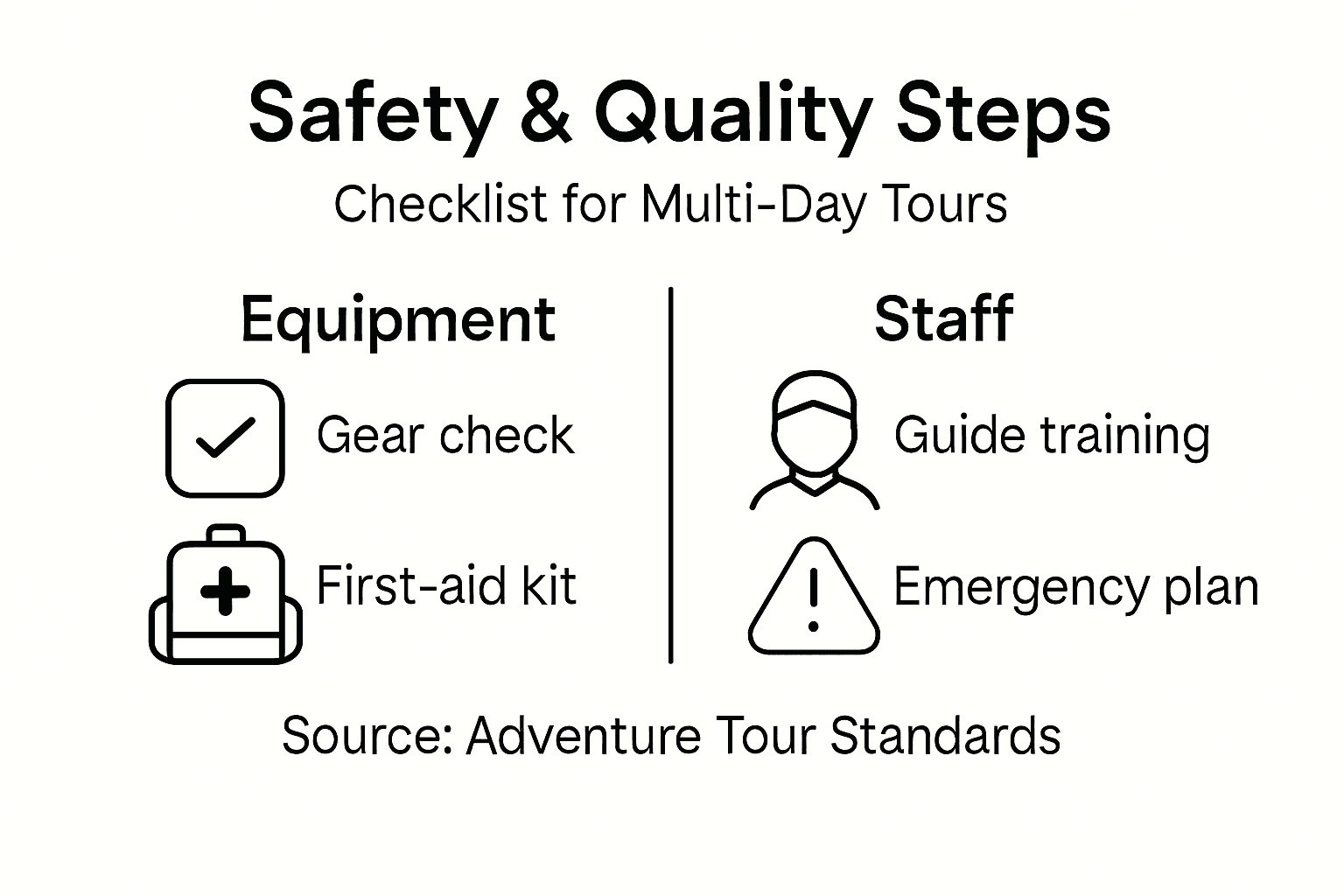
Pro tip: Create a participant readiness scorecard that evaluates fitness level, experience, health considerations, and risk comfort on a simple scale, then use it to identify anyone requiring pre-tour check-in conversations or itinerary modifications before they arrive.
Transform Your Multi-Day Adventure Tour Dreams into Reality with Next View Tours
Planning a seamless multi-day adventure tour demands expert insight into destination selection, itinerary design, vendor coordination, and participant safety. If you want to experience these challenges without the hassle Next View Tours offers expertly crafted adventure trips that deliver both excitement and comfort. Whether you seek rugged mountain routes or culturally rich experiences in Europe our carefully curated Adventure Tours – Next View Tours and Mountain Tours – Next View Tours provide authentic and reliable options.

Explore how we handle every detail from ensuring seasonal accessibility to vetting local accommodations and guides so you can focus on the thrill of your trip. Don’t wait to discover the perfect balance of physical challenge and cultural connection that this article highlights. Visit Next View Tours now and secure your place on an unforgettable multi-day adventure tailored to your needs.
Frequently Asked Questions
What are the key factors to assess when choosing adventure tour destinations?
Before selecting an adventure tour destination, evaluate natural features, local infrastructure, cultural integration, environmental impact, and seasonal accessibility. Research each factor thoroughly to ensure your selected location offers a genuine experience aligned with participant expectations.
How can I tailor multi-day itineraries for different adventure groups?
Design itineraries by understanding the specific motivations and risk tolerances of your participants. For example, customize a trip for a family by including lighter physical activities combined with cultural experiences, actively balancing challenge and relaxation throughout the tour.
What logistics should I coordinate for a successful adventure tour?
Coordinate transportation, accommodations, food services, and local guides to ensure a seamless experience. Create a comprehensive vendor spreadsheet detailing contact information and service agreements to streamline communication and prevent disruptions during the tour.
How can I effectively promote my adventure tours?
Promote your tours by targeting specific market segments with engaging storytelling that highlights unique experiences. Use digital platforms, such as your website and social media, to showcase breathtaking visuals and authentic narratives, thereby increasing visibility and interest in your tours.
What steps should I take to verify participant readiness before the tour?
Assess participant readiness by collecting detailed information about their physical fitness, prior experience, and any health conditions during the booking process. Engage in pre-tour conversations to ensure all participants have realistic expectations and are properly prepared for the adventure ahead.
How do I ensure safety and quality in my adventure tours?
Verify safety and quality by conducting thorough checks on equipment, transportation, and accommodations before the tour begins. Document all inspections and maintain regular communication with venders to address any last-minute changes and confirm all elements meet your operational standards.
Recommended
- Adventure Trip Planning Guide for Epic European Tours – Next View Tours
- How to Choose Adventure Trips for Unforgettable Experiences – Next View Tours
- How to Book Adventure Tours for Custom European Experiences – Next View Tours
- What Is an Adventure Tour – Real Experiences, Lasting Impact – Next View Tours


Comments are closed