
 Uncategorized
TL;DR:
- Salzburg offers a rich mix of Baroque architecture, alpine landscapes, and cultural history beyond its musical fame.
- The Old Town is a UNESCO World Heritage Site with landmarks like Hohensalzburg Fortress and Salzburg Cathedral.
- Visitors are encouraged to explore slowly, engage with locals, and experience the city’s authentic, less crowded neighborhoods.
Salzburg has a reputation problem. Most people picture Mozart’s birthplace as a destination purely for classical music devotees, perhaps a quick pilgrimage for fans of The Sound of Music. That image undersells the city in a significant way. Salzburg is a richly layered destination where Baroque architecture, a world-class food scene, alpine landscapes, and centuries of living history come together in a compact, walkable space. Whether you’re a culture seeker, a history enthusiast, or simply someone who loves discovering a new city on foot, Salzburg rewards curiosity at every turn. This guide walks you through everything you need to know to plan a visit that goes well beyond the highlights reel.
Table of Contents
- The historic heart: Old Town and Baroque masterpieces
- Salzburg’s musical legacy: Beyond Mozart
- Gastronomy and local flavor: Savoring Salzburg
- Tourism today: Insider tips and sustainable travel
- A deeper journey: What most travelers miss in Salzburg
- Plan your Salzburg adventure with Next View Tours
- Frequently asked questions
Key Takeaways
| Point | Details |
|---|---|
| UNESCO Old Town magic | Salzburg’s stunning historic center is a walkable museum of Baroque wonders and rich history. |
| Music at every turn | From Mozart to festivals, Salzburg’s streets and venues are alive with world-famous musical experiences. |
| Taste local life | Cafes, breweries, and traditional cuisine make Salzburg a destination for foodies and culture lovers alike. |
| Travel responsibly | Smart tips help you beat crowds and be part of sustainable tourism in a popular city. |
The historic heart: Old Town and Baroque masterpieces
Now that you know Salzburg offers more than meets the eye, let’s walk its iconic streets and define what makes the Old Town so special.
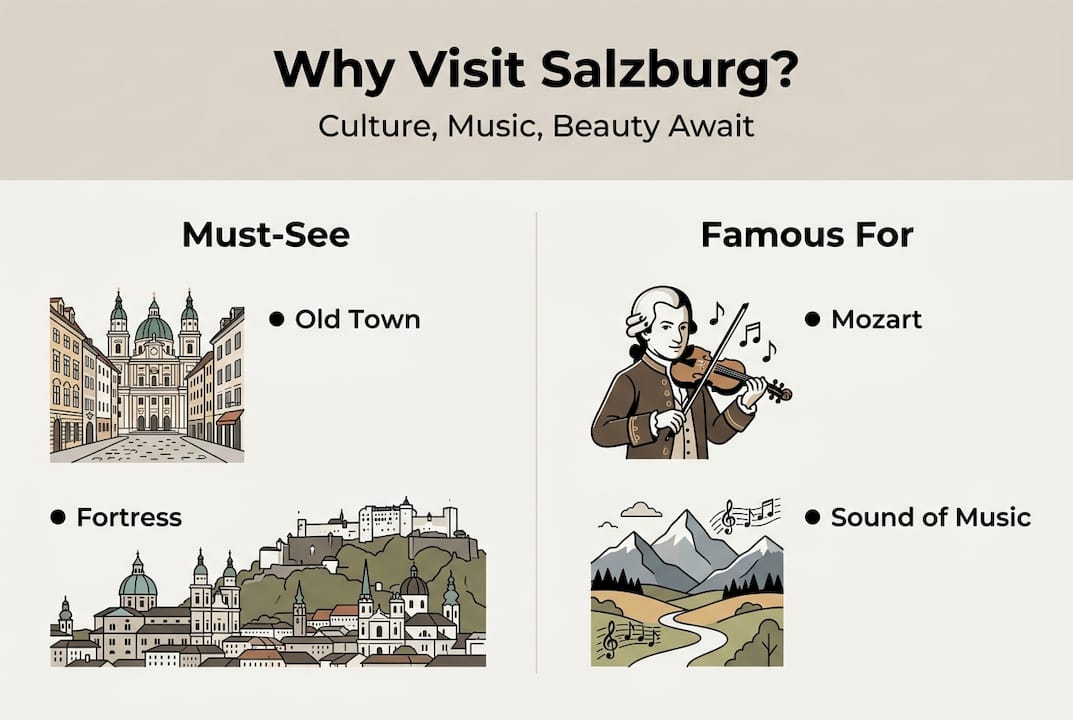
Salzburg’s Old Town, known locally as Altstadt, sits on the south bank of the Salzach River and is one of the most striking urban landscapes in central Europe. Exceptional Baroque architecture defines the district, and UNESCO recognized its outstanding universal value by listing it as a World Heritage Site. The designation covers a remarkable 236 hectares of well-preserved historic fabric, including churches, palaces, and public squares that have changed very little since the 17th century.
What does that mean for you as a visitor? It means you can spend an afternoon simply wandering and feel as though you’ve stepped into a living museum. The streets are dense with architectural detail: painted facades, ornate iron signs above shopfronts, cobblestone lanes threading between grand church towers.
Key landmarks to anchor your walk:
- Hohensalzburg Fortress sits high above the city on Festungsberg hill. Built in 1077, it is one of the largest and best-preserved medieval castles in Europe. The views from the top are simply stunning.
- Salzburg Cathedral dominates the southern end of the Old Town. Consecrated in 1628, its twin towers and soaring dome make it the defining symbol of the city’s Baroque identity.
- Residenzplatz is the grand central square where the prince-archbishops once displayed their power. The Residenz fountain, completed in 1661, remains one of the largest Baroque fountains north of the Alps.
- Salzburg Museum offers deep context for everything you see on the streets, tracing the city’s history from Celtic settlements to the present day.
| Landmark | Year built | Style |
|---|---|---|
| Hohensalzburg Fortress | 1077 | Romanesque/Gothic |
| Salzburg Cathedral | 1628 | Italian Baroque |
| Residenz Fountain | 1661 | High Baroque |
| Mirabell Palace & Gardens | 1606 | Baroque |
“Walking through the Old Town feels like reading a book where every page is a different century, yet the story flows naturally.”
Pro Tip: Enter the Old Town from the Staatsbrücke bridge early in the morning, around 7:30 a.m., when the light hits the cathedral’s facade perfectly and the crowds haven’t arrived yet. Those first two hours are genuinely magical.
Salzburg’s musical legacy: Beyond Mozart
Once you’ve soaked up the atmosphere in Old Town, Salzburg’s music scene offers a different rhythm to discover.
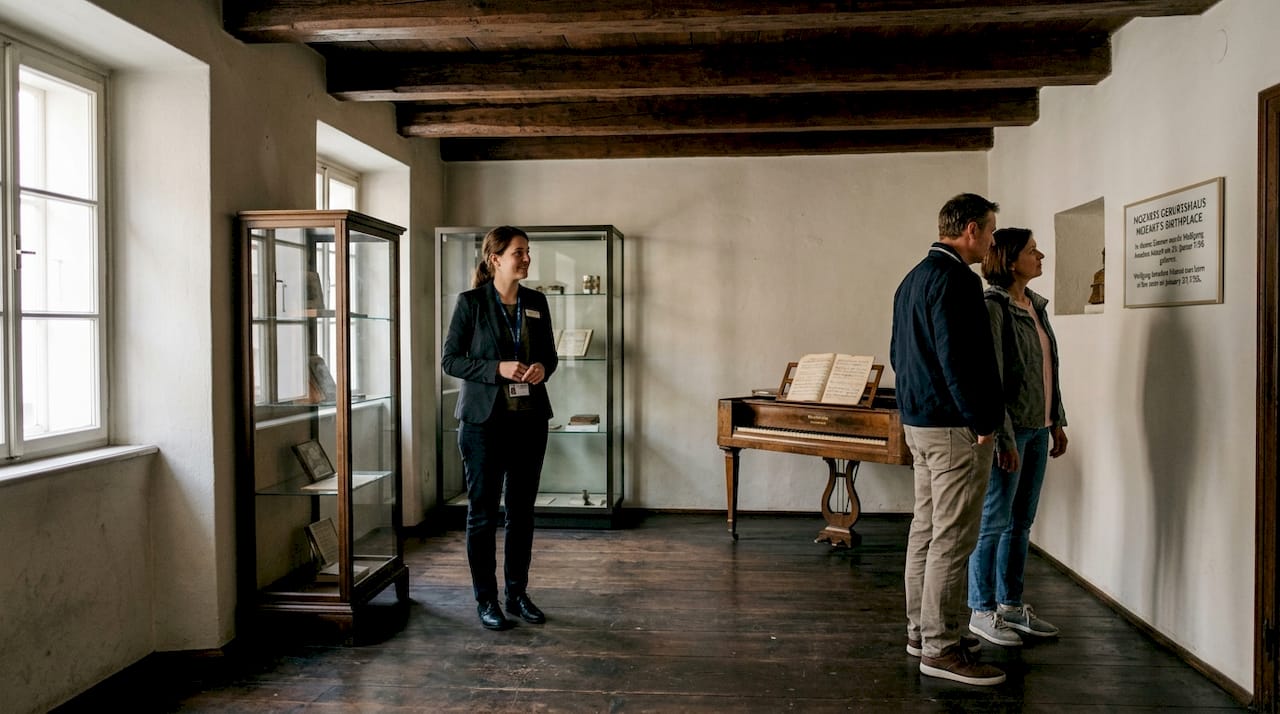
Wolfgang Amadeus Mozart was born at Getreidegasse 9 on January 27, 1756, and that fact alone has shaped Salzburg’s global identity for over two centuries. Mozartplatz, the central square bearing his name, features a bronze statue erected in 1842 and remains a gathering point for visitors from every corner of the world. The Mozart Birthplace and the Mozart Residence are both excellent museums, offering fascinating insight into how a prodigy grows up in a city that takes music seriously.
But the musical life of Salzburg extends far beyond any single composer. The city hosts live classical performances virtually year-round, from chamber concerts in palace halls to orchestral evenings at the Mozarteum.
Four ways to experience live music in Salzburg:
- Attend an evening concert at the Mozarteum University’s Great Hall, one of Austria’s finest acoustic spaces.
- Book tickets for a Mozart Dinner Concert, held regularly in ornate historic venues.
- Catch a performance at the Felsenreitschule, the dramatic open-air theater carved into a cliff face.
- Visit the Marionette Theater for an enchanting operatic experience unlike anything else in Europe.
The crown jewel of the calendar is the Salzburg Festival, held every summer since 1920. The 2025 festival attracted 256,600 visitors at an extraordinary 98.4% venue capacity, confirming its standing as one of the world’s most sought-after cultural events. Planning ahead is essential if you want tickets.
| Music experience | Best for | Season |
|---|---|---|
| Salzburg Festival | Opera, drama, orchestral | July to August |
| Mozart Week | Chamber and orchestral | Late January |
| Mozarteum concerts | Year-round classical | All year |
| Advent concerts | Choral, seasonal | December |
256,600 festival visitors attended the Salzburg Festival in 2025 at 98.4% venue capacity.
For film fans, the Sound of Music Tour traces filming locations across the city and surrounding landscape, blending cinematic nostalgia with genuinely beautiful scenery.
Pro Tip: If the Salzburg Festival is sold out, check the official website for returned tickets in the two weeks before opening night. Cancellations do happen, and last-minute availability is more common than most people realize.
Gastronomy and local flavor: Savoring Salzburg
With the city’s music still echoing in your ears, Salzburg’s culinary traditions are ready to delight your taste buds.
Austrian cuisine is hearty, inventive, and deeply rooted in local agricultural traditions. Salzburg adds its own regional personality to the national kitchen, producing dishes and sweets that you’ll find only here.
Must-try Salzburg food experiences:
- Salzburger Nockerl is the city’s signature dessert. This baked soufflé, shaped to resemble the three hills surrounding the city, is light, eggy, and sweetened with vanilla and sugar. Order it fresh and eat it fast.
- Mozartkugel are the famous chocolate truffles filled with pistachio marzipan and nougat. The originals, made by Konditorei Fürst since 1890, come unwrapped. The wrapped versions you see everywhere are licensed variants.
- Wiener Schnitzel and Tafelspitz (boiled beef) appear on almost every traditional menu and are worth trying in a proper Gasthof (traditional inn).
Cafe Tomaselli, founded in 1700, is the oldest coffee house in Austria and a genuine institution. Sitting inside with a Verlängerter (an extended espresso with hot water) and a slice of apple strudel is a rite of passage for any first-time visitor. The cafe culture here runs deep, and locals treat their coffee houses as a second living room.
For beer lovers, Salzburg has strong brewery traditions. The Stiegl Brauwelt brewery museum and the Augustiner Bräustübl, a massive beer hall operated by monks since 1621, are essential stops.
The Salzburg Card is worth serious attention. In 2024, card sales hit a record 265,822, enabling 1.3 million attraction entries. The card covers free entry to the main museums, the fortress funicular, and unlimited use of public transit. If you plan to visit three or more major sites, the math works strongly in your favor.
For a fuller overview of what to see and do, the Salzburg travel guide on Next View Tours is a practical resource, and the introduction to Salzburg page gives helpful context for first-time visitors.
Pro Tip: Buy your Salzburg Card on the day you plan to do the most sightseeing. The 24-hour, 48-hour, and 72-hour options start counting from the first use, not the purchase, so time it well.
Tourism today: Insider tips and sustainable travel
Every great city faces the challenge of balancing popularity with local life. Here’s how Salzburg is responding and what visitors should know.
Salzburg is undeniably popular. The city recorded 1.77 million arrivals and 3.14 million overnights in 2024. The broader Salzburg province reached nearly 30 million overnights in the 2023/24 season. These numbers create real pressure on neighborhoods, public spaces, and infrastructure, and city planners are responding with innovative strategies.
Rather than imposing entry fees or hard visitor caps, Salzburg is focusing on dispersal and quality management. Hotel bed caps in certain districts aim to prevent further accommodation density near the most sensitive historic areas. The goal is to spread visitors more evenly across the city and encourage longer, slower stays over quick day-trip rushes.
Practical tips for a more rewarding and respectful visit:
- Stay at least two nights. A rushed day trip means you join the peak-hour crowds and miss the city’s quieter personality entirely.
- Start early. The Getreidegasse shopping street, the fortress courtyard, and the cathedral are best before 9 a.m.
- Cross the river. The Linzer Gasse neighborhood on the north bank is charming, genuinely local, and far less crowded than the Old Town.
- Use public transit. Salzburg’s bus network is excellent, and the Salzburg Card makes it free. You’ll move more efficiently and reduce your footprint.
| Time of day | Crowd level | Best activity |
|---|---|---|
| 7:00 to 9:00 a.m. | Very low | Fortress walk, cathedral visit |
| 9:00 a.m. to 12:00 p.m. | Moderate | Museums, cafes |
| 12:00 to 3:00 p.m. | High | Indoor attractions, lunch |
| After 6:00 p.m. | Low to moderate | Riverside walks, concerts |
“Salzburg is not a city to be rushed. The slower you move, the more it gives you.”
For a brilliant way to experience Salzburg alongside another iconic destination, the Salzburg & Hallstatt Day Tour combines both in a single, well-paced itinerary.
Pro Tip: The Nonntal and Aigen neighborhoods, just south of the Old Town, offer local bakeries, independent shops, and almost no tourist foot traffic. A morning walk there gives you an honest sense of everyday Salzburg life.
A deeper journey: What most travelers miss in Salzburg
Most travel guides tell you where to go. We’d rather tell you how to be there.
The visitors who leave Salzburg feeling genuinely moved are rarely the ones who ticked off the most landmarks. They’re the ones who paused. Who sat at a cafe table long enough for a local to start a conversation. Who followed a sound down an alley and discovered a courtyard concert they hadn’t planned for.
Salzburg rewards that kind of attention. The Salzach riverside is perfect for an unhurried morning walk. The outdoor markets near Universitätsplatz sell regional cheeses, breads, and seasonal produce that tell you more about the region’s character than any museum exhibit. The city’s relationship with nature, visible in its alpine backdrop and riverside parks, shapes daily life in ways that visitors often overlook.
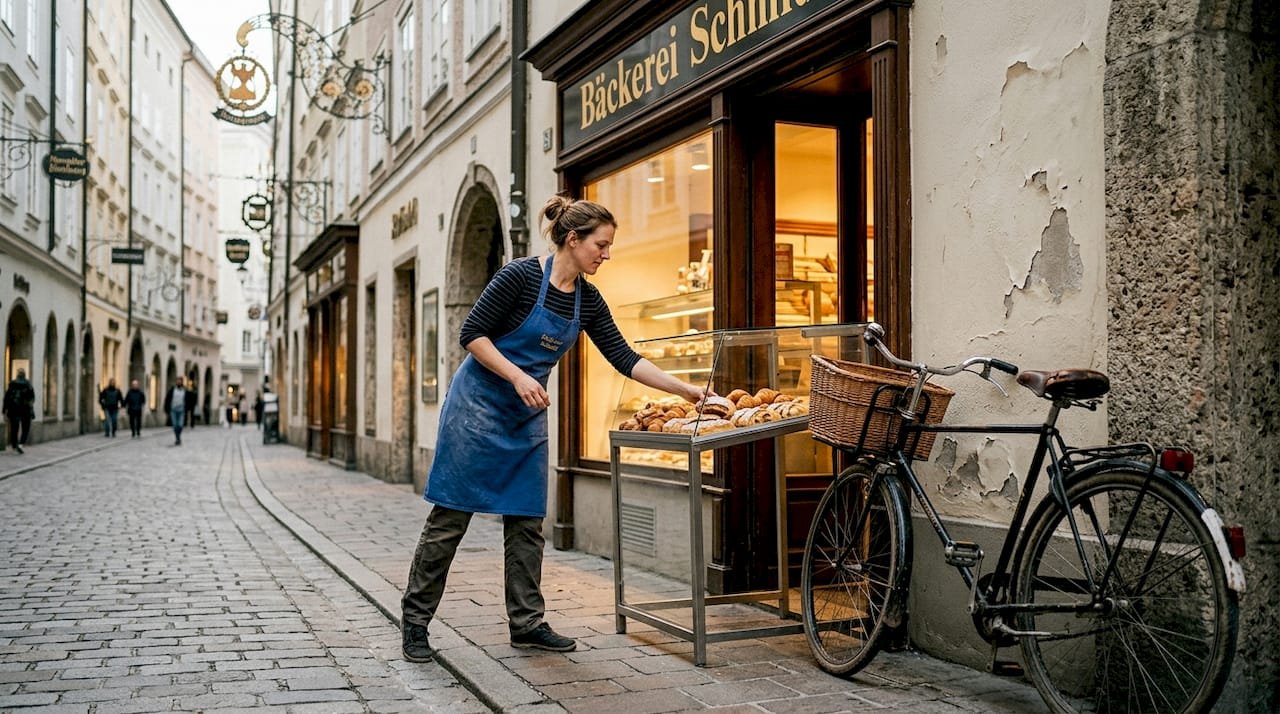
We’ve seen travelers choose different trip types and discover that a slower, more locally focused approach creates memories that outlast any selfie at the fortress gates. Build in unscheduled time. Talk to the person behind the bakery counter. Let the city reveal itself on its own terms. That’s where Salzburg’s real beauty lives.
Plan your Salzburg adventure with Next View Tours
Feeling inspired to experience Salzburg’s cultural layers? Here’s how to make your journey unforgettable.
Next View Tours specializes in crafting travel experiences across Europe that go beyond the standard itinerary. Whether you’re interested in a private guided walk through the Old Town, a curated multi-day exploration combining Salzburg with Vienna, Hallstatt, and the Austrian lakes, or something built entirely around your interests, we have options designed for curious, engaged travelers.
Our customizable trip types range from family-friendly day trips to intimate private tours in 2026 tailored to your pace and priorities. Every experience is guided by people who genuinely love the places they show you. Explore our Salzburg offerings and start planning a visit that will stay with you long after you’ve returned home.
Frequently asked questions
What is the best time to visit Salzburg?
Spring (April to May) and fall (September to October) offer mild weather with noticeably smaller crowds, while summer brings vibrant festivals alongside busier streets and higher accommodation prices.
Is Salzburg suitable for a day trip, or should I stay longer?
A day trip covers the main highlights well, but an overnight stay allows you to experience evening concerts, a quieter Old Town after dark, and the relaxed rhythm that makes Salzburg so appealing. The UNESCO-listed Old Town alone deserves unhurried exploration across more than one session.
How does the Salzburg Card work, and is it worth it?
The Salzburg Card provides free entry to major attractions and unlimited public transit use. With record 265,822 cards sold in 2024 enabling 1.3 million attraction entries, it clearly delivers strong value for visitors planning a full day or more of sightseeing.
Are there ways to avoid crowds in Salzburg?
Visit key sites before 9 a.m., explore the north-bank neighborhoods like Linzer Gasse, and consider a shoulder-season trip. The city’s hotel bed cap strategies are gradually improving the visitor experience across all areas.
Does Salzburg have activities for non-music lovers?
Absolutely. Architecture tours, fortress visits, culinary walks, brewery experiences, outdoor markets, and alpine day trips all offer compelling reasons to visit Salzburg with no interest in classical music whatsoever.
Recommended
- Salzburg Museum: A Cultural Treasure in the Heart of the City – Next View Tours
- Salzburg Cathedral: A Baroque Masterpiece in the Heart of the City – Next View Tours
- Schloss Klessheim: A Baroque Jewel Near Salzburg – Next View Tours
- Residenzgalerie: Salzburg’s Treasure of European Art – Next View Tours
- Summer Festivals, Lakes, and Mountains: Experience the Alps Stress-Free with Go Transfer Peak • Blog


Comments are closed