
 Uncategorized
TL;DR:
- Local guides offer authentic, personalized experiences by sharing stories and cultural insights.
- They provide insider access, flexibility, and meaningful interactions that standard tours lack.
- Choosing a qualified, community-rooted guide enhances travel depth and lasting memories.
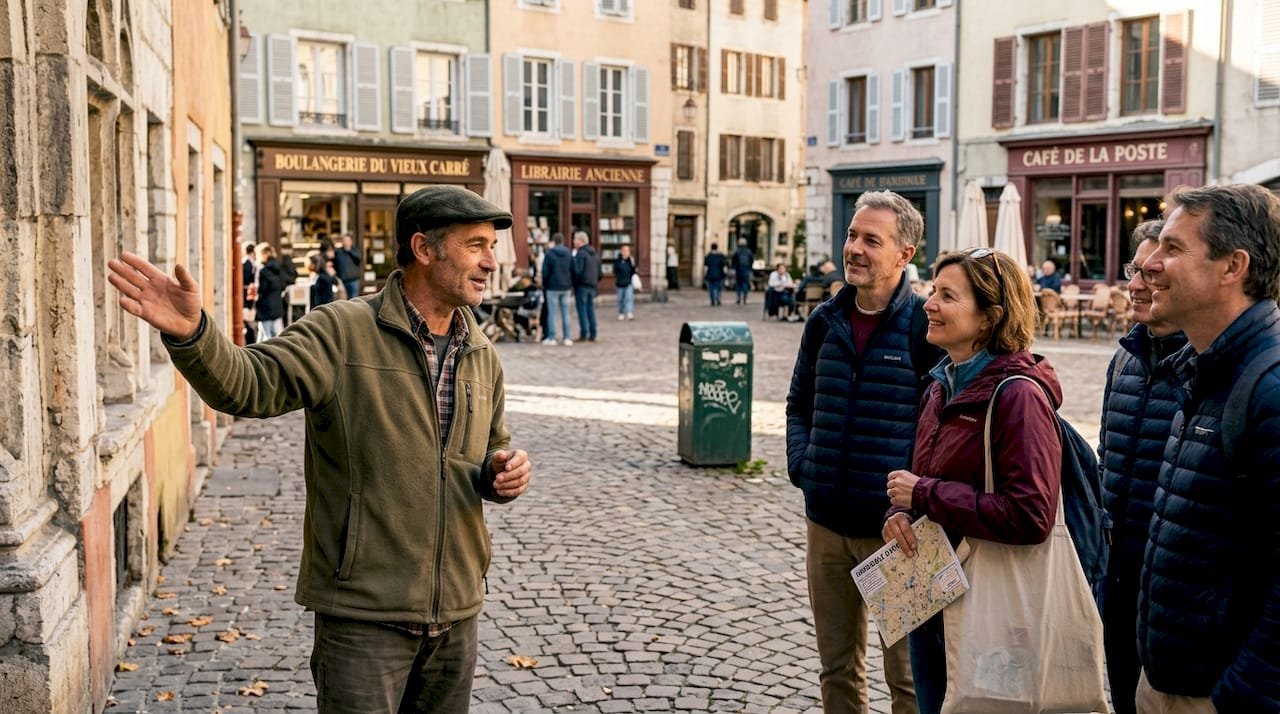
Most travelers assume guided tours mean crowded buses, rushed schedules, and scripted commentary. That picture couldn’t be further from the truth when a skilled local guide is involved. Across Europe, from the cobblestone lanes of Prague to the grand squares of Vienna, local guides are rewriting what travel can feel like. They bring destinations alive through personal stories, cultural knowledge, and genuine connections with their communities. This article will show you exactly why local guides matter, how they differ from standard tours, and how to choose the right one for your journey.
Table of Contents
- What makes local guides essential in European travel
- Local guides vs. traditional tours: A side-by-side comparison
- How local guides craft authentic and memorable experiences
- Tips for choosing the right local guide in Europe
- Our take: Don’t settle for ordinary — embrace the power of local guides
- Ready to experience Europe with your own local guide?
- Frequently asked questions
Key Takeaways
| Point | Details |
|---|---|
| Local guides add authenticity | Traveling with local guides allows you to truly immerse yourself in European culture and daily life. |
| Personalized tour flexibility | A local guide adapts your journey to your interests for a more meaningful experience. |
| Better access to hidden gems | Local guides can take you beyond tourist spots to unique locations most travelers miss. |
| Choose guides wisely | Selecting the right guide ensures reliability and maximizes your travel enjoyment. |
What makes local guides essential in European travel
Having introduced the misconception about guided tours, let’s explore what truly distinguishes local guides in Europe from standard tour leaders. The difference isn’t just style. It’s substance.
A local guide is someone who grew up in, studied, or spent years immersed in a specific place. They don’t read from a script. They tell you why the baker on the corner has been operating since 1923, or which courtyard in Budapest once sheltered a famous poet. As local guide details show, this lived knowledge goes far beyond what any pamphlet or audio guide can offer.
Local guides enhance cultural understanding and authenticity in ways that reshape how travelers see a destination. You stop being a spectator and start becoming a temporary local yourself. That shift is profound.
Here’s what local guides consistently bring to your European experience:
- Insider access: Hidden courtyards, neighborhood restaurants, and local events that never appear in mainstream travel guides
- Personalized storytelling: Narratives shaped around your interests, whether you love architecture, food, history, or contemporary culture
- Cultural context: The kind of layered meaning behind landmarks that transforms a pretty building into a living chapter of history
- Community connections: Introductions to local artisans, chefs, or historians who enrich your understanding of a place
- Flexible pacing: The freedom to linger at what moves you and skip what doesn’t
Understanding the full scope of European guide roles reveals how significantly a knowledgeable guide shapes the quality of your trip. The best guides aren’t tour operators. They’re cultural translators.
Pro Tip: Before your trip, write down three things you genuinely want to understand about your destination. Share this list with your local guide before you start. A great guide will weave those interests into every stop on the route.
Local guides also excel at reading you as a traveler. If you’re fascinated by a particular square, they’ll slow down. If a museum room doesn’t resonate, they’ll pivot. That responsiveness is something no pre-recorded audio tour can replicate.
Local guides vs. traditional tours: A side-by-side comparison
Now that we know what sets local guides apart, let’s directly compare them to mainstream tours to see the practical differences.
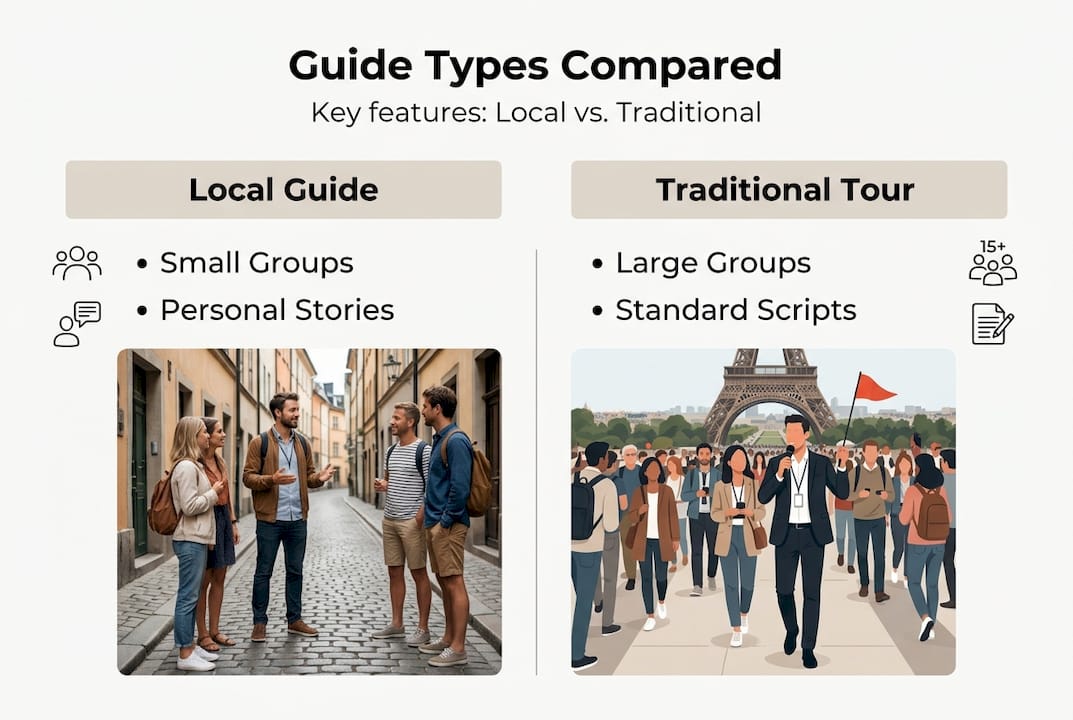
The growing demand for personalization in guided tours reflects a broader shift: travelers want depth, not just distance covered. The numbers support this. More European travelers in 2026 are seeking intimate, curated experiences over large-group formats.
| Feature | Local guide experience | Traditional large-group tour |
|---|---|---|
| Group size | 1 to 8 people | 20 to 50 people |
| Flexibility | High, adjustable at any point | Low, fixed itinerary |
| Cultural depth | Personal stories and context | Standard commentary |
| Pace | Set by you | Set by schedule |
| Hidden gems | Regularly included | Rarely offered |
| Interaction | Ongoing, two-way dialogue | Limited Q&A opportunities |
Looking at guided vs self-guided options also helps clarify where local guides fit best. They bridge independent travel and structured tours beautifully.
Here are the top reasons travelers choose local guides over standard providers:
- Genuine flexibility — Your guide adapts the day based on your energy, curiosity, and interests
- Real conversations — You can ask real questions and receive honest, thoughtful answers
- Smaller groups — Fewer people means more attention, less waiting, and richer dialogue
- Custom itineraries — Tours shaped around your priorities, not a one-size-fits-all template
- Emotional connection — You leave with stories and memories, not just photographs
For families, couples, and solo travelers alike, the value is clear. A detailed group tour guidance resource can also help you understand what to expect if you’re navigating Europe with others.
The traditional tour model was built for efficiency. Local guide experiences are built for meaning. Those are very different goals, and the experience reflects that difference vividly.
How local guides craft authentic and memorable experiences
Having compared types of tours, let’s explore how local guides make each experience genuinely unforgettable and unique.
Authenticity in travel is easy to talk about and hard to deliver. Local guides deliver it through a specific set of methods that they develop over years of practice.
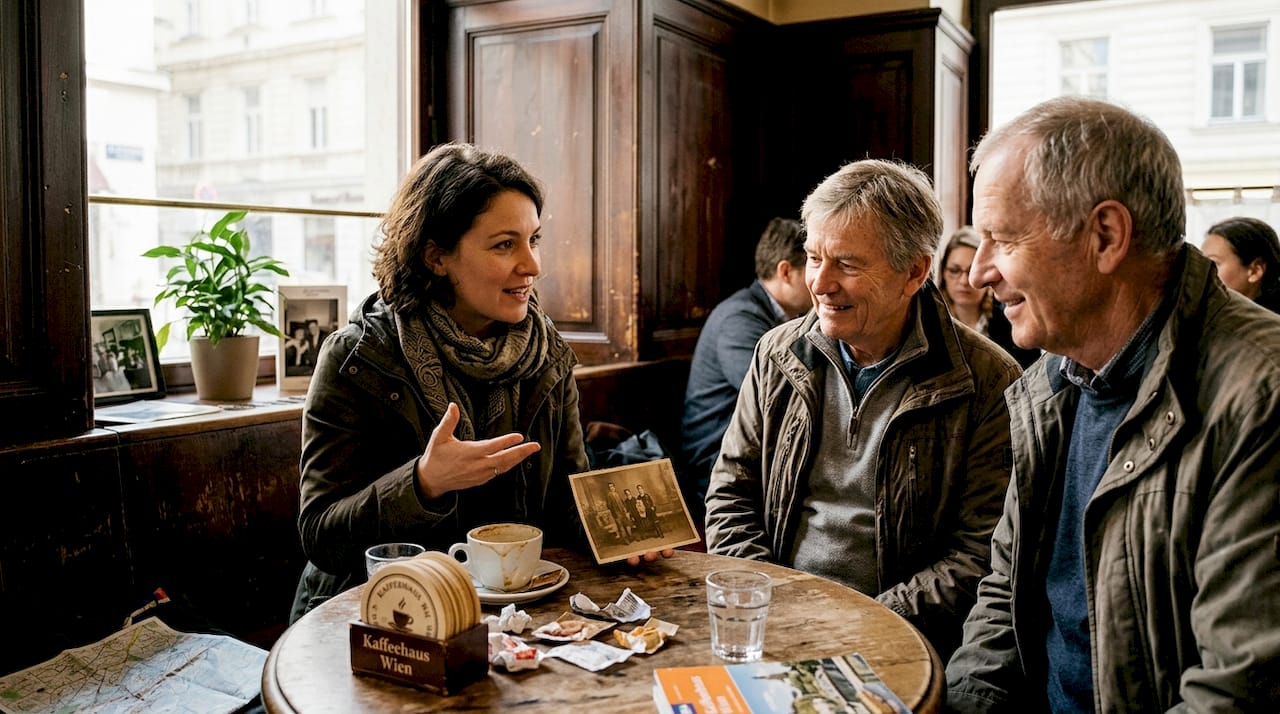
Storytelling is the foundation. A guide who tells you that a particular Viennese coffeehouse was where intellectuals debated philosophy in the early 20th century makes that cup of coffee mean something different. History stops being abstract and starts feeling immediate. Local guides connect travelers with real communities, turning landmarks into living narratives.
| Experience type | What your local guide does | What you gain |
|---|---|---|
| Culinary tour | Takes you to family-run spots, explains food traditions | Taste and cultural context together |
| Art and history | Shares symbolism and backstory behind works | Deeper emotional connection to art |
| Architecture walk | Points out hidden details and historical layers | Eye for design and civic history |
| Nature and adventure | Reads the landscape, shares ecological knowledge | Respect and wonder for the environment |
Beyond storytelling, local guides excel at finding hidden gems. These aren’t just obscure places. They’re often the most beautiful, most historically significant, or most culturally vibrant spots in a city, simply overlooked because they’re not on the standard tourist map.
They also adapt. Here’s what a skilled local guide tailors for different traveler types:
- Culinary travelers: Market visits, food history, restaurant recommendations only locals know
- History enthusiasts: Deep dives into specific eras, visits to lesser-known museums or monuments
- Adventure seekers: Off-path routes, outdoor experiences, physical challenges with local flavor
- Art lovers: Gallery commentary, artist biographies, architectural walking tours with cultural context
Exploring home city tours offers a vivid example of how this personalization works in practice across European cities.
Pro Tip: Ask your local guide for their personal favorite spot in the city. The answer reveals their character and often leads to the most unexpected highlight of your trip.
Tips for choosing the right local guide in Europe
To make the most of your trip, let’s look at how you can pick the best local guide for your needs.
Choosing well makes the difference between a good trip and a transformative one. Customized tours offer flexibility and expertise, but only when the guide behind them is genuinely qualified and aligned with your travel style.
Follow this step-by-step process to find the right local guide:
- Define your travel goals first — Are you seeking history, food, nature, or art? Know your priorities before searching
- Research credentials — Look for guides certified by local tourism boards or affiliated with respected agencies
- Read real reviews — Focus on reviews that mention specific moments or stories, not just generic praise
- Ask about their approach — A great guide will ask about your interests before booking, not after
- Check group size policies — Confirm how many people they typically guide at once
- Request a sample itinerary — This reveals both their knowledge and their flexibility
- Verify local roots — A guide who lives in the city year-round understands it differently than a seasonal operator
“The best travel experiences don’t come from having a guide who knows the most facts. They come from a guide who helps you feel something you couldn’t have felt alone.”
Avoid these common mistakes when booking a local guide in Europe:
- Choosing based on price alone without reading reviews or verifying credentials
- Assuming any guide works for all traveler types
- Failing to communicate your specific interests before the tour begins
- Booking through platforms with no vetting process or accountability standards
A thoughtful selection process pays for itself. You invest more time upfront, but what you gain in experience far exceeds what a random or budget booking delivers.
Our take: Don’t settle for ordinary — embrace the power of local guides
We’ve guided travelers across Europe for years, and one pattern stands out clearly: the travelers who remember their trips most vividly are almost always the ones who invested in a skilled local guide.
Most people don’t realize how much they’re missing until they experience the alternative. A great guide isn’t just adding information. They’re reordering the entire journey. Suddenly, the street corner has a story. The cathedral isn’t just beautiful — it’s a record of conflict, artistry, and community resilience.
We believe the measure of a great trip isn’t how many sights you checked off. It’s how many moments genuinely moved you. Local guides with deep roots in their communities consistently create those moments. Not because they follow a script, but because they care about the place they’re showing you.
If you want to understand what tour guides truly impact on a traveler’s experience, the answer is simple: everything. Focus less on credentials alone and more on finding a guide whose personal story intersects with the destination they’re bringing to life for you.
Ready to experience Europe with your own local guide?
Putting all of this into practice means finding the right partner for your journey. At Next View Tours, we specialize in exactly that.

We offer a full range of European trip types including private tours, family adventures, couple experiences, and day trips from cities like Vienna, Prague, Salzburg, and Budapest. Every experience is built around you. Our customized tours guide walks you through how we shape each journey around your specific interests and travel style. And if you’re wondering whether private is right for you, explore the private tours benefits that make one-on-one guide experiences so powerful. Your next unforgettable European moment is closer than you think.
Frequently asked questions
What does a local guide do beyond showing sights?
Local guides share cultural insights, personal stories, and customize tours to match your interests in ways standard tour leaders simply can’t. Their value lies in making destinations feel personally meaningful, not just visually impressive, as local guides enhance cultural understanding and authenticity.
How do I know if a local guide is reliable?
Check credentials, read reviews carefully, and ensure guides are connected to reputable agencies or local tourism organizations. Customised tour advantages also include working with vetted, knowledgeable guides who bring both expertise and flexibility to your experience.
Can local guides help access non-touristy experiences?
Yes, local guides regularly take travelers to hidden spots, neighborhood markets, and community events that fall well outside the standard tourist path. This is a core part of what a guided tour truly means when done through someone with genuine local roots.
Are local guides worth the investment for solo travelers?
Absolutely. Solo travelers gain personalized safety awareness, tailored cultural recommendations, and meaningful human interaction that enriches the journey significantly. The growing trend toward personalization in 2026 European travel reflects exactly this kind of demand from independent explorers.
Recommended
- Role of Tour Guides in Europe: Complete Guide – Next View Tours
- Why Choose Guided Tours for European Travel – Next View Tours
- How to Customize Private Tours for Unique European Experiences – Next View Tours
- Step by Step Group Tour Guide for European Adventures – Next View Tours
- How to Plan an Intimate Elopement in Europe Without Stress – A Simple Guide


Comments are closed