

 Uncategorized
TL;DR:
- Hallstatt’s unique geography requires visitors to cross Lake Hallstatt by ferry, making early arrival and strategic planning essential. To avoid crowds and maximize scenic experiences, travelers should arrive before 8:00 AM and focus on key sites like the Skywalk and salt mine early in the day. Thoughtful scheduling, including off-peak ferry crossings and delayed visits to busy areas, ensures a more personal, serene experience in this stunning lakeside village.
Hallstatt looks effortless in every photo you’ve seen: mirror-like lake, pastel-colored houses, mountains rising behind them. But showing up without a plan is the most common mistake first-time visitors make. The village is nestled so tightly between the Dachstein mountains and Lake Hallstatt that its train station sits on the opposite shore, requiring a short ferry crossing just to enter. Parking is severely limited, crowds peak intensely around midday, and the scenic rewards you came for are absolutely worth chasing — if you approach the day with intention and a clear strategy.
Table of Contents
- Understanding Hallstatt’s unique day-trip logistics
- Navigating parking, crowds, and village access
- Designing your scenic Hallstatt itinerary
- Bonus strategies: Ferry timing, alternative routes, and local insight
- Our take: Why Hallstatt rewards thoughtful planning (and what most guides miss)
- Explore more: Custom tours and scenic European adventures
- Frequently asked questions
Key Takeaways
| Point | Details |
|---|---|
| Train plus ferry logistics | Getting to Hallstatt often requires a scenic train ride and a short ferry crossing across the lake. |
| Smart crowd avoidance | Timing your arrival for early morning or late afternoon helps bypass peak crowds, especially in summer. |
| Parking and access strategy | Village parking is limited and the center is pedestrianized, so plan ahead for designated lots and walking. |
| High-impact scenic stops | Prioritize major viewpoints, salt mines, and lakeside strolls instead of trying to see every attraction. |
| Local insight tactics | Using alternative walking routes and ferry timings can dramatically improve your Hallstatt experience. |
Understanding Hallstatt’s unique day-trip logistics
Hallstatt is not your typical Central European town where you step off a train and walk directly into the village. Its geography sets it apart immediately. The train station, called Hallstatt Bahnhof, sits across Lake Hallstatt from the village center itself, meaning your very first step in Hallstatt involves a short but scenic ferry crossing. This small detail reshapes your entire day-trip plan.
Getting there: train, car, or bus?
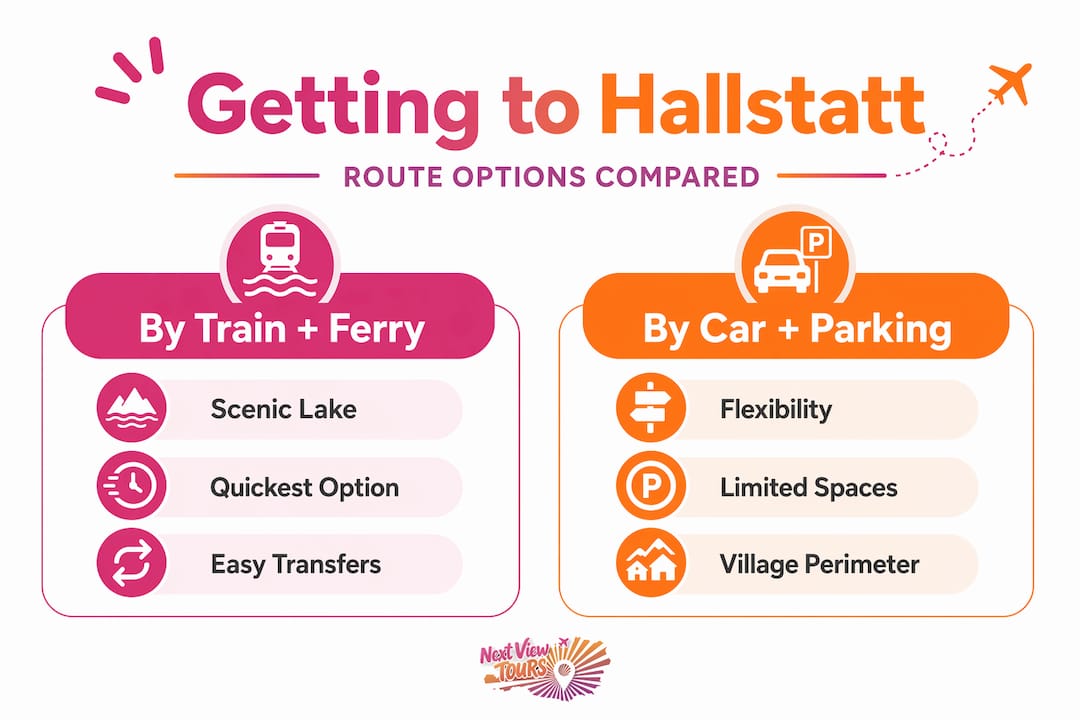
The most reliable way to reach Hallstatt is by train combined with the lake ferry. From Salzburg, the recommended route is: Salzburg Hauptbahnhof to Attnang-Puchheim (transfer), then onward to Hallstatt Bahnhof, with the ferry completing the journey. Total travel time from Salzburg runs approximately 2 to 2.5 hours each way. If you’re coming from Vienna, the trip takes roughly 3.5 to 4 hours; you can explore Vienna to Hallstatt logistics in detail to find the best train times and connections.
Here’s a quick comparison of your main transport options:
| Transport method | Travel time from Salzburg | Parking needed? | Flexibility |
|---|---|---|---|
| Train + ferry | ~2 to 2.5 hours | No | Moderate |
| Car + parking shuttle | ~1.5 to 2 hours | Yes (limited) | High |
| Organized day-trip tour | ~2 hours | No | Low but stress-free |
| Bus + ferry | ~2.5 hours | No | Moderate |
Driving might sound faster, but the parking situation complicates the picture significantly. Cars cannot enter the village center directly. You’ll park in one of the designated lots and either walk or use a shuttle to reach the waterfront. Many first-time drivers are surprised by this, especially during peak summer season when parking lots fill before 9:00 AM.
Key transit facts worth knowing before you go:
- Ferry frequency: Ferries run approximately every hour, timed to meet arriving trains
- Ferry cost: Roughly €3 to €5 per person each way (cash useful)
- Train booking: Austrian Federal Railways (ÖBB) allows advance booking and often offers savings on longer routes
- Village size: Hallstatt village is walkable in under 20 minutes end to end
Pro Tip: The morning ferry from the station side often feels quieter and more cinematic. Catching the very first or second departure of the day means you’ll glide across the lake with mist still on the water and almost no crowds on board.
“Hallstatt’s geography demands that you treat the ferry not as an inconvenience but as the opening act of your entire visit. That crossing sets the tone.”
You can also review Hallstatt visitor amenities for practical information on dining, accessible routes, and what to expect once you arrive at the waterfront.
Navigating parking, crowds, and village access
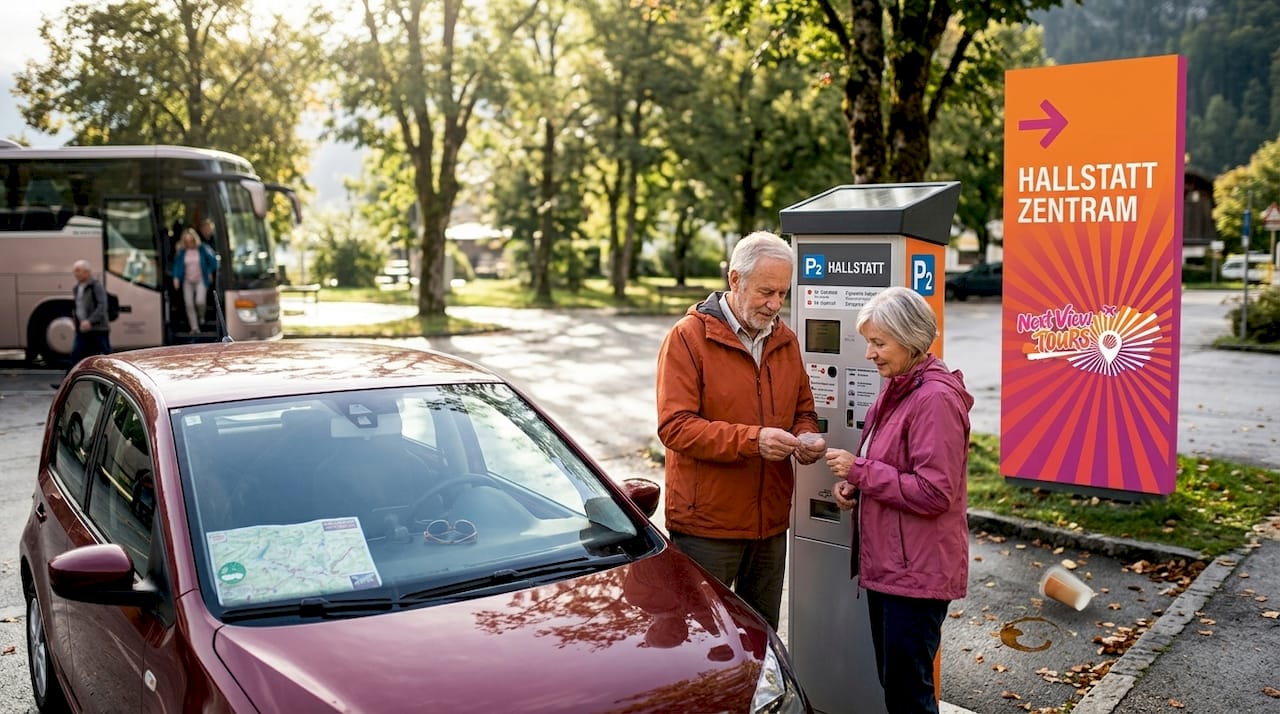
Once you understand how to get there, the next challenge is timing your arrival smartly. Hallstatt receives enormous visitor numbers, particularly between June and September. The village center is effectively car-free, requiring all drivers to use designated parking areas outside town. The main options are P1, P2, and P4, each with different walking distances and costs.
The parking system explained
P1 is closest to the village but fills fastest, often by 8:30 AM on summer weekends. P2 sits slightly further away and requires a short walk or shuttle ride. P4 is the most spacious option and is connected via a tunnel walk that emerges right into the village. Many experienced visitors actually prefer P4 because the tunnel provides a dramatic, almost theatrical entrance.
Here’s a practical breakdown of arrival time versus experience quality:
| Arrival time | Crowd level | Parking availability | Scenic photo quality |
|---|---|---|---|
| Before 8:00 AM | Very low | Excellent | Outstanding (soft light) |
| 8:00 to 10:00 AM | Low to moderate | Good | Very good |
| 10:00 AM to 12:00 PM | Moderate to high | Limited | Moderate |
| 12:00 PM to 3:00 PM | Peak (avoid) | Often full | Poor (harsh midday light) |
| After 4:00 PM | Declining | Opening up | Good (golden hour) |
The midday window between roughly 11:00 AM and 2:30 PM is when tour buses unload and the narrow lakeside promenade becomes genuinely congested. Photographers, families, and group tours all converge at the same viewpoints simultaneously. A smart “scenic methodology” prioritizes front-loading your major attractions early, then using the ferry crossing and lakeside stroll as the relaxed visual payoff during late afternoon.
A step-by-step arrival strategy that works:
- Arrive at Hallstatt Bahnhof on the first or second morning train
- Take the early ferry to beat the first wave of day-trippers
- Head immediately to the Hallstatt Skywalk or salt mine before 10:00 AM
- Explore the village market square and church during mid-morning
- Take a lakeside stroll as crowds begin building, staying off the main promenade
- Enjoy lunch at a waterfront restaurant during the 1:00 PM quiet window (most tour groups have already eaten)
- Return via a late afternoon ferry or evening train
Pro Tip: Late spring (May) and early autumn (September to October) offer dramatically lower crowds while maintaining excellent scenery. The foliage in October around the lake is genuinely spectacular, and you can walk the main promenade without navigating tour group traffic.
For those who want to combine the Hallstatt Skywalk with the Schloss Ort viewing route, check out the dedicated route guide that maps the most efficient path. You can also browse the Hallstatt photo gallery to understand which viewpoints deliver the most striking images throughout different seasons.
Designing your scenic Hallstatt itinerary
With your arrival strategy locked in, building a focused itinerary becomes straightforward. The core principle here is quality over quantity. Hallstatt is small, but it rewards slow exploration more than rapid sightseeing. Experienced travelers argue for choosing a small number of high-impact stops: the salt mines, the Skywalk, and the lakefront are the three that consistently deliver the strongest visual and experiential payoff.
The high-impact stops worth your time
- Hallstatt Skywalk (Welterbeblick): A viewing platform above the village offering panoramic views of the lake and rooftops. Arrive before 9:30 AM for near-empty conditions and extraordinary photos.
- Hallstatt Salt Mine (Salzwelten): The oldest salt mine in the world, with guided tours descending into tunnels carved over 7,000 years ago. Book tickets in advance online to guarantee entry during summer.
- Market Square (Marktplatz): The photogenic heart of the village, where the famous “postcard view” is captured. Best visited before 10:00 AM or after 4:00 PM.
- Hallstatt Parish Church and Charnel House (Beinhaus): A compact but haunting site featuring painted skulls, each telling a story of the village’s history with land and death.
- Lakeside promenade: The gentle walk along the water’s edge, best enjoyed in morning light or the golden hour before sunset.
Recommended itinerary order
- Ferry crossing at dawn: arrive from Hallstatt Bahnhof on the 7:30 or 8:00 AM ferry
- Walk directly uphill to the Skywalk before other visitors arrive
- Descend back to the village and tour the salt mine (pre-booked)
- Explore Market Square and the church during mid-morning
- Slow lakeside lunch at a waterfront café
- Afternoon walk along the promenade and charnel house visit
- Return ferry to Hallstatt Bahnhof at a relaxed pace
If your schedule allows, staying overnight in Hallstatt transforms the entire experience. After day-trippers leave, the village becomes a completely different place. Quiet, golden, and genuinely atmospheric. The Hallstatt and Salzburg summer trip packages this beautifully, combining both destinations across multiple days for a richer Austrian journey. For dining options and local guest services once you’re in the village, the destinations page covers everything you’ll need.
Pro Tip: Don’t attempt both the salt mine AND the Skywalk AND a full village walk AND a boat tour all in one day if you’re also managing a 4-hour round-trip train journey. Pick two or three anchor experiences and do them properly. The scenic payoff comes from presence, not checklists.
Bonus strategies: Ferry timing, alternative routes, and local insight
Beyond the core itinerary, a few additional strategies separate a great Hallstatt day trip from an average one. These are the kind of details that guide books skim past but experienced travelers always share.
Smart ferry timing and alternative walking routes
The most effective way to avoid the ferry “pile-on” effect is to flip the conventional order. Walking via Obertraun first, on the same side as the train station, and then taking the ferry back into the village later in the day means you encounter significantly fewer fellow passengers on the crossing. The walk from the station side through Obertraun takes roughly 45 to 60 minutes and rewards you with lakeside views rarely seen by day-trippers who rush straight onto the boat.
Additional strategies worth adopting:
- Take the last ferry of the day back: Crowds thin dramatically after 4:00 PM, and the late afternoon light over the lake is extraordinary
- Carry cash: Ferry tickets and some village cafés still prefer cash payments
- Check weather before you go: Lake Hallstatt is most dramatic under clear skies; a misty morning can be beautiful, but heavy rain limits the Skywalk experience significantly
- Wear comfortable footwear: The Skywalk hike involves elevation gain on uneven paths; sneakers are the minimum, trail shoes are better
- Book salt mine tickets online: Walk-up availability dries up by 10:00 AM in summer, and online booking secures a specific entry time
“The visitors who get the most out of Hallstatt are never the ones who try to do everything. They’re the ones who pick their moments, slow down, and actually look at the lake.”
For those wanting expert guidance on the ground, a guided Hallstatt day trip removes every logistical variable from your day. Your guide manages timing, entry tickets, and route sequencing so you focus entirely on the experience itself.
Our take: Why Hallstatt rewards thoughtful planning (and what most guides miss)
After years of advising day-trippers on Hallstatt and organizing tours throughout Austria, we’ve noticed a consistent gap in how most travel guides approach this destination. They cover the logistics in broad strokes: take a train, catch a ferry, visit the salt mine. What they rarely address is the midday crowd surge and how dramatically it degrades the experience you came for.
The honest truth is that Hallstatt becomes a very different place between 11:00 AM and 2:00 PM. The narrow promenade, the Market Square, the Skywalk path — all of them transform from serene scenic spaces into something resembling an outdoor shopping mall on a holiday weekend. No guide photo shows that version of Hallstatt, because no photographer chooses to shoot at noon in July.
Our strongest recommendation, grounded in real tour-organizing experience, is to treat Hallstatt as a morning and evening destination rather than a midday one. The expert Hallstatt planning we build into our day-trip departures from Vienna reflects this precisely: early departures, strategic arrival timing, and a return schedule that captures late afternoon light rather than rushing back during the post-lunch crowd peak.
There’s also a mindset shift worth embracing. Hallstatt is not a collection of attractions to tick off. It’s a mood, a light, a specific stillness you feel standing at the water’s edge when most people haven’t arrived yet. Chasing that feeling beats checking every box on a list. Focus on two or three experiences done properly, and you’ll leave with memories that feel genuinely personal rather than identical to everyone else’s Instagram feed.
Explore more: Custom tours and scenic European adventures
Ready to stop guessing logistics and start truly enjoying your European day trips? At Next View Tours, we specialize in exactly the kind of thoughtful, scenically optimized journeys this guide describes.

Our customized European tours are built around your priorities: whether that’s early-morning viewpoints, family-friendly pacing, or photographer-focused routing, we design the day around what matters most to you. From Hallstatt to Prague, Salzburg to Budapest, we offer multiple trip types that handle all the logistics so you experience the scenic payoff without the planning stress. If you’re thinking bigger, our top multi-day European trips combine destinations across Austria, Slovakia, and the Czech Republic into beautifully paced adventures.
Frequently asked questions
How long does the ferry from Hallstatt station to the village take?
The ferry crossing takes about 6 to 10 minutes, offering scenic views across Lake Hallstatt that serve as a perfect introduction to the village.
What’s the best time to visit Hallstatt to avoid crowds?
Arriving before 9:00 AM or returning late afternoon is the most effective strategy, as front-loading your visit before midday keeps you ahead of the tour-bus surge.
Is it possible to drive to Hallstatt, and where can you park?
Yes, driving is possible, but parking is limited to designated lots P1, P2, and P4 outside the pedestrianized village center, with P1 often full by 8:30 AM in summer.
Are there recommended routes for walking or alternative ferry crossings?
Walking via Obertraun from the train-station side first and taking the ferry back later significantly reduces crowding on the crossing and adds unique lakeside views to your itinerary.


Comments are closed