
 Uncategorized
TL;DR:
- Cultural experiences involve active participation in local traditions, arts, and community life. Authentic events are community-led, follow traditional timing, and involve local participants for genuine learning. Immersive experiences like ceremonies, festivals, and shared meals deepen understanding and help preserve intangible heritage.
Cultural experiences are defined as participatory events and practices through which travelers engage directly with local traditions, arts, and community life. Unlike sightseeing, these activities place you inside a living culture rather than outside looking in. The best examples of cultural experiences span indigenous ceremonies, traditional crafts, culinary rituals, and community festivals across every continent. Cultural immersion requires practical language use, homestays, and daily participation to create genuine connection. This guide covers the full range of cultural experience ideas, from rare healing ceremonies in Indonesia to harvest festivals in Malaysian Borneo.
1. What are the most immersive examples of cultural experiences?
Cultural immersion activities fall into six broad categories: indigenous ceremonies, traditional crafts, music and dance, festivals, culinary practices, and language and storytelling. Each category offers a different depth of engagement. The most meaningful ones share one quality: they are run by and for the community, not designed around tourist convenience.
- Indigenous ceremonies: The Tao Flying Fish Festival on Orchid Island, Taiwan, centers on wooden boats built from 21–27 hand-fitted planks with no nails. The ceremony follows fish migration patterns, not tourism calendars.
- Traditional arts: In New Orleans, Mardi Gras Indian suits are hand-sewn over a full year, weigh up to 120 pounds, and can cost $25,000. That level of devotion signals a living tradition, not a performance.
- Music and dance: Attending a live gendang pampat performance during Gawai in Sarawak, Malaysia, connects you to rhythms that predate written history.
- Festivals: Bali’s Omed-omedan festival carries sacred healing origins that most outside visitors miss entirely. Understanding the ritual context transforms the experience.
- Culinary immersion: Cooking Pad Thai with a family in Chiang Mai or preparing pierogi with a grandmother in Kraków puts food in its social and emotional context.
- Language and storytelling: Joining an oral storytelling circle in West Africa or a poetry recitation evening in Vienna places language at the center of cultural identity.
Pro Tip: Research the seasonal timing of any ceremony before you book. The Tao Flying Fish Festival, for example, depends on environmental factors. Forcing a tourist schedule risks missing the core ritual entirely.
2. How to identify authentic versus touristy cultural experiences
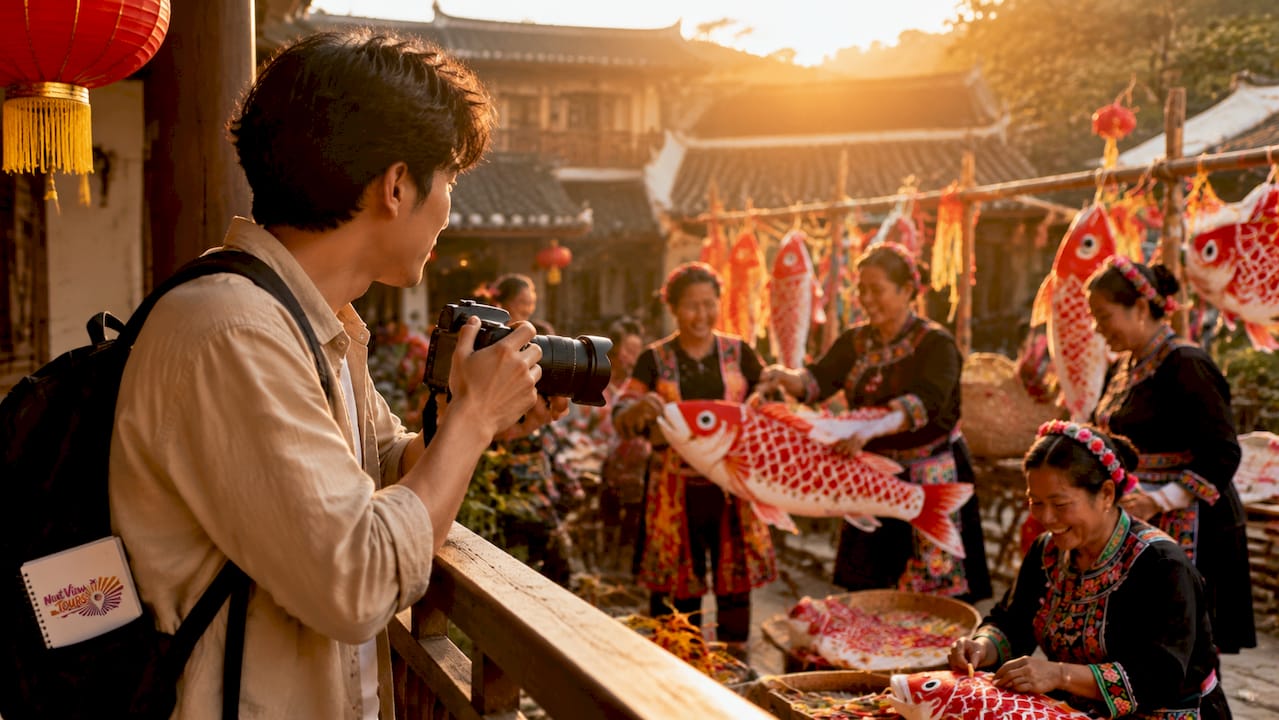
Authentic cultural experiences are community-run, carry genuine meaning for participants, and do not depend solely on tourism revenue. Touristy versions are designed to satisfy visitor expectations, often at the cost of accuracy or depth. The difference is visible once you know what to look for.
Indicators of authenticity include:
- Elders or knowledge holders are present and leading, not just performing
- The event follows a traditional calendar, not a tour operator’s schedule
- Local families attend for their own reasons, not to earn tips
- Photography restrictions exist and are enforced with respect
Community-run experiences with diversified incomes consistently provide more genuine learning than activities tied exclusively to tourism revenue. Korea’s Farmping program, where travelers live and work on family farms, is a strong example. Hosts earn income from farming, so the cultural exchange is a bonus rather than a transaction.
“Meaningful cultural travel is often found in small, unplanned moments with locals rather than at staged tourist attractions.” — Artsy Traveler
Slow travel supports authenticity. Spending a week in one village reveals rhythms that a two-hour tour never will. Respecting local taboos, such as the punen quiet periods observed by Mardi Gras Indian tribes, signals that you are a guest, not a consumer.
3. Unique cultural experiences that preserve intangible heritage
Intangible cultural heritage refers to living practices, oral traditions, and ritual knowledge passed between generations without a physical artifact. These are the experiences most at risk of disappearing, and the most rewarding to witness.
-
Mentawai Sikerei healing ceremonies (Siberut Island, Indonesia): The Sikerei is a living bridge between the physical and spirit worlds. Ceremonies include healing dances, chants, and traditional tattooing. Guests may observe or informally participate during extended tribal stays. This is not a performance. It is a sacred ritual that happens to welcome respectful outsiders.
-
Sarawakian traditional music performances (Borneo, Malaysia): The ruding, a jaw harp played by Dayak communities, is at risk of disappearing due to declining youth mastery. A 2017 study flagged this decline in traditional performers. Attending a live community performance during Gawai directly supports the musicians who keep the tradition alive.
-
Gawai harvest festival (Sarawak, Malaysia): Gawai marks the end of the rice harvest with communal feasts, music, and ritual offerings. Visitors who attend as guests of a longhouse family, rather than through a packaged tour, experience the full ceremonial weight of the occasion.
-
Naghol land diving (Vanuatu): Men on Pentecost Island leap from wooden towers with vines tied to their ankles. The ritual predates bungee jumping by centuries and carries deep agricultural and spiritual significance.
Travelers who attend these events support preservation through respectful presence. Purchasing crafts directly from artisans, following photography guidelines, and contributing to community funds all make a measurable difference.
4. How culinary immersion enhances cultural experiences
Food is the most accessible entry point into any culture. Preparing and sharing a meal with local families communicates values, history, and social structure in ways that a museum exhibit cannot.
Strong culinary immersion activities include:
- Cooking classes with local families: A Pad Thai class in a Bangkok home kitchen differs entirely from a hotel cooking demonstration. The family version includes market shopping, ingredient sourcing, and conversation about regional variations.
- Community meals and harvest feasts: Sharing a communal table during Gawai or a Sunday lunch in a Portuguese village places you inside the social fabric of the community.
- Food festivals with local producers: Markets in Vienna, Prague, and Salzburg feature producers who have supplied the same recipes for generations. Tasting is not passive. Ask questions, and the history comes with the food.
- Fermentation and preservation workshops: Learning to make kimchi in Korea or cure olives in Greece connects you to agricultural cycles that shaped the culture long before tourism existed.
Pro Tip: Choose culinary experiences where the host family eats the same meal alongside you. If the guide eats separately or the kitchen looks staged, the experience has been designed for tourists rather than shared with them.
The role of local cuisine in tourism extends well beyond taste. Food rituals encode social hierarchies, seasonal knowledge, and religious practice. Engaging with them seriously is one of the fastest ways to understand a culture from the inside.
5. Comparison of cultural experience types for different travelers
Not every traveler wants the same depth of engagement. The table below compares the main types of cultural experiences by key factors.
| Experience type | Interaction level | Duration | Cost range | Best for |
|---|---|---|---|---|
| Public festival attendance | Observational | Half day to 3 days | Low | First-time cultural travelers |
| Cooking class with local family | Participatory | 3–6 hours | Low to medium | Food-focused travelers |
| Craft or music workshop | Participatory | 1–3 days | Medium | Travelers seeking hands-on skills |
| Homestay with local family | Full immersion | 3–14 days | Medium | Slow travelers, language learners |
| Indigenous ceremony observation | Observational | Variable | Variable | Respectful, research-prepared travelers |
| Multi-day cultural tour | Mixed | 3–10 days | Medium to high | Travelers wanting guided depth |
Active participation builds stronger memories and deeper understanding than observation alone. That said, some ceremonies require observation only. Respecting that boundary is itself a form of cultural engagement. The cultural trip types available in Europe range from single-day city experiences to multi-day immersive programs, giving travelers genuine flexibility.
6. How language and storytelling connect you to living culture
Language is the architecture of a culture. Even basic phrases open doors that money and cameras cannot. Travelers who learn ten words of the local language before arriving are treated differently from those who do not.
Storytelling traditions carry this further. Oral histories in Indigenous Australian communities, griots in West Africa, and bardic traditions in Ireland all transmit knowledge that was never written down. Attending a storytelling session, even through a translator, reveals how a community understands its own past. These are among the most underrated cultural experience ideas available to travelers today.
Language exchanges, where you teach your language in return for learning theirs, create reciprocal relationships. That mutuality is the foundation of genuine cultural immersion, as experts consistently recommend learning language basics alongside opting for homestays and respecting rituals.
Key takeaways
The most meaningful cultural experiences are participatory, community-led, and timed to local rhythms rather than tourist schedules.
| Point | Details |
|---|---|
| Participation beats observation | Active involvement in rituals, meals, and crafts creates deeper cultural understanding than watching alone. |
| Authenticity has clear markers | Look for elder-led events, seasonal timing, and hosts who do not depend solely on tourism income. |
| Intangible heritage is fragile | Traditions like Sarawakian ruding music and Mentawai healing ceremonies need respectful attendance to survive. |
| Food is a cultural entry point | Community meals and family cooking classes reveal social values that sightseeing misses entirely. |
| Slow travel unlocks depth | Spending more time in fewer places exposes rhythms and relationships that short visits never reach. |
Why the best cultural experiences are never the ones you planned
Every traveler I have worked with at Nextviewtours remembers the same kind of moment. Not the famous cathedral or the ticketed museum. The moment a grandmother in Hallstatt pulled out a photo album. The afternoon a local musician in Budapest played an unrehearsed piece just because the mood was right.
Staged cultural experiences have their place. They introduce you to traditions you would otherwise never encounter. But the ones that stay with you are the ones where something unscripted happened. That only occurs when you slow down, show genuine curiosity, and treat your hosts as people rather than attractions.
The travelers who get the most from cultural immersion are not the ones with the longest itineraries. They are the ones who ask the best questions and sit with the answers. Ethical participation, which means following local rules, spending money with local producers, and leaving ceremonies as you found them, is not a constraint. It is what earns you access to the real thing.
Seek experiences that create mutual understanding, not just personal enrichment. The difference between a tourist and a guest comes down to that single intention.
— Next
Nextviewtours: cultural depth built into every trip
Nextviewtours designs European tours around exactly the kind of cultural depth this article describes. Every itinerary, from day trips out of Vienna and Salzburg to multi-day programs across Austria, the Czech Republic, Hungary, and Slovakia, is built around local guides who know their communities personally.

Private and customized tours give you the flexibility to attend local festivals, visit artisan workshops, and share meals with families rather than restaurants. Group tours create the social energy that makes communal cultural events feel natural rather than forced. Nextviewtours trip types cover the full range, from single-day cultural excursions to extended immersive programs across Central Europe. If you want cultural experiences that go beyond the surface, the right guide makes all the difference.
FAQ
What are cultural experiences in travel?
Cultural experiences are participatory activities through which travelers engage directly with local traditions, arts, rituals, and community life. They go beyond sightseeing to include cooking, ceremonies, crafts, and language exchange.
What makes a cultural experience authentic?
Authentic cultural experiences are community-run, follow traditional timing rather than tourist schedules, and involve local participants who attend for their own reasons. The presence of elders and the absence of commercial staging are strong indicators.
What are examples of cultural events travelers can attend?
Strong examples include the Tao Flying Fish Festival in Taiwan, Gawai harvest festival in Sarawak, Mardi Gras Indian processions in New Orleans, and Bali’s Omed-omedan festival. Each carries deep ritual significance beyond its visual spectacle.
How does culinary immersion count as a cultural experience?
Cooking and sharing traditional meals with local families connects travelers to agricultural cycles, social values, and historical knowledge encoded in food. It is one of the most accessible and genuine forms of culinary tourism available.
How can travelers support cultural preservation through travel?
Travelers support preservation by attending community-led events, purchasing crafts directly from artisans, following photography and behavioral guidelines, and choosing tours where local guides and families receive the economic benefit directly.


Comments are closed