 Uncategorized
TL;DR:
- Guided nature tours offer deeper ecological understanding and active participation.
- They support conservation funding and collaborations with local NGOs.
- Small group sizes enhance sustainability, wildlife encounters, and personalized experience.
Many travelers assume that heading into Europe’s wild spaces alone is the most authentic way to connect with nature. That idea feels intuitive, even romantic. But guided nature tours quietly outperform solo adventures in almost every meaningful way, from the wildlife you actually see to the conservation projects your visit supports. Expert-led experiences in regions like the Alps, the Black Forest, and the Eastern European lowlands put rare species within reach and translate the landscape around you into something you can truly understand. This guide breaks down what makes guided nature tours worth booking, and why the impact goes far beyond the trail.
Table of Contents
- Nature tours: Beyond sightseeing to true immersion
- How nature tours support real-world conservation
- Small groups and ethical travel: flexible, sustainable, and personal
- Where and what: choosing the right nature tour in Europe
- The real value of nature tours: what most travelers miss
- explore Europe’s wild landscapes with guided tours
- frequently asked questions
Key Takeaways
| Point | Details |
|---|---|
| Expert-guided connection | Guided nature tours use local expertise to provide deeper, more educational encounters with wildlife and landscapes. |
| Direct conservation impact | Your booking fee often funds real conservation projects, supporting habitats and community livelihoods. |
| Personalized and sustainable | Small group tours prioritize flexibility, low ecological impact, and a tailored experience for each participant. |
| Ethical operator selection | Choosing the right company ensures your tour is both responsible and enriching for you and the environment. |
Nature tours: Beyond sightseeing to true immersion
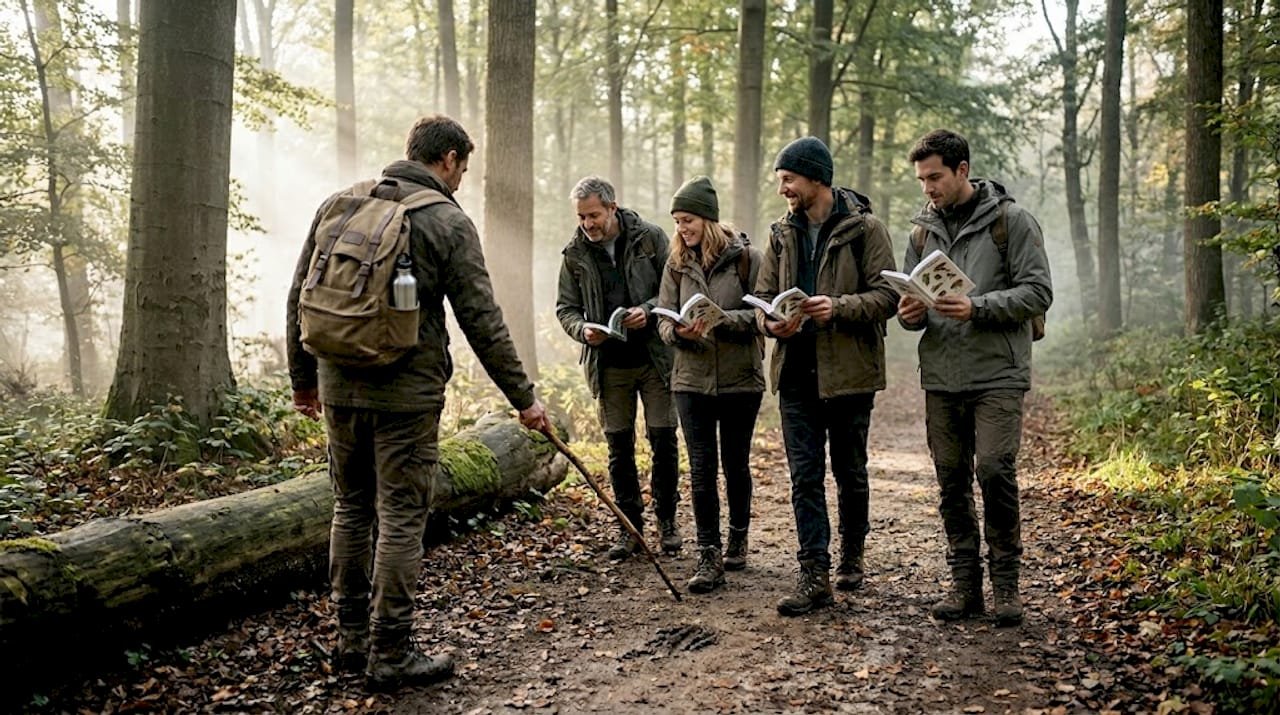
There is a significant gap between passing through a landscape and genuinely reading it. A guided nature tour bridges that gap in ways that independent travel rarely can. Your expert guide does not just point at a bird perched on a pine branch. They explain its migration pattern, its role in the local ecosystem, and the pressures threatening its habitat. That context transforms a sighting into a lesson.
Immersive nature tours are structured around active participation, not passive observation. You might assist with wildlife tracking, help record species data, or join your guide in reading animal signs across a forest floor. These activities build ecological literacy (the ability to interpret and respond to natural environments) that stays with you long after the trip ends. You can explore the range of nature tours explained to understand how different trip formats are structured for this kind of depth.
Guided tours in regions like the Alps or the Romanian and Slovak sections of the carpathians are especially rich in this regard. Local guides in these areas know exactly where wolf packs move at dawn, where brown bears forage in late summer, and which ridgelines offer the clearest views of raptors on thermal currents. Wolf tracking in Europe teaches travelers about coexistence between predators and rural communities, a dimension of the landscape that no map or guidebook captures.
Here is what distinguishes an immersive guided tour from standard sightseeing:
- Expert ecological interpretation at every stop
- Active participation in tracking, observation, and species recording
- Low-impact route design that avoids disturbing nesting or foraging zones
- Real-time learning from guides with field research backgrounds
- Conservation briefings on species recovery efforts in the area
“The difference between seeing a wolf print and understanding what it means ecologically is the difference between visiting a landscape and belonging to it, even briefly.”
Pro tip: When browsing tour listings, look for itineraries that mention citizen science or data contribution. These tours give you a tangible role in wildlife monitoring, making your time in the field count twice.
The common misconception is that going alone equals going deeper. In practice, ethical guides with regional expertise reveal access points, behavioral cues, and habitat details that solo travelers simply miss. Structure, when it is built around ecological principles, actually produces richer freedom.
How nature tours support real-world conservation
Beyond the experience itself, your booking decision carries financial and ecological weight. When you choose a reputable tour operator, a portion of your fee flows directly toward conservation projects, habitat restoration, and species monitoring programs. This is not marketing language; it reflects a measurable funding channel that independent travelers rarely replicate.

Operators like naturetrek, which raised over £4.3 million for conservation projects, demonstrate what scaled impact looks like. That funding supports everything from anti-poaching patrols to rewilding initiatives in degraded European ecosystems.
Many operators also partner with regional NGOs, embedding your trip within a longer-term conservation strategy. You are not just a visitor; you become part of a network that monitors populations, reports threats, and funds field research. Independent visits, by contrast, rarely contribute to structured conservation pipelines.
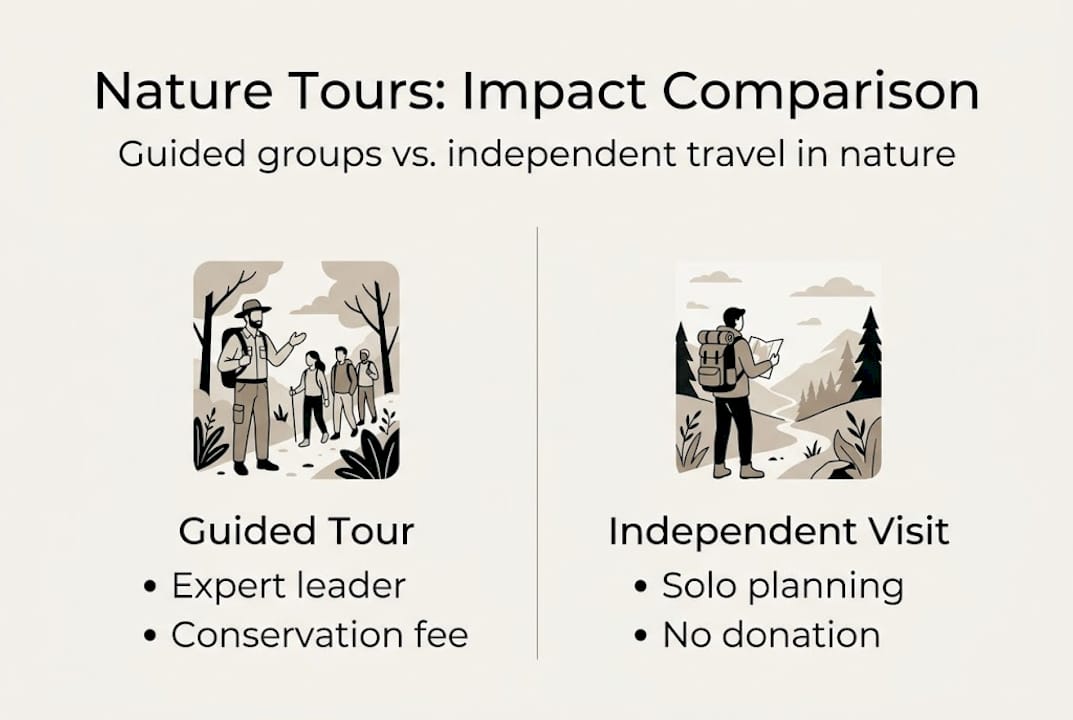
Here is a direct comparison that clarifies the difference:
| Factor | guided nature tour | independent visit |
|—|—|—|
| Conservation funding | Direct, built into fee | None, unless donated separately |
| Wildlife impact tracking | Part of tour structure | Not typically available |
| Local community benefit | Often embedded in model | Variable |
| Expert monitoring input | Yes | No |
| Carbon-offset options | Often available | Self-managed |
If you want your travel to produce lasting change, community sustainability in Austria offers a useful parallel: local networks that integrate visitor activity with broader environmental goals consistently generate stronger outcomes than individual efforts.
How you can contribute through a guided nature tour:
- Book with operators that publish conservation reports, showing where funds go
- Choose tours linked to NGO partners with verified field projects
- Ask about citizen science involvement before you book
- Support multi-day formats, which generate more revenue for long-term programs
- Review post-tour impact summaries, which some operators now send to participants
For a practical breakdown of how to choose low-impact itineraries, our nature trips guide covers key criteria in detail.
Small groups and ethical travel: flexible, sustainable, and personal
The operational model of a tour shapes its environmental and personal impact just as much as its destination. Small group nature tours, typically between four and twelve participants, produce significantly lower ecological footprints than large coach-based excursions. They move quietly, stay on narrow paths, and allow guides to adapt the pace to what the landscape actually offers on a given day.
Small group sizes ensure personalized, low-impact experiences that large group formats simply cannot replicate. When there are fewer of you, wildlife is less disturbed, stops feel unhurried, and your guide can give genuine attention to each participant’s interests.
Here is what to look for when evaluating an ethical tour operator:
- Published group size limits, ideally under 12 participants
- A clear code of conduct covering wildlife interaction and trail behavior
- Local guide employment, which supports community economies
- No baiting or artificial wildlife attraction in their methodology
- Carbon or offset transparency in their booking details
| Tour type | group size | experience quality | environmental impact |
|—|—|—|—|
| Small group guided | 4 to 12 | High, personalized | Low |
| Large group guided | 20 or more | Variable, diluted | Higher footprint |
| Independent travel | Solo to small | Self-directed | Variable |
Pro tip: A tour operator that publicly limits group size is signaling a genuine ethical commitment, not just a marketing preference. It costs them revenue. Take that transparency seriously.
Large group tours tend to produce rushed encounters, crowded viewpoints, and wildlife avoidance. Animals learn quickly. A herd of 30 hikers telegraphs its presence long before it arrives at a meadow. The immersive travel trends shaping 2025 and 2026 consistently point toward smaller, slower, more intentional formats as the benchmark for quality nature experiences.
Where and what: choosing the right nature tour in Europe
Europe holds an extraordinary range of wild habitats, and the right tour depends on what you genuinely want to see and learn. Before browsing listings, clarify your focus. Are you drawn to apex predators like wolves and brown bears? Are botanical meadows or birdwatching more your interest? Or do you want a mix, following a landscape through its seasonal rhythms?
The major mountain ranges and forest corridors offer distinct experiences:
- The Alps: High-altitude flora, golden eagles, chamois, and ibex. Best for hikers who want dramatic scenery alongside wildlife.
- The carpathians (Romania and Slovakia): Europe’s largest populations of brown bears, wolves, and lynx. Dense forest tracking tours dominate here.
- The apennines (Central Italy): Wolf recovery zones, rare orchids, and lesser-known birdwatching circuits.
- The bialowieza Forest (Poland and Belarus border): One of Europe’s last primeval forests, home to European bison.
- The puszta (Hungary): Open steppe with dramatic bird migrations and traditional pastoral landscapes.
For top wildlife tours in summer 2026, the Alps, apennines, and carpathians remain the headline destinations, offering structured access to bears, wolves, and lynx alongside expert-led ecological interpretation.
When screening operators, use this checklist:
- Are group sizes clearly published and limited?
- Do they name specific conservation partners or NGOs?
- Is local guide expertise documented (field research, regional credentials)?
- Do they offer pre-trip ecological briefings?
- Is there a post-tour conservation impact summary?
Pro tip: Organizations like the European Nature Trust and operators associated with verified rewilding projects are useful benchmarks. If a company references specific species recovery programs by name, that is a strong credibility signal.
For step-by-step screening advice, the guide on selecting the best nature tour walks you through operator evaluation in plain terms.
The real value of nature tours: what most travelers miss
Conventional travel advice still leans toward independence as the gold standard of authenticity. We hear it constantly: “Go off the beaten path. Skip the tour groups. Find it yourself.” That framing sounds compelling, but it overlooks something fundamental about how deep ecological learning actually works.
Expert guides unlock a layer of the landscape that is simply invisible to the untrained eye. They know the signs, the seasons, the histories of individual animals in a territory. They have relationships with local communities, researchers, and conservation bodies. A solo traveler moving through the same terrain sees scenery. A guided traveler in a small group sees a living system.
What seems “less spontaneous” is often more meaningful. The advantages of customized tours reflect this clearly: tours built around your interests, with expert support and real conservation connections, produce experiences that are more personal, not less. The structure creates access, not restrictions. And for the landscapes and species you care about, your intentional, guided presence does more good than a solitary footprint ever could.
explore Europe’s wild landscapes with guided tours
If the insights above have sparked a desire to plan something more meaningful than a standard holiday, Next View Tours is ready to help you build it.
We specialize in small group and private European trip types designed for eco-conscious travelers who want immersive experiences without compromising the environments they visit. From alpine wildlife encounters to multi-day forest expeditions, our itineraries are built around ethical principles and genuine regional expertise. Browse our multi-day adventure ideas for inspiration, or go deeper with our full Nature trips guide to find the format that fits your pace, your interests, and your values.
frequently asked questions
Do nature tours really help conservation efforts?
Yes, reputable nature tours direct part of your fee to conservation projects, with operators like naturetrek raising over £4.3 million for wildlife and habitat work. The funding flows directly into field programs, not just administration.
Are guided tours better for spotting wildlife than going alone?
Guided tours significantly increase your chances of seeing wildlife because expert trackers read animal signs and behaviors that most travelers overlook. Wolf tracking experiences are a clear example of how guided expertise turns unlikely sightings into reliable encounters.
How do I choose an ethical operator for a nature tour?
Look for small group sizes, clear conservation partnerships, and transparent sustainability practices published openly on the operator’s website. If they name specific NGO partners and limit group numbers, that is a strong positive sign.
What are the most popular wildlife tours in Europe?
Top tours focus on the Alps, apennines, and carpathians, giving structured access to rare wildlife like bears, wolves, and lynx alongside expert-led ecological interpretation across each region.


Comments are closed