
 Uncategorized
TL;DR:
- Heritage tourism connects travelers with living cultures, stories, and traditions that shape civilizations, generating over $607 billion annually. It encompasses tangible sites, intangible practices, festivals, and communities, emphasizing authenticity, respect, and meaningful engagement. Modern trends focus on immersive experiences, digital enhancements, and sustainable practices that support preservation and local livelihoods.
Heritage tourism is one of the most misunderstood categories in travel. Most people picture dusty museum halls and guided walks past old buildings. The reality is far richer. What is heritage tourism, truly? It’s a globally significant market valued at approximately $607 billion annually in 2026, one that connects travelers to living cultures, enduring stories, and traditions that shaped entire civilizations. This guide unpacks the real definition, shows you where it thrives, explains why it matters, and offers practical ways to engage with it meaningfully on your next trip.
Table of Contents
- Key takeaways
- What is heritage tourism, really?
- Iconic heritage tourism examples from around the world
- Why heritage tourism matters
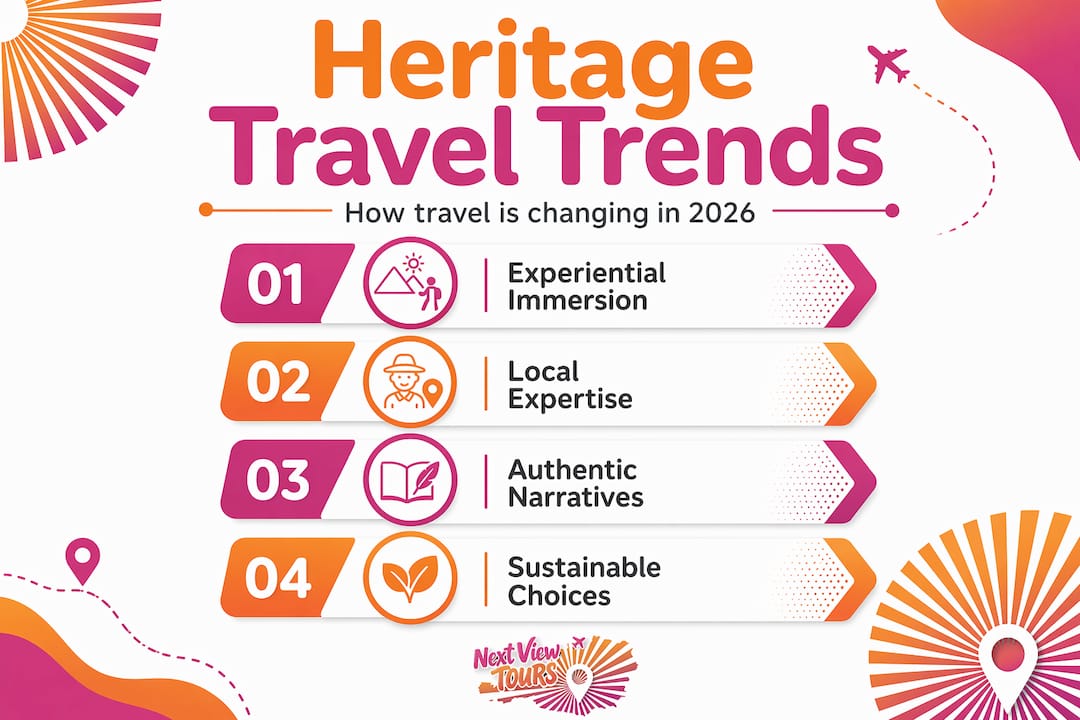
- Heritage tourism trends shaping travel today
- How to engage meaningfully with heritage tourism
- My take on what travelers consistently miss
- Explore Central Europe’s heritage with Nextviewtours
- FAQ
Key takeaways
| Point | Details |
|---|---|
| Heritage tourism is broad | It includes tangible sites, intangible traditions, festivals, culinary arts, and living communities. |
| Cultural heritage leads the market | Cultural heritage accounts for about 48% of the global heritage tourism market share. |
| Economic impact is substantial | Heritage tourism generates over $607 billion annually and supports jobs in local communities worldwide. |
| Authenticity drives modern travelers | Visitors today seek genuine historical narratives and immersive cultural experiences, not just sightseeing. |
| Meaningful engagement requires respect | Supporting local guides, artisans, and community-based experiences deepens cultural understanding and aids preservation. |
What is heritage tourism, really?
Heritage tourism is travel motivated by the desire to experience the cultural, historical, and natural legacy of a place. The National Trust for Historic Preservation defines it as traveling to experience the places, artifacts, and activities that authentically represent the stories and people of the past and present. That last phrase matters. Past and present. Heritage tourism is not only about ruins and relics.
There are three broad categories you should understand:
- Tangible cultural heritage: Physical sites and objects, including historic buildings, archaeological sites, monuments, and museums. Think of places like the Colosseum in Rome or the castles of Prague.
- Natural heritage: Landscapes and ecosystems that carry cultural or historical significance, such as the Scottish Highlands or the Danube gorge corridor through Central Europe.
- Intangible heritage: Living practices, oral traditions, festivals, music, cuisine, and artisan crafts. These are often the most memorable travel experiences precisely because they cannot be photographed and fully captured.
A complex ecosystem of stakeholders, from governments to cultural institutions and local communities, works together to offer, preserve, and promote these experiences. That structure is what separates well-managed heritage tourism from ordinary sightseeing.
Authenticity and storytelling are the backbone of every strong heritage experience. A cobblestone street in Vienna becomes something entirely different when a knowledgeable guide explains the layers of Habsburg rule embedded in its architecture. Without context, you’re just looking at old stones. With it, you are reading centuries of history.
Pro Tip: When choosing a heritage tour, always ask whether the guide is a local specialist or a generalist. Local experts bring personal connection to the stories, which transforms a visit into something genuinely memorable.
Iconic heritage tourism examples from around the world
Heritage tourism takes radically different forms depending on where you go. Some of the most widely recognized sites include:
- Machu Picchu, Peru: A 15th-century Inca citadel set high in the Andes that draws hundreds of thousands of visitors annually, representing the intersection of natural landscape and ancient civilization.
- Stonehenge, England: A prehistoric monument whose exact purpose remains debated, drawing visitors fascinated by pre-Roman British history and ritual culture.
- Angkor Wat, Cambodia: The largest religious monument in the world, offering insight into Khmer civilization, Hindu cosmology, and centuries of Southeast Asian history.
But the most powerful contemporary example of living heritage tourism is arguably Phuoc Tich village in Vietnam. This 500-year-old village actively involves local residents through nine tourism service categories including homestays, culinary experiences, and cultural demonstrations. The result for Phuoc Tich village was over $123,000 in revenue from more than 50,000 visitors between 2024 and 2025. The village did not become a museum. It remained a living community that visitors entered respectfully and temporarily.
Cultural festivals are another dimension you should not overlook. Carnival in Venice, Oktoberfest in Bavaria, and the Salzburg Festival in Austria all function as heritage tourism attractors that blend performance, tradition, and place into an experience no photograph can replicate. Culinary tourism is increasingly recognized as heritage tourism in its own right. Eating traditional Viennese Schnitzel in a family-run establishment that has operated for generations is not just a meal. It’s an encounter with a way of life.
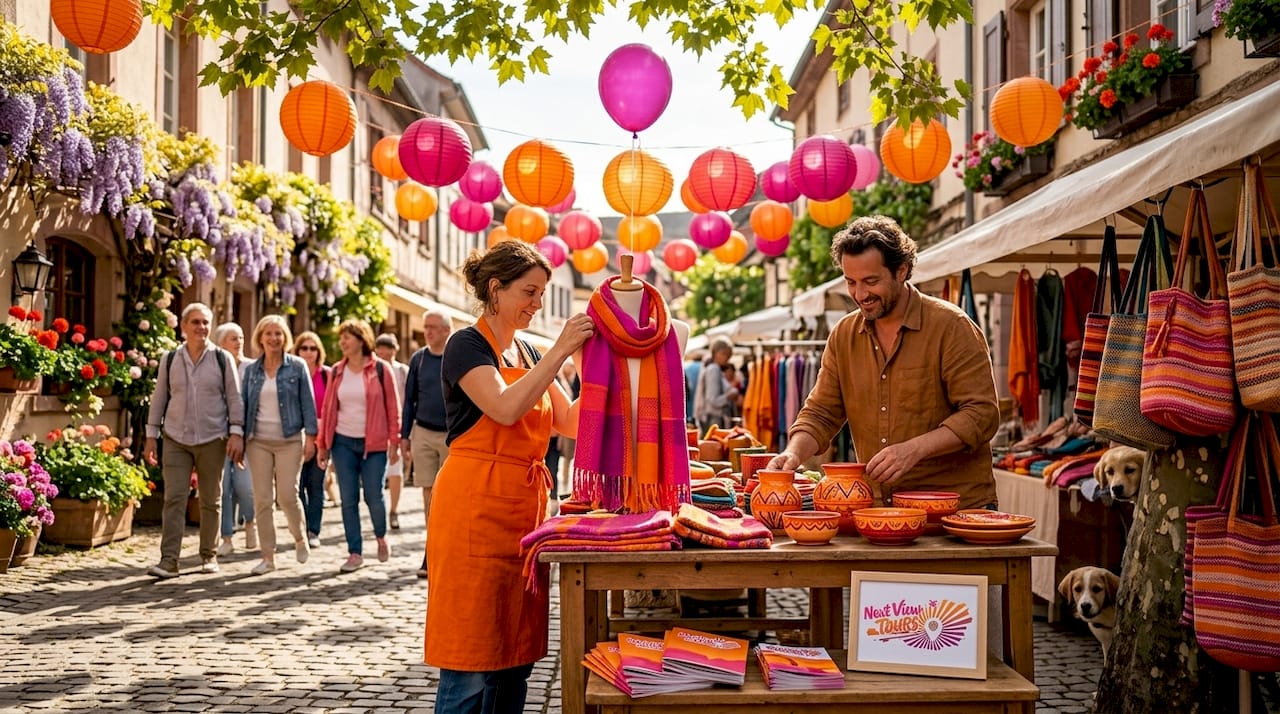
Pro Tip: Look beyond the UNESCO World Heritage Site list when planning. Some of the most authentic heritage experiences happen in smaller villages and regional festivals that have not yet been overwhelmed by mass tourism.
Why heritage tourism matters
The importance of heritage tourism goes well beyond satisfying traveler curiosity. It operates as a significant force for economic development, cultural preservation, and community identity.
| Benefit Area | Impact |
|---|---|
| Economic growth | Direct revenue for local businesses, guides, artisans, and accommodation providers |
| Job creation | Supports employment in rural and historically significant areas where alternatives are limited |
| Cultural preservation | Revenue funds the conservation of sites, traditions, and artifacts for future generations |
| Community identity | Validates local culture, strengthens pride, and encourages younger generations to maintain traditions |
| Education | Provides travelers with genuine historical knowledge that classroom learning rarely delivers |
The regional dimension is particularly striking. South Korea’s royal palaces attracted 17.81 million visitors in 2025, including 4.27 million foreign travelers. That is a sevenfold increase in foreign visitors since 2022. The cultural heritage category alone accounts for roughly 48% of the global market, making it the dominant segment within a $607 billion industry.
The challenges are real, though. Balancing visitor access with conservation is genuinely difficult. Overcrowded sites deteriorate faster. Resident quality of life can suffer when tourism overwhelms a neighborhood’s character. Organizations in Italy have developed standardized indicators to manage visitor carrying capacity while protecting resident well-being, positioning heritage tourism as a strategic global asset rather than an extractive industry.
These tensions matter to you as a traveler because your choices determine which side of that balance tips.
Heritage tourism trends shaping travel today
The field is not static. Several forces are reshaping how travelers engage with heritage destinations in 2026 and beyond.
- Experiential travel over passive sightseeing. Travelers increasingly seek authentic historical narratives rather than simple observation. Cooking classes in a medieval kitchen, weaving workshops with local artisans, or attending a centuries-old religious ceremony all reflect this demand.
- Digital tools and augmented reality. Museums and heritage sites are adopting augmented reality overlays that reconstruct destroyed buildings or animate historical figures. This technology extends the storytelling power of physical heritage without replacing it.
- Sustainable and responsible management. Heritage tourism is evolving into a strategic asset with dedicated tools to manage overtourism while improving local well-being. Timed entry systems, visitor caps, and off-peak incentives are now standard practices at major European sites.
- Growing interest in intangible heritage. Language preservation programs, traditional music archives, oral history projects, and artisan apprenticeship programs are attracting travelers who want to contribute, not just consume.
| Trend | What it means for your trip |
|---|---|
| Experiential immersion | Seek programs where you actively participate, not just observe |
| Digital enhancement | Look for sites using AR or multimedia guides to add historical depth |
| Managed access | Book in advance; many top sites now have strict visitor limits |
| Intangible heritage focus | Ask about local workshops, storytelling events, and cultural demonstrations |
You can read more about how these patterns are developing in European guided tour trends to understand what this shift means for specific destinations.
How to engage meaningfully with heritage tourism
Knowing what heritage tourism is and actually practicing it well are two very different things. Here is what separates a culturally enriching trip from a superficial one:
- Prioritize community-based experiences. Staying in locally owned accommodation, hiring local guides, and eating at family-run restaurants keeps revenue within the community rather than redirecting it to international operators.
- Support local artisans. Purchasing handmade crafts directly from makers is both an economic contribution and a form of cultural preservation. When you buy a hand-painted ceramic from a Czech artisan, you help sustain a tradition that might otherwise disappear.
- Learn before you go. Visiting Hallstatt or Budapest without background knowledge is like watching a film from the middle. A brief read on local history, architecture, or significant historical events before you arrive transforms what you see into something you understand.
- Respect site protocols. Dress codes, photography restrictions, and visitor limits at heritage sites exist to protect both the physical site and the dignity of living communities. Ignoring these is not independence. It’s disrespect.
- Choose tours that emphasize living culture. The best heritage experiences involve interaction with people who carry the traditions forward, not just interpretation boards and audio guides.
Pro Tip: If you want to experience immersive, sustainable travel across Central Europe, look for itineraries that combine major heritage sites with smaller, community-led experiences. The contrast between the two teaches you something neither could achieve alone.
My take on what travelers consistently miss
I’ve spent years helping travelers discover Central Europe, from the imperial grandeur of Vienna to the quiet medieval streets of Ceský Krumlov. And the pattern I keep observing is this: travelers often arrive at heritage sites looking for confirmation of what they already know. They want their expectations validated, not challenged.
What genuinely enriches a heritage experience is the willingness to sit with ambiguity. Heritage sites are curated versions of history designed for accessibility. The version of history you encounter at any major monument has been edited, selected, and framed. That doesn’t make it false. It makes it layered. The traveler who asks “whose story is not being told here?” gets far more out of a visit than the one who simply photographs the facade.
Living heritage is where I think the real action is. A village in Slovakia where elderly women still practice traditional lace-making is not picturesque. It is urgent. These traditions exist at the edge of disappearance, and your presence as an engaged, respectful visitor contributes to their survival in a way that no government grant can fully replicate.
My encouragement is this: go deeper than the top-ten list. Ask your guide what their grandparents remembered. Look for the authenticity-focused private tour that takes you to the neighborhoods locals actually love, not just the monuments on the postcard. That is where heritage tourism becomes something you carry home in your thinking, not just in your photo roll.
— Next
Explore Central Europe’s heritage with Nextviewtours

Nextviewtours specializes in exactly the kind of heritage travel this article describes: culturally immersive, expertly guided, and deeply rooted in the authentic character of each destination. Whether you want to trace imperial history through Vienna and Salzburg, discover the Gothic architecture of Prague, or explore the living village traditions of Slovakia and the Czech Republic, Nextviewtours crafts experiences that go well beyond standard sightseeing.
You can explore the full range of available trip types and experiences to find the format that fits your travel style, whether that is a private tour, a group adventure, or a fully customized itinerary built around your cultural interests. If you want a heritage journey shaped specifically around what moves you, the customised tours guide explains exactly how that process works. Your next meaningful cultural encounter is closer than you think.
FAQ
What is the definition of heritage tourism?
Heritage tourism refers to travel motivated by the desire to experience the cultural, historical, and natural legacy of a place. It includes visits to historic sites, participation in traditional festivals, and engagement with intangible practices like cuisine, music, and craftsmanship.
What are the best heritage tourism examples in Europe?
Europe offers an extraordinary range, from the castles of Prague and the imperial architecture of Vienna to the medieval old town of Salzburg and the cultural festivals of Budapest. Living heritage sites, where local communities actively participate in the visitor experience, represent the most authentic form of heritage tourism.
Why is heritage tourism important?
Heritage tourism generates over $607 billion globally each year, creates jobs in historically significant regions, funds conservation of cultural sites, and helps preserve traditions that might otherwise disappear. It also provides travelers with genuine historical education that enriches their understanding of the world.
How is heritage tourism changing in 2026?
The sector is shifting toward experiential and immersive travel, with travelers prioritizing authentic cultural narratives over passive observation. Digital tools like augmented reality are enhancing site interpretation, while sustainable visitor management practices are being adopted at major sites to reduce the impact of overtourism.
How can I practice heritage tourism responsibly?
Choose local guides and community-based accommodation, purchase directly from local artisans, respect site protocols, and research the historical context of destinations before you visit. Selecting tours that emphasize living culture over monument-checking creates experiences that are both more enriching for you and more beneficial for local communities.


Comments are closed