

 Uncategorized
TL;DR:
- Budapest offers excellent value, with city cards, efficient transit, and optimal seasonal timing enhancing travel experiences.
- Travelers should activate their Budapest Card carefully, use Pay&GO for seamless transit, and plan visits during spring or autumn.
Budapest is one of Europe’s most rewarding cities to visit, and a well-planned 2025 trip depends on three tools: the Budapest Card, the Pay&GO transit system, and smart seasonal timing. This budapest trip guide 2025 gives you everything you need to move through the city confidently, from Buda Castle Hill to the thermal baths of City Park. Budapest is approximately 47% cheaper than Western European capitals like Paris and London, which means your budget stretches further here than almost anywhere else on the continent. The city rewards preparation, and this guide delivers exactly that.
What is the best budapest card option for your trip?
The Budapest Card is the single most practical purchase for any visitor. It covers unlimited public transport and free entry to select museums and one thermal bath visit, all in one card. Card prices range from €53 for 24 hours to €112 for 96 hours, with 48-hour and 72-hour options at €69 and €85 respectively. That pricing structure rewards longer stays, since the per-day cost drops significantly as you extend your duration.
| Card Duration | Price | Best For |
|---|---|---|
| 24-hour | €53 | One-day layover or short visit |
| 48-hour | €69 | Weekend trip with focused sightseeing |
| 72-hour | €85 | Standard 3-day city break |
| 96-hour | €112 | Extended stay with full cultural immersion |
Activation is the step most travelers get wrong. The Budapest Card activates from the date and hour you write on the card, not from the moment of purchase. This means you control the clock. If you arrive at noon and plan to spend the afternoon settling in, activate your card the next morning when your sightseeing begins in earnest.
The card is non-transferable and personal. You cannot share it between travel companions, and inspectors will check it. Each person in your group needs their own card. The included free entry to St. Lukács Thermal Bath adds real value, especially since thermal bath tickets typically cost €20–€30 on their own.
Pro Tip: Match your card duration to your busiest sightseeing days. Buying a 96-hour card “just in case” when you only have two full days of planned attractions means paying for time you will not use. Activate it the morning of your first packed day and build your itinerary from there.
How does budapest’s pay&go transit system work in 2025?
Budapest’s public transport network covers the entire city efficiently, and the Pay&GO system makes single-ticket travel easier than ever. You tap your bank card or smart device directly on the validator, and the system purchases and validates your ticket in one step. No app download, no paper ticket, no ticket machine queue.
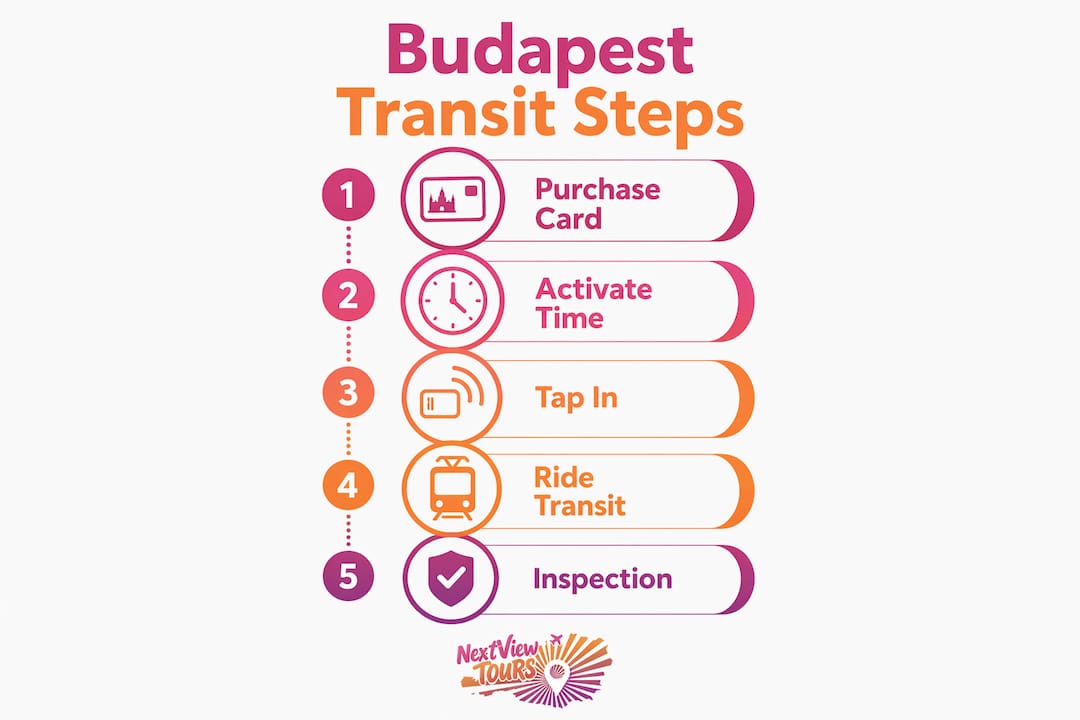
Pay&GO works across metro lines M1, M2, M3, and M4, as well as the 100E Airport Express bus. That coverage means you can use it from the moment you land at Budapest Ferenc Liszt International Airport. The 100E Airport Express runs directly between the airport and Deák Ferenc tér in central Pest, making it the fastest and most affordable airport transfer option.
Here is how to use Pay&GO correctly every time:
- Approach the validator at the metro gate or bus stop.
- Tap your contactless bank card or phone/watch with Apple Pay or Google Pay.
- Wait for the green confirmation signal on the validator screen.
- Board the vehicle. Your ticket is now active.
- Keep your payment card accessible during your journey.
Inspectors verify Pay&GO purchases using handheld checkers that read the system record of your tap. The fine for an invalid ticket in Budapest is significant, so a failed or incomplete tap is not a minor inconvenience. Always confirm the green light before boarding.
Pro Tip: If you hold a Budapest Card, you do not need Pay&GO at all for covered transport lines. Use Pay&GO only on days before or after your card is active, or for transport modes not covered by the card.
When should you visit budapest in 2025?
Spring and autumn are the strongest travel seasons for Budapest, specifically april through june and september through november. Summer brings peak crowds and heat that can make outdoor sightseeing uncomfortable, particularly on Buda Castle Hill where shade is limited. Winter offers low prices and a quieter city, but some outdoor attractions lose their appeal in cold weather.
A 3–4 day itinerary works well for most first-time visitors. The city divides naturally into two sides: Buda, which is hilly and historic, and Pest, which is flat, urban, and culturally dense. Splitting your days between the two sides prevents fatigue and gives you a complete picture of the city.
Here is a practical framework for a 4-day visit:
- Day 1 (Buda): Buda Castle, Matthias Church, Fisherman’s Bastion, and the Castle District streets. Use the funicular from Clark Ádám tér for the ascent.
- Day 2 (Central Pest): Start at Vörösmarty tér for coffee and cake, walk Andrássy út, visit the Hungarian State Opera House, and end at City Park near Széchenyi Baths.
- Day 3 (Jewish Quarter and Great Market Hall): The Dohány Street Synagogue, the ruin bars of the VII district, and the Great Market Hall on Fővám tér.
- Day 4 (Margaret Island and thermal baths): A morning walk on Margaret Island, followed by an afternoon at Széchenyi or Rudas Baths.
| Neighborhood | Key Attractions | Best Transit Option |
|---|---|---|
| Buda Castle Hill | Castle, Matthias Church, Bastion | Bus 16 or funicular |
| Andrássy út / City Park | Opera House, Heroes’ Square, Széchenyi | Metro M1 (yellow line) |
| Jewish Quarter | Dohány Synagogue, ruin bars | Metro M2 to Astoria |
| Waterfront (both sides) | Chain Bridge, Parliament, Citadel | Tram 2 along the Pest embankment |
For a deeper look at Budapest’s architectural heritage, the Art Nouveau buildings along Andrássy út and in the inner city deserve dedicated time. The style is concentrated enough that you can cover several landmarks in a single afternoon walk.
What are budapest’s best thermal baths to visit in 2025?
The thermal bath experience is one of Budapest’s defining cultural offerings, but 2025 visitors need to know one critical fact before planning. Gellért Baths closed on October 1, 2025, for renovation and will remain closed until 2028. If Gellért was on your list, remove it and replace it with Széchenyi or Rudas.
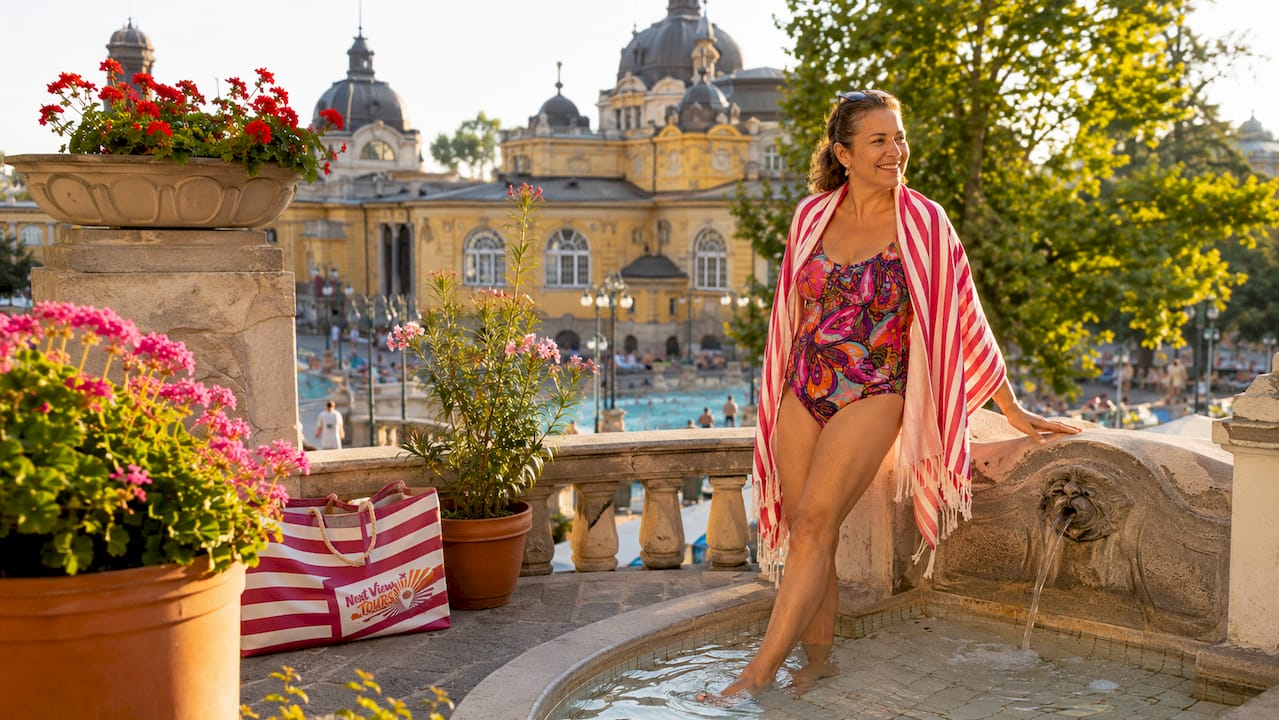
Széchenyi Thermal Bath in City Park is the largest and most photogenic option. Its outdoor pools and yellow Neo-Baroque architecture make it a genuine cultural landmark, not just a wellness facility. Széchenyi operates from 7 AM to 8 PM on weekdays and 8 AM to 8 PM on weekends, with indoor pools staying open later on select evenings.
Rudas Baths on the Buda side offers a more atmospheric experience. The Ottoman-era domed pool dates to the 16th century and feels distinctly different from Széchenyi’s grand scale. Rudas also runs popular Friday and Saturday night sessions, which combine the thermal pools with a rooftop bar overlooking the Danube.
Key tips for your thermal bath visit:
- Arrive before 9 AM at Széchenyi to experience the outdoor pools with minimal crowds. The difference between a 7:30 AM arrival and a 10:30 AM arrival is dramatic.
- Book tickets online in advance, especially for weekends and evening sessions at Rudas. Walk-up availability is not guaranteed.
- Bring a towel or rent one on-site. Rental costs are modest, but bringing your own saves time at the counter.
- Combine Széchenyi with City Park. Heroes’ Square, the Museum of Fine Arts, and Vajdahunyad Castle are all within a 10-minute walk, making the area a full half-day destination.
Pro Tip: The Budapest Card includes free entry to St. Lukács Thermal Bath. Lukács is smaller and less crowded than Széchenyi, making it an excellent choice if you want the thermal experience without the tourist volume. Save Széchenyi for a separate visit on a different day.
For romantic experiences beyond the baths, Budapest offers exceptional date-night options ranging from rooftop bars to candlelit cellar restaurants in the Castle District.
Key takeaways
A successful Budapest visit in 2025 requires activating the Budapest Card at the right moment, using Pay&GO for single-trip transit, and building your itinerary around the spring or autumn travel windows.
| Point | Details |
|---|---|
| Budapest Card activation | Write the start date and hour yourself; the card runs from that moment, not from purchase. |
| Pay&GO transit | Tap your bank card once to buy and validate; always confirm the green signal before boarding. |
| Gellért Baths closure | Gellért is closed until 2028; plan thermal bath visits around Széchenyi or Rudas instead. |
| Best travel seasons | April through june and september through november offer the best balance of weather and crowd levels. |
| Budget advantage | Budapest costs roughly 47% less than Paris or London, making it one of Europe’s best-value city breaks. |
My honest assessment of budapest in 2025
I have helped travelers plan Budapest itineraries across every season, and the city consistently surprises people who expect a straightforward tourist circuit. The Pay&GO system is a genuine improvement. Before it existed, buying a single transit ticket meant finding a machine, carrying coins, and hoping the validator worked. Now you tap and go. That kind of friction removal matters when you are trying to move efficiently between Buda and Pest.
The Budapest Card is worth buying if you plan to use it actively. The mistake I see most often is travelers buying the 96-hour card as a safety net and then spending two of those days on day trips outside the city. The card does not cover trips to Szentendre or the Danube Bend. Buy the duration that matches your actual in-city days.
The Gellért closure is a real loss for 2025 visitors. That building is one of the most beautiful in Budapest, and the interior pools are unlike anything at Széchenyi or Rudas. If you can wait until 2028, the post-renovation Gellért will be worth the trip on its own. For now, Rudas at night is the closest thing to a genuinely atmospheric alternative.
One thing most guides undervalue: the historic café culture along Vörösmarty tér and the inner city. Gerbeaud, the New York Café, and the Central Café are not tourist traps. They are living pieces of the city’s Belle Époque identity, and spending an hour in one of them tells you more about Budapest than most museums will.
— Next
Plan your budapest trip with Nextviewtours
Nextviewtours designs Budapest experiences that go beyond the standard tourist checklist. Whether you want a private Budapest tour built around your exact interests or a group tour that connects you with fellow travelers, the options are built for real flexibility.

From half-day city walks to multi-day itineraries covering both sides of the Danube, Nextviewtours matches the format to your travel style. Explore the full range of Budapest trip types and find the option that fits your 2025 dates, group size, and budget. Every itinerary is designed by people who know the city well, so you spend your time experiencing Budapest rather than figuring it out.
FAQ
How many days do you need in budapest?
Three to four days covers Budapest’s major attractions comfortably. A 72-hour Budapest Card aligns well with this timeframe and provides the best per-day value.
Is the budapest card worth buying?
The Budapest Card is worth buying if you plan to visit multiple museums and use public transport daily. The card pays for itself within one or two museum visits plus transit costs.
What is the best way to get from the airport to the city?
The 100E Airport Express bus connects Budapest Ferenc Liszt International Airport to Deák Ferenc tér in central Pest. Pay&GO works on this route, so you can tap your bank card directly at the stop.
Which thermal bath should you visit in 2025?
Széchenyi Thermal Bath is the top choice for first-time visitors, with outdoor pools and easy access via Metro M1. Rudas Baths offers a more intimate, historic atmosphere and popular evening sessions.
Is budapest safe for tourists?
Budapest is considered safe for tourists and ranks among the more secure capital cities in Central Europe. Standard precautions apply in crowded areas like the Great Market Hall and public transit during peak hours.


Comments are closed