

 Uncategorized
TL;DR:
- Travel agents perform comprehensive duties, including client consultation, itinerary planning, and booking coordination. They also provide proactive support during disruptions and conduct post-trip follow-up to build long-term client relationships. Mastery of technical tools and strong interpersonal skills are essential for success in the profession.
Travel agents duties are defined as the full set of professional tasks required to plan, book, manage, and support client travel from first consultation through post-trip follow-up. The role of a travel agent has expanded well beyond simple ticket booking. Today’s travel consultant acts as a personal advocate, risk manager, and itinerary architect. Understanding these responsibilities is the foundation of a successful career in travel. Whether you are entering the field or refining your practice, knowing what the job truly demands separates good agents from great ones.
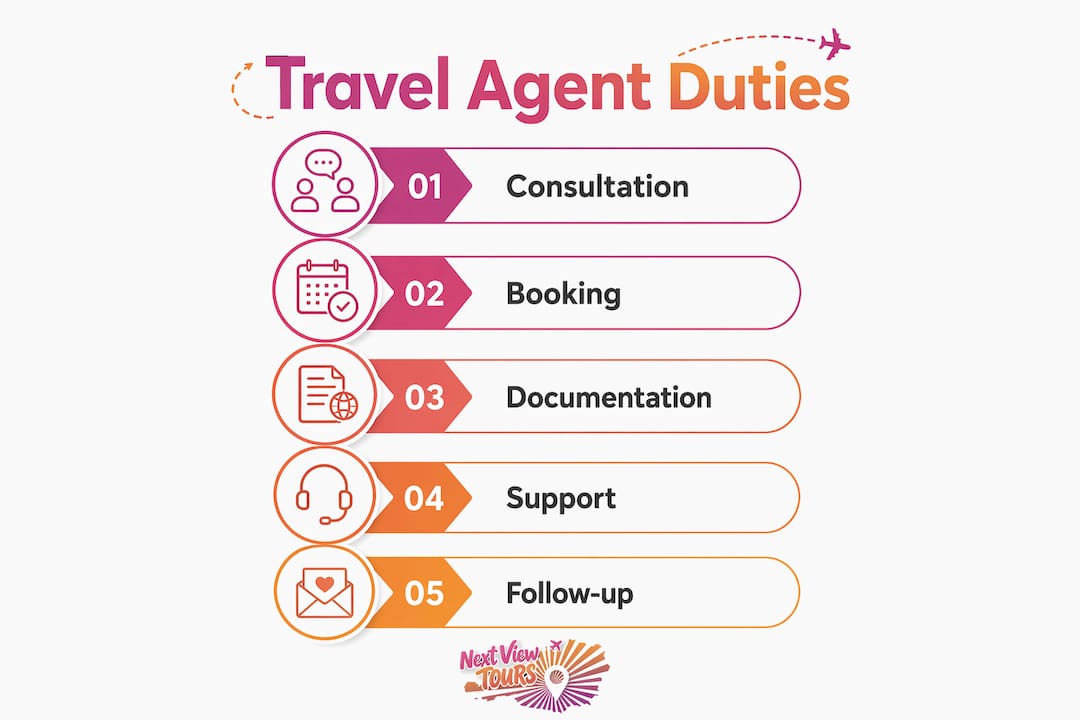
What are the core travel agents duties in client consultation?
Client consultation is the starting point of every professional travel engagement. Before a single booking is made, you must understand your client’s travel objectives, budget, preferred travel style, and any special requirements such as dietary needs, accessibility concerns, or family dynamics. This discovery phase shapes every decision that follows.
The consultative approach defines modern travel advising. Successful agents focus on understanding the “why” behind a trip, not just the “where.” A client who says “I want to go to Vienna” may actually be seeking a romantic anniversary experience, a cultural deep dive, or a family reunion. Asking the right questions unlocks that motivation and leads to higher-value, more satisfying bookings.
Once you understand the client’s goals, the itinerary planning phase begins. This involves researching destinations, comparing options across multiple global distribution systems (GDS), and building a day-by-day plan that accounts for local logistics, transfer times, and cultural context. A well-crafted itinerary reads like a story, not a spreadsheet.
Key consultation duties include:
- Conducting structured intake interviews to capture travel dates, budget, group size, and preferences
- Researching destinations using GDS platforms, tourism board resources, and firsthand supplier knowledge
- Designing day-by-day itineraries with confirmed contact details, local transport options, and timing buffers
- Building a shadow itinerary with emergency contacts and insider logistics as a client safety net
Pro Tip: Always ask clients to describe their best and worst past travel experiences. Those two answers reveal more about their expectations than any questionnaire.
The shadow itinerary concept is one of the most underused tools in travel advising. It is a parallel document containing backup plans, emergency numbers, and local logistics that clients rarely see but always benefit from. This level of preparation is what separates a professional agent from an online booking engine.
How do travel agents handle booking coordination and documentation?
Booking coordination is the operational core of a travel agent’s work. Once the itinerary is approved, you move into execution mode, which demands precision and attention to detail across multiple platforms and supplier systems.

Agents must maintain 100% accuracy in every booking record to prevent denied boarding or financial loss. A single name misspelling on a flight ticket can result in a client being turned away at the gate. That standard of accuracy is not optional; it is a professional baseline.
The booking coordination process follows a clear sequence:
- Book flights using GDS platforms such as Sabre or Amadeus, confirming seat assignments and baggage allowances
- Reserve accommodations that match the client’s budget, location preferences, and accessibility needs
- Arrange ground transport including car rentals, private transfers, and rail passes
- Book tours and experiences through vetted local operators, confirming availability and cancellation policies
- Collect payments and issue receipts, maintaining accurate financial records for each booking
- Provide visa and entry requirement guidance, including processing timelines and required documentation
- Recommend travel insurance appropriate to the trip type, destination risk level, and client profile
Documentation management runs parallel to booking. You are responsible for compiling all travel documents into a clear, organized package for the client. This includes e-tickets, hotel vouchers, tour confirmations, insurance certificates, and visa copies. Clients who receive a complete, well-organized travel document package arrive at the airport with confidence.
Travel insurance guidance deserves special attention. Agents who understand hotel check-in requirements and entry regulations across destinations can advise clients on the exact coverage they need, from medical evacuation to trip cancellation protection. This guidance protects both the client and your professional reputation.
In what ways do travel agents provide proactive support and disruption management?
Proactive support is where professional travel agents earn their value most visibly. The work does not stop when the client boards the plane. The majority of a travel agent’s real work happens during the disruption phase, monitoring conditions and resolving problems before clients even realize something went wrong.
Agents spend 30–50% of their workday on relationship management and proactive monitoring beyond initial bookings. That figure reflects how much of the job is invisible to clients but critical to their experience.
Proactive support duties include:
- Monitoring flight status and travel advisories in real time during client trips
- Tracking weather events, political developments, and health alerts that could affect itineraries
- Initiating rebookings proactively before cancellations are officially announced
- Coordinating with hotels and tour operators to adjust plans when disruptions occur
- Providing 24/7 emergency contact availability for clients in crisis situations
“The defining skill of a professional travel advisor is not building the perfect itinerary. It is standing behind that itinerary when things go wrong and making the client whole again. That is the work that builds careers and long-term client loyalty.”
Service recovery skills separate professional travel consultants from DIY booking platforms. When a flight is canceled at 11:00 PM in a foreign city, a client with a professional agent has someone working the phones immediately. A client who booked online is on hold with a call center. That difference is the entire value proposition of the profession.
Strong supplier relationships are the engine behind effective disruption management. Agents who have cultivated genuine working relationships with airline contacts, hotel managers, and tour operators can resolve problems faster than any automated system. These relationships are built over years and represent a significant professional asset.
What administrative and follow-up duties build client retention?
Administrative duties form the backbone of a sustainable travel agency practice. Accurate recordkeeping, timely invoicing, and organized client files are not glamorous, but they prevent costly errors and support long-term business growth.
Post-travel follow-up is one of the most impactful and most neglected duties in the profession. Agents who conduct follow-ups within 7 days of a client’s return are 2–3 times more likely to retain that client for future bookings. That single habit compounds into a loyal client base over time.
| Administrative Duty | Purpose |
|---|---|
| Maintaining booking records | Prevents billing disputes and supports accurate commission tracking |
| Post-trip client follow-up | Collects feedback, resolves issues, and opens the door to repeat bookings |
| CRM data management | Stores client preferences for personalized future proposals |
| Accurate invoicing | Builds financial trust and supports transparent client relationships |
| Feedback documentation | Identifies supplier quality issues and improves future recommendations |
CRM platforms are the professional standard for managing client data. Systems that store travel preferences, past destinations, dietary needs, and communication history allow you to personalize every future proposal. Clients notice when you remember that they prefer aisle seats and avoid cruises. That personalization is what converts a one-time booking into a decade-long relationship.
Pro Tip: Set a calendar reminder for every client’s return date. A brief, personal follow-up message sent within 48 hours of their return creates a lasting impression and opens the conversation for the next trip.
The group travel planning workflow adds another layer of administrative complexity. Group bookings require coordinating multiple travelers’ documents, dietary needs, and rooming preferences simultaneously. Agents who master group administration unlock a high-revenue segment of the market.
What skills and tools do travel agents need to succeed?
Effective execution of travel agent responsibilities requires a combination of technical proficiency, interpersonal skill, and cultural awareness. No single skill operates in isolation. The best agents combine all three into a practiced, professional approach.
Core skills and tools include:
- GDS proficiency: Sabre, Amadeus, and similar platforms are the technical foundation of booking work. Fluency in these systems directly affects speed and accuracy.
- CRM management: Platforms that centralize client data allow agents to personalize proposals and track booking history efficiently.
- Travel advisory monitoring: Tools that track government advisories, weather systems, and airline status updates support proactive disruption management.
- Customer service and conflict resolution: The ability to stay calm, communicate clearly, and solve problems under pressure is a career-defining skill.
- Sales and proposal writing: Agents who can present a compelling itinerary proposal convert consultations into confirmed bookings at higher rates.
- Cultural awareness: Understanding local customs, entry requirements, and regional sensitivities allows agents to advise clients with genuine authority.
Technical and communication skills are both essential to fulfill duties accurately and efficiently. Agents who excel technically but lack interpersonal warmth lose clients to advisors who make people feel heard. The reverse is equally true.
| Skill Category | Application in Daily Duties |
|---|---|
| GDS and booking platforms | Flight, hotel, and tour reservations with accuracy |
| CRM systems | Client data storage, preference tracking, and follow-up scheduling |
| Travel advisory tools | Real-time monitoring of conditions affecting active itineraries |
| Communication and negotiation | Client consultations, supplier negotiations, and complaint resolution |
| Cultural and destination knowledge | Accurate advice on entry requirements, local customs, and safety |
The role of customer service in hospitality directly mirrors the skills travel agents apply daily. Complaint handling, refund navigation, and emergency rebooking all draw from the same professional toolkit that hospitality professionals use in hotels and resorts. Cross-industry learning accelerates skill development for travel agents at every career stage.
Understanding the full role of a travel agent in tourism provides additional context for how these skills fit into the broader industry structure.
Key Takeaways
A travel agent’s professional value rests on three pillars: consultative client understanding, precise booking execution, and proactive disruption management that protects travelers when plans change.
| Point | Details |
|---|---|
| Consultation drives booking quality | Understanding client motivations before booking leads to higher satisfaction and repeat business. |
| Accuracy is non-negotiable | Booking errors cause denied boarding and financial loss; 100% accuracy is the professional standard. |
| Disruption management defines value | Agents spend 30–50% of their workday on monitoring and proactive problem resolution. |
| Follow-up builds retention | Post-trip contact within 7 days makes agents 2–3 times more likely to retain clients. |
| Skills span technical and interpersonal | GDS proficiency and communication skills are equally critical to career success. |
What I have learned about the real work of travel advising
The biggest misconception about this profession is that booking is the job. Booking is the beginning. The real work is everything that happens before the client asks a question and everything that happens after the itinerary is confirmed.
Early in my career, I treated every consultation as a logistics exercise. I asked where clients wanted to go, what dates worked, and what budget they had. I got the answers and built the trip. The results were technically correct and emotionally flat. Clients came back occasionally. They did not refer friends.
The shift happened when I started asking “why.” Why Vienna? Why now? Why this particular type of trip? Those questions changed everything. A couple who said “we want to see Central Europe” turned out to be celebrating 25 years of marriage after a difficult few years. That context transformed a standard multi-city itinerary into something genuinely meaningful. They referred four couples to me within a year.
The shadow itinerary concept changed my practice in a different way. Building a parallel document with emergency contacts, backup restaurant options, and local transport alternatives takes an extra two hours per booking. Those two hours have saved clients from genuine crises more times than I can count. Clients rarely see that document. They feel its effects every time something goes sideways and their agent already has a solution.
The agents who thrive long-term are the ones who embrace the invisible labor. Monitoring flight status at midnight, calling a hotel manager to resolve a room issue before the client checks in, preemptively rebooking a connection that looks risky. That work is not glamorous. It is the entire point.
— Next
How Nextviewtours supports your travel planning practice
Nextviewtours offers a portfolio of European experiences that gives travel agents a strong foundation for client recommendations across every trip type.
From private tours through Vienna, Salzburg, and Prague to multi-day adventures across Austria, Hungary, Slovakia, and the Czech Republic, Nextviewtours covers the full range of client needs. Whether your clients want a customised tour built around their specific interests or a structured group experience, the catalog provides ready-made options that simplify your proposal process. Agents can explore the complete trip types catalog to match client preferences with the right experience format. Nextviewtours’ range of day trips, family tours, couple tours, and adventure experiences gives you the product depth to serve diverse client profiles with confidence.
FAQ
What are the main duties of a travel agent?
Travel agents duties include client consultation, itinerary design, booking coordination across flights, hotels, and tours, documentation management, and post-trip follow-up. Proactive disruption management and supplier relationship maintenance are equally central to the role.
How much time do travel agents spend on tasks beyond booking?
Agents spend 30–50% of their workday on relationship management and proactive monitoring beyond initial bookings. This includes tracking travel advisories, managing disruptions, and maintaining supplier contacts.
What is a shadow itinerary and why does it matter?
A shadow itinerary is a parallel document containing emergency contacts, backup logistics, and insider tips that agents prepare alongside the main travel plan. It provides clients with a professional safety net when unexpected situations arise.
How do travel agents retain clients long-term?
Agents who conduct post-trip follow-up within 7 days of a client’s return are 2–3 times more likely to retain that client for future bookings. Personalized service and CRM-based preference tracking reinforce that loyalty over time.
What technical skills does a travel agent need?
Proficiency with GDS platforms such as Sabre and Amadeus, CRM systems for client data management, and travel advisory monitoring tools are the core technical requirements. Strong communication and cultural awareness skills complete the professional profile.


Comments are closed