
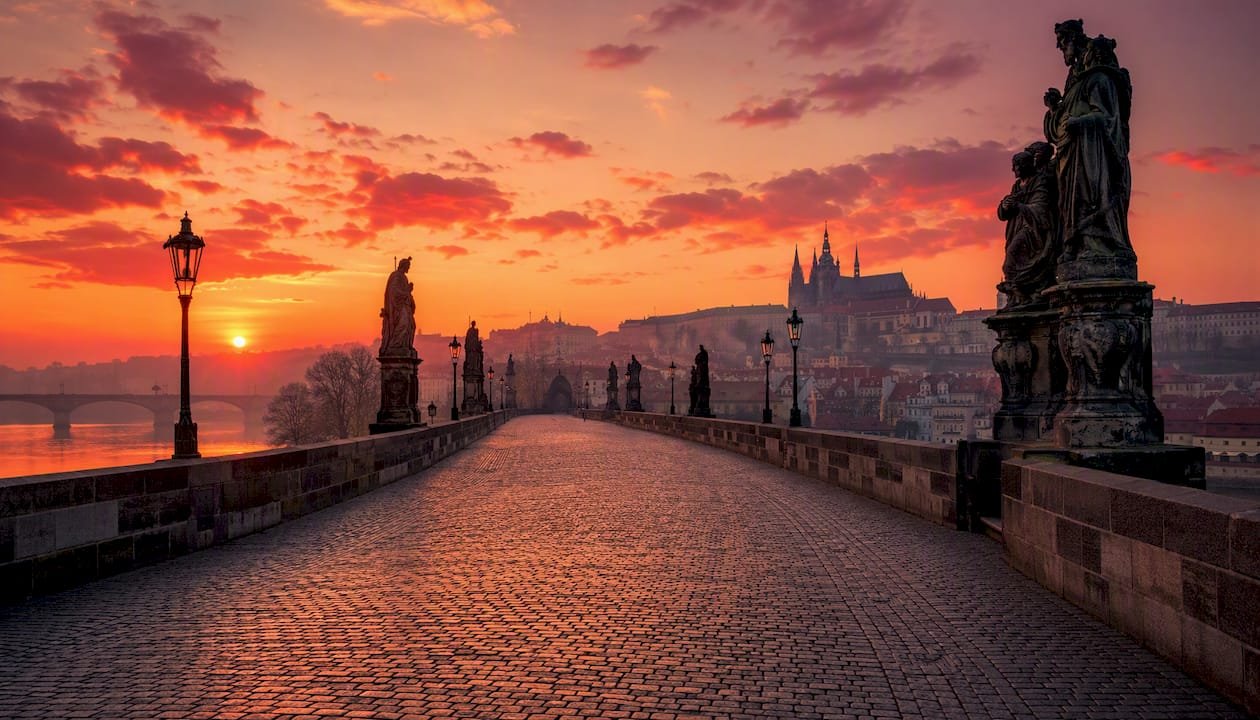
 City Tour
May and September are the best months to visit Prague for most travelers. Both shoulder months combine mild temperatures, manageable crowds, and a full cultural calendar, giving you the city at its most rewarding without peak-season prices or summer gridlock.
- Best for weather and outdoor walks: May and September, with daytime highs in the mid-50s to mid-60s°F and soft light perfect for Charles Bridge at dawn
- Best for lowest prices: November through March (excluding Christmas and New Year’s week), when hotel rates drop and crowds thin considerably
- Best for festivals: May (Prague Spring Music Festival), August (Prague Pride), and late November through December (Prague Christmas markets at Old Town Square and Wenceslas Square)
- Best for indoor culture: January and February, when concert and theater seasons peak and you share the city with far fewer tourists
Nextviewtours guides Prague year-round, and the shoulder months consistently produce the most satisfying trips across all traveler types.
Key Takeaways
May and September are the best months to visit Prague, balancing mild weather, manageable crowds, and an active cultural calendar across all traveler types.
| Point | Details |
|---|---|
| Best overall months | May and September offer mild temperatures, shoulder-season crowds, and full cultural programming. |
| Peak season tradeoff | June through August brings the best weather but the highest prices and densest crowds at Charles Bridge and Old Town Square. |
| Cheapest window | November through March (excluding Christmas week) delivers the lowest hotel rates and fewest tourists. |
| Booking lead times | Book summer 10–14 weeks ahead; shoulder months 6–8 weeks; Christmas market period 8–12 weeks. |
| Packing priority | A windproof layer and broken-in walking shoes are non-negotiable in every season due to river wind and cobblestones. |
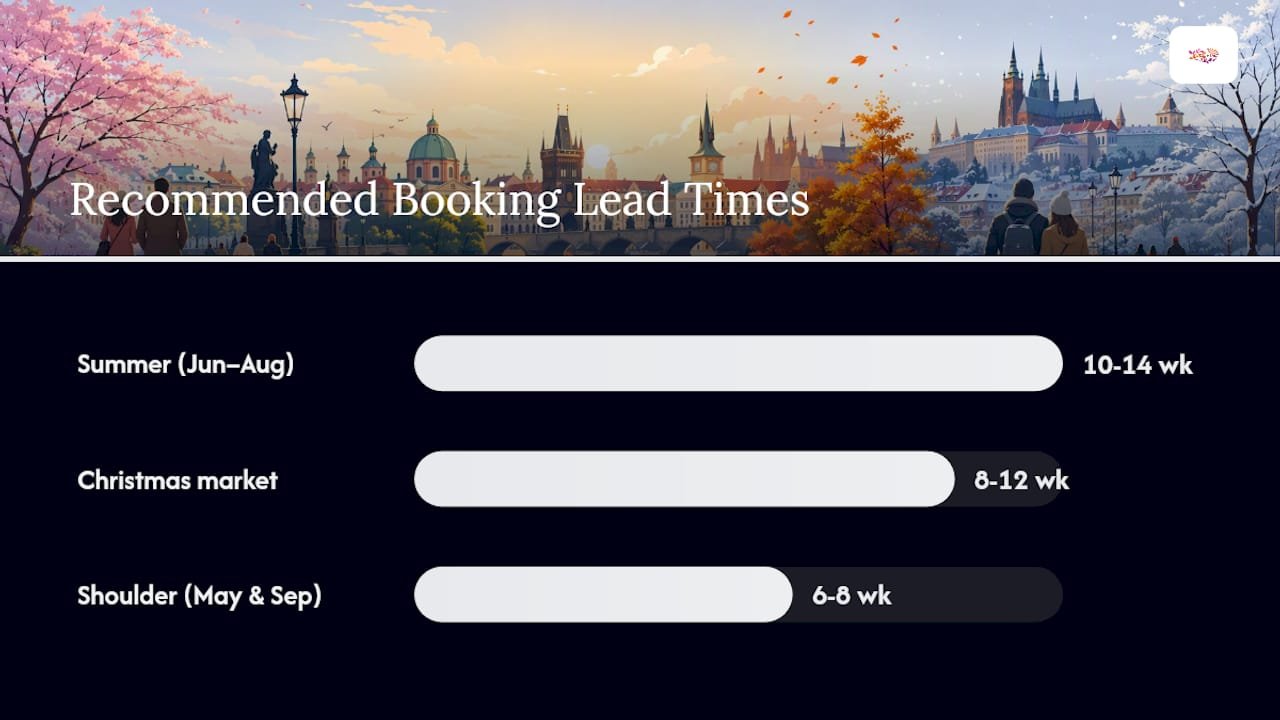
Table of Contents
- What is the best time to visit Prague by season?
- Month-by-month Prague weather and crowd guide
- Which events and festivals should you plan around?
- When does Prague get cheapest, and how far ahead should you book?
- How many days do you actually need in Prague?
- What should you pack for each Prague season?
- Which month suits your travel style best?
- Sources
What is the best time to visit Prague by season?
Shoulder seasons win for most travelers, but every season has a genuine case. Here is what each one actually delivers.
Spring (March–May)
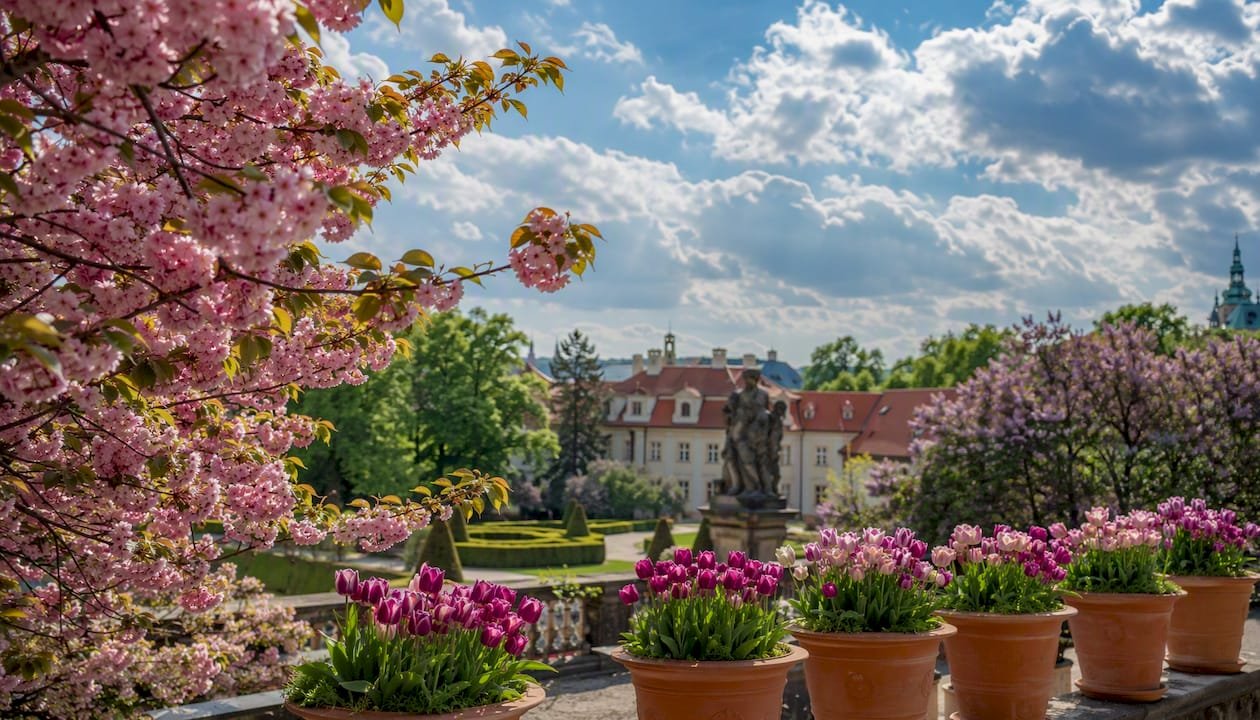
Pros: Cherry blossoms and lilacs open across the city’s baroque gardens, temperatures climb from the low 40s°F in March to the mid-60s°F by May, and the cultural season is in full swing. The Prague Spring Music Festival draws international orchestras each May, filling concert halls without overwhelming the streets.
Cons: Early March can feel raw, and wind off the Vltava adds a chill even when the thermometer reads 55°F.
Crowds: Low to medium (rising through May)
Summer (June–August)
Pros: Long days near the summer solstice, reliable sunshine, and the city’s outdoor terraces and river cruises at their liveliest. Prague Pride in August draws a vibrant international crowd.
Cons: Summer is Prague’s peak season, with the highest hotel rates and the densest foot traffic at Charles Bridge and Old Town Square. July also brings the year’s highest rainfall at around 2.6 inches.
Crowds: High
Autumn (September–November)
Pros: September carries summer’s warmth into early autumn, with highs still in the low-to-mid 60s°F, golden foliage, and the cultural season restarting after the summer break. Photography conditions are outstanding.
Cons: Days shorten noticeably by October, and November turns grey and damp.
Crowds: Medium (September) to Low (November)
Winter (December–February)
Pros: The Prague Christmas markets at Old Town Square and Wenceslas Square are genuinely magical, and concert and theater seasons peak in January and February with far fewer tourists competing for tickets.
Cons: January average lows drop to around 27°F, daylight is short, and outdoor sightseeing requires serious layering.
Crowds: Low (except Christmas and New Year’s week, which spike sharply)
Month-by-month Prague weather and crowd guide
Long-term climate averages show a clear arc from cold winters to warm summers, with the shoulder months offering the most comfortable balance. The warmest, sunniest stretch runs mid-May through mid-September, though even summer nights can stay cool enough to warrant a light jacket.
Statistic callout: July is Prague’s warmest month, with an average high around 75°F and the highest precipitation. January average lows sit near 27°F.
Pro Tip: Arrive at Charles Bridge by 7:00 AM in May or September. The light is soft, the crowds are thin, and the view of Prague Castle across the Vltava is one of the finest in Central Europe.
Which events and festivals should you plan around?
Prague’s event calendar shapes the city’s energy and its hotel availability. These are the dates worth building your trip around, or consciously avoiding if crowds are your concern.
- Prague Spring Music Festival (May): One of Europe’s oldest classical music festivals, running for several weeks each May. It draws serious audiences to venues including the Rudolfinum and St. Vitus Cathedral. Shoulder-season timing means you get the festival atmosphere without summer peak prices; book accommodations early.
- Easter markets (March or April, date varies): Old Town Square fills with craft stalls and traditional food. Crowds are moderate and the atmosphere is festive without being overwhelming. Check the exact dates annually since Easter shifts each year.
- Prague Pride (August): A week-long celebration centered on Wenceslas Square and the surrounding neighborhoods. It adds energy and color to an already busy summer week, so expect higher hotel demand and book well ahead.
- Prague Food Festival (late May or early June): Held at Prague Castle grounds, this three-day event showcases Czech and international cuisine. Check Prague Food Festival’s official site for exact annual dates, as they shift slightly year to year.
- United Islands of Prague (June): A free music festival spread across islands in the Vltava, drawing local and international acts. It adds to June’s appeal without dramatically spiking accommodation costs.
- Prague Christmas markets (late November through December 24): The markets at Old Town Square and Wenceslas Square are among the most atmospheric in Central Europe. The period from late November through Christmas week sees a sharp crowd and price spike despite the overall low season. Thermal layers and waterproof boots are non-negotiable, and hotel reservations should be made months in advance.
Weekend festival dates tend to sell out faster than weekday openings. If a festival falls during your planned trip, add at least four to six weeks to your normal booking lead time.
When does Prague get cheapest, and how far ahead should you book?
Low season runs roughly November through March, excluding the Christmas and New Year’s holiday window. Hotel rates drop noticeably, popular restaurants are easier to walk into, and you can spend an hour at the Jewish Quarter without navigating tour groups. The tradeoff is cold weather and short days, so plan indoor-heavy itineraries.
Booking well in advance is critical for summer weeks and festival dates. Here is a practical timeline:
- Summer (June–August): Book flights and hotels 10–14 weeks ahead. Prague’s peak season fills mid-range hotels fast, especially around Prague Pride in August and the summer solstice period.
- Shoulder months (May and September): Book 6–8 weeks ahead for most options. May fills faster than September because of the Prague Spring Music Festival, so lean toward the earlier end of that window.
- Christmas market period (late November–December): Book 8–12 weeks ahead. Despite being technically low season, the market weeks create a localized demand spike that rivals summer for popular central hotels.
- Deep winter (January–February) and late autumn (October–November): Last-minute deals are genuinely available. You can often find good rates 2–3 weeks out, and some of the city’s best concert tickets are easier to secure.
Pro Tip: Midweek arrivals in shoulder months often unlock noticeably lower hotel rates than Friday or Saturday check-ins. If your schedule is flexible, a Tuesday or Wednesday arrival in May can save a meaningful amount on a central property.
How many days do you actually need in Prague?
Prague is a compact city. Its major districts, including the Old Town, Malá Strana, Prague Castle, and the Jewish Quarter, sit within comfortable walking distance of each other. Two to three days covers the essential highlights; four to five days lets you slow down, explore neighborhoods off the main circuit, and add a day trip.
- One day: Start at Prague Castle and St. Vitus Cathedral (allow 2–3 hours), walk down through Malá Strana to Charles Bridge, then cross into Old Town for the Astronomical Clock and Old Town Square. Finish with dinner in the Jewish Quarter. It is a full day, and you will feel it in your feet.
- Two to three days: Add the Jewish Quarter and its six synagogues (half a day), a river cruise on the Vltava (1–2 hours), and an evening concert or theater performance. Day three works well for Vyšehrad fortress or a slower walk through Vinohrady.
- Four to five days: Consider a day trip or multi-day regional excursion to Český Krumlov, Kutná Hora, or even a cross-border trip toward Vienna or Budapest. Prague also pairs naturally with Salzburg and Hallstatt for a Central European itinerary.
If you are visiting during the Prague Spring Music Festival or the Christmas markets, budget an extra half-day for the event itself and the crowds it draws to the surrounding streets.
What should you pack for each Prague season?
Prague’s cobblestone streets, river breezes, and variable weather reward travelers who pack thoughtfully. The single most common mistake is underestimating the wind chill off the Vltava, which can make a 58°F spring afternoon feel considerably colder on a riverside walk.
Spring (March–May)
- Windproof outer layer (essential for river walks and castle hilltop)
- Light mid-layer or fleece
- Comfortable, waterproof walking shoes with ankle support for cobblestones
- Compact umbrella or packable rain jacket
- Scarf for early-morning sightseeing
Summer (June–August)
- Breathable, light clothing for warm days
- Light jacket or cardigan for cool evenings and air-conditioned interiors
- Sunscreen and sunglasses (July sun is strong)
- Comfortable walking shoes (still cobblestones, still unforgiving)
- Reusable water bottle
Autumn (September–November)
- Layering system: base layer, mid-layer, and a waterproof shell
- Warmer scarf and light gloves for October onward
- Waterproof walking shoes
- Small daypack for layers you peel off as the day warms
Winter (December–February)
- Thermal base layers (January lows near 27°F demand them)
- Insulated, waterproof boots with grip for icy cobblestones
- Hat, gloves, and a warm scarf
- Heavy coat rated for temperatures in the 20s°F
Pro Tip: Whatever season you visit, pack shoes you have already broken in. Prague’s Old Town cobblestones are beautiful and brutal on new footwear. Blisters on day one will reshape your entire itinerary.
A European power adapter (Type E plug) is standard in the Czech Republic. Prague’s public transport system is excellent and inexpensive; a 24-hour or 72-hour pass covers trams, metro, and buses and is worth buying on arrival. For hotel photography and seasonal pricing insights, Hospitality Lens’s Prague page offers useful visual and rate context.
Which month suits your travel style best?
Your ideal month depends on what you want most from the trip. Here is a quick guide by traveler type, drawing on Nextviewtours’ experience running Prague tours and experiences across all seasons.
- Photographers: May is the standout month. Cherry blossoms frame baroque facades, the light is soft and golden in the early morning, and crowds at Charles Bridge are manageable before 8:00 AM. September is a close second, with warm-toned foliage and the same favorable light conditions.
- Budget travelers: January and February offer the lowest hotel rates and the fewest crowds. You will need indoor plans, but Prague’s concert halls, the National Museum, and the Jewish Quarter’s synagogues are all at their most accessible.
- Festival-goers: May for the Prague Spring Music Festival, August for Prague Pride, or late November for the Christmas markets. Each creates a distinct city atmosphere. May gives you the best weather alongside the cultural programming.
- Indoor culture lovers: Winter is genuinely underrated for this. Concert and theater seasons peak in January and February, tickets are easier to secure, and the city’s galleries and museum spaces feel less rushed. A Stories of Jewish Prague tour or a culinary deep dive through the Old Town makes for a rich cold-weather itinerary.
- Families: Late May and early September hit the sweet spot. Weather is warm enough for outdoor exploration, school holiday crowds have not yet peaked or have just subsided, and the city’s parks and castle grounds are at their most inviting.
A guide’s honest take on when to go
The shoulder-month consensus is correct, but May edges out September for one reason most guides understate: the Prague Spring Music Festival transforms the city’s cultural atmosphere in a way that September, for all its beauty, simply does not replicate. You can walk into St. Vitus Cathedral for an evening concert, step out onto Charles Bridge in the late dusk, and feel the city operating at its full artistic and architectural register simultaneously. September is quieter and arguably more photogenic, but May has a particular energy that rewards travelers who care about both the city’s outdoor beauty and its living cultural life.
The one thing I would tell every first-time visitor: set your alarm for 6:30 AM on your first full day, walk to Charles Bridge before the tour groups arrive, and look west toward the castle. That single hour will anchor everything else you see.
Sources
These are the most reliable resources for verifying weather averages, festival dates, and booking timing before your trip.
- Best Times to Visit Prague | U.S. News Travel
- Prague Climate, Weather By Month, Average Temperature (Czechia) – Weather Spark
- Prague climate: seasons, when to go, monthly averages
- Best time to visit Prague – Lonely Planet
- The Best Time to Visit Prague: A Complete Seasonal Guide | Celebrity Cruises


Comments are closed