
 Uncategorized
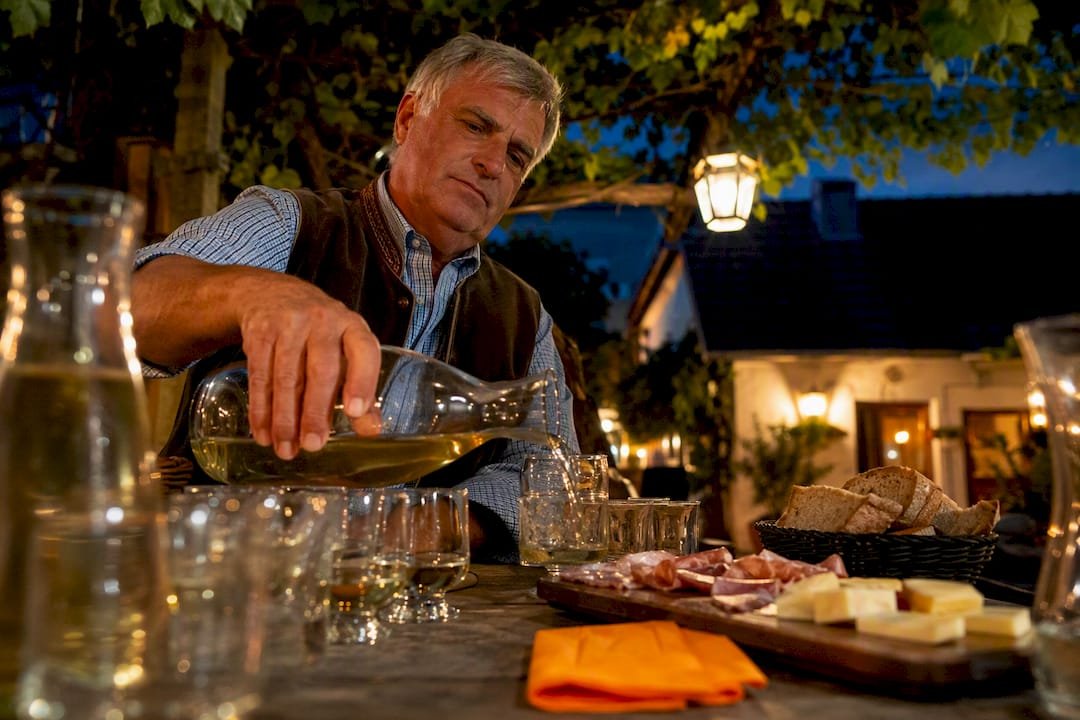
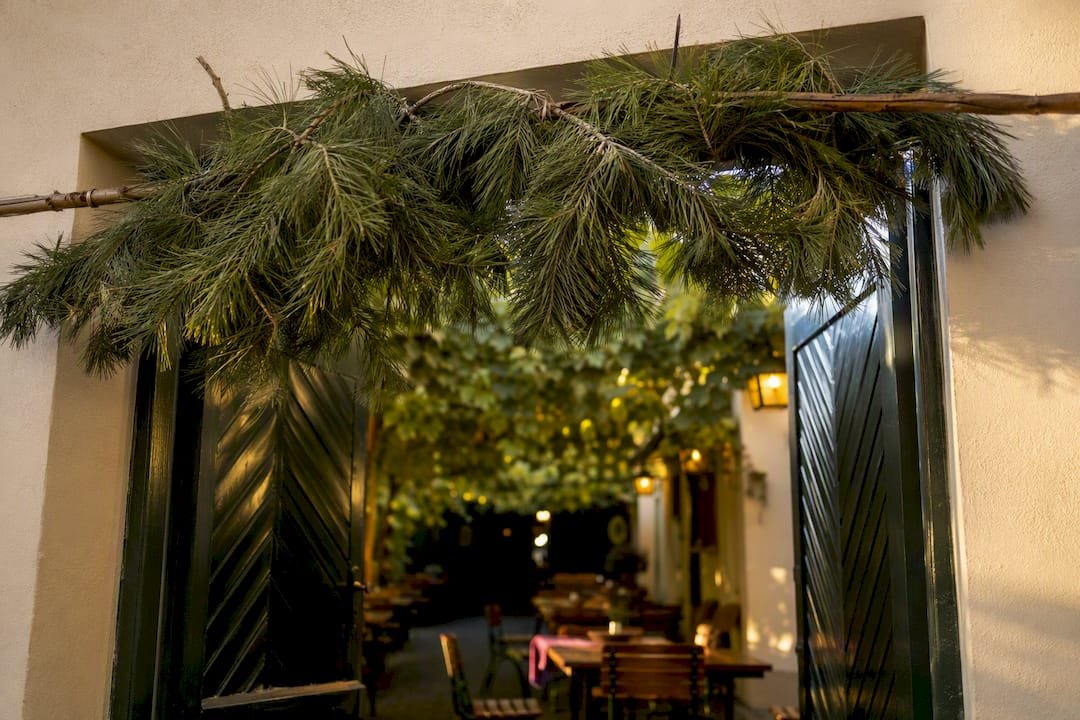
A Heuriger is a producer-run wine tavern where the vintner behind the counter also tends the vines outside, pouring their own new-vintage wine alongside a cold buffet of ham, cheese, and dark bread. Vienna’s Heurigen cluster in vineyard districts like Grinzing and Nussdorf, and the best window to visit runs April through October, peaking in September and October when Sturm season hits. Before you go anywhere, learn to spot the pine branch or “Ausg’steckt” sign hanging above the door. It’s the only reliable way to know if a Heuriger is actually open that day.
TL;DR:
- Most Vienna Heurigen open only during the season from April to October, with peak times in September and October when Sturm is in season.
- A Heuriger serves only its own current-vintage wine accompanied by simple cold buffet food, with communal seating and informal ordering.
- The presence of a pine branch or “Ausg’steckt” sign indicates that a Heuriger is open and pouring that day.
- Visitors should plan to arrive early in the evening, especially on weekends, and avoid driving afterward by using public transportation or taxis.
- Starting in less touristy districts like Nussdorf or Stammersdorf provides a more local experience and better access to authentic wines compared to the crowded Grinzing area.
Table of Contents
- What Is a Heuriger, Exactly?
- Where to Find the Best Heurigen in Vienna
- What to Order, and How to Behave Once You’re There
- When to Visit and How to Tell If One Is Open
- Getting There: Transit, Hours, and What to Bring
- A Sample Evening and Pairing It With a Wachau Day Trip
- Next View Tours’ Take on Vienna’s Wine Tradition
- Book the Wine Day Trip That Skips the Guesswork
- Sources
- FAQ
What Is a Heuriger, Exactly?
The word “heurig” means “this year’s,” a nod to the young wine that defines the entire tradition. The custom traces back to a 1784 decree from Emperor Joseph II, which gave wine growers the right to sell their own harvest directly from the farm without a tavern license. That rule still shapes the experience today.
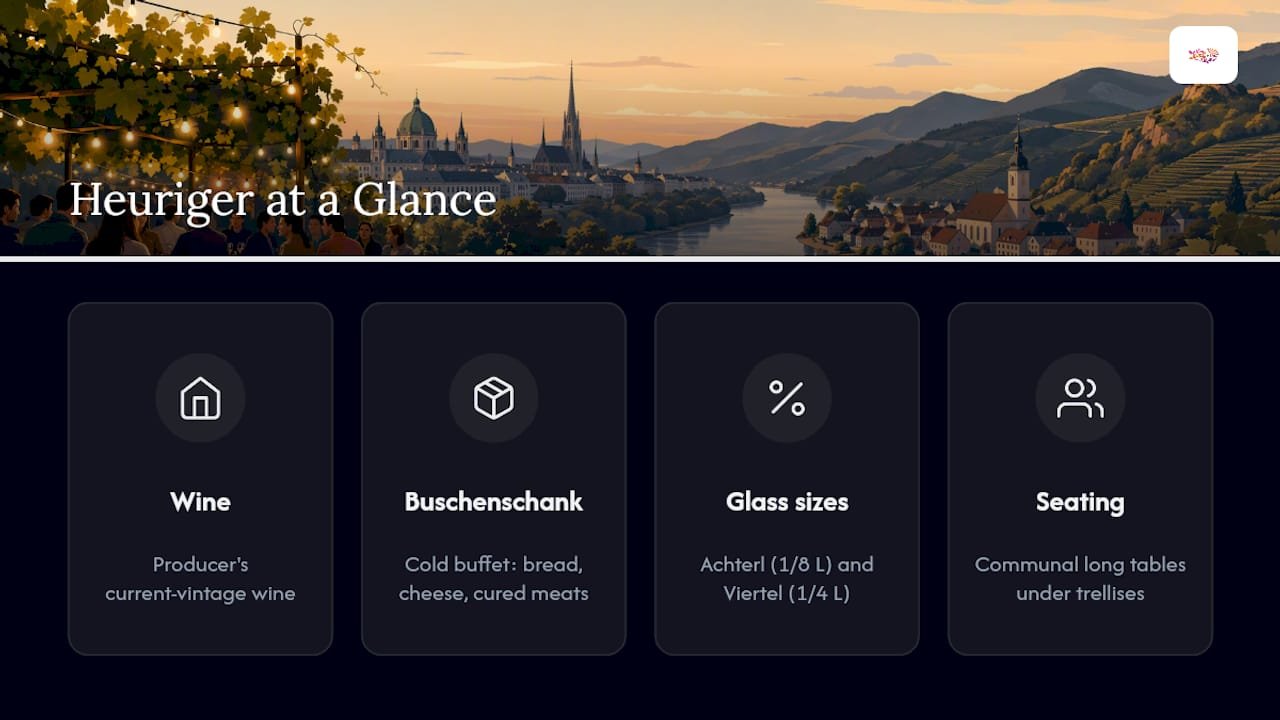
A true Heuriger serves only wine made by the producer, poured fresh from the current vintage, alongside a cold-buffet style meal called Buschenschank, historically just bread, cheese, and cured meats you’d pick out yourself. You order wine by the glass in two standard sizes: an Achterl (an eighth of a liter) or a Viertel (a quarter liter). Seating is almost always communal, at long wooden tables under grapevine trellises or inside a centuries-old farmhouse. Strangers end up sharing a table more often than not, and that’s the point.
Where to Find the Best Heurigen in Vienna
Vienna’s vineyards sit almost entirely inside the city limits, roughly about seven hundred hectares concentrated in the 19th, 21st, and 23rd districts. That geography shapes where you’ll actually go for a genuine Heuriger evening.
- Grinzing: The most famous name, and the most touristy. Cobblestone lanes packed with Heurigen signs make it an easy first stop, though locals often steer toward quieter spots nearby.
- Nussdorf and Nussberg: Vineyard-hillside setting with sweeping views over the Danube. Several Heurigen here run seasonal pop-ups directly among the vines.
- Heiligenstadt: Walkable from Beethoven’s former residences, so it pairs naturally with a half-day of sightseeing before dinner.
- Stammersdorf: Across the Danube, less polished, and considerably more local. Fewer tour groups, more regulars.
- Mauer and Ottakring: Smaller, lesser-known pockets on the city’s western edge, worth seeking out if you’ve already done Grinzing once.
If photography and a dramatic backdrop matter most, head toward Nussberg. One standout is Wieninger am Nussberg, a hillside Heuriger known for sunset views over the vineyards that make the wait for a table worth it. For a quieter, more residential feel, Stammersdorf beats the postcard districts every time.
What to Order, and How to Behave Once You’re There
Start with the wine. Wiener Gemischter Satz, a field blend of multiple grape varieties planted and harvested together, has become the signature pour of the city’s vineyards over the past two decades. Grüner Veltliner is the reliable everyday choice. If you’re visiting in September or October, order Sturm, the cloudy, partially fermented grape juice that only shows up during harvest and disappears by November.
Ordering follows a simple rhythm:
- Find a spot at a communal table, indoors or in the garden.
- Order your wine first, usually an Achterl to start, since a Viertel commits you to more.
- Walk to the buffet counter and select cold cuts, cheese, or spreads like Liptauer directly from the display.
- Pay per item at the counter rather than running a table tab in most traditional Buschenschanken.
- Round up the bill for the server if you paid at the table, since Heurigen etiquette treats a modest rounding as the standard tip.
Cash still rules in many of the older, family-run Heurigen, though card acceptance has grown. Don’t assume a card minimum won’t apply. And one firm rule: however good the wine tastes, don’t drive afterward. Public transport or a taxi is the only sensible way home.
Pro Tip: Order a small serving of two different wines before committing to a larger glass. Heuriger wine lists change with the vintage, and tasting first saves you from being stuck with a glass you don’t love.
When to Visit and How to Tell If One Is Open
The season runs roughly during the warmer months from spring to autumn, with the sweet spot landing in September and October, when Sturm is flowing and the harvest atmosphere is at its peak. Outside that window, many smaller Heurigen close entirely or cut back to weekends only.
That’s where the Ausg’steckt sign comes in. A pine branch, or “Buschen,” hung above the entrance signals that a Heuriger is currently open and pouring. No branch, no service, regardless of what a listing site says. Smaller, family-run producers often adjust their hours around weather, harvest work, or simple staffing, so checking a venue’s own social media the same day beats relying on a general directory. Weekday visits tend to mean shorter waits and a more local crowd. Weekend evenings bring bigger groups, louder tables, and occasionally a wait for a seat in the garden.
Getting There: Transit, Hours, and What to Bring
Reaching Vienna’s Heuriger districts doesn’t require a car, and honestly, you shouldn’t drive there anyway once the wine starts flowing. Tram 38 runs directly to Grinzing, tram 31 heads to Stammersdorf, and bus 38A climbs toward Nussberg and Kahlenberg for the vineyard-view spots. Tram 37 and tram 60 cover other pockets depending on which district you’ve picked. A taxi or ride-share from the city center typically runs a reasonable flat fare and saves time on a cold night.
Most Heurigen open in the late afternoon and stay lively in the evening. Reservations aren’t standard practice at the casual, buffet-style places, but arriving before 6:30 p.m. on a Friday or Saturday will spare you a wait for a table.
- Bring cash as a backup even where cards are accepted.
- Wear real shoes. Vineyard paths and garden seating are often gravel or uneven stone.
- Budget for a moderate per-person spend covering wine and a buffet plate, more if you’re pairing multiple wines with a full spread.
- Check accessibility ahead of time. Older Buschenschanken sometimes have steps or gravel courtyards that aren’t wheelchair-friendly.
A Sample Evening and Pairing It With a Wachau Day Trip
Typical Heuriger visits last a few hours and have a natural rhythm once you know it.
- Arrive by 5:30 p.m. to claim a good table before the dinner rush.
- Order an Achterl of Grüner Veltliner or Gemischter Satz and scope the buffet before committing to a plate.
- Pace yourself. A second glass an hour in keeps the evening social rather than sloppy.
- Wind down by 8:30 or 9 p.m. and take the tram back while service is still running smoothly.
That plan works well for a single evening in the city, but if your trip has room for a full day among actual vineyards outside Vienna, a guided Wachau Valley outing fills a different gap entirely. It suits travelers short on time, unfamiliar with regional wine routes, or simply tired of researching train schedules and cellar reservations on vacation. DIY Heuriger hopping rewards spontaneity and a free evening; a structured Wachau day trip rewards travelers who’d rather hand off the logistics and just show up for the tastings.
Next View Tours’ Take on Vienna’s Wine Tradition
Heurigen culture rewards curiosity more than planning perfection, making it a prime example of defining culinary experiences for adventurous travelers. The biggest mistake visitors make isn’t picking the wrong district. It’s assuming every Heuriger runs on the same hours as a normal restaurant, then showing up to a shuttered gate with no Buschen in sight. Next View Tours builds its Wachau Valley wine day trip around that exact lesson: transport timing and tasting schedules that account for real vineyard rhythms, not tourist-brochure hours.
The most underrated move for a first-time visitor is skipping Grinzing on night one and starting in Nussdorf or Stammersdorf instead, where the crowd skews local and the wine list stays close to what’s actually growing outside. Save the postcard district for when you already know what you like.
— Next
Book the Wine Day Trip That Skips the Guesswork
If a full day tasting through actual vineyard country sounds better than hopping between city taverns, Next View Tours runs that trip without the planning headache. The Wachau Valley Day Trip with Wine Tasting bundles round-trip transport from Vienna, curated stops at working wineries, and a local guide who handles the parts that eat up a DIY afternoon: finding parking, timing cellar visits, and knowing which producer is actually pouring that day.

It suits travelers who want the countryside wine experience without renting a car or piecing together regional trains, and it pairs naturally with an evening Heuriger visit earlier in the trip. For readers weighing other trip formats, Next View Tours’ full range of trip types covers everything from private outings to small-group departures. Check available dates for the Wachau trip and reserve a spot before your travel week fills in.
Sources
- Vienna Wine Guide: Heurigen Taverns & Wine Tasting (2026)
- The Viennese Heurige – vienna.info
- Heurigen: Vienna’s hyper-local wine taverns
- How to Visit Vienna’s Heuriger Wine Taverns + Map
FAQ
What Exactly Is a Heuriger?
A Heuriger is a producer-run wine tavern that serves only its own current-vintage wine alongside a simple cold buffet, a tradition dating back to a 1784 decree from Emperor Joseph II.
How Do I Know If a Heuriger Is Open?
Look for a pine branch or “Ausg’steckt” sign hanging over the entrance. That signal, documented by Vienna’s own tourism authority, means the producer is currently pouring and serving.
When Is the Best Time to Visit a Vienna Heuriger?
April through October covers the full season, but September and October are the standout months, when Sturm, the young partially fermented grape juice, is available alongside the harvest atmosphere.
Which Vienna District Has the Best Heurigen?
Grinzing is the most iconic and easiest to reach by tram 38, while Nussdorf and Stammersdorf offer a quieter, more local feel with fewer tour groups.
Can I Visit a Heuriger Without Speaking German?
Yes. Staff at the more visited Heurigen in Grinzing and Nussdorf are used to English-speaking visitors, and ordering by pointing at the buffet works everywhere regardless of language.
Is It Better to Do Heurigen on My Own or Book a Guided Trip?
DIY visits suit travelers with a free evening and no fixed schedule, while a guided option like Next View Tours’ Wachau Valley day trip suits those who’d rather have transport and tastings arranged for them in advance.


Comments are closed