
 Uncategorized
If you have half a day, ride the No. 29 bus to Devín Castle or wander the Baroque streets of Trnava. With a full day, head into the Small Carpathians wine country around Pezinok or make the trek to Bojnice Castle. Given a long day and an early alarm, Vienna or Budapest reward the trip. Trains, buses, boats, and guided tours all serve these routes, and which one you choose usually comes down to how many stops you want to make.
TL;DR:
- Vienna is the fastest major trip from Bratislava, with direct trains taking about 55 to 65 minutes, ideal for architecture and cultural sightseeing.
- Devín Castle is accessible by bus in approximately 20 to 25 minutes and suits history enthusiasts and those seeking a scenic half-day escape.
- The Small Carpathians wine region can be reached in around 30 to 45 minutes, offering tastings and vineyard views, especially with a guided tour or rental car.
- Budapest requires a longer journey of 2.5 to 3 hours and is best for travelers wanting to explore Hungary’s capital after an early start.
- Booking guides and tickets in advance is recommended for international trains and guided tours, while local buses and regional travel can usually be paid on-site or on short notice.
Table of Contents
- Day Trips From Bratislava: Where to Go and Who Each One Suits
- Travel Times, Fares, and Booking Tips for Each Route
- Choosing a Day Trip by Interest, Not Just Distance
- Three Ready-Made Itineraries You Can Book Tonight
- Ticketing, Payments, and Other Planning Details
- How Next View Tours Simplifies These Day Trips
- Planning for Families, Older Travelers, and Limited Mobility
- What to Eat on Each Day Trip
- Staying Safe and Respecting Local Customs
- What to Pack for a Bratislava Day Trip
- Pairing Destinations for a Better Day
- Book Your Bratislava Day Trip With Next View Tours
- Where to Check Timetables and Opening Hours Before You Go
- Sources
- FAQ
Day Trips From Bratislava: Where to Go and Who Each One Suits
Bratislava sits at a genuinely unusual crossroads. Vienna is closer to it than most American day-trippers expect, and Budapest, Brno, and a cluster of Slovak castles and wine towns all sit within a comfortable train or bus ride. The trick isn’t finding a destination, it’s matching the destination to your available hours and your travel style.
Here’s how the strongest options stack up.
- Vienna (55–75 minutes). Austria’s capital is the most popular of all day tours from Bratislava, and for good reason. Direct trains cover the distance in about 55 to 65 minutes, which is faster than some commutes inside a major U.S. metro area. Once there, you’ll want time for Schönbrunn Palace, a stroll down the Ringstrasse, and at least one coffeehouse stop. Best for travelers chasing grand architecture, museums, and imperial history in a single sweep.
- Devín Castle (20–30 minutes). This is the closest genuine escape from downtown Bratislava, and arguably the easiest Bratislava to Devín Castle trip you can make without a car. Bus No. 29 runs from the Most SNP stop and gets you there in roughly 20 to 25 minutes, with the castle ruins perched dramatically over the meeting point of the Danube and Morava rivers. Plan on two to four hours on-site, including the museum and a short hike around the ramparts. Ideal for history lovers and anyone who wants a scenic half-day without committing to a full itinerary.
- Trnava (28–35 minutes). Slovakia’s so-called “little Rome” earns that nickname from its dense cluster of Baroque churches packed inside a walkable old town. The train ride takes about 28 to 35 minutes, and return fares run cheap, often around the €4.80 mark cited in regional guides. Best for travelers who want a quiet, low-effort historic town without crowds or a long commute.
- Pezinok and the Small Carpathians (25–45 minutes). This is the wine-country answer among day tours from Bratislava, and it draws a different crowd than the castle-and-capital circuit. Pezinok sits about 25 km from Bratislava, roughly a 30-minute drive, while nearby Modra adds another 10 minutes. The region is home to Červený Kameň Castle, a genuinely impressive Renaissance fortress, alongside dozens of family-run wineries. Best for travelers who want tastings, vineyard views, and a slower pace.
- Budapest (2.5–3 hours). The most ambitious of the standard Bratislava excursions, Budapest demands an early start and a tolerance for a longer ride. Direct trains take 2.5 to 3 hours, so a departure before 8:00 a.m. is close to mandatory if you want real time at the Parliament Building, Buda Castle, and the Danube promenade. Best for travelers who have already done Vienna or specifically want Hungary’s capital checked off the list.
- Brno (about 1.5 hours). The Czech Republic’s second city rarely makes the front page of Bratislava travel guides, which is exactly why it’s worth mentioning. Brno rewards visitors with café culture, functionalist architecture, and a noticeably slower, less touristed pace than Prague. Best for travelers craving a cross-border day that skips the crowds.
- Bojnice Castle (about 2 hours). For fairy-tale architecture, Bojnice is the standout among Slovak castles. Intercity buses take roughly two hours, while driving trims that to about 1 hour 40 minutes. Entry fees for guided tours generally fall in the €8 to €12 range. Best for travelers specifically chasing castle scenery over city sightseeing.
Travel Times, Fares, and Booking Tips for Each Route
Every one of these Bratislava day trips hinges on getting the transport logistics right, and the options vary more than you’d guess for a country this size.
- Vienna: Direct trains run roughly hourly, and advance bookings typically land between €15 and €22 round trip. Between April and October, the Twin City Liner catamaran offers a scenic river alternative, though it costs more than the train and only runs seasonally.
- Devín Castle: Bus No. 29 departs roughly every 20 to 30 minutes on weekdays, and a standard city transport ticket covers the fare. No advance booking needed.
- Trnava: Frequent train service from Bratislava’s main station, tickets purchasable same-day through the national rail app or at station kiosks.
- Small Carpathians: Public buses reach Pezinok, but visiting multiple wineries in one day is far easier with a rental car or a guided wine tour, which typically runs €45 to €120 depending on duration and inclusions.
- Budapest and Bojnice: Intercity buses are usually cheaper than trains but run on similar schedules; book online in advance during summer weekends when seats fill fast.
Regional bus timetables often shrink on weekends, so a Saturday departure that looks routine on a weekday schedule may run half as often. Always cross-check the timetable the night before, particularly for Bojnice and Small Carpathians routes. For multi-stop wine days or castle visits off the main rail lines, a rental car or guided tour removes most of the friction that public transit can’t solve.
Choosing a Day Trip by Interest, Not Just Distance
Distance matters less than what you actually want to do with the day. Here’s how to match the trip to the interest.
- Wine lovers: Pezinok and Modra are the obvious picks. Expect a tasting to run 45 minutes to an hour, and plan on visiting only two wineries comfortably in a single day unless you have private transport, since travel between cellars eats time fast.
- Castle and history fans: Devín wins for convenience and dramatic river views, while Bojnice wins for fairy-tale architecture and interior tours. Budget half a day for Devín and closer to a full day, including transit, for Bojnice.
- Capital-city seekers: Vienna edges out Budapest for a single day trip simply because the shorter commute leaves more time on the ground. If you choose Budapest, prioritize Buda Castle, Parliament, and a Danube walk, and skip anything requiring a long taxi ride.
- Outdoor and active travelers: A Danube-side cycling route toward Devín is a popular alternative to the bus, and the Small Carpathians offer light hiking trails between vineyards for those who want movement built into the wine day.
Three Ready-Made Itineraries You Can Book Tonight
- Half-day: Devín Castle plus Old Town. Catch the No. 29 bus by 9:00 a.m., spend two to three hours exploring the ruins and riverside paths, then return to Bratislava by early afternoon for lunch and a walk through Old Town.
- Full-day: Small Carpathians wine route. Depart by 9:30 a.m., visit Červený Kameň Castle first, then schedule two winery tastings in Pezinok or Modra between noon and 5:00 p.m., allowing 45 minutes to an hour at each cellar.
- Long day: Vienna or Budapest. For Vienna, catch a train before 8:30 a.m. and prioritize Schönbrunn, the Ringstrasse, and St. Stephen’s Cathedral. For Budapest, leave before 8:00 a.m. and focus on Buda Castle, Parliament, and the Danube promenade, skipping anything requiring extra transfers.
Ticketing, Payments, and Other Planning Details
International trains to Vienna and Budapest, plus the seasonal Twin City Liner, are worth booking a few days ahead in peak summer months since seats do sell out. Regional buses to Devín, Trnava, and the wine region rarely need advance booking, you can pay on board or at the station.
- Weekend bus schedules run less frequently than weekday ones, so check timetables the night before, not the morning of.
- Slovakia, Austria, and Hungary all use the euro, and cards are widely accepted in cities, but small wine villages and rural bus stops often expect cash.
- Carry small euro bills for tastings, tips, and castle entry booths that don’t take cards.
Pro Tip: Withdraw cash before leaving Bratislava rather than hunting for an ATM in a small wine village, where machines are scarce and sometimes out of order on weekends.
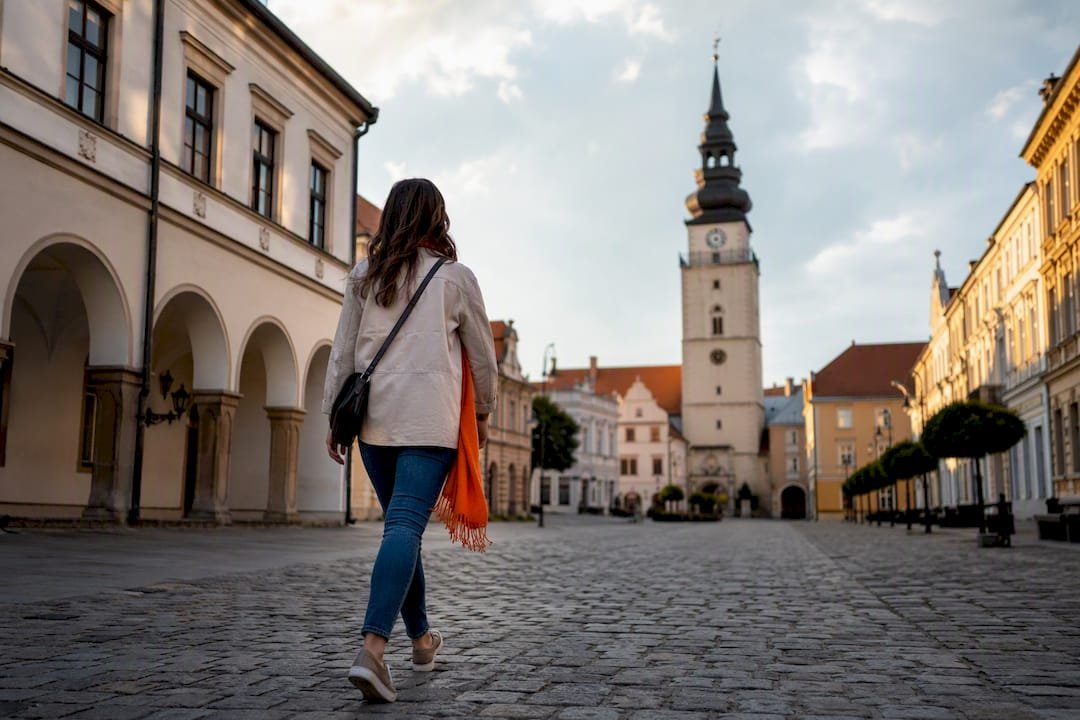
Devín Castle’s uneven terrain and stone paths make it tougher for wheelchair users or travelers with limited mobility, while Trnava’s flat, compact old town is considerably easier to navigate on foot.
How Next View Tours Simplifies These Day Trips
Public transit works well for single-destination trips like Vienna or Trnava, but multi-stop days, especially wine routes through the Small Carpathians or castle visits off the main rail corridor, are where guided logistics genuinely pay off. Coordinating two winery reservations, a castle tour, and a return bus schedule on your own leaves little room for error if one connection runs late.
Some providers offer day trips, private tours, and customizable itineraries across the region that help simplify cross-border logistics:
- Guided day trips that bundle transport, entry tickets, and local commentary into one booking
- Private and small-group formats for travelers who want flexibility without managing timetables themselves
- Custom itineraries for pairing multiple stops, such as a castle and a wine tasting, in a single organized day
…
Planning for Families, Older Travelers, and Limited Mobility
Not every destination on this list suits every traveler equally. Vienna and Trnava are the easiest picks for families with young kids or travelers using a wheelchair or cane, since both have flat, walkable old towns and modern public transit with low-floor buses and trams. Budapest’s core sights cluster near flat riverside paths as well, though the metro system has a mix of older and newer stations, some with limited elevator access.
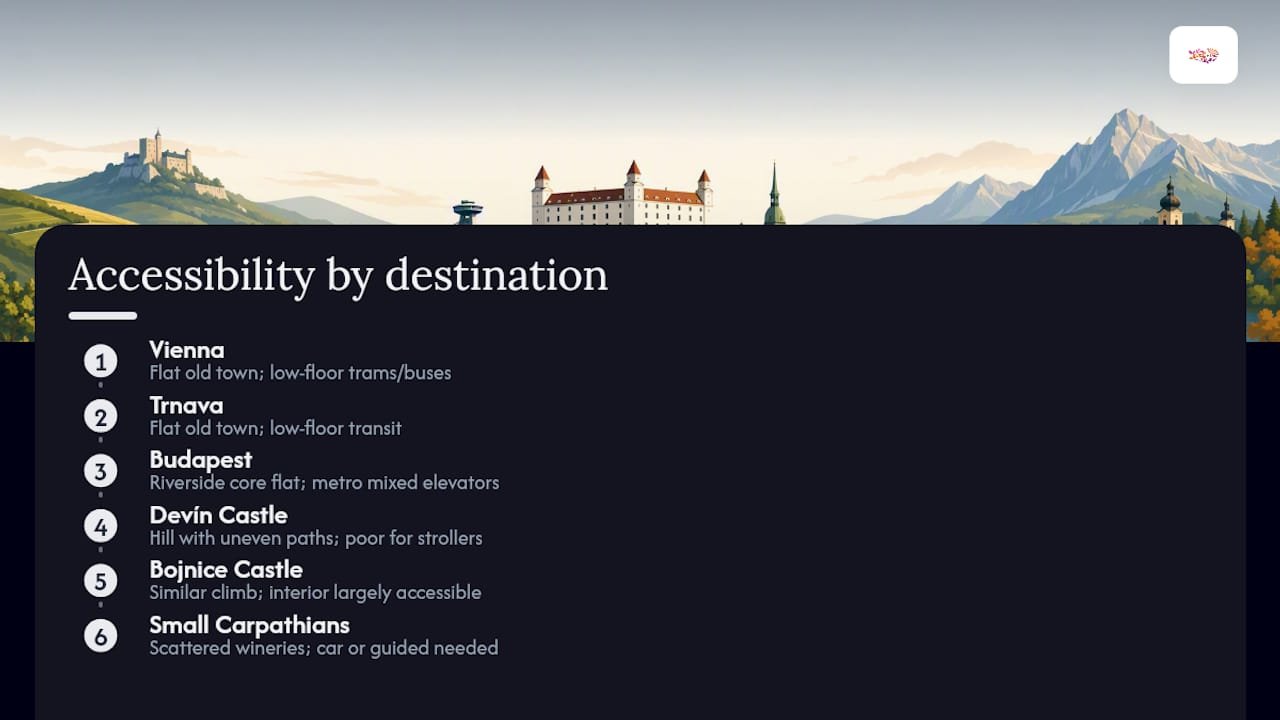
Devín Castle is more demanding. The ruins sit on a hill, and the paths leading up include uneven stone and gravel sections, which makes it a tougher call for strollers, wheelchairs, or anyone with joint pain. Bojnice Castle involves a similar climb, though its interior tour is largely accessible once inside.
The Small Carpathians wine region is the trickiest for accessibility, mainly because it isn’t really a walking destination. Wineries are spread across several towns, and visiting more than one location generally requires a car or guided transport regardless of mobility level. For older travelers or those who tire easily, this is actually an advantage. A guided wine tour handles all the driving between stops, so the only walking required is inside each cellar.
Families traveling with young children tend to do best on the shorter half-day trips, Devín paired with Old Town, or Trnava on its own, since a full day of trains and buses to Vienna or Budapest can wear out anyone under age eight well before dinner.
What to Eat on Each Day Trip
Food is half the reason these trips are worth the ride. In Vienna, a proper Wiener Schnitzel and a slice of Sachertorte at one of the historic coffeehouses near the Ringstrasse is close to mandatory, and it’s worth budgeting an hour just to sit and enjoy it rather than rushing through.
Trnava’s old town has a handful of small bistros serving Slovak classics like bryndzové halušky, a potato dumpling dish with sheep cheese, alongside the kind of unhurried café culture the town is known for. In the Small Carpathians, the food follows the wine. Expect hearty regional plates designed to accompany tastings, often cured meats, local cheeses, and fresh bread served right at the winery. Pairing a wine day with a broader look at regional food culture, similar to the kind of local gastronomy experiences travelers seek out elsewhere in Europe, adds real depth to the day.
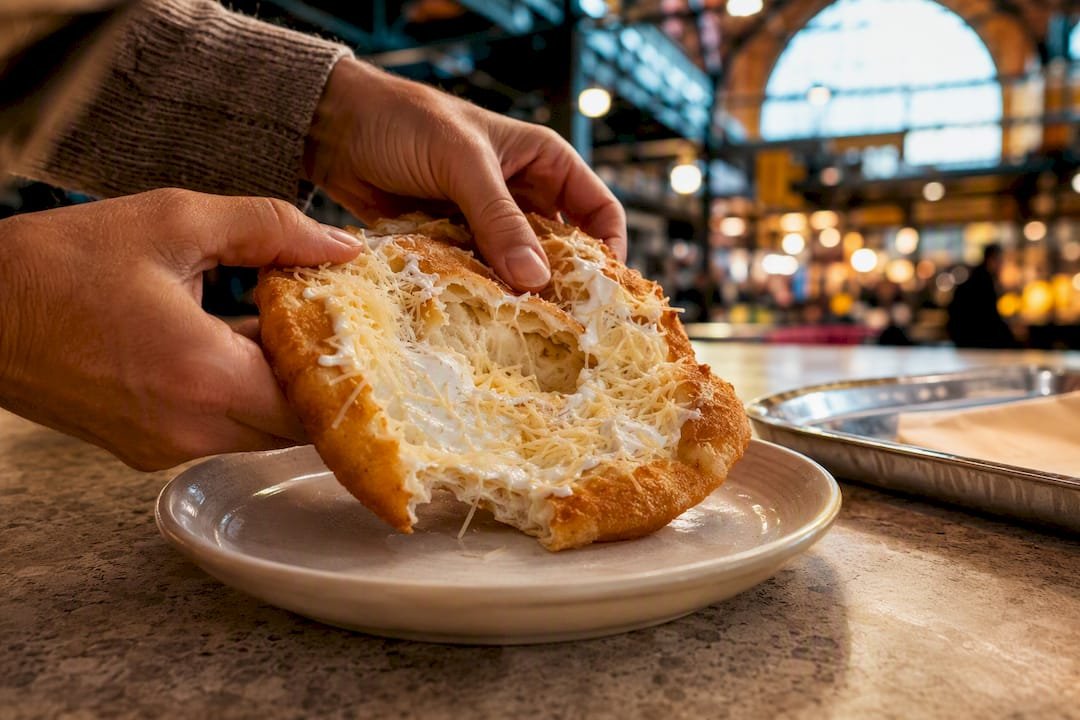
Budapest rewards travelers with goulash and langos, a fried dough topped with sour cream and cheese, sold from stalls throughout the central market halls. Bojnice’s castle town has simple Slovak fare nearby, though options thin out compared to the bigger destinations, so eating before or after the castle visit is the more reliable plan. Brno’s café scene, meanwhile, leans toward the kind of relaxed, coffee-and-pastry pace that rewards travelers who aren’t in a rush.
Staying Safe and Respecting Local Customs
None of these day trips carry unusual safety risks, but a few habits make the day smoother. Keep valuables close on regional trains and buses, particularly around Bratislava’s main station, where pickpocketing, while uncommon, isn’t unheard of in crowded periods. Vienna and Budapest’s central districts are well-patrolled and safe for walking at most hours, though standard city awareness still applies after dark.
Locals across Slovakia, Austria, and Hungary tend to appreciate a bit of formality. A greeting before asking a question, whether to a shopkeeper or a winery host, goes further than jumping straight into English.
At wineries in the Small Carpathians, it’s common courtesy to let the host guide the tasting order rather than requesting specific wines out of sequence. Castle sites like Devín and Bojnice often restrict photography inside certain rooms, so watch for posted signage rather than assuming phones are fine everywhere.
What to Pack for a Bratislava Day Trip
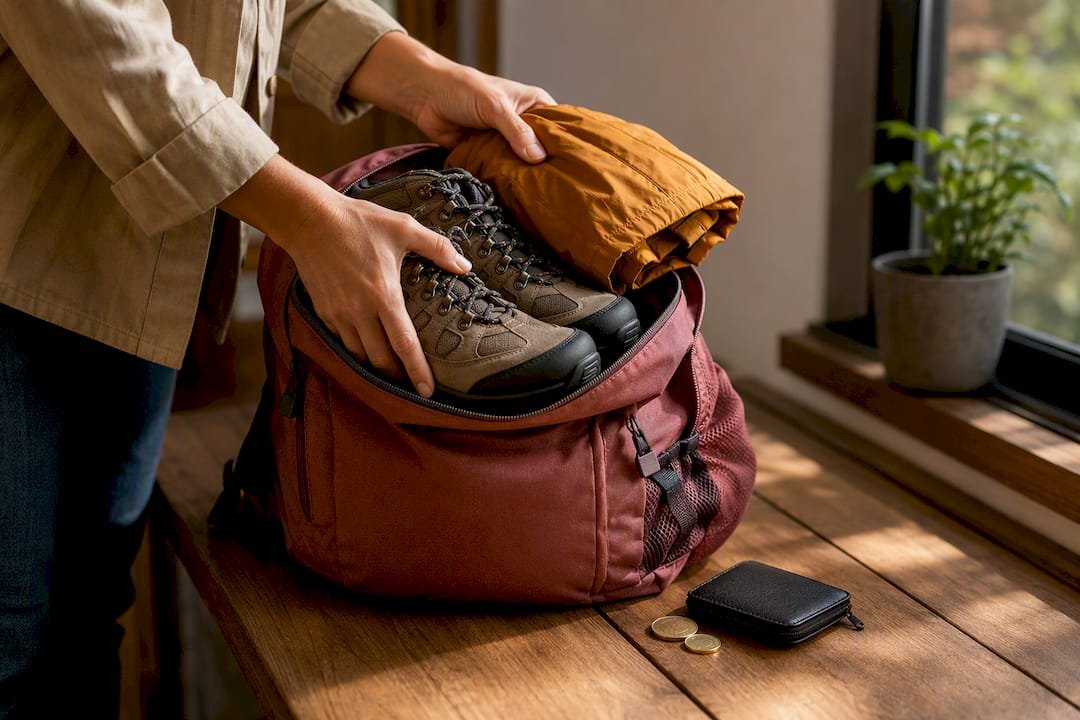
Comfortable, closed-toe walking shoes matter more than almost anything else on this list, especially for Devín’s uneven paths or a full day covering Vienna’s Ringstrasse on foot. Layer clothing regardless of season, river valleys like the Danube corridor can run noticeably cooler and windier than the forecast suggests inland.
Carry a printed or downloaded copy of your train or bus ticket in case mobile signal drops in rural stretches near the Small Carpathians. A small day pack works better than a full-size bag for castle visits, since Devín and Bojnice both involve stairs and narrow passages where bulky luggage becomes a liability. Pack euro cash in small denominations for wineries, castle entry booths, and rural bus fares where card machines are unreliable or absent entirely.
Pairing Destinations for a Better Day
Devín in the morning, Old Town in the afternoon, works because the castle rewards early light and quiet paths before the afternoon crowds arrive downtown. Seasonal timing matters too. The Twin City Liner and outdoor wine tastings both thrive between April and October, while winter favors the indoor pace of Vienna’s museums and coffeehouses.
— Next
Book Your Bratislava Day Trip With Next View Tours
Handling train transfers, winery reservations, and castle tickets on your own works fine for a single stop, but Guided day trips that bundle transport, entry tickets, and local commentary into one booking can remove the logistics headache of coordinating bus schedules and connections.

There are tour operators that provide day trips and customizable private tours across the region, including options suited to castle visits and cross-border capital days. Browse the current one-day trip lineup to see what’s available for your travel dates. Summer months fill fast, particularly for wine-region and castle itineraries, so booking a few weeks ahead gives you the best shot at your preferred date and departure time.
Where to Check Timetables and Opening Hours Before You Go
- Devín Castle’s official page for current opening hours and entry details.
- Bratislava Escape’s travel guides for up-to-date transport advice and local pricing examples.
- National rail and major intercity bus operator websites for live, same-day timetable changes.
Sources
- Devín Castle | Places | Visit Bratislava
- Devín Castle day trip from Bratislava 2026: bus, hike, tips
- Best Bratislava Day Trips 2026: Explore Central Europe | ItiMaker Travel Blog
FAQ
What is the best day trip from Bratislava?
There isn’t a single best answer, it depends on your time budget. Devín Castle wins for a quick half-day, the Small Carpathians wine region wins for a relaxed full day, and Vienna wins for travelers with a full day who want a major capital city experience.
How many days in Bratislava is enough?
Two full days covers Bratislava’s Old Town and castle comfortably, leaving one or two additional days free for day trips like Devín, Vienna, or the wine country. Travelers using Bratislava as a base for multiple excursions often plan four to five days total.
Which is nicer, Vienna or Bratislava?
Vienna offers grander imperial architecture and a larger cultural scene, while Bratislava has a smaller, more relaxed old town that many travelers find easier to see in a short visit. Most people pair the two rather than choosing, since the train ride between them takes only about 55 to 65 minutes.
What is the prettiest city in Slovakia?
Bratislava’s Old Town and castle hill are usually cited as the country’s most photogenic urban spot, though Trnava’s Baroque churches and Bojnice’s fairy-tale castle both draw strong votes from day-trippers. It largely comes down to whether you prefer city streets or standalone landmarks.
Do I need to book Bratislava day trips in advance?
Regional buses to Devín and Trnava rarely require advance booking, you can pay on arrival. International trains to Vienna or Budapest, the seasonal Twin City Liner, and guided tours through operators like Next View Tours are worth reserving a few days ahead during peak summer months.


Comments are closed