
 City Tour
Seven days is genuinely enough to experience imperial Vienna, baroque Salzburg, and the mirror-still waters of Hallstatt — provided you use two main bases and resist the urge to cover the whole country. The most efficient one-week Austria route runs Vienna (3 nights) → Salzburg (3 nights) → flexible final day, with a Hallstatt day trip slotted into your Salzburg block. According to a complete 2026 day-by-day itinerary, this structure keeps hotel changes to a minimum while giving you full days in each city.
Your 7-day at-a-glance plan:
- Day 1: Arrive Vienna, orientation walk, evening concert or dinner (sleep: Vienna)
- Day 2: Schönbrunn Palace, Naschmarkt, coffeehouse afternoon (sleep: Vienna)
- Day 3: Stephansdom, Kunsthistorisches Museum, evening music (sleep: Vienna)
- Day 4: Morning train to Salzburg, Mirabell Gardens, Old Town stroll (sleep: Salzburg)
- Day 5: Hohensalzburg Fortress, Mozart sites, Sound of Music stops (sleep: Salzburg)
- Day 6: Full-day Hallstatt trip, Dachstein option, ferry crossing (sleep: Salzburg or Hallstatt)
- Day 7: Melk Abbey and Wachau Valley detour OR direct return to Vienna for departure
Key travel times to know upfront: Vienna to Salzburg by train takes roughly 2.5 hours on ÖBB or Westbahn. Salzburg to Hallstatt requires a train to Attnang-Puchheim, a connection to Hallstatt Bahnhof, then a ferry across the lake adding at least 30 minutes — budget 2 hours total each way.
Key Takeaways
A well-paced Austria itinerary for 7 days uses Vienna and Salzburg as two main bases, adds a Hallstatt day trip, and keeps hotel changes to a minimum so you spend time exploring, not relocating.
| Point | Details |
|---|---|
| Two-base structure | Sleep 3 nights in Vienna and 3 in Salzburg to minimize moves and maximize sightseeing. |
| Book early for key slots | Reserve Schönbrunn timed entry and Hallstatt Salt Mines 4–6 weeks ahead in summer. |
| Hallstatt transfer timing | Factor in the ÖBB ferry (30+ min) plus the Attnang-Puchheim connection — budget 2 hours each way. |
| Daily budget range | Mid-range travelers should plan €20–€30 per person per day covering accommodation, meals, and activities. |
| Nextviewtours option | The guided Vienna–Hallstatt–Salzburg tour handles logistics, timed entries, and transfers for you. |
Table of Contents
- How does the week flow between Vienna and Salzburg?
- Day-by-day plan: what to do and where to sleep
- How do you get around Austria efficiently?
- When should you go, and what should you pack?
- What does a week in Austria actually cost?
- Seasonal highlights and the Wachau + Melk alternative
- Nextviewtours makes this exact week easier to run
- Sources
How does the week flow between Vienna and Salzburg?
Keeping Vienna and Salzburg as your two overnight bases is the single most practical decision you can make for a first-time Austria trip. As first-timer itinerary guides consistently note, fewer hotel changes mean more sightseeing time and less logistical friction. Three nights in each city gives you two full days of exploration per base, which is the minimum travel writers recommend for sampling palaces, museums, and coffeehouse culture properly.
The route flows west: Vienna sits in the east, Salzburg in the center-west, and Hallstatt lies roughly an hour south of Salzburg by train and ferry. This linear progression means you never double back unnecessarily.
Neighborhood recommendations for each base
In Vienna, the 1st district (Innere Stadt) puts you within walking distance of Stephansdom and the Hofburg. The 7th district (Neubau) offers slightly lower prices with excellent café and restaurant density. Both are well-served by the U-Bahn.
In Salzburg, the Altstadt (Old Town) is the most atmospheric choice, though it commands premium prices. Staying near the main train station (Salzburg Hauptbahnhof) is a practical alternative that shaves 10–15 minutes off your Hallstatt departure on Day 6.
Alternate routings worth considering
- Add Innsbruck: Swap one Salzburg night for an Innsbruck overnight if alpine architecture and the Nordkette cable car appeal to you. Salzburg to Innsbruck takes about 1 hour 45 minutes by train.
- Wachau loop on Day 7: Instead of returning directly to Vienna, stop at Melk Abbey and the Wachau Valley vineyards — a scenic cultural detour before reaching the capital.
- Hallstatt overnight: If you want the village at dawn before day-trippers arrive, booking a lakeside stay is worth the extra hotel move. Accommodation in Hallstatt is extremely limited, so reserve months ahead.
Pro Tip: Rick Steves’ Austria materials emphasize sequential regional travel over trying to see everything — commit to your two bases and let the day trips do the heavy lifting.
Day-by-day plan: what to do and where to sleep
This schedule is built for first-timers who want cultural depth without exhaustion. Each day includes a rough time structure, key sights, and a sample budget for paid activities.
Day 1: Arrive in Vienna
Arrive at Vienna International Airport (VIE) and take the City Airport Train (CAT) to Wien Mitte in 16 minutes, or the S-Bahn for a cheaper option (roughly 30 minutes). Check in, then walk the Innere Stadt in the late afternoon: the Hofburg exterior, the Burggarten, and Stephansdom’s Gothic spire are all free to view from outside.
For the evening, the Vienna State Opera (Wiener Staatsoper) offers standing-room tickets at the door from around €4–€10 — one of the great cultural bargains in Europe. Alternatively, a Heuriger (traditional wine tavern) in the Grinzing or Neustift neighborhoods gives you a relaxed first taste of Austrian cuisine: try Wiener Schnitzel, Tafelspitz (boiled beef), and local Grüner Veltliner wine.
Sample Day 1 budget: Transport from airport €12–€15, dinner €20–€35, standing-room opera ticket €4–€10.
Days 2–3: Vienna in depth
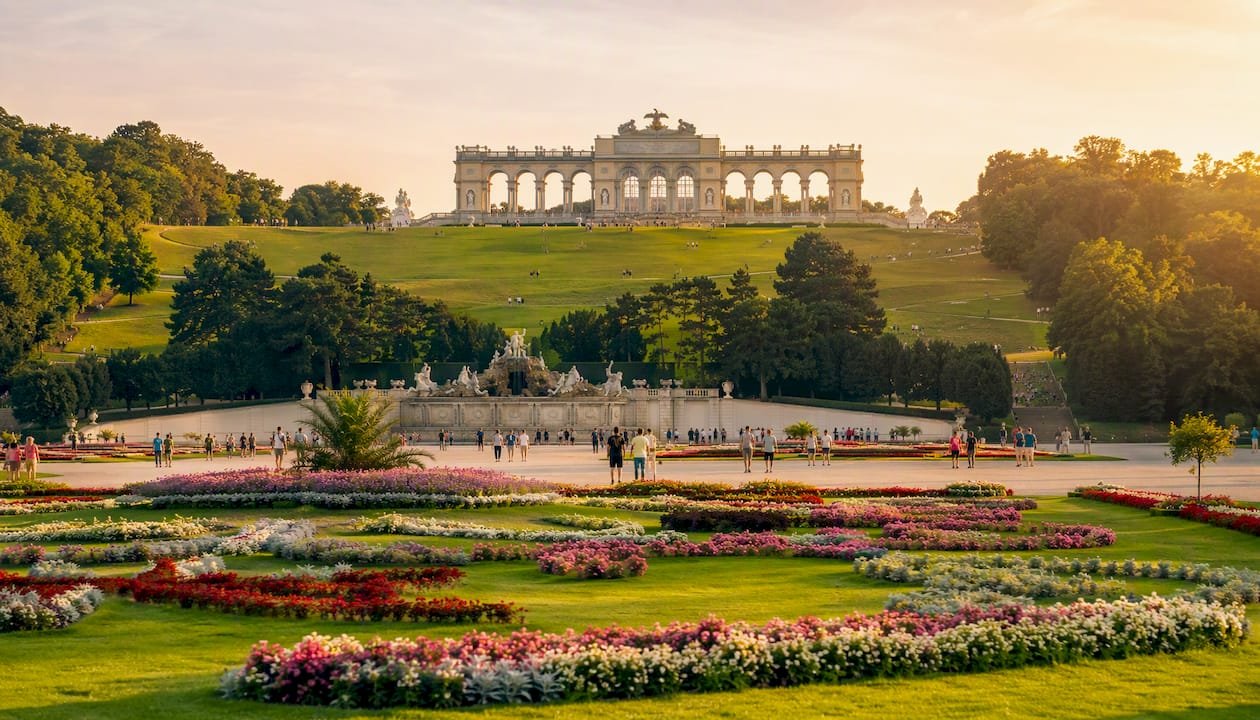
Day 2 belongs to Schönbrunn Palace. Book the Grand Tour (40 rooms, approximately €26 per adult) well in advance — timed-entry slots sell out weeks ahead in summer. Spend the morning inside, then walk the palace gardens to the Gloriette for a panoramic view of the city. Afternoons work well at the Naschmarkt, Vienna’s open-air market, where you can graze on cheese, charcuterie, and fresh produce. End the day at a traditional Viennese coffeehouse: Café Central or Café Hawelka both carry the weight of literary history in their walls.
Day 3 opens with Stephansdom. Climb the South Tower (€6) for rooftop views, then descend to the catacombs (€8) for a genuinely atmospheric experience. The Kunsthistorisches Museum deserves a full afternoon — its collection of Vermeer, Bruegel, and Velázquez rivals any museum in Europe, and the entry fee runs around €21. For the evening, consider a Mozart or Strauss concert at one of the Palais venues; book 2–3 weeks ahead for the best seat selection.
Sample Days 2–3 budget per person: Schönbrunn Grand Tour entrance, Kunsthistorisches Museum entrance, Stephansdom tower and catacombs combined entrance, meals and transport with a moderate daily budget.
Day 4: Transfer to Salzburg
Board an ÖBB or Westbahn train from Wien Hauptbahnhof. The journey takes approximately 2 hours 30 minutes, with trains running frequently throughout the morning. Aim for a 9:00–10:00 AM departure to arrive by midday.
Drop your bags at the hotel, then spend the afternoon in Mirabell Gardens — the formal baroque garden made famous by The Sound of Music and free to enter. Walk across the Salzach River into the Altstadt and explore Getreidegasse, the narrow medieval shopping street where Mozart was born (the Mozart Birthplace museum charges around €12 entry). Dinner in the Altstadt: Salzburger Nockerl (a sweet soufflé dessert) and Kasnocken (cheese dumplings) are regional specialties worth seeking out. Pairing your lodging and dining choices thoughtfully makes a real difference to the experience.
Sample Day 4 budget: Train ticket €25–€45, Mozart Birthplace €12, dinner €25–€40.
Day 5: Salzburg highlights
Start at Hohensalzburg Fortress, the largest fully preserved medieval castle in Central Europe. The funicular ride up costs around €15 round trip with museum entry; the views over the city and the Alps are worth every cent. Allow 2–3 hours. Back in the Altstadt, the Mozart Residence on Makartplatz (separate from the Birthplace) offers a deeper look at the composer’s adult years for around €12.
Mirabell Palace interior is free to visit on weekdays and hosts regular chamber concerts. The Sound of Music filming locations — Mirabell Gardens, the Felsenreitschule, and the Leopoldskron Palace exterior — are all within easy reach and require no tickets to view from outside. For the Hallstatt Salt Mines (a popular half-day excursion from Salzburg), book your slot several weeks ahead in high season; the mine tour runs about €30 per adult.
Sample Day 5 budget: Hohensalzburg €15, Mozart Residence €12, meals and transport €35–€50.
Day 6: Hallstatt day trip
This is the logistically demanding day, so an early start is non-negotiable. Take the first or second morning train from Salzburg toward Attnang-Puchheim, then connect to Hallstatt Bahnhof. The ÖBB ferry across the lake adds at least 30 minutes to your arrival time — total travel is roughly 2 hours each way. Aim to arrive in Hallstatt by 9:30–10:00 AM before the day-tripper crowds peak.
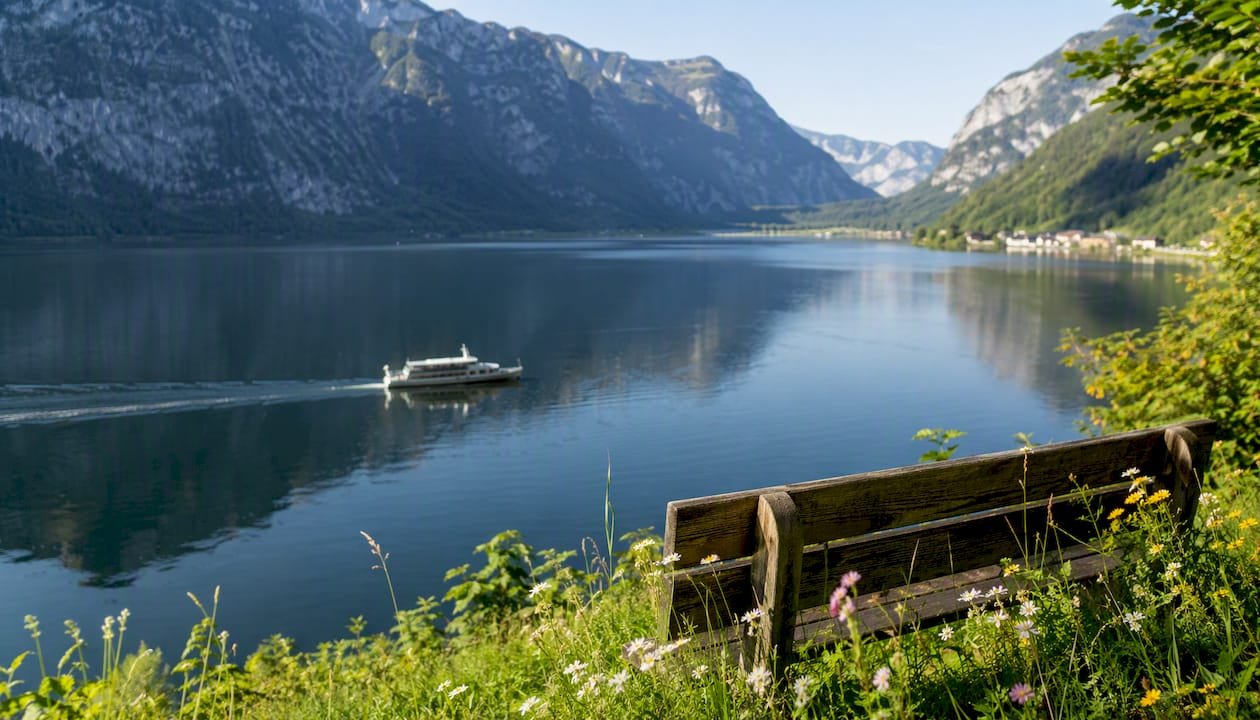
Walk the lakeside promenade, climb to the Hallstatt Skywalk viewpoint (free, about 20 minutes on foot), and consider a boat tour on the Hallstätter See. The Dachstein Ice Caves and the Five Fingers viewing platform on the Dachstein plateau are reachable by cable car from nearby Obertraun — allow an extra 2–3 hours if you add this. Return to Salzburg by early evening; the last reliable ferry and train connection back leaves Hallstatt around 5:00–6:00 PM, so check the ÖBB timetable before you go.
Sample Day 6 budget: Train and ferry €20–€30 round trip, Dachstein cable car €35–€45 if included, meals €25–€35.
Day 7: Flexible final day
Two strong options here. Option A takes you through the Wachau Valley: catch a morning train from Salzburg (or Vienna if you repositioned overnight) to Melk, visit Melk Abbey (one of the finest baroque monasteries in Europe, entry around €15), then continue along the Danube by train or river cruise to Krems before reaching Vienna. Option B is a direct return to Vienna for a final afternoon of shopping, a museum you missed, or simply a long lunch before your flight.
If your flight departs from VIE on Day 7, allow at least 2.5 hours before departure for the airport transfer and check-in. A private transfer from central Vienna to the airport takes 30–45 minutes depending on traffic.
Sample Day 7 budget: Melk Abbey €15, train or cruise €20–€40, airport transfer €15–€50 depending on mode.
A note on booking lead times: Schönbrunn timed-entry and Hallstatt Salt Mine slots should be reserved 4–6 weeks ahead in summer (June–August). Vienna concert venues and the Wiener Staatsoper standing-room tickets are available closer to the date, but premium seats sell out 2–3 weeks in advance.
How do you get around Austria efficiently?
Train: the backbone of the route
ÖBB (Austrian Federal Railways) and Westbahn both serve the Vienna–Salzburg corridor, with trains running roughly every 30 minutes during peak hours. ÖBB covers the full national network including regional lines to Hallstatt; Westbahn operates only on the Vienna–Salzburg route but often at competitive prices. Book both through the ÖBB website for accurate timetables and seat reservations — timetables change seasonally, so always verify before finalizing your schedule.
Seat reservations on intercity trains are optional but cost only €3–€5 and guarantee your spot during busy periods. For the Hallstatt connection, the transfer at Attnang-Puchheim is the critical junction: missing it means a 1-hour wait for the next connection.
When driving makes sense
A rental car gives you flexibility for alpine villages, Wachau vineyard stops, and rural routes that trains don’t serve well. The tradeoff: parking in Vienna and Salzburg city centers is expensive and limited, and winter driving in alpine areas requires snow tires (legally mandatory in Austria from November through April on mountain roads). If you plan to drive, base the car rental in Salzburg and use trains for the Vienna leg.
Travel-time summary
| Leg | Mode | Approximate Time |
|---|---|---|
| Vienna to Salzburg | Train (ÖBB/Westbahn) | 2 hrs 30 min |
| Salzburg to Hallstatt | Train + ferry (via Attnang-Puchheim) | 2 hrs each way |
| Salzburg to Innsbruck | Train | 1 hr 45 min |
| Vienna to Melk | Train | 1 hr 10 min |
| Vienna Airport (VIE) to city center | CAT train | 16 min |
| Vienna Airport (VIE) to city center | S-Bahn | 30 min |
Pro Tip: When planning your Hallstatt return, build in a 20-minute buffer before the last ferry of the day. Missing the ferry means missing your train connection at Attnang-Puchheim — always check the ÖBB timetable the night before.
When should you go, and what should you pack?
Choosing your travel window
May through October is the sweet spot for this itinerary. Alpine hiking trails around Hallstatt and the Dachstein are fully accessible from June, lake steamers run on full summer schedules, and the long daylight hours let you squeeze more into each day. May and September offer thinner crowds and pleasant temperatures without the peak-season pricing of July and August.
December is a different kind of magic. Vienna’s Christkindlmarkt at Rathausplatz and Salzburg’s markets in the Domplatz and Residenzplatz are among the most atmospheric in Europe. The tradeoff: Hallstatt and alpine trails become icy and some cable cars close for maintenance. A winter visit rewards you with Christmas markets but requires a different activity mix.
Shoulder seasons (April and October/November) bring variable weather. Pack for both sun and rain, and expect some alpine attractions to operate on reduced schedules.
Packing by season
Spring/Summer (May–September):
- Lightweight layers for cool mornings and warm afternoons
- A waterproof jacket (mountain weather changes fast)
- Comfortable walking shoes with ankle support for cobblestones and fortress climbs
- Sunscreen and sunglasses for lake days
- A small daypack for Hallstatt and Dachstein excursions
Autumn/Winter (October–December):
- Thermal base layers and a warm mid-layer
- Waterproof, insulated boots with grip for icy alpine paths
- Microspikes if you plan to walk any winter alpine trails
- Gloves, hat, and a scarf rated for sub-zero temperatures
- A compact umbrella for city days
Year-round essentials:
- EU Type F power adapter (Austria uses 230V/50Hz)
- Euro cash for small alpine vendors, market stalls, and rural cafés
- A physical or downloaded copy of your ÖBB tickets
Accessibility note: Schönbrunn Palace, the Kunsthistorisches Museum, and Mirabell Gardens all offer wheelchair-accessible routes. Hohensalzburg Fortress is reachable by funicular. Hallstatt’s lakeside promenade is flat and pram-friendly, though the Skywalk path involves steps.
What does a week in Austria actually cost?
Daily budget ranges
Austria sits in the mid-to-upper range for European travel costs. Here is a realistic per-person daily breakdown:
| Budget Level | Accommodation | Meals | Activities + Transport | Daily Total |
|---|---|---|---|---|
| Budget | Hostel/guesthouse €40 | Self-catering + one sit-down meal €25–€35 | €20–€30 | €25–€45 |
| Mid-range | 3-star hotel €25–€45 | Two restaurant meals €25–€35 | €35 | €20–€30 |
| Splurge | 4-star hotel €35–€45 | Fine dining + wine €25–€35 | €15–€35 | €15–€50 |
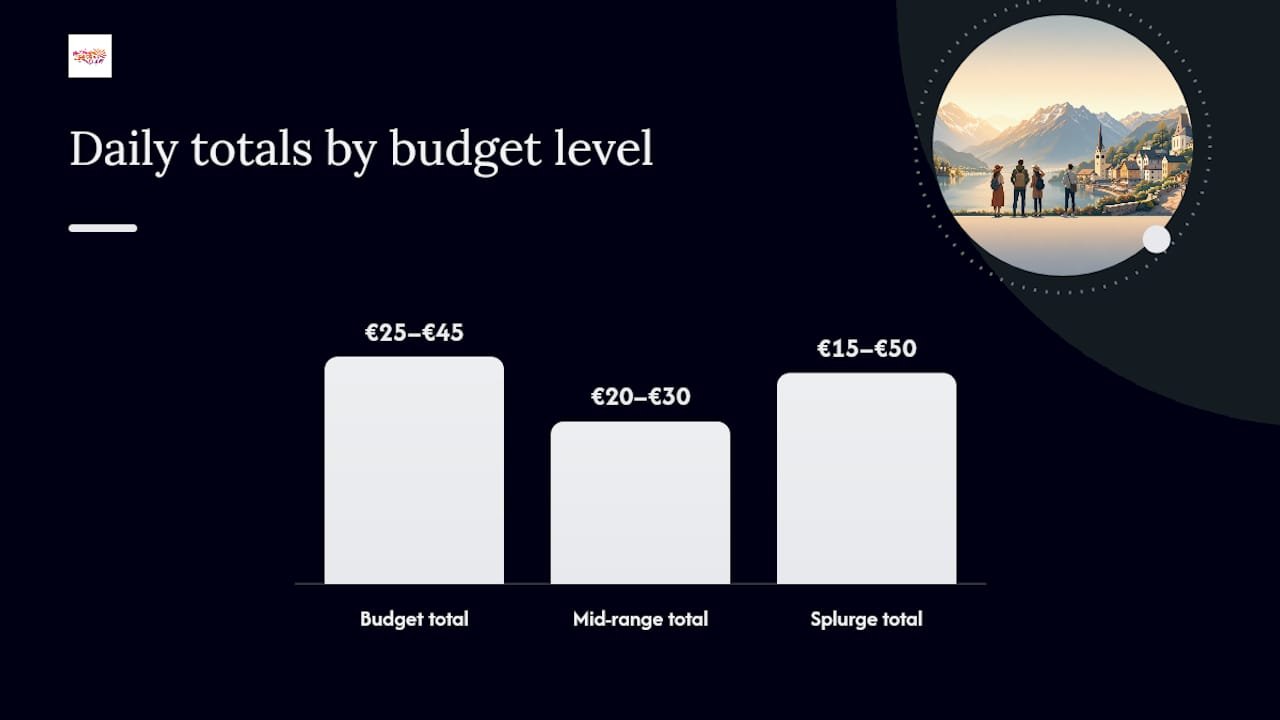
These figures cover a single traveler. Couples sharing a room reduce the per-person accommodation cost significantly.
Tickets and reservation checklist
Book these before you leave home:
- Schönbrunn Palace Grand Tour: reserve timed entry 4–6 weeks ahead in summer
- Hallstatt Salt Mines: book online at least 3–4 weeks ahead
- Vienna concert tickets: 2–3 weeks ahead for good seats; standing-room available at the door
- Melk Abbey: no advance booking required, but check opening hours seasonally
- Hallstatt ferry: runs on a fixed schedule; no advance booking needed, but verify the last departure time
Paying and tipping in Austria
Austria is a euro (€) country. Credit and debit cards (Visa, Mastercard) are widely accepted in cities and larger towns, but small alpine vendors, market stalls, and rural guesthouses often prefer cash. Carry €50–€100 in small bills when heading to Hallstatt or the Wachau.
Tipping customs are relaxed by American standards. You are not obligated to tip at self-service counters or bakeries.
Pro Tip: Austrian cuisine is one of the most underrated parts of the trip. Prioritize at least one sit-down meal per city for regional dishes — local food experiences are a genuine window into the culture, not just a meal.
Family and mobility-friendly adjustments
Families with young children can swap the Kunsthistorisches Museum for the Natural History Museum next door (same building complex, more interactive exhibits). The Schönbrunn Zoo, located within the palace grounds, is one of the oldest zoos in the world and a reliable half-day for kids. For travelers with limited mobility, the flat Ringstrasse boulevard in Vienna and the Mirabell Gardens in Salzburg are both fully accessible and deeply rewarding without requiring any climbing.
Seasonal highlights and the Wachau + Melk alternative
Best months for specific activities
- Alpine hiking (Hallstatt, Dachstein, Innsbruck Nordkette): June through September
- Lake steamers and boat tours on the Hallstätter See and Wolfgangsee: May through October
- Glacier access at Dachstein: year-round, but summer offers the clearest conditions
- Christmas markets in Vienna and Salzburg: late November through December 24
- Wine harvest festivals in the Wachau Valley: September and October
A one-day Wachau + Melk Abbey alternative
If Hallstatt feels too crowded (July and August see peak visitor numbers) or weather closes alpine routes, the Wachau Valley makes an equally compelling Day 6 or Day 7 substitute.
From Vienna, take a morning train to Melk (about 1 hour 10 minutes). Melk Abbey sits on a dramatic rocky outcrop above the Danube and is one of Austria’s finest baroque buildings — the library and church interior alone justify the detour. Allow 2 hours. From Melk, a river cruise or regional train follows the Danube east through the Wachau, passing terraced vineyards, medieval castles, and the wine town of Dürnstein, before reaching Krems. From Krems, trains return to Vienna in about 1 hour.
The full Wachau loop takes 7–8 hours and costs around €30–€50 per person including transport and abbey entry. It suits travelers who prefer gentle scenery and cultural history over alpine exertion, and it works particularly well as a final-day option before an evening flight.
What Nextviewtours has learned running this route
The Vienna–Salzburg–Hallstatt structure works because it respects the rhythm of travel. Rushing between four or five cities in a week leaves you with photographs but not memories. Two solid bases, one alpine highlight, and a flexible final day give you the pace to actually absorb what you are seeing.
The single most common planning mistake on this route is underestimating the Hallstatt transfer time. The ÖBB connection via Attnang-Puchheim is reliable, but it requires you to be on the platform, not still at the lake. Lock in your Schönbrunn and salt-mine slots the moment you confirm your travel dates. For tight arrival or departure windows, a private transfer is worth the cost — it removes the one variable that can unravel an otherwise well-planned week.
Nextviewtours makes this exact week easier to run
Planning this itinerary yourself is entirely doable. Running it with Nextviewtours is faster, less stressful, and often richer in local detail. The Austrian Alps, Hallstatt, and Salzburg guided tour maps directly to this 7-day structure, with local guides who know the ferry schedules, the best viewpoints, and the restaurants that don’t appear on the first page of a search.

Three concrete reasons to book rather than DIY: your guide handles all timed-entry logistics (Schönbrunn, salt mines, concerts) so you never lose a morning to a sold-out slot; private transfer options protect tight arrival and departure windows; and the itinerary is fully customizable for families, couples, or travelers with specific interests. Browse the private and group tour formats to find the version that fits your group, or go straight to the private tour customization page to build your own week from this exact route.
Sources
- 7 Days in Austria (2026) – Complete Itinerary
- 7-Day Austria Itinerary: Vienna, Salzburg, Hallstatt & Innsbruck
- 7 Day Austria Itinerary for First Timers: Vienna, Salzburg, Hallstatt & More
- ÖBB (Austrian Federal Railways)


Comments are closed