
 Uncategorized
Vienna is one of the easier European capitals to navigate with a stroller, and yes, you should bring one. Pack a compact, lightweight stroller rather than a bulky all-terrain model. Public transit runs largely step-free, and the city’s flagship parks and palace gardens offer long, flat stretches built for exactly this. The catch: a few cobblestone pockets in the old town and unpredictable elevator waits mean you’ll want a backup carrier for tight spots.
TL;DR:
- Most major transit stations offer reliable step-free access, but occasional elevator outages mean travelers should check live status apps beforehand.
- Vienna’s flat parks, palace grounds, and wide-open spaces provide excellent stroller-friendly environments, though cobblestones near old town may require a backup carrier.
- Public toilets are common but vary in quality; carry coins and a personal changing mat to ensure comfort and convenience.
- Staying in neighborhoods like Schönbrunn or Prater offers quieter, more stroller-friendly lodging options close to flat, accessible parks and sights.
- Bringing a compact stroller and a child carrier covers most terrain, with weather protection gear essential for Vienna’s often unpredictable climate.
Table of Contents
- The Best Stroller-Friendly Spots and Attractions in Vienna
- Getting Around: Public Transit, Elevators, and Practical Transit Tips
- Best Neighborhoods to Stay in with a Stroller
- Packing and Stroller Tips for Vienna’s Streets
- A Sample 1-Day Stroller-Friendly Itinerary
- Why Trust This Guide: On-the-Ground Family Travel Experience
- Finding Accessible Restrooms and Changing Facilities
- Stroller Rental Services and Availability in Vienna
- Navigating Busy Tourist Sites Without Losing Your Mind
- Stroller-Friendly Cafés and Restaurants Worth Seeking Out
- Author Perspective: A Short Note on Traveling with Toddlers in Vienna
- How Nextviewtours Makes Stroller-Friendly Vienna Easier
- Sources
The Best Stroller-Friendly Spots and Attractions in Vienna
Vienna’s biggest advantage for parents isn’t any single attraction. It’s how many of the city’s top sights sit inside genuinely flat, wide-open spaces designed for walking, not squeezing through medieval alleys. Local parent guides consistently rank the city high for exactly this reason, and one stroller-focused review site scores Vienna at 76 out of 100 for stroller travel, citing its parks, transit, and family facilities as the main drivers.
Here’s where to point your wheels first:
- Prater: The park surrounding the Riesenrad Ferris wheel has wide, flat, tree-lined paths and a mix of gentle rides that suit toddlers, not just thrill-seeking teens. Stroller parking near the main ride entrances is common practice.
- Schönbrunn Palace & Tiergarten Schönbrunn: The palace gardens are free to enter, entirely flat, and built for strollers, with the zoo, Tiergarten Schönbrunn, a short walk from the main gate. Budget extra time since the grounds are enormous.
- Donauinsel: This narrow island running through the Danube gives you kilometers of flat, car-free promenade. It’s the closest thing Vienna has to a stroller highway, with plenty of grass for a mid-walk break.
- Stadtpark and Augarten: Stadtpark alone earns an 81% baby-friendly rating for its wide, smooth paths and benches, though it has no on-site stroller rental and only coin-operated toilets, so keep loose change handy.
- Indoor museum picks: Many of Vienna’s major museums, including the Natural History Museum and the Kunsthistorisches Museum, accept strollers and have elevators between floors. Ask at the entrance desk about stroller parking if the galleries get tight.
Each of these spots solves a different problem. Parks give you space to let a toddler burn energy; palace grounds give you shade and grandeur; museums give you a dry, climate-controlled fallback when Vienna’s weather turns.
Getting Around: Public Transit, Elevators, and Practical Transit Tips
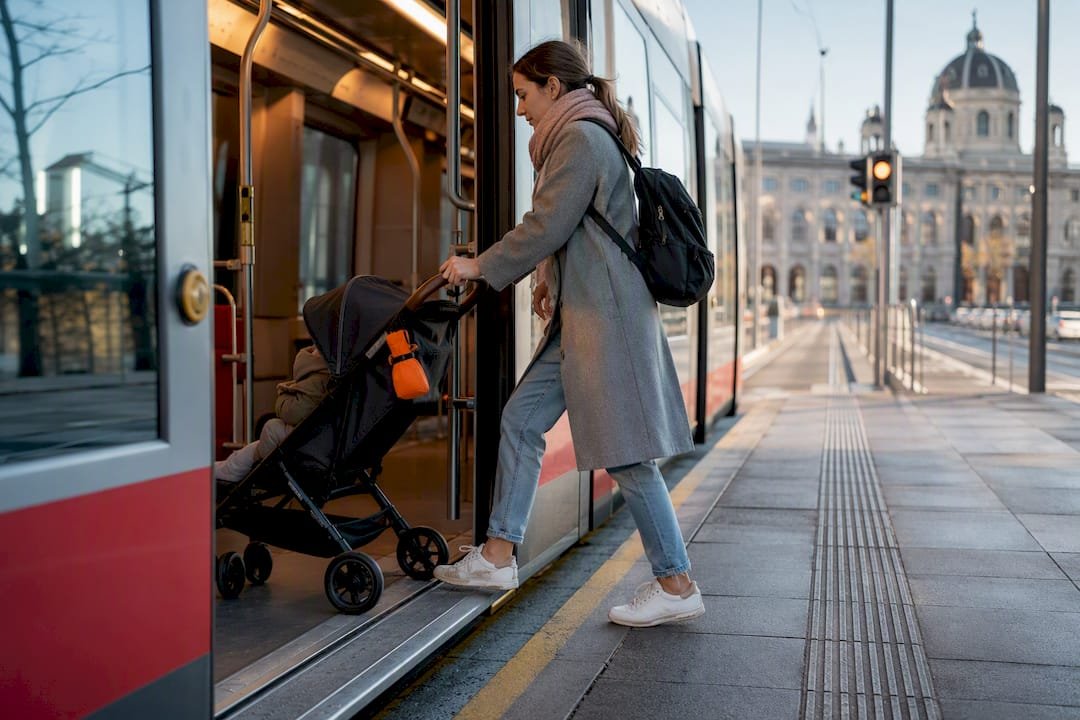
Vienna’s public transit system is one of the strongest arguments for skipping a rental car entirely. Almost every major U-Bahn station has a lift, and trams and buses run low-floor with boarding assistance available, meaning you roll straight on without folding anything.
Quick stat: Nearly all major U-Bahn stations in Vienna offer step-free access via lifts or ramps, according to accessibility data from All About Vienna, though individual elevators do go out of service occasionally, so build a few extra minutes into transfers.
That reliability gap is exactly what the WienMobil app solves. It shows live elevator status across the network, which means you can check before you commit to a transfer instead of discovering a broken lift with a sleeping baby and three shopping bags.
A few boarding habits that make transfers smoother:
- Stand near the doors marked with a stroller or wheelchair symbol; that’s where the floor is lowest and the gap smallest.
- Make eye contact with the driver on trams and buses. A quick nod usually gets you a longer boarding window.
- Ride in the middle cars on the U-Bahn. They tend to align better with platform lifts than end cars.
- Avoid rush hour (roughly 7:30 to 9:00 AM and 4:30 to 6:00 PM) if your schedule allows it.
On fares, kids under 6 ride free across Vienna’s entire public transport network, no ticket required. The Vienna City Card adds unlimited transit plus discounts at various attractions, and some family packages let one child under 15 ride free alongside a card holder. If your trip is under three days, compare the card’s cost against buying individual 24 or 48-hour passes since the math doesn’t always favor the card for shorter stays.
Best Neighborhoods to Stay in with a Stroller
Where you sleep decides how many cobblestones you cross before breakfast, so choose carefully.
Innere Stadt (1st district) puts you steps from Stephansplatz, but that convenience has a tax: crowds around the cathedral and Graben pedestrian zone can bottleneck a stroller, and some side streets still carry old cobblestone paving that rattles wheels. It works well if your hotel sits on a quieter side street just off the main drag.
Schönbrunn and Hietzing trade some central convenience for calm. This area sits close to the palace and zoo, has quieter residential blocks, and gives you an easy morning walk instead of a transit ride to one of the day’s biggest stops.
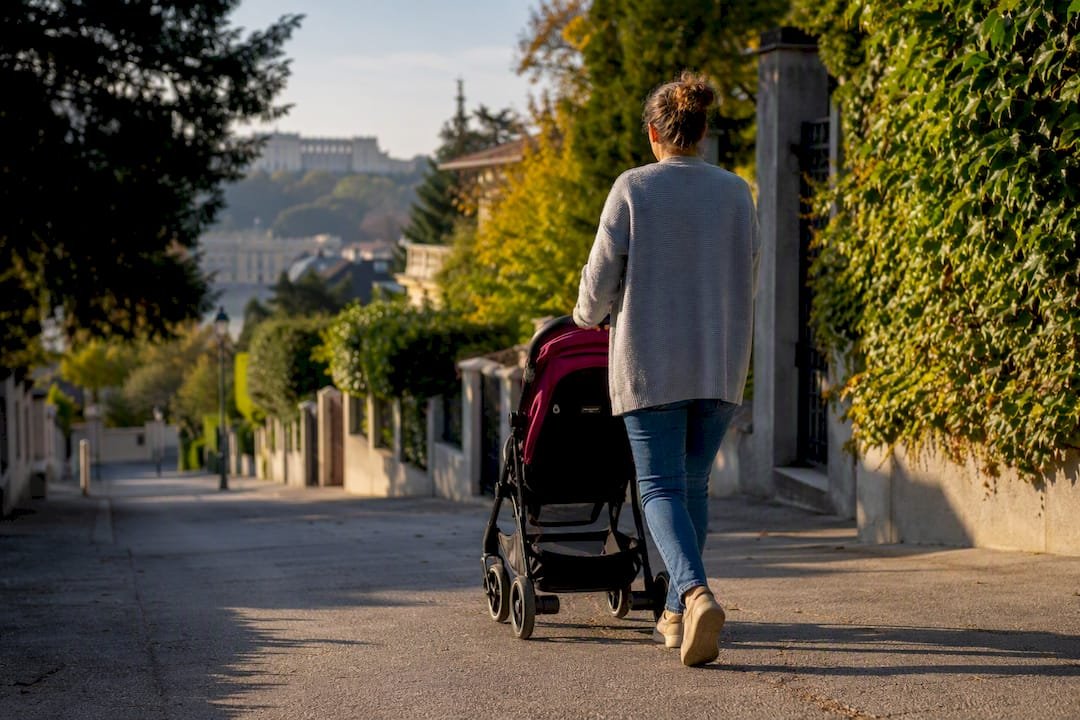
Prater and Leopoldstadt put you next to the park and the Donauinsel, both flat and stroller-friendly, and this district tends to run a bit cheaper on lodging than the 1st.
Whichever neighborhood you pick, check for these before booking:
- An elevator in the building, not just stairs to a third-floor walk-up.
- A family room or suite with separate sleeping space for nap schedules.
- A kitchenette, which saves you from three restaurant outings a day with a toddler.
- Walking distance to a U-Bahn station with confirmed lift access.
Packing and Stroller Tips for Vienna’s Streets
The right gear matters more than most first-time visitors expect, so plan the details before you land.
- Bring a compact, lightweight stroller rather than a heavy all-terrain rig. Vienna’s transit, elevators, and café doorways all favor something you can fold fast and lift with one arm.
- Pack a carrier as backup. Old-town alleyways, crowded markets, and long elevator queues are the moments you’ll want your hands free and your child on your chest instead of parked in a stroller.
- Bring a rain cover and sunshade. Vienna’s weather swings, and family travel guides consistently recommend both regardless of season.
- Carry a small changing mat. Not every restroom has a changing table, and public parks often don’t have one at all.
- Keep coins on hand. Public toilets, including the ones at Stadtpark, are frequently coin-operated.
- Watch for cobblestones near Stephansplatz and the Naschmarkt. These sections can jolt a stroller enough to wake a napping baby, so consider a wider berth or a carrier switch there.
Pro Tip: Time your big outdoor stops, Schönbrunn, Prater, Donauinsel, for the window right after breakfast. You’ll beat both the tour bus crowds and the early afternoon slump when a toddler’s patience runs out.
A Sample 1-Day Stroller-Friendly Itinerary
This sequence keeps transfers short and naps intact.
- 9:00 AM: Schönbrunn Palace gardens. Arrive early to beat crowds, walk the flat grounds, and let your toddler loose near the Great Parterre lawn. Budget 90 minutes.
- 11:00 AM: Tiergarten Schönbrunn. The zoo is a short stroll from the palace gate. Plan two hours, more if your child fixates on the pandas.
- 1:00 PM: Lunch near Hietzing. Look for a café with a kids’ menu and a changing table rather than pushing on hungry.
- 2:30 PM: Tram ride around the Ringstraße. This is a built-in nap window. The tram’s gentle motion and the low-floor boarding make it an easy transfer straight from lunch.
- 3:30 PM: Stadtpark. Wind down with a slow walk and playground time before heading back to your hotel.
If rain moves in, swap the outdoor blocks for the Natural History Museum, which has elevators between floors and enough dinosaur skeletons to hold a toddler’s attention for a full hour.
Why Trust This Guide: On-the-Ground Family Travel Experience
Nextviewtours has spent years running day trips and guided routes through Vienna, including family and private tour formats built around real logistics, not guesswork.
That experience shapes the advice here in a few concrete ways:
- Meeting points get chosen near stations with confirmed elevator access, not just the closest landmark.
- Transport choices favor low-floor trams and buses over stairs-heavy shortcuts, even when the shortcut saves five minutes.
- Routing avoids peak crowd windows at major sights, which matters more with a stroller than it does solo.
Every recommendation in this guide reflects what actually works on the ground for families moving through Vienna with young kids in tow.
Finding Accessible Restrooms and Changing Facilities
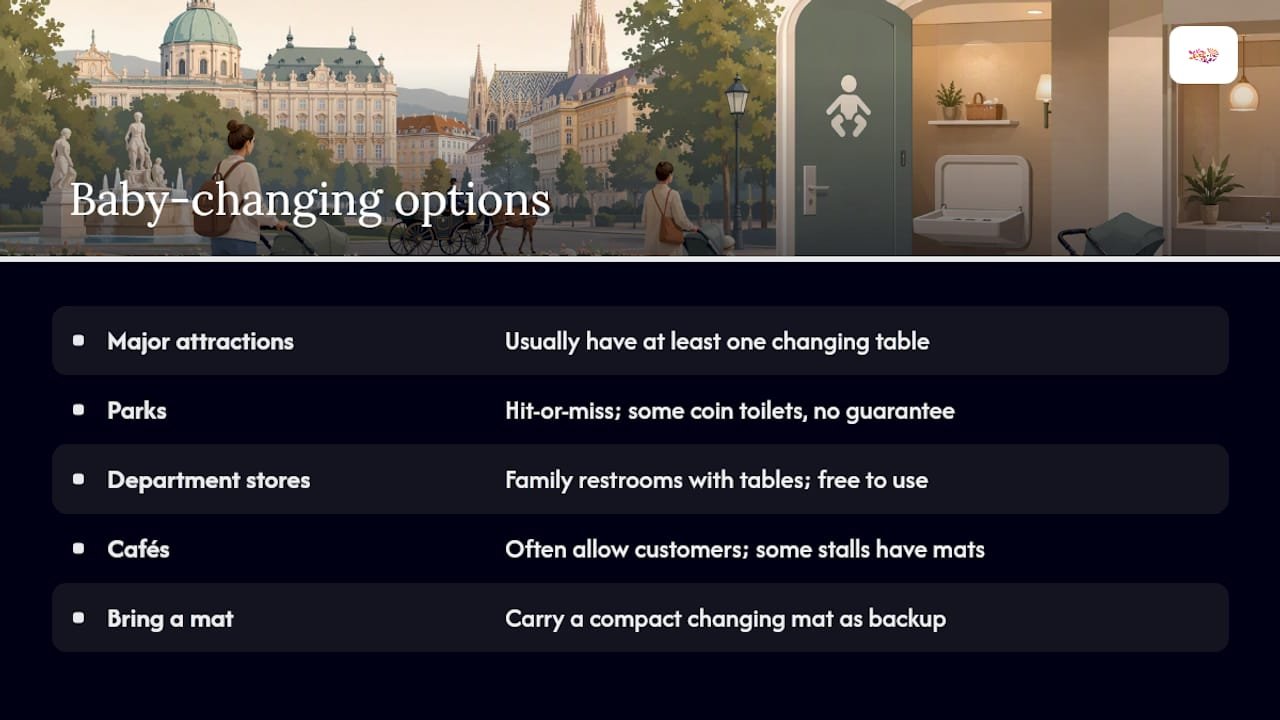
Public restrooms in Vienna are common but inconsistent when it comes to baby changing stations. Major attractions, Schönbrunn, the zoo, and larger museums, generally have dedicated changing tables in at least one restroom. Smaller parks are hit or miss; Stadtpark, for instance, has restrooms but they run on coins, and there’s no guarantee of a changing table inside.
Department stores are an underused resource here. Larger stores along Mariahilfer Strasse and the Ringstraße typically have family restrooms with changing tables, air conditioning, and a place to sit down, all free to use even if you’re not shopping.
Cafés are your third option. Many sit-down cafés will let you use their restroom if you’re a paying customer, and a decent number have a changing mat tucked into an accessible stall. It’s worth asking before you order if changing facilities are a priority for that stop.
Carry your own compact changing mat regardless. Relying entirely on public infrastructure for this one task is the fastest way to end up improvising on a park bench, which works in a pinch but isn’t anyone’s favorite plan B.
Stroller Rental Services and Availability in Vienna
Dedicated stroller rental isn’t widespread in Vienna the way it is at some U.S. theme parks or airports. Major parks like Stadtpark don’t offer on-site rental, and there’s no citywide rental network you can count on the way you might for bikes.
A handful of baby equipment rental companies operate in Vienna and deliver strollers, cribs, and car seats directly to hotels or vacation rentals, typically booked online a few days ahead of arrival. These services work well if you’re flying in and don’t want to check a stroller as luggage.
Some larger family-oriented hotels keep a small stock of strollers for guest use, but availability is limited and rarely guaranteed, so confirm directly with your accommodation before counting on it.
The most reliable plan is still bringing your own compact stroller. It travels through security faster than checked luggage, folds down for tram boarding, and doesn’t leave you scrambling if a rental delivery runs late on your first jet-lagged morning.
Navigating Busy Tourist Sites Without Losing Your Mind
Stephansplatz, the Naschmarkt, and the area around the Hofburg draw the heaviest foot traffic in the city, and that’s exactly where a stroller becomes a liability instead of a convenience.
The fix isn’t avoiding these spots. It’s timing them. Arrive at Stephansplatz before 10 AM or after 5 PM, and the crowd thins enough that a stroller moves normally. Midday, especially on weekends, expect to weave constantly and consider switching to a carrier for that stretch alone.
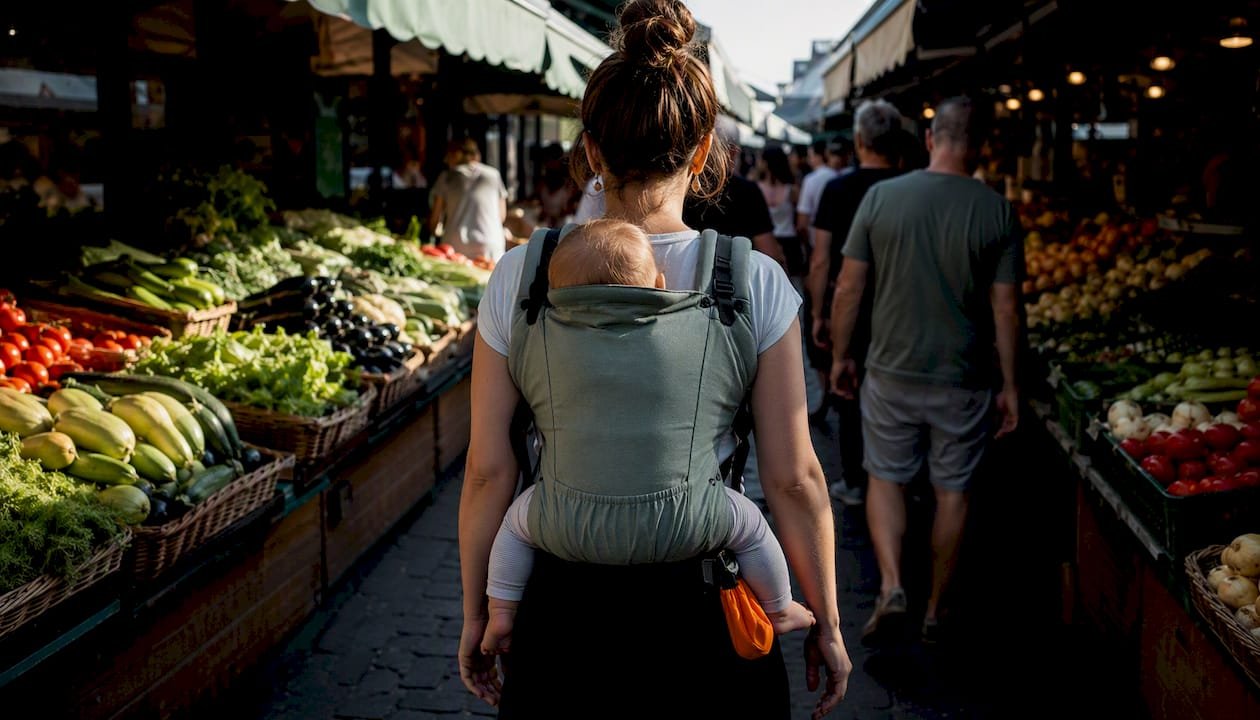
At the Naschmarkt, the aisles between stalls are narrow and often uneven underfoot. A carrier beats a stroller here almost every time, even for parents who otherwise prefer wheels.
For elevator-dependent transfers at busy U-Bahn stations like Karlsplatz, check the WienMobil app before you head down. A five-minute wait for a working lift is manageable when you know it’s coming; it’s much more frustrating when you didn’t plan for it and a toddler is done waiting.
Stroller-Friendly Cafés and Restaurants Worth Seeking Out
Vienna’s café culture, all velvet booths and marble tabletops, sounds like the opposite of stroller-friendly, but plenty of spots make it work. Look for cafés with street-level entry and no interior stairs; many of the classic coffeehouses occupy ground-floor spaces with wide doorways built for a different era of foot traffic, which happens to suit strollers well today.
Family-run restaurants in residential neighborhoods like Hietzing or Leopoldstadt tend to be more relaxed about stroller parking near your table than tourist-district spots competing for turnover. Ask when you’re seated. Most staff will point you to a spot without hesitation.
High chairs are common but not universal, so it’s worth asking when you book or arrive rather than assuming. Cafés near Schönbrunn and the Prater, given the volume of family foot traffic, are more likely to have both high chairs and enough floor space for a folded stroller near your seat.
Author Perspective: A Short Note on Traveling with Toddlers in Vienna
Most families don’t need help walking through a park. They need help with the ten small decisions that add up: which elevator to trust, which tram car to board, when to switch to a carrier. Some tour providers plan family logistics around those decisions specifically. A guided day works best when your window in the city is short or you’d rather not spend vacation hours studying transit maps. Independent travel works just as well when you have time to spare and enjoy figuring it out yourself.
— Next
How Nextviewtours Makes Stroller-Friendly Vienna Easier
Some tour services offer private or family-focused tours that build meeting points near accessible stations, plan routing around Vienna’s flatter paths, and keep pace with a toddler’s actual schedule instead of a tour bus timetable.

That matters most on short trips, where every hour lost to a broken elevator or a wrong turn near Stephansplatz is an hour you don’t get back. Families who want the flexibility of a private schedule without the planning workload can look at private tour options built around personalized routing, while those weighing costs and formats can start with Nextviewtours’ breakdown of European tour packages to see what fits a family budget and timeline.
If your Vienna visit is tight on days or heavy on must-see stops, compare the self-planning route against booking a guided option before you land, not after you’re already navigating a broken lift at Karlsplatz with a cranky toddler.
Sources
- Is Vienna Stroller-Friendly? Yes — Parent’s Guide (2026) | Stroller Friendly
- How accessible is public transport in Vienna for wheelchairs and strollers? | All About Vienna
- Vienna with Kids (2026) – Family Travel Guide & Activities
- Stadtpark, with baby | TravelToWith


Comments are closed