
 Uncategorized
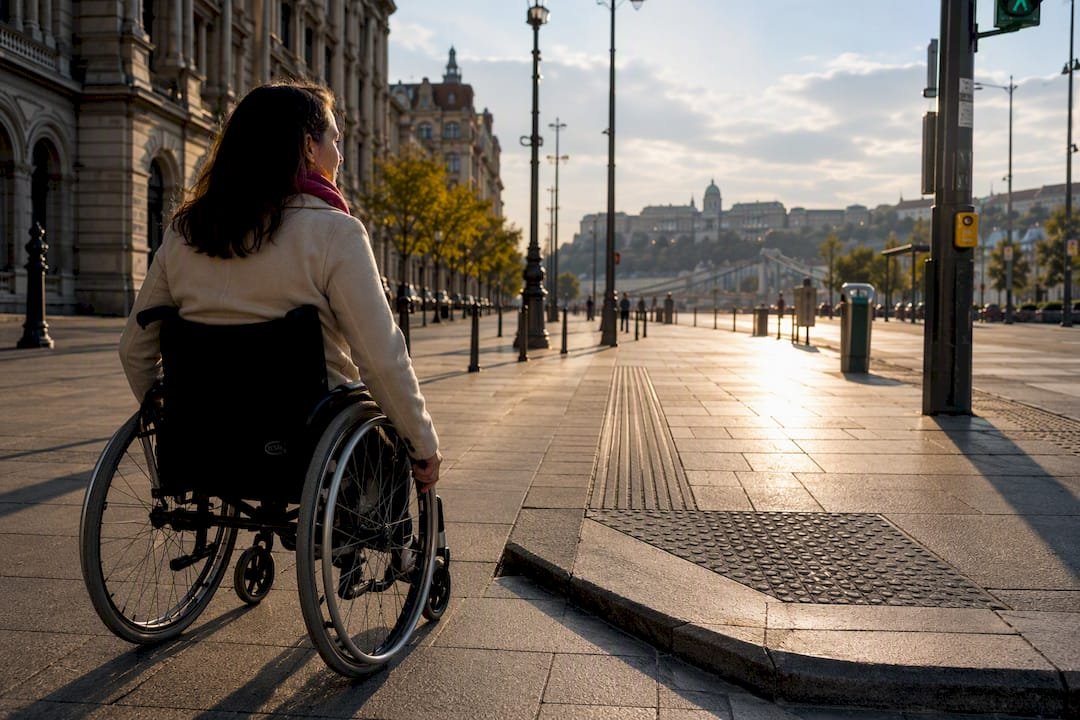
Budapest is manageable for many wheelchair users willing to plan ahead, and Pest is consistently the easier half of the city to navigate than hilly, cobbled Buda. Your three immediate moves: build your routes around Metro line M4 and the low-floor tram network, verify every venue on Access4you before you commit to it, and prebook an accessible airport transfer well before you land.
TL;DR:
- The M4 metro line is fully accessible from platform to street, making it the most reliable transit choice for wheelchair users in Budapest.
- Booking hotels near the M4 corridor or Danube promenade ensures step-free access to most attractions and minimizes reliance on elevators and taxis.
- Confirm accessibility details for venues in advance, especially historic baths and upper terraces, as some may only be partially accessible or require extra planning.
- Private accessible transfers from Budapest Airport are recommended for a predictable, doorstep arrival, with supplies like printed accommodation confirmation aiding communication.
- Pavement quality varies, with the flat streets in Pest and parks being the easiest to navigate; Buda’s hills and cobblestones demand extra time and cautious wheel positioning.
Table of Contents
- Wheelchair Friendly Budapest: What “Accessible” Actually Means Here
- Getting From Budapest Airport to the City Center
- Which Budapest Trains, Trams, and Buses Actually Work for Wheelchairs
- Where to Book a Wheelchair Accessible Hotel in Budapest
- Budapest Attractions That Are Genuinely Worth the Trip
- Navigating Budapest’s Sidewalks, Hills, and Cobblestones
- Booking an Accessible Taxi or Private Transfer in Budapest
- Your Pre-Trip Checklist for an Accessible Budapest Visit
- Why Next View Tours Understands Accessible Budapest Planning
- What I’d Tell a Friend Planning This Trip
- Book a Private Accessible Tour With Next View Tours
- Sources
Wheelchair Friendly Budapest: What “Accessible” Actually Means Here
Budapest doesn’t hand you accessibility on a platter, but it rewards preparation better than most European capitals. The city split its personality centuries ago: Pest is grid-planned, largely flat, and increasingly retrofitted with step-free infrastructure. Buda climbs a hill, wraps around a castle, and still runs on cobblestones in places that predate the automobile.
That split matters more than any single attraction on your list. A traveler who bases their trip in Pest, near the Danube promenade or the Grand Boulevard, will cover far more ground with far less frustration than someone chasing views from Buda’s upper terraces. This isn’t a knock on Buda Castle. It’s a scheduling decision, and it’s the single biggest lever you have over how your trip actually feels.
The standard industry term for what you’re researching is accessible tourism, and Budapest’s approach to it is uneven by design rather than neglect. Some infrastructure, like the M4 metro line, was built accessible from day one. Other pieces, like the historic thermal baths, were built for a different century and retrofitted where budgets and buildings allowed. Knowing which category something falls into before you show up saves you a wasted afternoon.
Getting From Budapest Airport to the City Center
Budapest Airport (Ferenc Liszt International, code BUD) has staff who can meet you at the gate if you request assistance. Notify your airline at least 48 hours before departure, and confirm the request again 24 hours out. Airlines lose these notes more often than they’d like you to know.
From the terminal, you have two realistic paths into Pest:
- Private accessible transfer: Operators such as Paratrans run vans equipped with ramps and wheelchair securement, and they’re the most predictable option after a long flight when you don’t want to test unfamiliar infrastructure.
- Public shuttle: BKK’s airport bus routes use low-floor vehicles, which cost far less but require more planning around luggage and timing.
For most first-time visitors, a private accessible van is worth the extra cost on arrival day alone. You skip the transfer logistics and land directly at your hotel entrance.
Pro Tip: Carry a printed copy of your accommodation’s accessible-room confirmation. Some drivers and hotel staff respond faster to a physical document than a phone screen, especially if language is a barrier at 11 p.m.
Which Budapest Trains, Trams, and Buses Actually Work for Wheelchairs
Metro line M4 is your anchor. BKK confirms it’s fully step-free from platform to street, which makes it the default choice whenever your route allows it. The rebuilt M3 line and several M2 stations have also been brought up to accessible standards, though coverage across the older M1 and M2 lines is inconsistent enough that you should check a specific station before relying on it.
Trams fill the gaps well. Low-floor trams run on lines 4 and 6, both of which loop the Grand Boulevard, and route 1 adds weekend accessible service along the Bud aside of the river. Board through the middle door, marked with a wheelchair pictogram, where the floor sits level with the platform.
Buses are the most consistent option citywide. Every city bus in Budapest is now low-floor, with a manual or automatic ramp and a designated securement area just behind the driver.
A few numbers worth knowing before you plan a route:
- M4 is entirely step-free, end to end.
- Trams 4 and 6 run low-floor vehicles on their full routes.
- All city buses are low-floor with ramp access.
For real-time planning, download BKK’s Futár journey planner, also branded as BudapestGO, which flags which specific vehicles on your route are low-floor before you commit to a departure time. Wheelchair users and one companion typically ride free on public transport with proper documentation, so carry your disability ID alongside any local paperwork the hotel or transit office recommends.
Where to Book a Wheelchair Accessible Hotel in Budapest
Book your hotel inside the M4 corridor, along the Grand Boulevard, or within a few blocks of the Danube promenade. That geography puts you within step-free reach of most sightseeing without depending on a single elevator or a single accessible taxi to start your day.
Before you commit to a room, confirm these five details directly with the property:
- Roll-in shower versus a tub with a transfer bench. These get conflated constantly in listing photos.
- Turning radius inside the bathroom and bedroom, not just doorway width.
- Step-free path from the street entrance to the room, including any threshold at the lobby door.
- Elevator access to every floor the hotel operates, including breakfast rooms that sometimes sit on a mezzanine with no lift.
- Access4you listing status, which tells you whether a third party has actually audited the property rather than taken the owner’s word for it.
Ask for current photos of the specific room type, not stock images from the listing. Hotel accessibility staff, when a property has a dedicated contact, are usually more candid on a phone call than a booking platform’s chat widget.
Pro Tip: Request early elevator priority and luggage assistance in the same email where you confirm your room. Bundling requests gets you a human reply instead of an automated confirmation.
Budapest Attractions That Are Genuinely Worth the Trip
Not every landmark deserves equal billing on a wheelchair itinerary, and some require a phone call before you show up.
- Hungarian Parliament has a dedicated accessible entrance. Contact the visitor center in advance to confirm entry logistics and request staff assistance for the tour route.
- St. Stephen’s Basilica offers ramp access at a specific side entrance, and the interior is navigable once you’re inside, though you should verify the current entrance location before your visit.
- Great Market Hall is step-free from Fővám tér, right at an M4 station, making it one of the easiest wins on any accessible itinerary.
- Buda Castle is reachable by the Budavári Sikló funicular or bus 16/16A, but the cobblestones on the upper terraces are rough going even with good tires, so budget extra time and a companion who can help with the last stretch.
- Heroes’ Square, Andrássy Avenue, and Margaret Island are flat, wide, and genuinely enjoyable rolling routes with no surprises.
- Thermal baths vary widely. Paskál Thermal Bath is a modern facility with reliable pool lifts, while Széchenyi and Gellért, both historic palace-style baths, have inconsistent lift availability that you should confirm the same day you plan to visit.
| Attraction | Access level | Note before you go |
|---|---|---|
| Great Market Hall | High | Step-free from M4 station |
| Hungarian Parliament | High | Call visitor center ahead |
| St. Stephen’s Basilica | Moderate to high | Confirm ramp entrance location |
| Buda Castle | Moderate | Cobblestones on upper terraces |
| Paskál Thermal Bath | High | Reliable pool lift |
| Széchenyi / Gellért Baths | Variable | Verify lift status same day |
Many venues will accommodate mobility needs when contacted ahead of your visit, which is exactly why the phone call matters more than the guidebook.
Navigating Budapest’s Sidewalks, Hills, and Cobblestones
Pest wins the flatness contest by a wide margin, and it’s not close. Buda’s terrain climbs steadily toward the castle district, and the surface underfoot shifts from smooth pavement to centuries-old cobbles the closer you get to the historic core.
Sidewalk quality across the city is mixed rather than uniformly bad. Renovated boulevards and city-park loops, especially Margaret Island’s flat, car-free paths, offer some of the smoothest rolling you’ll find anywhere in Central Europe. Older side streets, particularly in Buda, can still surprise you with a curb that has no ramp or a patch of loose paving stones.
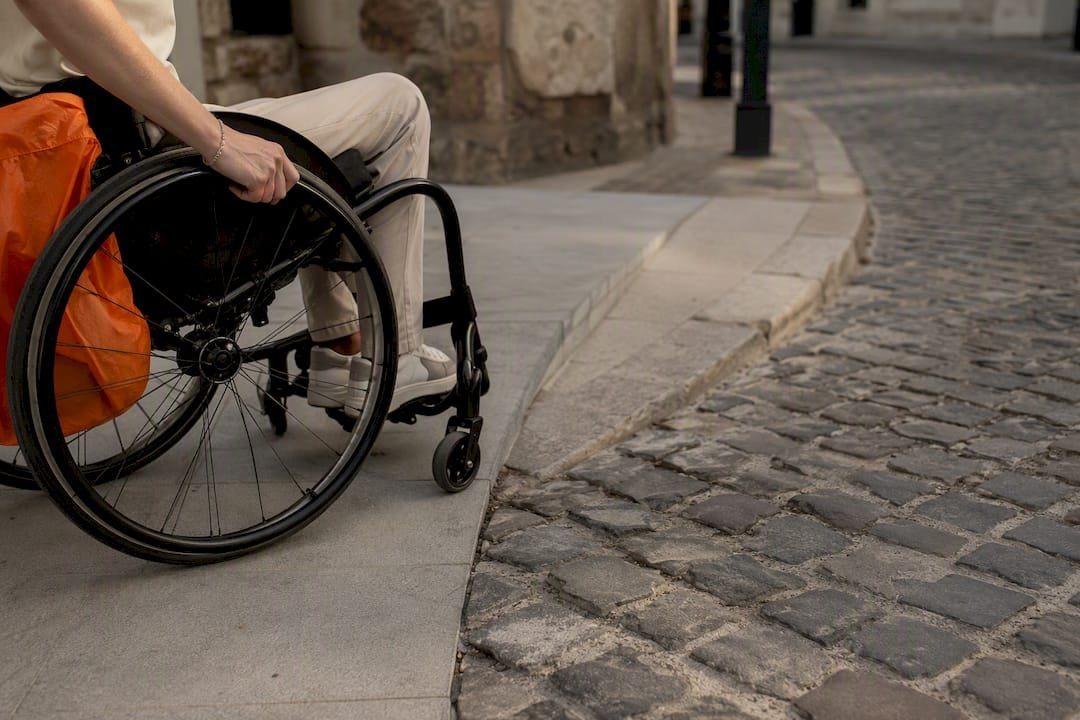
Municipal crews have been installing curb ramps and tactile paving at more intersections, but coverage isn’t even across every district yet. Accessible public restrooms exist at major transit hubs, larger museums, and shopping centers, though don’t expect one at every café or minor sight, so plan around known locations rather than assuming.
Pro Tip: When you hit a stretch of cobblestones, angle your wheels slightly rather than rolling straight across the gaps. A companion pushing from slightly behind and to the side handles pearl gravel far better than pushing straight from behind.
Booking an Accessible Taxi or Private Transfer in Budapest
Specialized operators like Paratrans run vans with ramps and proper wheelchair securement, and they’re the more reliable option any time you’re moving with luggage, a larger group, or higher mobility needs than standard transit accommodates.
Public transit works well for shorter city hops. Private accessible transfers make more sense for the airport run, day trips outside the center, or evenings when you don’t want to gamble on tram schedules.
Before booking, confirm:
- Vehicle type and ramp or lift specifics, since not every “accessible” listing means the same equipment.
- Securement straps rather than just a flat floor with no tie-down points.
- Driver assistance level, especially if you’ll need help beyond the vehicle door.
Budget accordingly and tip as you would for any private car service in Central Europe, modestly and in cash if the driver hasn’t quoted an all-in price.
Your Pre-Trip Checklist for an Accessible Budapest Visit
Work through this in the two weeks before departure:
- Gather documents: disability ID, prescriptions, travel insurance details, and your embassy’s local contact number.
- Verify venues: cross-check your planned stops against Access4you’s listings, which audit accessibility rather than take an owner’s claim at face value.
- Contact attractions directly: email or call ahead to confirm staff assistance and that elevators are operating the day you visit.
- Pace your days: plan two to three stops per day instead of five, and pad extra time into every transfer.
Pro Tip: Screenshot your Access4you confirmations before you travel. Hotel Wi-Fi and mobile data abroad aren’t always reliable exactly when you need proof of a booking.
Why Next View Tours Understands Accessible Budapest Planning
Arranging a Budapest trip around verified accessibility takes more coordination than a standard sightseeing itinerary, and that coordination is where Next View Tours spends most of its planning time for European clients. A private itinerary lets you confirm venue access, transfer logistics, and pacing before you ever land, rather than discovering a broken elevator at the door. For deeper route planning, the Budapest experience guide covers local pacing suggestions worth reviewing alongside your accessibility checklist.
What I’d Tell a Friend Planning This Trip
Stay in Pest, lean on M4 and the low-floor trams, and check Access4you before you walk anywhere unfamiliar. Budapest rewards that discipline. It won’t reward improvising, and some historic sites and baths will only ever be partially accessible no matter how well you plan.
— Next
Book a Private Accessible Tour With Next View Tours
Unlike standard group bus tours with fixed routes, private itineraries can be customized around individual mobility needs, with venue access checked in advance.

You can prioritize attractions and accessibility preferences, and transport, pacing, and entry logistics can be coordinated accordingly. Explore private tour options to see how a customized Budapest itinerary comes together, and reach out with your accessibility requirements so we can confirm venue access before you book anything else.
Sources
Confirm every detail against the source, not a blog post, before you finalize plans.


Comments are closed