
 Uncategorized
A Melk Abbey day trip from Vienna is entirely practical and simpler than most travelers expect: catch the roughly one-hour ÖBB train, spend two to three hours inside the abbey, then either head straight back or extend the afternoon with a seasonal Danube cruise before returning. Budget several hours total and expect to spend a moderate amount per person depending on tickets and lunch. Travelers who would rather skip the timetable math can book a guided day tour from Vienna instead.
TL;DR:
- Visiting Melk Abbey by train from Vienna takes about an hour, with tickets costing around €16 for self-guided entry or more for guided tours.
- The abbey remains an active monastery, featuring a large library, impressive Marble Hall, and an Austrian Baroque church, which are the main highlights.
- Allocate at least two hours for the full visit, and consider prebooking online during peak season to skip long lines and secure English-language tour slots.
- Combining the visit with a downstream Danube cruise from Melk to Krems adds scenic value and extends the day to about eight to ten hours.
- Peak season runs from April to October, with summer months being busiest; arrive early and book tickets in advance to beat the crowds.
Table of Contents
- Why Melk Abbey Matters (And What Makes It Worth the Trip)
- What to See Inside Melk Abbey: A Room-by-Room Walkthrough
- How Much Do Melk Abbey Tickets Cost, and Should You Book Ahead?
- How to Get From Vienna to Melk Abbey
- Three Ways to Structure Your Melk Abbey Day Trip
- When to Visit, and How to Avoid the Crowds
- Where to Eat Near Melk Abbey
- When Independent Planning Isn’t Worth Your Vacation Time
- Book a Melk Abbey Day Trip Without the Spreadsheet
- Sources
Why Melk Abbey Matters (And What Makes It Worth the Trip)
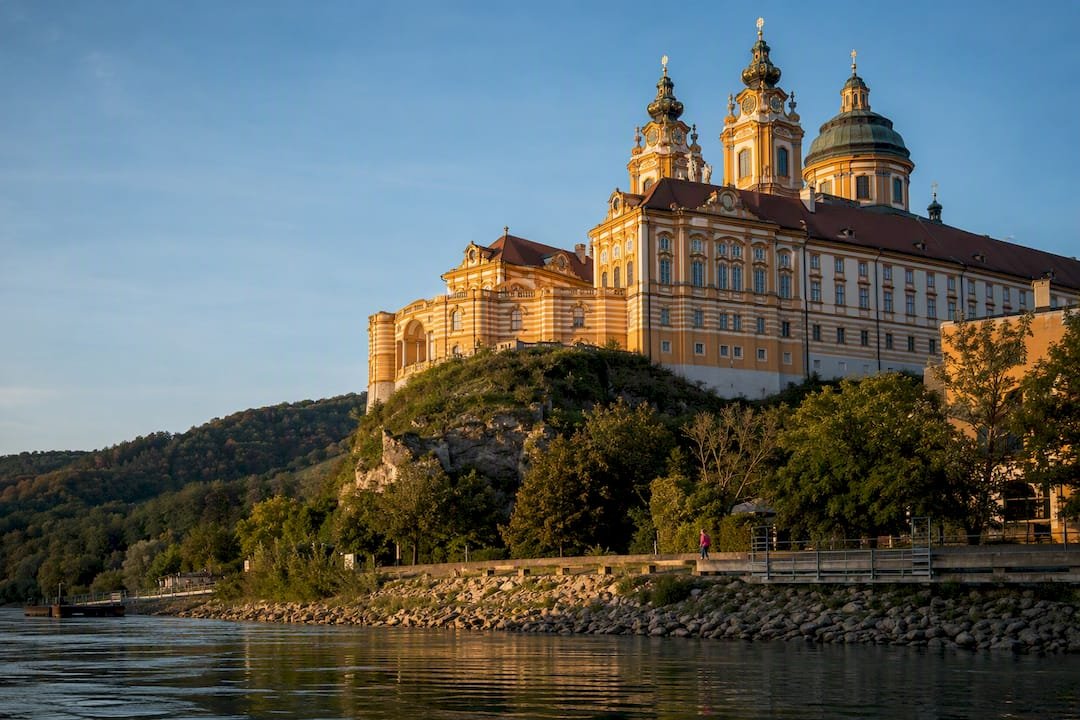
Benedictine monks founded Melk Abbey in 1089, perched on a rocky terrace above the Danube. The building most visitors see today, though, dates from a later chapter. In the early 18th century, architect Jakob Prandtauer transformed the medieval monastery into a significant Baroque complex in Central Europe, a project so large it was finished by his assistant, Josef Munggenast.
What separates Melk from a typical stately-home visit is that it is still a working Benedictine monastery. Monks live and pray there, and the complex also houses an active secondary school with roughly 900 students, a detail that surprises many first-time visitors expecting a museum shell. Stift Melk describes itself as a cultural center rather than a historical relic, and that framing matters: you are walking through a functioning institution, not a preserved corpse of one.
Three spaces carry most of the abbey’s reputation, and knowing why helps you prioritize your visit:
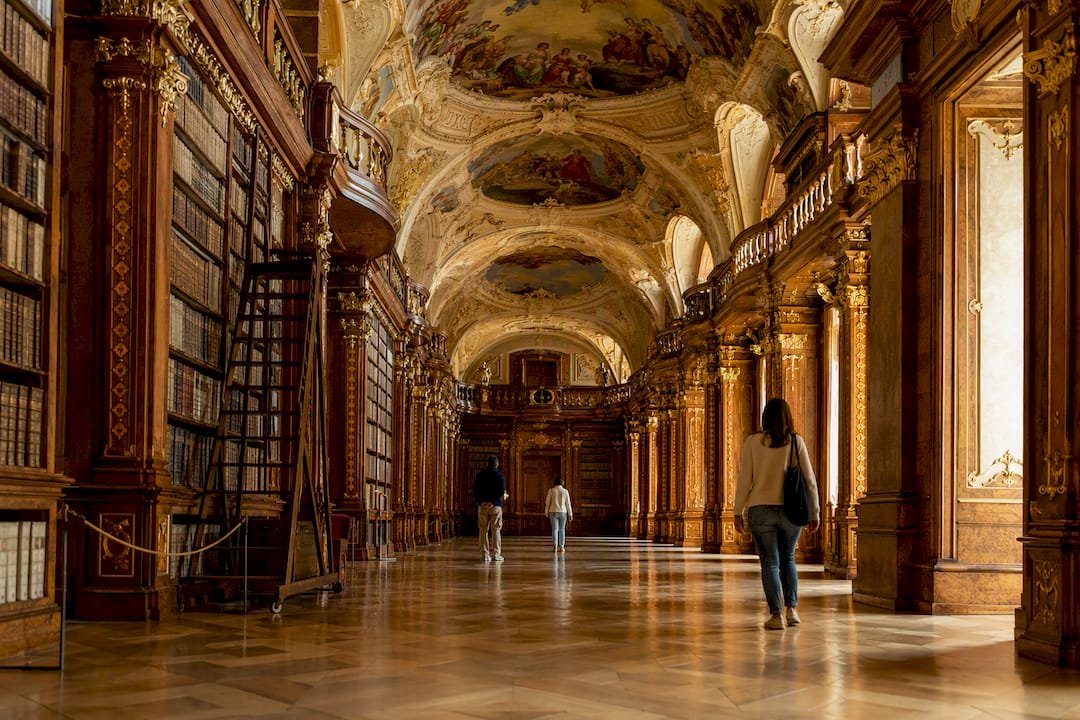
- The Abbey Library holds around 1,900 medieval manuscripts and roughly 100,000 volumes, arranged beneath a ceiling fresco that plays tricks with painted architecture.
- The Marble Hall uses the same trompe l’oeil trick on a grander scale, with a ceiling fresco that makes a flat surface look like it opens straight into the sky.
- The Abbey Church delivers the emotional payoff of the whole visit, a gold-and-fresco interior that architectural historians treat as a textbook example of Austrian Baroque at its most theatrical.
None of this requires advance art history. It helps to know what you’re looking at before you’re standing under it.
What to See Inside Melk Abbey: A Room-by-Room Walkthrough
The abbey’s visitor route is designed as a sequence, and walking it in order makes the story land better than skipping around.
- Imperial Staircase and Imperial Corridor. This is your entry choreography, a grand processional route built to impress visiting emperors. Give it five to ten minutes; it’s a transition space, not a destination, but the portrait gallery lining the corridor is worth a slow look.
- Abbey Museum. Exhibits cover the monastery’s founding, its Baroque rebuild, and its role today. Plan on 30 to 45 minutes here, longer if you read the placards closely.
- Marble Hall. Despite the name, only the doorframes are actual marble. The ceiling fresco by Paul Troger creates the illusion of an open, sunlit vault. Five minutes standing still, looking up, tells you more than any description.
- Abbey Library. This is the room most people came for. Photography is typically restricted here to protect the manuscripts, and the space asks for quiet, so treat it the way you would a reading room, not a photo backdrop.
- Abbey Church. Notice the high altar depicting the martyrdom of Saints Peter and Paul, and take a minute to look straight up at the dome frescoes by Johann Michael Rottmayr.
- Balcony and viewpoints. The terrace views over the Danube and the town of Melk are, for many visitors, the actual highlight of the trip. Morning light tends to be softer for photos; midday sun can wash out the valley colors.
- Abbey Park. Open seasonally from April through October, the park adds a Baroque garden pavilion and shaded paths, a nice decompression stop after the intensity of the library and church.
Pro Tip: Save your camera battery and your patience for the balcony, not the library. The interior shots you’ll actually want to keep are the terrace views over the Danube, not a dim, restricted photo of a bookshelf.
Stift Melk’s own guidance recommends allocating at least two to two and a half hours for the full route, museum through park. If you’re moving efficiently and skip the park, two hours covers it comfortably.
How Much Do Melk Abbey Tickets Cost, and Should You Book Ahead?
Adult admission runs €16.00 for self-guided entry, which covers the museum, Marble Hall, library, church, and balcony. A guided tour adds roughly €4.00 on top of that and runs about 50 to 55 minutes, walking you through the Imperial rooms with a docent who fills in context the audio guide and placards skip.
Here’s the practical breakdown:
- Self-guided ticket: €16.00, includes museum, Marble Hall, library, church, balcony, and the park during its April to October season.
- Guided tour supplement: roughly €4.00 on top of admission, about 50 to 55 minutes.
- English-language tour times: vary by season, and in shoulder months some days offer only one English slot, so check the exact schedule for your travel date before you build your itinerary around it.
- Where to buy: on-site at the ticket counter in the first courtyard, or online in advance through the official Stift Melk ticketing page.
Prebooking matters more than it sounds like it should. Stift Melk explicitly recommends buying tickets online ahead of your visit during peak season, and April through October is exactly when tour buses and cruise groups converge on the first courtyard. Skipping that line can save you 20 to 30 minutes you’d rather spend inside.
Opening hours run 9:00 AM to 5:30 PM from April 1 through October 31, with last admission at 5:00 PM. November through March hours are reduced, and some guided-tour slots thin out considerably, so if you’re traveling in winter, confirm times before you commit to a train departure.
Combined abbey-and-boat packages show up seasonally through operators and occasionally through ÖBB fare bundles, worth a quick check if you’re planning the Danube cruise extension anyway.
How to Get From Vienna to Melk Abbey
Four ways to make the trip, ranked roughly by convenience.
Train. ÖBB runs direct connections from Vienna to Melk roughly hourly, with a journey time of about one hour to one hour fifteen minutes depending on the specific service. Regional tickets typically run in the €15 to €25 range round trip, and booking through the ÖBB website ahead of time locks in your seat without adding much cost. This is the method most independent travelers use, and for good reason: no parking headaches, no traffic on the A1, and you arrive close to the town center.

Driving. The A1 motorway gets you from Vienna to Melk in about one hour ten minutes. Parking is available near the abbey, and lots typically validate for abbey visitors, but you’re trading the train’s simplicity for flexibility, useful mainly if you’re combining Melk with other Lower Austria stops the same day.
Boat, downstream only. A common misconception is that you can boat both ways. Upstream travel from Vienna against the Danube current takes considerably longer, making a same-day boat return from Vienna impractical. What does work well is boarding a downstream cruise from Melk to Krems after your abbey visit, typically running April through October with DDSG Blue Danube and similar operators covering that stretch of the Wachau Valley.
Walking from the station. The walk from Melk’s train station to the abbey takes 10 to 15 minutes uphill. It’s manageable for most fitness levels, but if you’re traveling with heavy luggage or limited mobility, taxis wait at the station and the ride takes about five minutes.
If saving planning time matters more than saving euros, a guided operator handles all four of these decisions for you in one booking.
Three Ways to Structure Your Melk Abbey Day Trip
Pick the version that matches your patience for logistics versus your appetite for planning your own schedule.
Option A: Independent by train. Take an early train, something in the 8:00 to 9:00 AM window, arriving in Melk by roughly 9:15 to 10:15 AM. Walk up to the abbey, spend two to three hours inside, grab lunch in town, and catch a return train in the mid to late afternoon. Total round-trip cost including tickets and lunch typically lands between $70 and $100 per person. Total time: about six to seven hours door to door.
Option B: Independent, plus a downstream Danube cruise. Same morning train and abbey visit, but instead of heading straight back, walk down to the Melk boat landing after lunch and catch an afternoon cruise to Krems, a trip of about one and a half to three hours depending on the operator. From Krems, ÖBB trains run back to Vienna in about an hour. This is the itinerary independent travel guides consistently point to as the most satisfying version of the day, since it adds the Wachau Valley’s terraced vineyards to the historical payoff of the abbey itself. Total time: eight to ten hours; total cost: roughly $90 to $140 per person.
Option C: Guided day tour from Vienna. A guided tour typically bundles round-trip transport, entry tickets, and often a guided walkthrough of the abbey into one price and one pickup time, removing every scheduling decision above. This suits time-limited travelers, groups coordinating multiple schedules, or anyone who would rather not track ferry timetables on their phone mid-visit.
| Itinerary | Total time | Approximate cost per person | Best for |
|---|---|---|---|
| A: Train only | 6–7 hours | $70–$100 | Budget-focused, flexible schedule |
| B: Train + Danube cruise | 8–10 hours | $90–$140 | Travelers who want the Wachau scenery |
| C: Guided day tour | 8–10 hours | Varies by operator | Groups, families, no-planning travelers |
Nextviewtours runs a Wachau Valley day trip from Vienna that follows the Option C model, and readers building their own version of Option B can use the client’s Wachau Valley overview for a sense of what the boat leg adds to the day.
When to Visit, and How to Avoid the Crowds
April through October is peak season for a reason: the abbey park is open, the Danube cruise operators are running, and daylight lasts long enough to comfortably fit both the abbey and a boat leg into one day. Inside that window, May, June, September, and October offer the best trade-off, warm enough for the terrace and park, light enough on crowds that you won’t be shuffling through the library in a line.
July and August bring the heaviest tour-bus traffic, particularly midmorning. If you’re traveling in peak summer, book your ticket online in advance and aim for an opening-hour arrival, before 10:00 AM, to beat the crowds that build through midday.
A few practical notes worth packing around:
- Wear comfortable shoes; the uphill walk from the station and the abbey’s stone floors add up over a few hours.
- Bring a light layer even in summer, since the library and museum interiors run noticeably cooler than the outside terrace.
- Keep bags small, and expect to be asked to stay quiet in the library and church, both active spaces, not just exhibits.
- The steep approach from the station makes this a tougher visit for travelers using mobility aids; check with Stift Melk directly about accessible routes and elevator access before you go.
- Restrooms and a café are available on-site, so you don’t need to plan around finding facilities in town.
Pro Tip: If you’re traveling with kids, the balcony and abbey park will hold their attention far longer than the library will. Front-load the library visit early when energy is highest, and save the outdoor spaces for when patience starts running out.
Where to Eat Near Melk Abbey
You have three realistic options for lunch, and the right one depends on your afternoon plans.
- The abbey restaurant, on-site, convenient if you’re tight on time before an afternoon boat or train.
- Cafés around Rathausplatz, Melk’s main square, a five-minute walk downhill, with a wider range of Austrian classics and better prices.
- A riverside picnic, if you’d rather buy provisions in town and eat by the Danube before your boat departs.
If you’re catching a scheduled downstream cruise, eat before you walk down to the landing. Boat departure windows don’t flex for a slow lunch. Expect $12 to $20 per person for a sit-down meal. Overnight stays make sense mainly if you’re combining Melk with a longer Wachau Valley exploration; Melk and nearby Krems both offer guesthouses and small hotels in the $80 to $150 per night range.
When Independent Planning Isn’t Worth Your Vacation Time
Independent travel works well for Melk when you have a flexible schedule and don’t mind checking train times twice. It works less well when you’re juggling a tight Vienna itinerary, traveling with a group whose members want different paces, or visiting during peak summer when tour buses crowd the ticket line before you’ve had coffee.
A guided or private option earns its cost back in the hours you don’t spend cross-referencing ÖBB schedules against boat departures. Some guided options build Melk and Wachau itineraries around that pain point, structuring the day so the train, abbey entry, and any boat or wine-tasting extension are already coordinated before you leave your hotel.
— Next
Book a Melk Abbey Day Trip Without the Spreadsheet
If the timetable math above sounds like more coordination than your vacation needs, there are alternatives to building your own itinerary from scratch: some bookings cover transport, abbey entry, and the Wachau extension, so your day is planned before you leave Vienna.

Nextviewtours’ Wachau Valley day trip from Vienna covers the abbey visit and the surrounding valley in one seamless outing, and travelers who want to pair the history with a taste of the region can look at the Wachau Valley day trip with wine tasting instead. Groups who’d rather set their own pace and schedule can also look into a private tour built around Melk specifically. Whichever fits your trip, check current dates and availability and lock in your seat before peak season fills the popular departures.


Comments are closed