
 Uncategorized
For most independent travelers, the most efficient Slovakia itinerary for 3 days is a Bratislava base with a full day in the Old Town and castle, Devín Castle on day two, and either a High Tatras long day or a relaxed spa and wine day to close things out. Castle-hoppers and scenic drivers who don’t mind an early start and a rental car should instead consider a cross-country loop through Orava, Bojnice, or Spiš. Either model demands early mornings if you want to see everything without rushing.
TL;DR:
- Traveling with a rental car offers greater flexibility for rural castles like Orava, Bojnice, or Spiš, which are less accessible by public transport.
- The most efficient 3-day Slovakia itinerary centers on Bratislava’s Old Town, castle, Devín Castle, and a day trip to the High Tatras or a spa and wine experience.
- Pre-booking train tickets, castle entries, and cable car passes ahead of time helps avoid delays during peak season, especially on Day 3’s early train to the Tatras.
- The daily costs typically range from €60 to €120 per person, with the Tatras day pushing expenses higher due to longer transport and entry fees.
- Staying near Bratislava’s Old Town minimizes transit time for Day 1 and Day 2, while base location choices can influence your transport costs and schedule flexibility.
Table of Contents
- Slovakia Trip Plan at a Glance
- Day 1: Bratislava’s Old Town, Castle, and a Danube Sunset
- Day 2: Devín Castle and Small Carpathians Wine Country
- Day 3: High Tatras Long Day vs. a Relaxed Spa and Wine Day
- Transport, Timing, and Budget for a 3-Day Trip
- What to Book Ahead and What to Pack
- How Next View Tours Approaches Short Slovakia Itineraries
- Choosing Where to Stay for Your 3-Day Base
- What Three Days in Slovakia Actually Costs, Day by Day
- Alternative Plans for Different Kinds of Travelers
- Slovak Dishes Worth Building Your Meals Around
- Our Take: Pick One Model and Commit to It
- Let Next View Tours Handle the Logistics for You
- Sources
Slovakia Trip Plan at a Glance
Before the detailed schedule, here’s how the three days break down. This Bratislava based structure is the one most travel guides converge on because the city is compact and walkable, which frees up time for one substantial day trip without wasting hours in transit.
Day 1: Bratislava Old Town and Castle
- Morning: Main Square, Michael’s Gate, and the Čumil statue
- Afternoon: Bratislava Castle grounds and Danube overlook
- Evening: Sunset from the UFO Bridge observation deck, dinner in the Old Town
Day 2: Devín Castle and wine country (or modern Bratislava)
- Morning: Bus to Devín Castle for Danube and Morava river views
- Afternoon: Small Carpathians wine tasting in Pezinok or Modra, or Eurovea riverside shopping
- Evening: Return to Bratislava for dinner and a relaxed walk
Day 3: High Tatras long day, or spa and wine
- Morning: Early train to Poprad-Tatry, then electric railway to Štrbské Pleso
- Afternoon: Lake walk, cable car views, or a slower spa and vineyard loop near Bratislava
- Evening: Return transfer and a final dinner
Daily budgets for this Slovakia trip plan tend to fall between €60 and €120 per person, excluding flights, though the Tatras day will push transport costs higher than the wine and spa alternative. Build in extra buffer time on Day 3 if you’re relying on trains. A missed connection can eat two hours you don’t have.
Day 1: Bratislava’s Old Town, Castle, and a Danube Sunset
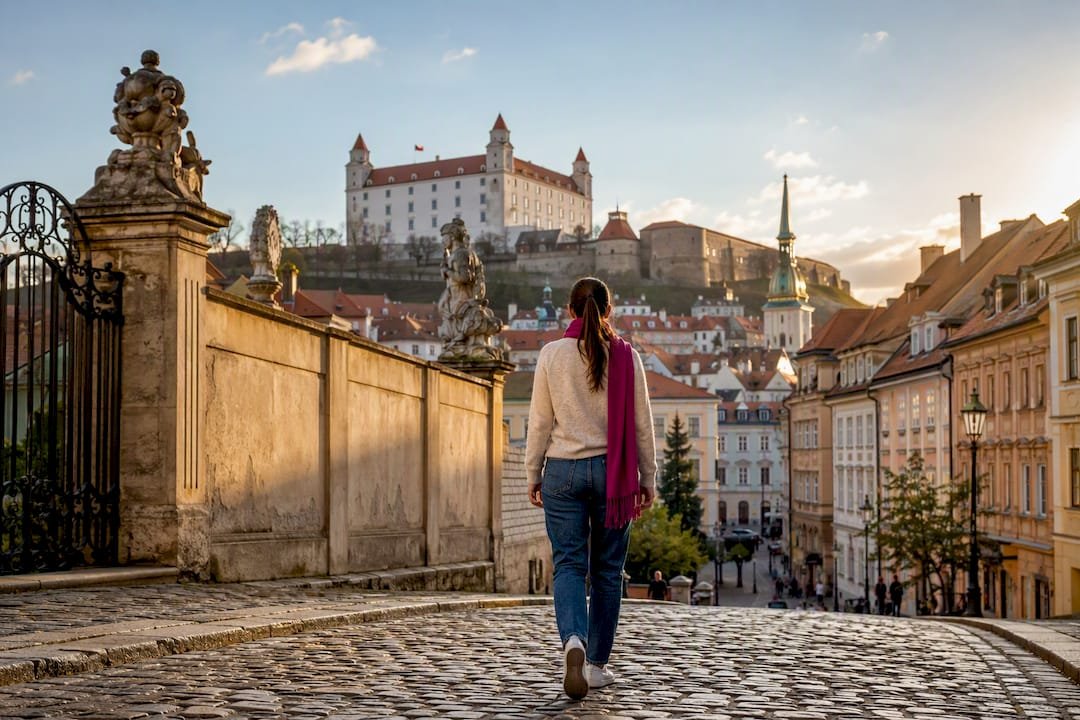
Bratislava rewards an early start. Most sights sit within a 15 minute walk of each other, so you can move through the historic core at a relaxed pace and still have the whole afternoon free for the castle and riverfront.
- 9:00 AM: Start at Main Square (Hlavné námestie). Grab coffee at one of the square’s cafés and take in the Old Town Hall before the tour groups arrive.
- 9:30 AM: Walk to Michael’s Gate. This is the last surviving gate of the medieval fortifications, and the tower’s small museum gives a good overview of the city’s defenses if you want a 20 minute detour.
- 10:15 AM: Find the Čumil statue. The bronze “man at work” peeking out of a manhole cover is one of the most photographed spots in the city and takes two minutes to see, but it anchors a good stretch of boutique shopping streets around it.
- 10:45 AM: Visit St. Martin’s Cathedral. The former coronation church of the Kingdom of Hungary is free to enter for a quick look, or budget around 30 minutes with the small entry fee for the interior exhibits.
- 12:00 PM: Lunch break in the Old Town. A sit-down meal at a mid-range restaurant here runs roughly €10 to €18 per person.
- 1:00 PM: Head up to Bratislava Castle. It’s a steady 15 to 20 minute uphill walk from the Old Town, or a short taxi ride if your legs are tired. The castle grounds and courtyard are free to walk, while the museum inside runs in the range of €10 to €12 for adults. If you’re short on time, skip the museum and just enjoy the terraces. The views over the Danube and into Austria and Hungary on a clear day are worth the climb alone.
- 3:00 PM: Wander the castle gardens and ramparts for another hour, then start making your way back down toward the river.
- 5:30 PM: Walk across the New Bridge to the UFO observation deck. The saucer shaped platform sits roughly 95 meters above the Danube, and it’s the single best sunset vantage point in the city. Entry runs around €14 to €16, and the timing works well if you arrive 30 to 45 minutes before sunset.
- 7:30 PM: Dinner in the Old Town or along the riverfront. Slovak dumplings and a local beer will run you €12 to €20 depending on how touristy the spot is.
Pro Tip: Buy your castle and UFO tickets online the night before if you can. Lines form fast on weekends between May and September, and losing 30 minutes to a ticket queue is 30 minutes you won’t get back on a tight schedule.
Day 2: Devín Castle and Small Carpathians Wine Country
Day two splits nicely into a morning at Devín and an afternoon that swings toward either wine country or a more urban, modern side of Bratislava. Either combination keeps the day at a manageable pace without a single long transfer.
- Getting to Devín: Take bus 29 from Most SNP (the bridge near the castle) directly to Devín. The ride takes about 20 to 25 minutes and costs the same as a standard city transit ticket.
- At the castle: Devín’s ruins sit on a dramatic bluff where the Danube meets the Morava River, near the border with Austria. Entry runs around a small fee for adults, and most visitors spend 90 minutes to two hours exploring the ruins and the river viewpoints.
- Winery option: If wine is more your speed than a second castle, head to Pezinok or Modra in the Small Carpathians, both roughly 30 to 40 minutes from Bratislava by bus or car. Tastings at small family wineries typically run €10 to €20 for a flight of four to six pours, and the rolling vineyard landscape is a genuine change of pace from the city.
- Modern Bratislava option: If you’d rather stay closer, Eurovea’s riverside promenade and shopping complex gives you a look at the city’s newer development, plus a good range of lunch spots.
- Combining the two: Devín in the morning, back to Bratislava by early afternoon, then a taxi or rental car out to Pezinok for a late afternoon tasting works well if you don’t mind a slightly fuller day.
- Getting back: A public transport day ticket covers your bus rides to Devín and back for a flat fee, while a taxi from Pezinok back into the city runs roughly €25 to €35 depending on traffic.
- Evening: Save energy for a relaxed dinner. After two full days of walking, this is a good night to pick a restaurant close to your accommodation rather than crossing town again.
Independent travelers weighing whether to rent a car for this stretch should know that a vehicle gives real flexibility for reaching rural castles like Orava, Bojnice, or Spiš more efficiently than public transit allows, though for the Devín and wine country loop alone, buses and taxis cover you just fine.
Day 3: High Tatras Long Day vs. a Relaxed Spa and Wine Day
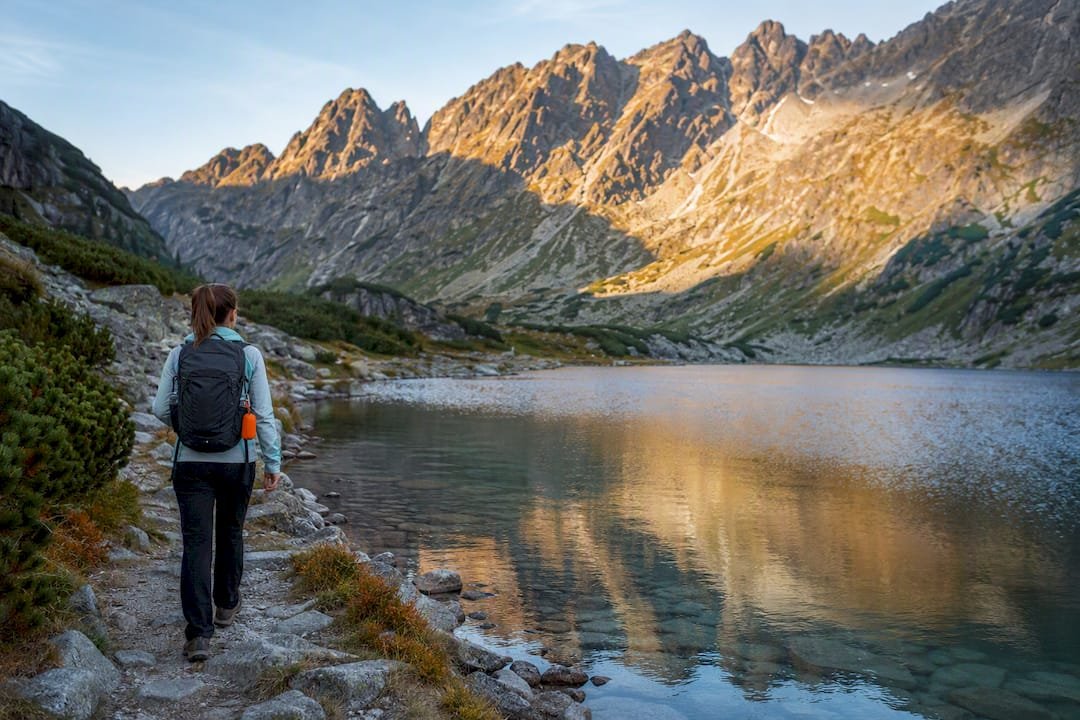
This is the day where your itinerary really forks, and the right call depends on your energy level, the season, and how much you value mountain scenery over a slower pace.
Option A: The High Tatras long day
- 6:00 AM to 6:30 AM: Catch the earliest direct or one-change train from Bratislava to Poprad-Tatry. The ride takes roughly four hours one way, which is the single biggest logistics factor in this option. Skipping the earliest departure can cost you an hour of daylight at the other end.
- 10:30 AM: Arrive in Poprad-Tatry and transfer to the electric railway (TEŽ) heading up to Štrbské Pleso. This narrow gauge line climbs into the mountains in about 45 minutes and is a scenic ride in its own right.
- 11:15 AM: Arrive at Štrbské Pleso. Walk the lake loop, which takes 45 minutes to an hour at an easy pace, and take in the glacial lake framed by the High Tatras peaks.
- 12:30 PM: Lunch at one of the lakeside restaurants, then decide whether to ride a chairlift for elevated views or simply extend your walk into the surrounding trails.
- 2:30 PM: Start heading back toward Poprad-Tatry to catch a mid-afternoon train, giving yourself buffer room in case of delays.
- 6:30 PM to 7:00 PM: Arrive back in Bratislava, tired but with a full day of mountain scenery behind you.
This option only works if you’re comfortable with roughly eight hours of round-trip travel for around four hours on the ground. It’s the right call if mountains are the whole reason you’re visiting Slovakia, but it’s a hard pass for anyone who dislikes long train days.
Option B: Spa and wine, relaxed pace
- 9:30 AM: Head to a thermal spa complex within easy reach of Bratislava (several sit within 30 to 45 minutes of the city). Day entry typically runs €15 to €25.
- 12:30 PM: Lunch near the spa, then a slow afternoon back toward the Small Carpathians for a second, more leisurely wine tasting loop if you didn’t fully cover it on Day 2.
- 3:00 PM to 5:00 PM: Visit one or two more family wineries, spending closer to an hour at each rather than rushing.
- 6:00 PM: Return to Bratislava for a final dinner, with the whole day covering under two hours of total transport time.
If you do choose the mountains, check trail conditions first. Some Slovak Paradise ladders and higher mountain routes are best used from late spring through early autumn, and conditions can shift fast at elevation even outside winter. Confirm cable car and trail status before you commit to the early train.
Transport, Timing, and Budget for a 3-Day Trip
Getting the logistics right on a three-day trip matters more than almost anything else on this list, because every hour lost to transit is an hour you don’t get back.
- Airport to city center: Bus 61 runs from Bratislava Airport into the city center for a few euros and takes about 25 minutes. A taxi covers the same distance in roughly 15 to 20 minutes for around €15 to €25.
- City transport: A single Bratislava transit ticket costs a small flat fare, and a day pass is worth buying if you’re making more than two or three trips, which you will be on Day 2’s Devín run.
- Intercity trains: The Bratislava to Poprad-Tatry route is the backbone of the High Tatras option, and advance tickets on Slovak Railways are worth booking once your date is fixed, since fares can rise closer to departure.
- Car rental vs. trains: A rental car makes sense if your three days lean toward rural castles rather than the Bratislava and Tatras combination, since driving cuts transfer times to places like Orava or Bojnice that trains reach only indirectly.
- Where to stay: Basing yourself in or near the Old Town keeps every Day 1 and Day 2 sight within walking distance. Budget guesthouses run roughly €40 to €60 a night, mid-range hotels sit around €70 to €120, and boutique or four-star properties push past €150.
- Cash and cards: Cards are widely accepted in Bratislava restaurants and shops, but carry some cash for smaller wineries, rural castle ticket booths, and Devín’s entry counter, where card readers aren’t always reliable.
Statistic to plan around: daily spending on this kind of trip commonly lands between €60 and €120 per person, a range wide enough that your choice between the Tatras day and the spa day alone can swing your total budget by €30 or more.
What to Book Ahead and What to Pack
A few small planning steps prevent the kind of delays that quietly wreck a tight three-day schedule.
Prebook these:
- Bratislava to Poprad-Tatry train tickets, especially if you’re traveling in peak summer months
- Bratislava Castle museum tickets for visits
- Cable car or chairlift tickets at Štrbské Pleso during July and August
- Any guided castle tour that runs on a fixed schedule rather than open access
Pack for both scenarios:
- Layers you can add or remove, since Bratislava in the valley and Štrbské Pleso at altitude can differ by 10 degrees or more
- A light waterproof shell, even in summer
- Comfortable walking shoes for the Old Town’s cobblestones and sturdier boots if the Tatras option is on the table
- A power bank, since a day of train transfers and photos will drain a phone fast
Seasonality shapes which version of Day 3 makes sense. Late spring through early autumn favors the mountains, when trails and the electric railway run full service, while the shoulder months of late fall and winter tilt the decision toward castles and wine, since some mountain routes and facilities scale back or close outside the warmer months.
Pro Tip: If you’re doing the High Tatras day, set two alarms for your train. Missing the earliest departure doesn’t just cost you an hour. It can cost you the entire lake walk, since the return train still leaves on the same fixed schedule regardless of when you arrived.
How Next View Tours Approaches Short Slovakia Itineraries
Short trips fail for one predictable reason: too much time lost to transfers and not enough time actually looking at anything. Next View Tours builds its Slovakia itineraries around a single core principle borrowed from how seasoned trip planners handle any tightly constrained travel window: pick one base, limit the number of long transfers to one per trip, and build the schedule around daylight rather than convenience.
The travelers who get the most out of a short Slovakia visit are the ones who commit early to a single model, either the Bratislava and castle combination or the Bratislava and Tatras combination, rather than trying to squeeze both into three days. A three-day window can comfortably support one big day trip. Trying to fit two turns every day into a transit slog.
A typical private or small-group itinerary around Bratislava might include two nights in the Old Town, a full day covering the castle and river views, a half-day at Devín paired with a Small Carpathians wine stop, and a final day left open for either the Tatras or a slower pace, depending on stamina and the weather forecast. The travelers who ask for changes almost always want more time in one place, never less.
Choosing Where to Stay for Your 3-Day Base
Your accommodation choice does more than set your comfort level. It reshapes your entire itinerary’s walking distances and transfer times. Staying inside or right at the edge of Bratislava’s Old Town means Day 1 requires almost no transit at all, since the castle, cathedral, and UFO Bridge sit within a 20 minute walking radius of most hotels there.
Basing yourself further out, near the main train station or in a quieter residential district, saves money on nightly rates but adds 10 to 15 minutes of tram or bus time to every single outing, which adds up over three packed days. For travelers prioritizing the High Tatras option on Day 3, staying near Bratislava’s main station shaves a few minutes off your early morning train departure, a genuinely useful trade if your train leaves before 6:30 AM.
Pairing your hotel choice with a nearby dinner spot each night, rather than trekking across town after a full day of sightseeing, is a small habit that makes a noticeable difference on multi-day trips where fatigue compounds fast. If you’re set on the wine country stop, a base slightly toward the eastern edge of the Old Town cuts a few minutes off your Pezinok or Modra transfer, though the difference is marginal enough that it shouldn’t override your preference for being close to the castle and cathedral.
What Three Days in Slovakia Actually Costs, Day by Day
Breaking your budget down by category makes it far easier to spot where your money will actually go, rather than guessing at a single lump figure.
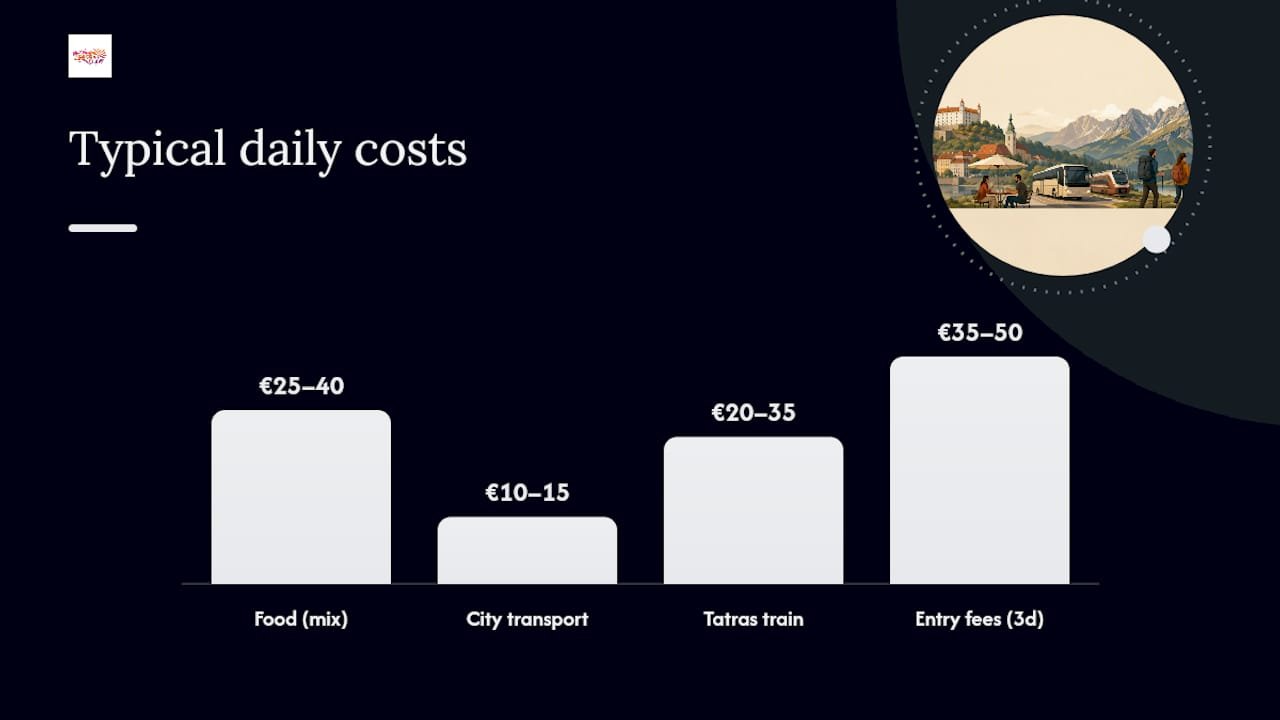
Food: Expect €25 to €40 per day if you mix casual lunches with one sit-down dinner. Old Town restaurants near major sights charge a premium, while spots two or three streets back often run 20% cheaper for the same quality.
Transport: Budget €10 to €15 per day for city buses, trams, and the Devín bus combined. The High Tatras day is the outlier, where round-trip train fare alone can run €20 to €35 depending on how far ahead you book.
Entry fees: Bratislava Castle grounds are free, but the museum, UFO Bridge, Devín Castle, and any wine tastings add up to roughly €35 to €50 across the three days if you do most of the recommended stops.
Put together, most travelers following this plan land in the €60 to €120 daily range cited by other Slovakia guides, with the Tatras day pushing toward the higher end and the spa and wine alternative sitting comfortably in the middle.
Alternative Plans for Different Kinds of Travelers
Not every traveler wants the same balance of city, castle, and mountain, so here’s how to adjust the core plan without breaking its logic.
Budget travelers: Skip the High Tatras day entirely and replace it with the spa and wine option, which cuts transport costs by more than half. Stick to bus travel over taxis for every leg, and choose a guesthouse over a hotel to bring your nightly rate down toward €40.
Comfort seekers: Add a private driver for Day 2’s Devín and wine country loop instead of relying on buses and taxis separately, and consider a hotel with a spa on-site so Day 3 requires no additional transfer at all.
Nature lovers: Commit fully to the High Tatras option and consider extending your stay by a half day if your schedule allows it, since four hours each way to Poprad-Tatry is a heavy price to pay for a single afternoon at the lake.
Culture seekers: Swap the Tatras day for a deeper dive into Bratislava’s museums and a second castle, such as adding Bojnice or Orava if you have a rental car, since these medieval fortresses rank among the country’s most visited sites.
Slovak Dishes Worth Building Your Meals Around
Slovak cuisine leans hearty, and three days is enough time to work through most of the dishes that define it without repeating a single meal.
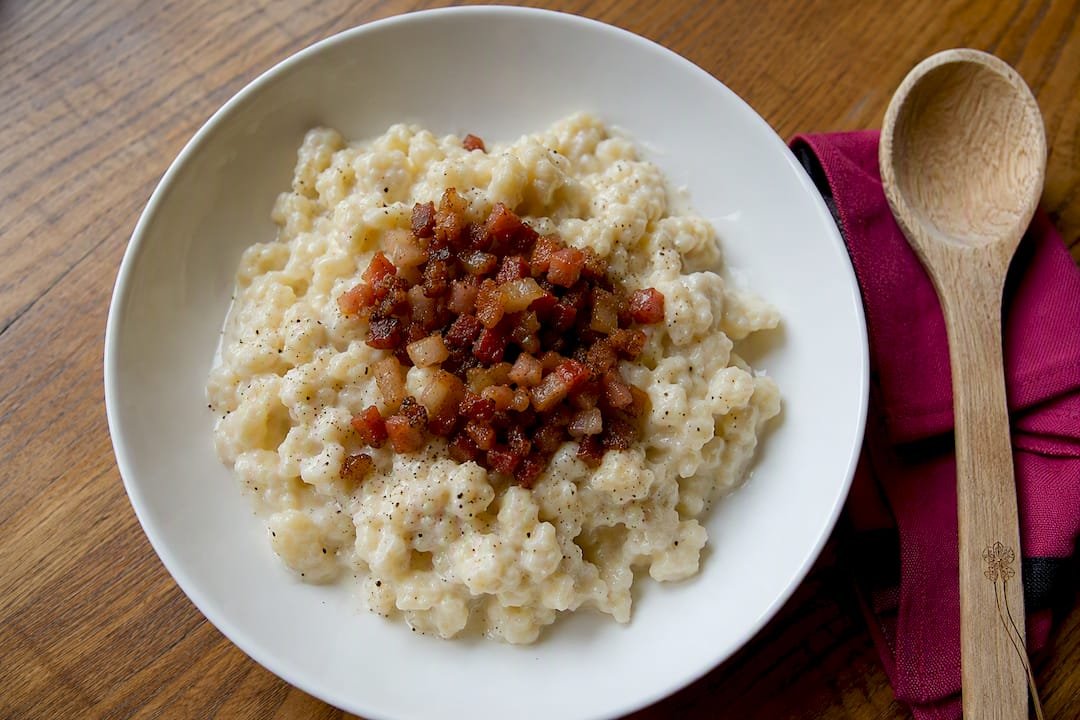
Bryndzové halušky is the dish to order first: small potato dumplings tossed in a soft sheep’s cheese called bryndza, usually topped with crispy bacon bits. Most Old Town restaurants serve a version of it for €8 to €12.
Kapustnica, a sour cabbage soup with smoked meat and sometimes mushrooms, shows up on nearly every traditional menu and makes a good starter before a heavier main.
Guláš here differs slightly from its Hungarian cousin, tending toward a thicker stew served with bread dumplings rather than noodles, and it’s a reliable choice on a cold evening after a long day outdoors.
For dessert, look for lokše, thin potato pancakes often filled with poppy seed paste or goose fat, depending on whether you’re ordering something sweet or savory. Pair any of these with a glass of the Small Carpathians wine you tasted on Day 2, since several Old Town restaurants stock the same regional producers you’ll visit in Pezinok or Modra.
Our Take: Pick One Model and Commit to It
The biggest mistake independent travelers make with a three-day Slovakia trip isn’t choosing the wrong sights. It’s refusing to choose a single model and trying to blend both. A Bratislava base with one big day trip works. A scattered plan hitting Bratislava, a rural castle, and the Tatras in the same three days almost never does, because the math on transfer time simply doesn’t allow it.
Conventional advice tends to undersell how much a four hour train ride actually costs you in usable daylight. Guides list the Tatras as a bullet point without stressing that it consumes an entire day’s schedule around it. That’s not a reason to skip the mountains. It’s a reason to be honest with yourself about whether you’re a mountain person or a castle person before you book anything.
If there’s one thing to prioritize first, it’s this: fix your Day 3 decision before you book trains or a car, since that single choice determines almost everything else about how the rest of your trip gets built.
— Next
Let Next View Tours Handle the Logistics for You
Everything above works as a self-guided plan, but the parts that eat time (train transfers, castle ticket lines, figuring out which bus goes where) are exactly what a guided option removes from your plate. Some travelers prefer to use a local guide to handle timing and tickets, so their three days go entirely toward sightseeing instead of logistics.

For travelers who want the Bratislava and Devín combination without managing bus 29 or ticket counters themselves, a private tour built around your exact pace is worth a look, especially if you’re traveling with family or a small group that doesn’t want to split up over transit decisions. If you’re leaning toward the High Tatras and want the four hour train transfer handled for you, browse the full range of trip types to see which format fits your Day 3 decision. Either way, get in touch to check dates and pricing for your specific three days.
Sources
A few official sources are worth bookmarking before you finalize any bookings, since opening hours and seasonal access can shift year to year.
Checking these directly, rather than relying on a single blog’s snapshot, is the safest way to confirm a site or trail is actually open on the days you’re traveling.


Comments are closed