
 Uncategorized
Kutná Hora is the best quick day trip from Prague, a direct train delivering you to St. Barbara’s Cathedral and the Sedlec Ossuary in under 70 minutes. Český Krumlov remains the most iconic full-day choice, though its distance rewards travelers who can spare a night. Karlštejn Castle, Terezín, and Plzeň round out the strongest options for train-friendly half or full days, each trading travel time for a different kind of payoff. If logistics feel like the hardest part, a guided or private tour strips out the guesswork entirely.
TL;DR:
- Kutná Hora offers a quick 55 to 70-minute train ride with walkable UNESCO sites, making it ideal for a cultural day trip with minimal transit time.
- Český Krumlov’s nearly three-hour journey each way makes it better suited for an overnight stay rather than a rushed day trip.
- Longer trips like Karlovy Vary and Bohemian Switzerland require about two hours or more of travel each way, fitting best into full-day outings with prior planning.
- Guided or private tours remove logistical guesswork, with private options starting around $80 to $150 per person, especially helpful for cross-border trips like Dresden.
- Check transportation schedules and entry policies in advance to avoid missed connections, especially during peak seasons or at sites with timed entries.
Table of Contents
- Top Day Trips From Prague, Ranked by What They Deliver
- Travel Times, Transport, and Cost Ranges Compared
- How to Pick the Right Day Trip for Your Trip
- Timing, Tickets, and Transport: Getting the Details Right
- Where Next View Tours Fits Into Your Planning
- What Attractions Actually Cost and When They’re Open
- Accessibility Notes for Travelers With Mobility Needs
- Where to Eat Along the Way
- If You Only Have One Day, Here’s the Honest Pick
- Book a Day Trip That Fits Your Schedule, Not the Other Way Around
- Sources
- FAQ
Top Day Trips From Prague, Ranked by What They Deliver
Each of these destinations rewards a different kind of traveler. Some are built for speed, others for depth, and a few only make sense if you treat them as an overnight rather than a rushed round trip.
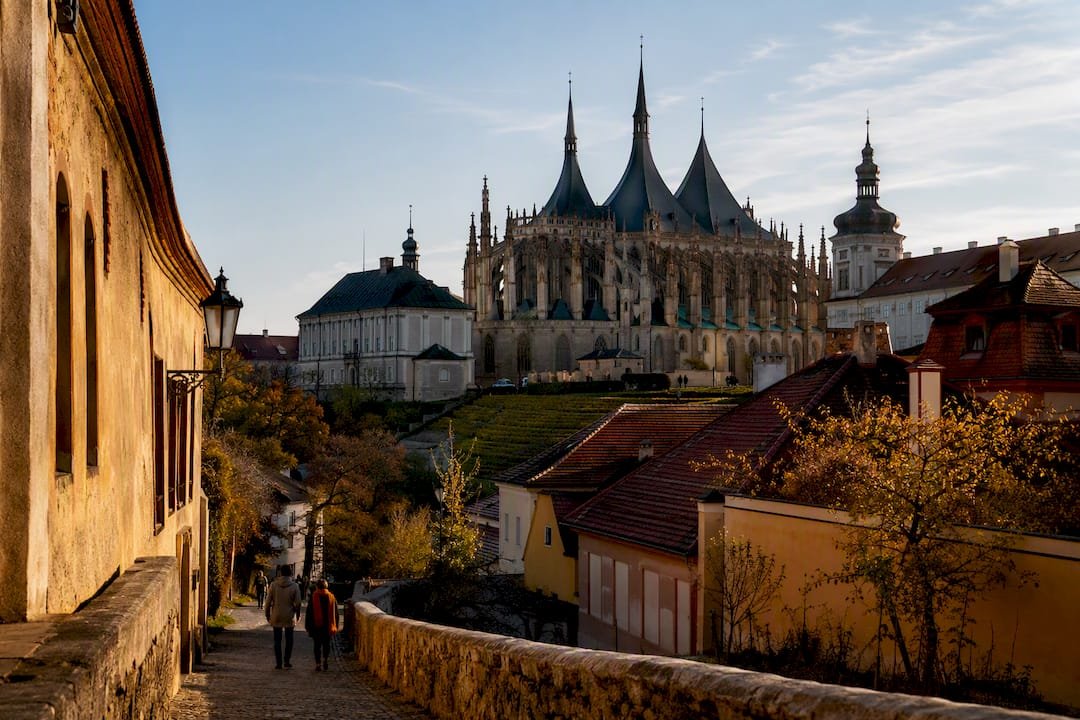
Kutná Hora is the gold standard for a quick, satisfying escape from the city. The direct train takes roughly 55 to 70 minutes, dropping you within walking distance of a walkable historic core, the bone-lined Sedlec Ossuary, and the Gothic spires of St. Barbara’s Cathedral. Budget travelers can do the round trip plus entry fees for around $20 to $35; guided small-group tours typically run $40 to $70. It’s the best pick for anyone who wants a full cultural experience without sacrificing a whole day to transit.
Český Krumlov is the town everyone puts on their Czech Republic wish list, and for good reason. Its cobblestone streets, castle complex, and river bend are genuinely unmatched. But the honest math is this: travel each way runs about two to nearly three hours by bus or train, and direct return services are limited enough that a rushed day trip can mean five or more hours on transport just to get three or four hours in town. Many travelers find it works far better as an overnight stop.
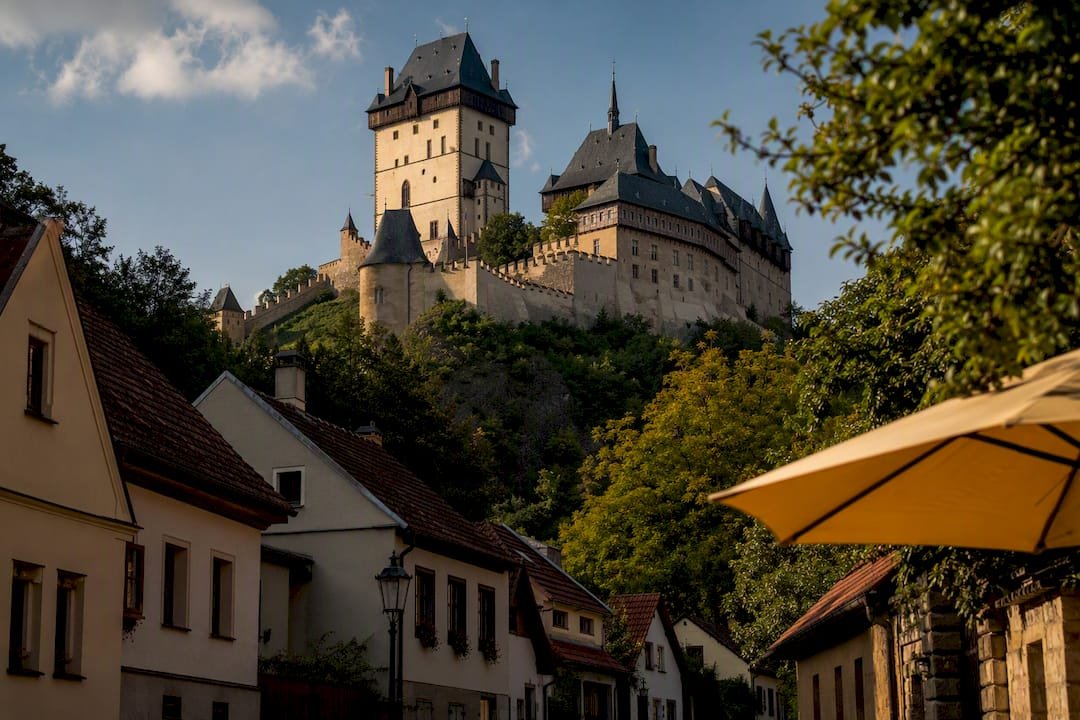
Karlštejn Castle solves the “I want a castle without the commitment” problem. The train ride is about 40 minutes, and the hilltop fortress, built to guard the Bohemian crown jewels, makes for a satisfying half-day loop. You can combine it with lunch in the village below and still be back in Prague by mid-afternoon.
Terezín is not a lighthearted outing, but it’s one of the most significant. The bus ride takes about 55 minutes, and the former Gestapo prison and Jewish ghetto site demands a serious, reflective visit rather than a casual stroll. It’s best suited to travelers with a genuine interest in 20th-century history, and a guided tour adds context that’s hard to piece together from placards alone.
Plzeň earns its spot for beer lovers and industrial history buffs. The train takes about 90 minutes and lands you near the Pilsner Urquell Brewery, where tours walk you through the original 19th-century brewing process and underground cellars. Pair it with the city’s Gothic cathedral and you have a full, satisfying day.
Karlovy Vary is the spa town that photographs like a fairytale, with colonnades, hot mineral springs, and Belle Époque facades lining the river. The bus takes around two hours each way, making it a legitimate full-day commitment. Our Karlovy Vary tours from Prague guide breaks down the best ways to structure the visit so you’re not rushing the spa experience.
Bohemian Switzerland, home to the dramatic sandstone arch Pravčická brána, is the pick for travelers who want scenery over architecture. Getting there takes about two hours, and reaching the main viewpoints requires a moderate hike, so it suits active visitors more than those looking for a leisurely stroll.
České Budějovice rarely tops anyone’s list, but it deserves consideration if you’re chaining destinations. It sits about two and a half hours from Prague by train and offers a handsome main square and the original Budweiser Budvar brewery, often combined with a Český Krumlov overnight itinerary.
Dresden is the cross-border wildcard. The train takes two to two and a half hours, crossing into Germany, so bring a passport even though there’s typically no formal border check. Dresden’s rebuilt Frauenkirche and Zwinger Palace complex make for a strikingly different day, trading Czech small-town charm for grand German cityscape.
Konopiště Castle, closer to Prague at about an hour by train and connecting bus, offers a quieter alternative to Karlštejn with extensive English-style gardens and the former residence of Archduke Franz Ferdinand.
Quick reference for planning:
- Under 1 hour each way: Kutná Hora, Karlštejn, Konopiště
- 1 to 1.5 hours each way: Terezín, Plzeň
- 2 hours or more each way: Karlovy Vary, Bohemian Switzerland, Dresden, České Budějovice
- Best treated as an overnight: Český Krumlov
Travel Times, Transport, and Cost Ranges Compared
Matching your available time to the right destination comes down to three numbers: how long you’ll spend in transit, what mode gets you there, and what you’ll realistically pay.
Direct trains handle most of the short trips well. Kutná Hora and Karlštejn both run on frequent regional lines with minimal transfer hassle. Longer trips like Karlovy Vary and Bohemian Switzerland lean more heavily on coach or bus service, which tends to be comfortable but less frequent than trains, so checking the timetable before you leave matters more.
| Destination | Travel time (one way) | Best transport | DIY cost (per person) | Guided tour cost | Trip length |
|---|---|---|---|---|---|
| Kutná Hora | 55–70 min | Direct train | $20 to $35 | around $40 to $70 | Half day |
| Karlštejn | ~40 min | Direct train | $15 to $55 | $35 to $70 | Half day |
| Terezín | ~55 min | Bus | $15 to $55 | $40 to $70 | Half day |
| Plzeň | ~90 min | Train | $15 to $55 | $35 to $95 | Full day |
| Karlovy Vary | ~2 hrs | Bus | $20–$35 | $55–$90 | Full day |
| Bohemian Switzerland | ~2 hrs | Train + hike | $20–$35 | $80 to $150 or more | Full day |
| Dresden | 2–2.5 hrs | Cross-border train | $35 to $70 | $80 to $150 or more | Full day |
| Český Krumlov | 2–2.75 hrs | Bus or train | around $20 to $35 | typically $90 or more, depending on options | Overnight recommended |
DIY costs by public transport generally run $15 to $55 depending on distance and entry fees, while guided small-group tours land between $35 and $95. Private tours, which include a dedicated driver or guide and flexible timing, typically start around $80 to $150 or more per person, scaling with group size and distance.
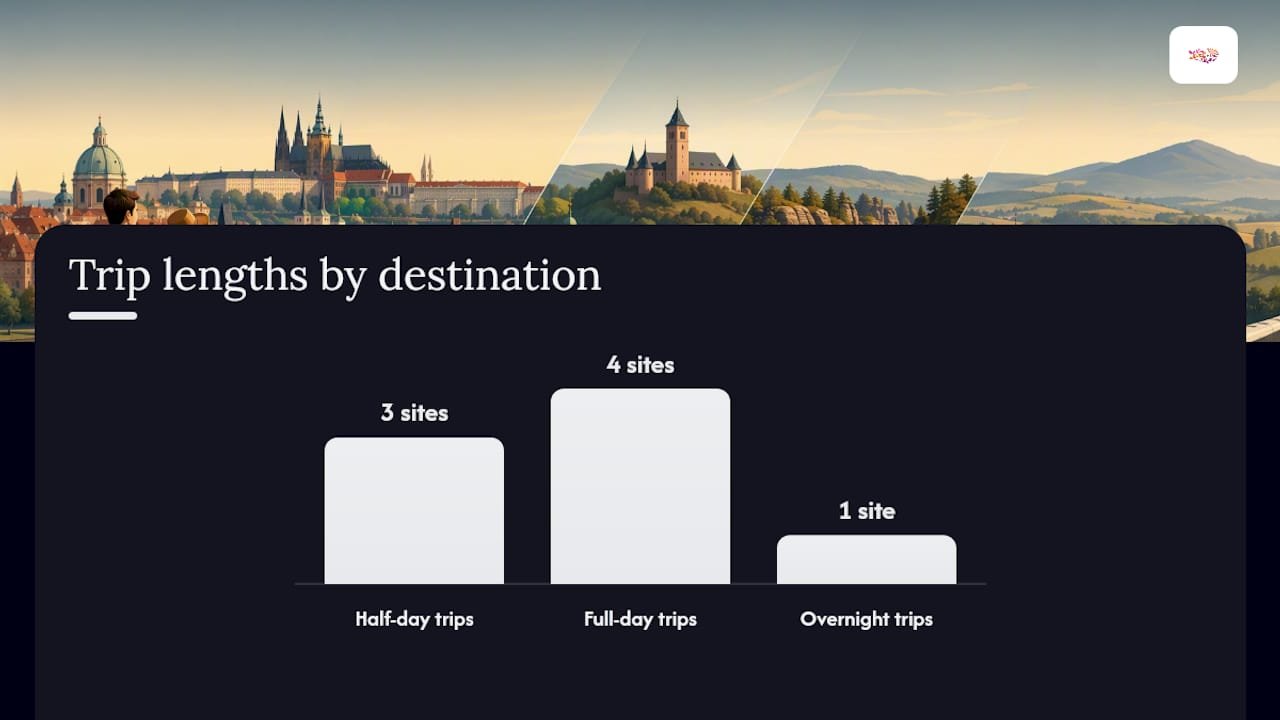
Half-day trips (Kutná Hora, Karlštejn, Konopiště) leave room to explore Prague on the same day. Full-day trips (Plzeň, Karlovy Vary, Dresden, Bohemian Switzerland) consume most of your daylight. Český Krumlov, realistically, asks for a night in town if you want to see the castle, wander the old town, and not spend your evening on a bus.
How to Pick the Right Day Trip for Your Trip
Choosing well comes down to matching the destination to how much time you actually have and what kind of experience you’re chasing.
- Start with your available hours. If you have a single free morning, Kutná Hora or Karlštejn are your realistic options. A full day opens up Plzeň, Karlovy Vary, or Bohemian Switzerland.
- Pick your interest category. History buffs lean toward Terezín and Kutná Hora; castle enthusiasts want Karlštejn or Konopiště; nature lovers should target Bohemian Switzerland; beer and spa fans should look at Plzeň and Karlovy Vary respectively.
- Weigh the physical demands. Bohemian Switzerland involves real hiking. Karlštejn’s castle sits atop a steep hill. Kutná Hora and Karlovy Vary are comparatively flat and walkable.
- Check your tolerance for long returns. A four-hour round trip to Karlovy Vary feels very different at the end of a long day than a 90-minute hop to Kutná Hora.
- Consider whether you want guided commentary. Terezín especially benefits from a guide who can supply historical context that plaques alone won’t cover.
Before booking, watch for a few common red flags: tight return train connections that leave no buffer if you’re running late, sold-out castle entry slots during peak summer months, unexpected Monday closures at many Czech museums and castles, and reduced winter hours at outdoor sites like Bohemian Switzerland’s main trails.
Pro Tip: Check whether a castle requires a guided-tour-only entry policy, which is common at Karlštejn. Showing up without a reserved time slot can mean waiting hours or missing the interior entirely.
Timing, Tickets, and Transport: Getting the Details Right
The single biggest mistake travelers make on a day trip is misjudging the return trip. Trains and buses to smaller Czech towns run less frequently in the evening, and missing the last direct connection can mean an expensive taxi or an overnight you didn’t plan for.
- Leave Prague by mid-morning at the latest for full-day destinations like Plzeň or Karlovy Vary.
- Confirm your final return departure time before you leave the station, not after you’ve finished sightseeing.
- Book castle and museum tickets online in advance during July and August, when Karlštejn and Kutná Hora see the heaviest crowds.
- Understand the difference between operators: RegioJet and České dray (Czech Railways) both run the Kutná Hora and Plzeň routes, while Terezín and Karlovy Vary rely mainly on coach services.
- Reserve seats for longer or cross-border routes, including Dresden and direct Český Krumlov trains, especially in high season, since seat reservations matter more on intercity and cross-border services than on short regional hops.
- Pack layered clothing and sturdy shoes for Bohemian Switzerland’s trails, and bring a light jacket for Karlovy Vary’s cooler mountain air even in summer.
- Double check which station you need. Kutná Hora has two separate stations, and arriving at the wrong one adds an unplanned shuttle ride to your morning.
Where Next View Tours Fits Into Your Planning
Some tour operators run private and small-group day trips departing from Prague, designed to simplify the planning: timetable checking, seat reservations, and station details are handled to let travelers focus on sightseeing instead of logistics.
Beyond individual excursions, Next View Tours maintains planning resources built for U.S. travelers navigating the Czech Republic for the first time, including a complete guide to booking day trips from Prague and a dedicated Prague destination page outlining available trip formats. Our guides handle logistics daily across these same routes, from Kutná Hora’s ossuary crowds to Karlovy Vary’s spa colonnades, and that repetition is what turns a good itinerary into a smooth one. Specific guide credentials and traveler feedback for individual departures are available on each trip’s booking page.
What Attractions Actually Cost and When They’re Open
Entry fees and hours vary enough across these sites that showing up without checking in advance can derail your schedule.
Kutná Hora’s Sedlec Ossuary and St. Barbara’s Cathedral each charge separate modest entry fees, typically in the range of a few hundred Czech koruna per site, and both generally close on Mondays outside peak season. Karlštejn Castle operates on a timed-entry, guided-tour-only basis for its interior, and hours shrink considerably from November through March, with some tour routes closed entirely in winter. Terezín’s Memorial complex charges a combined entry fee covering the Small Fortress and main museum, open daily year-round with slightly reduced winter hours.
Plzeň’s Pilsner Urquell Brewery runs scheduled tour times throughout the day rather than free-roam access, so reserving a slot ahead of arrival avoids a long wait. Karlovy Vary’s main colonnades and hot springs are free to walk through, though specific spa treatments and the Diana Lookout Tower funicular charge separately. Bohemian Switzerland’s national park trails are free, but the boat ride through the Edmund Gorge and any ranger-led programs carry their own fees and seasonal schedules, typically running April through October.
Across nearly every site, arriving right at opening avoids both the worst crowds and the risk of afternoon tour slots selling out, particularly at Karlštejn in summer.
Accessibility Notes for Travelers With Mobility Needs
Terrain varies dramatically across these destinations, and it’s worth knowing before you book rather than after you arrive.
Kutná Hora’s town center and cathedral grounds are largely flat and manageable, though the ossuary’s interior has some uneven flooring and steps. Karlštejn Castle is the most physically demanding of the popular castles: the walk up from the train station to the entrance is a steep uphill climb of about 15 to 20 minutes, and the castle interior itself involves stairs with no elevator access. Konopiště, by contrast, sits on flatter ground with more accessible garden paths, making it a gentler alternative for travelers who want a castle experience without the hill climb.
Terezín’s memorial sites are mostly flat and paved, suitable for wheelchairs and travelers with limited mobility, though some barracks interiors have narrow doorways. Karlovy Vary’s colonnades and riverside promenades are flat and stroller or wheelchair friendly, though reaching some viewpoints requires the funicular rather than stairs, which actually works in favor of travelers with mobility limitations.
Bohemian Switzerland is the one destination on this list genuinely unsuited to mobility challenges. Reaching Pravčická brána requires a moderate uphill hike over uneven natural terrain with no paved alternative route. If dramatic scenery matters more than the hike itself, Karlovy Vary or Kutná Hora deliver a comparably memorable day with far less physical demand.
Where to Eat Along the Way
Food options range from quick bites to sit-down traditional Czech fare, and most of these towns handle day-trippers well.
Kutná Hora’s main square has several traditional Czech restaurants serving goulash and roast duck, plus casual cafes near the ossuary for a faster stop. Karlštejn village, clustered right below the castle, is lined with restaurants and beer gardens that cater specifically to castle visitors, so expect tourist pricing but reliable quality. Terezín has limited dining directly at the memorial site, so most guided tours build in a stop at a nearby restaurant in Litoměřice, a short drive away with a more appealing selection.
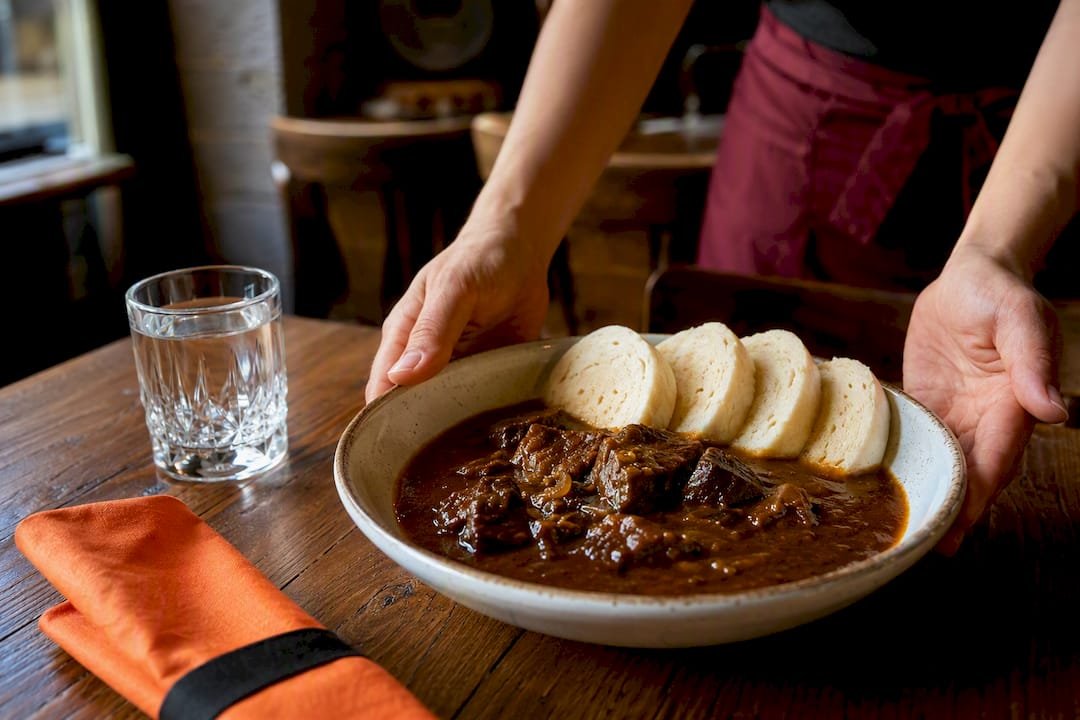
Plzeň rewards a slower lunch, with traditional pubs serving fresh Pilsner Urquell alongside hearty Czech classics like svíčková and fried cheese near the brewery and main square. Karlovy Vary’s colonnade area is dotted with cafes serving the town’s famous wafer-thin Karlovy Vary wafers alongside coffee, plus more substantial spa-town dining along the river. Bohemian Switzerland has minimal food service near the trailheads themselves, so packing snacks and water is genuinely necessary rather than optional. Dresden’s Altmarkt and Neumarkt squares offer a wide range of German dining, a welcome contrast if you’re craving something other than Czech cuisine mid-trip.
If You Only Have One Day, Here’s the Honest Pick
Kutná Hora is the recommendation if you have exactly one free day and want maximum experience for minimum transit. The train frequency is generous, the round trip fits comfortably into a morning departure and evening return, and the combination of Gothic cathedral and the ossuary’s unsettling artistry delivers more per hour than almost anything else on this list.
If your priority shifts toward nature or a change of scenery rather than history, Karlovy Vary is the stronger alternate pick. It costs more time on the road, but the spa town’s colonnades and mineral springs offer a completely different rhythm from Prague’s cobblestones, and travelers on tight European itineraries generally get more value from one well-planned trip than several rushed ones.
— Next
Book a Day Trip That Fits Your Schedule, Not the Other Way Around
Planning transit connections, ticket windows, and castle entry slots across multiple Czech towns eats into the vacation time you actually came for. Some tour agencies offer both private tours for families or couples seeking flexibility and small-group day trips for travelers who prefer a set schedule and a shared guide.

Pricing reflects the format: private tours sit at a premium since you get a dedicated vehicle and guide on your own timeline, while group day trips offer a more budget-friendly middle ground with the same expert commentary. Both formats include transport, so you skip the timetable-checking and seat-reservation steps entirely. If you’re weighing which structure fits your trip, the Trip Types page breaks down private, group, and multi-day formats so you can check available dates and book the one that matches how you actually want to spend your day outside Prague.
Sources
FAQ
What is the best day trip from Prague?
Kutná Hora is generally the best overall pick for a first-time day trip, combining a short direct train ride with two major UNESCO-listed sites in one walkable town.
What are some good day trips I can take from Prague by train?
Kutná Hora (55 to 70 minutes), Karlštejn (about 40 minutes), and Plzeň (about 90 minutes) all run on direct or near-direct train lines, making them the most reliable train-based options.
What countries are easy to visit from Prague on a day trip?
Germany is the most accessible neighboring country, with direct trains to Dresden taking roughly two to two and a half hours, making it a realistic cross-border day trip.
What cities can you visit from Prague in a single day?
Beyond the Czech towns of Kutná Hora, Plzeň, and Karlovy Vary, Dresden in Germany is reachable within a single day thanks to direct rail service, though it requires a passport for the border crossing.
Is Český Krumlov possible as a day trip from Prague?
It’s possible, but travel time of roughly two to nearly three hours each way makes it tight; many travelers find an overnight stay lets them actually enjoy the castle and old town without rushing.


Comments are closed