

 Adventure Tours
Over 38 million american travelers choose group tours every year, making them a popular option for those seeking adventure with less planning stress. The appeal lies in the chance to experience new places while sharing the journey with others and relying on professional guidance. Whether traveling solo or with friends, understanding how group tours work helps travelers make smart choices and enjoy more rewarding trips.
Table of Contents
- What Is A Group Tour Definitively
- Types Of Group Tours Explained
- How Group Tours Operate Logistically
- Key Benefits And Drawbacks
- Costs, Risks And Responsibilities
Key Takeaways
| Point | Details |
|---|---|
| Definition of Group Tours | A group tour is a structured travel experience involving 10 or more individuals traveling together with shared transportation, accommodations, and activities. |
| Types of Group Tours | Group tours can be categorized into independent, hosted, and escorted tours, each offering varying levels of traveler support and flexibility. |
| Benefits and Drawbacks | Group tours provide cost savings and hassle-free planning, but may limit personal flexibility and exploration. |
| Logistical Considerations | Effective group tours require meticulous planning of logistics, including transportation, accommodations, and sightseeing to ensure a seamless experience. |
What Is A Group Tour Definitively
A group tour represents a structured travel experience where multiple individuals journey together under a pre-planned itinerary, sharing transportation, accommodations, and guided activities. According to Law Insider, a group tour is technically defined as a tour attended by 10 or more associated persons, typically organized with a collective purpose and shared logistics.
The concept goes beyond mere numerical grouping. As Sbalta Research explains, a Group Inclusive Tour (GIT) involves a prepaid travel package designed for a specified minimum number of participants traveling as a cohesive unit. These tours often include comprehensive services such as transportation, accommodations, attraction visits, and frequently feature a dedicated travel escort to coordinate group activities and ensure seamless experiences.
Group tours distinguish themselves through several key characteristics:
- Predetermined itinerary with fixed schedules
- Shared transportation methods
- Collective accommodation arrangements
- Professional guide or tour manager
- Standardized pricing for group participation
- Cost-effective travel options compared to individual bookings
Whether you’re a solo traveler seeking connection or a group looking for a structured adventure, home city tours can provide an exciting way to explore destinations with the comfort of organized travel. The group tour model transforms travel from a solitary experience into a collaborative journey, offering both social interaction and professional coordination.

Types Of Group Tours Explained
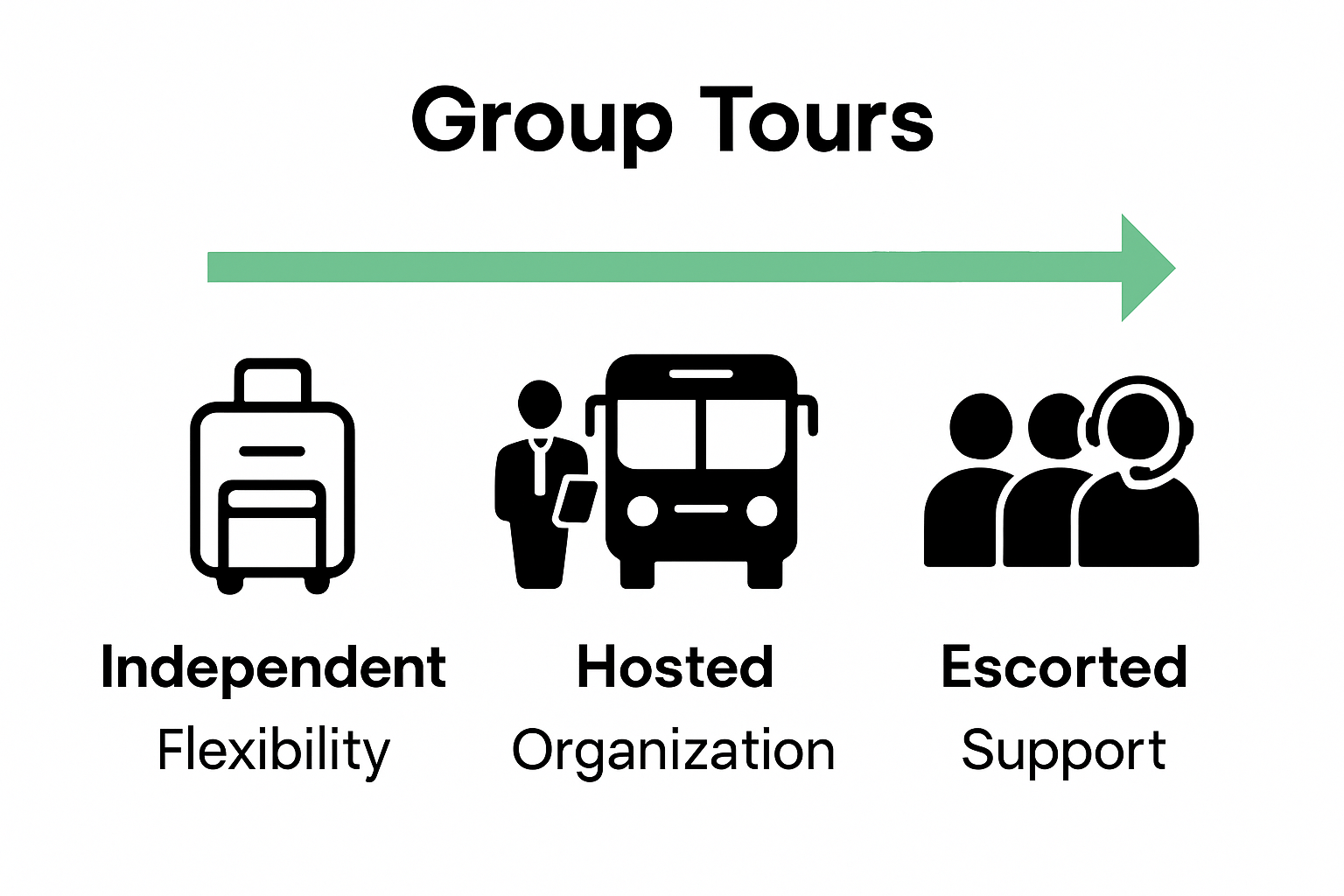
Group tours represent a diverse landscape of travel experiences, each designed to cater to different traveler preferences and needs. According to Sbalta Research, group tours can be fundamentally categorized into three primary types: independent, hosted, and escorted tours, each offering unique characteristics and levels of traveler support.
Independent Tours provide travelers with prepaid packages that include essential arrangements without direct tour company interaction. These tours offer maximum flexibility, allowing participants to explore destinations at their own pace while benefiting from pre-arranged logistics. Hosted Tours take this concept a step further by including ground transportation and accommodations, with a local representative available to provide limited assistance and recommendations.
Escorted Tours represent the most comprehensive group tour experience. As outlined by ITI Research, these tours feature structured programs that typically include:
- Transportation
- Accommodations
- Meals
- Comprehensive sightseeing
- Professional tour director
Furthermore, group tours can be distinguished by participant affiliations. Some tours are designed for affiliated groups with shared interests or organizations, while others welcome non-affiliated travelers seeking social connections and structured travel experiences. For travelers looking to explore new destinations with the convenience of organized travel, home cruise tours offer an exciting way to discover multiple locations with minimal planning stress.
How Group Tours Operate Logistically
Group tours represent intricate travel experiences meticulously planned and executed through complex logistical frameworks. According to Sbalta Research, these tours operate by systematically organizing transportation, accommodations, meals, and sightseeing into a structured program, with escorted tours featuring a dedicated tour director managing services from beginning to end.
Operational Components of group tours involve comprehensive coordination across multiple service sectors. ITI Research highlights that Group Inclusive Tours (GITs) require intricate planning of various elements including:
- Chartered transportation
- Baggage handling
- Entrance fee management
- Tax coordination
- Meal arrangements
- Attraction access
The logistics typically begin months in advance, with tour operators carefully mapping out detailed itineraries, negotiating group rates with hotels and transportation providers, and creating seamless travel experiences. This behind-the-scenes orchestration ensures travelers can focus on enjoying their journey without worrying about complex travel arrangements. Travelers seeking comprehensive travel experiences can explore various tour activities that showcase the intricate planning and execution required to create memorable group travel experiences.
Key Benefits And Drawbacks
Group tours offer a unique travel experience that balances convenience with potential limitations. According to Sbalta Research, these tours provide significant advantages including cost savings through economies of scale, structured itineraries, and the convenience of having all travel arrangements professionally managed.
Benefits of group tours are particularly compelling for travelers seeking hassle-free experiences:
- Significant cost reductions
- Comprehensive travel planning
- Professional logistics management
- Social interaction opportunities
- Access to expert guided experiences
- Reduced individual planning stress
However, the same research highlights notable Drawbacks that potential travelers should carefully consider. ITI Research emphasizes challenges such as maintaining consistent quality, ensuring clear communication, and managing group dynamics. These tours often feature less personal flexibility, fast-paced schedules, and limited individual exploration time. Travelers seeking more personalized experiences might find the structured nature of group tours restrictive. For those interested in balancing group tour convenience with personal preferences, tour services can provide insights into customizable travel options that mitigate traditional group tour limitations.
Costs, Risks And Responsibilities
Group tours involve a complex interplay of financial considerations, potential challenges, and critical operational responsibilities. According to Sbalta Research, the financial landscape of these tours encompasses comprehensive cost elements including transportation, accommodations, meals, and entrance fees, each contributing to the overall tour pricing structure.
Cost Components typically include:
- Base tour price
- Transportation expenses
- Accommodation fees
- Meal arrangements
- Attraction entrance fees
- Potential optional activity costs
- Travel insurance premiums
Risks and Responsibilities are equally critical aspects of group tour experiences. ITI Research emphasizes the importance of maintaining pricing competitiveness while managing potential challenges such as service quality inconsistencies and meeting diverse customer expectations. Tour operators shoulder significant responsibilities including professional management, clear communication, and ensuring customer satisfaction through meticulous planning and responsive service. For travelers seeking detailed insights into managing these complex dynamics, exploring additional tour services can provide valuable context and preparation strategies.
Discover How Group Tours Can Simplify Your European Travel Experience
Planning a group trip can feel overwhelming with so many details to manage like transportation, accommodations, and attractions. This article highlights how group tours provide structured itineraries and professional management to ease these challenges while offering cost-effective and social travel opportunities. If you want to enjoy the benefits of organized travel without the stress, consider exploring our carefully designed City Tour – Next View Tours and Wildlife Tours – Next View Tours that cater to group travelers seeking expert guidance and memorable experiences.
Take control of your next adventure by choosing from a wide range of group tours across Europe with Next View Tours. Visit https://nextviewtours.com today to find the perfect trip that fits your needs and start creating unforgettable memories with confidence and ease.
Frequently Asked Questions
What is a group tour?
A group tour is a structured travel experience involving multiple individuals traveling together under a pre-planned itinerary, which typically includes shared transportation, accommodations, and guided activities.
What are the types of group tours available?
The primary types of group tours are independent tours, hosted tours, and escorted tours. Each type offers different levels of support and flexibility for travelers.
What are the main benefits of going on a group tour?
Group tours offer benefits such as cost savings, structured itineraries, professional logistics management, social interaction opportunities, and reduced individual planning stress.
What should I consider before joining a group tour?
Before joining a group tour, consider the potential drawbacks, such as less personal flexibility, fast-paced schedules, and limited exploration time. Ensure the tour meets your travel style and preferences.


Comments are closed