
 Uncategorized
Go to Széchenyi for the postcard views and iconic outdoor pools, add Rudas if you want atmosphere and history, and keep Lukács in mind if you’d rather soak where locals actually go. Book tickets online before you arrive, pack a swimsuit and towel since rentals are increasingly unreliable, and budget 1.5 to 2 hours per visit. One note before you plan anything: Gellért Thermal Bath is closed for renovation, so leave it off your itinerary entirely.
TL;DR:
- Book tickets online in advance, especially for Széchenyi and Rudas, to secure entry and access special sessions like night bathing or Sparties.
- Prefer cabins over lockers for changing, as they offer more privacy and reduce stress, particularly during busy hours or on crowded days.
- Choose Széchenyi for photo opportunities and large outdoor pools, Rudas for authentic Ottoman ambiance and rooftop views, and Lukács for local, medicinal experiences.
- Plan visits for early mornings or evenings to avoid crowds, with 1.5 to 2 hours being an optimal duration for soaking and relaxing.
- Pack swimsuit, towel, flip-flops, waterproof bag, minimal toiletries, and cash or card, as towel rentals and on-site amenities are limited or variable across venues.
Table of Contents
- Best Budapest Thermal Baths by Travel Goal
- What Happens When You Walk Into a Thermal Bath?
- Which Budapest Baths Should You Actually Visit?
- How Much Do Budapest Thermal Baths Cost, and How Do You Book Them?
- What to Pack and How to Behave at a Budapest Bath
- How Long Should You Stay, and When’s the Best Time to Go?
- Why Rudas Is the Bath to Book for Atmosphere
- How Do You Choose the Right Bath for Your Trip?
- Getting to Each Bath From Central Budapest
- Eating and Drinking In and Around the Baths
- Are the Baths Good for Families and Kids?
- Are Budapest Baths Accessible for Limited Mobility?
- How a Guided Visit Changes the Bath Experience
- Another Option: A Guided Budapest Experience
- Sources
- FAQ
Best Budapest Thermal Baths by Travel Goal
Every bath in this city has a personality, and matching that personality to your trip matters more than chasing a “best of” list. Here’s a snapshot to help you choose fast, organized by what you’re actually trying to get out of the visit.
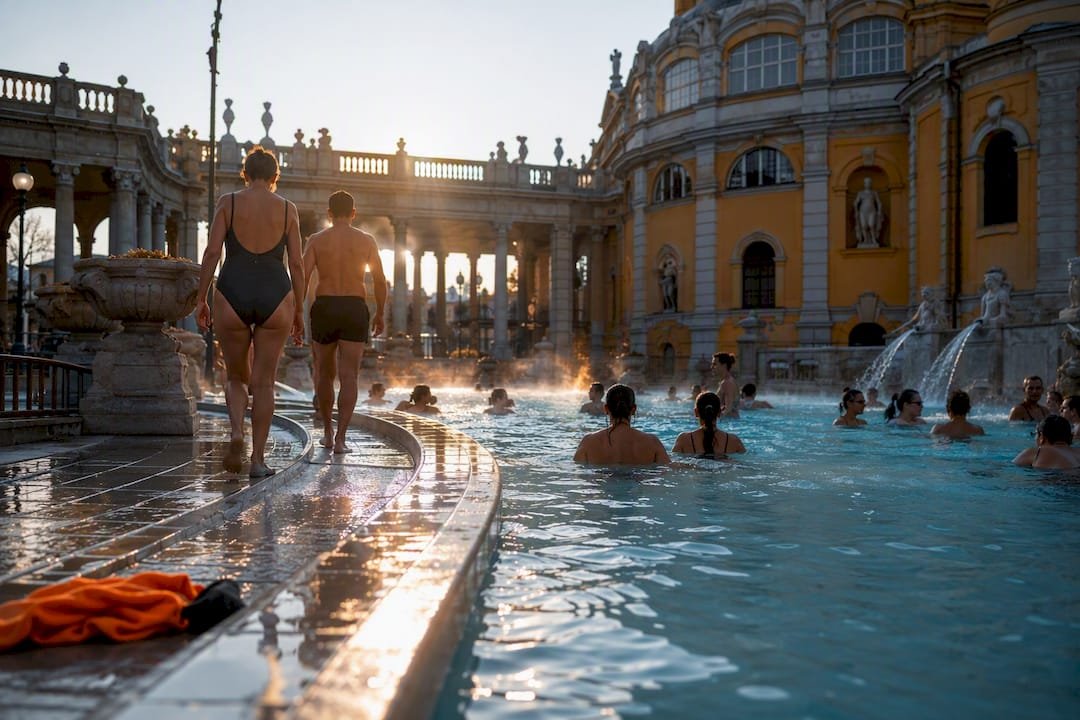
- Best for photos and first-timers: Széchenyi. The bright yellow Neo-Baroque buildings and steaming outdoor pools are the image most people picture when they think of a Budapest spa experience, and the scale (15 pools total) means you won’t feel rushed.
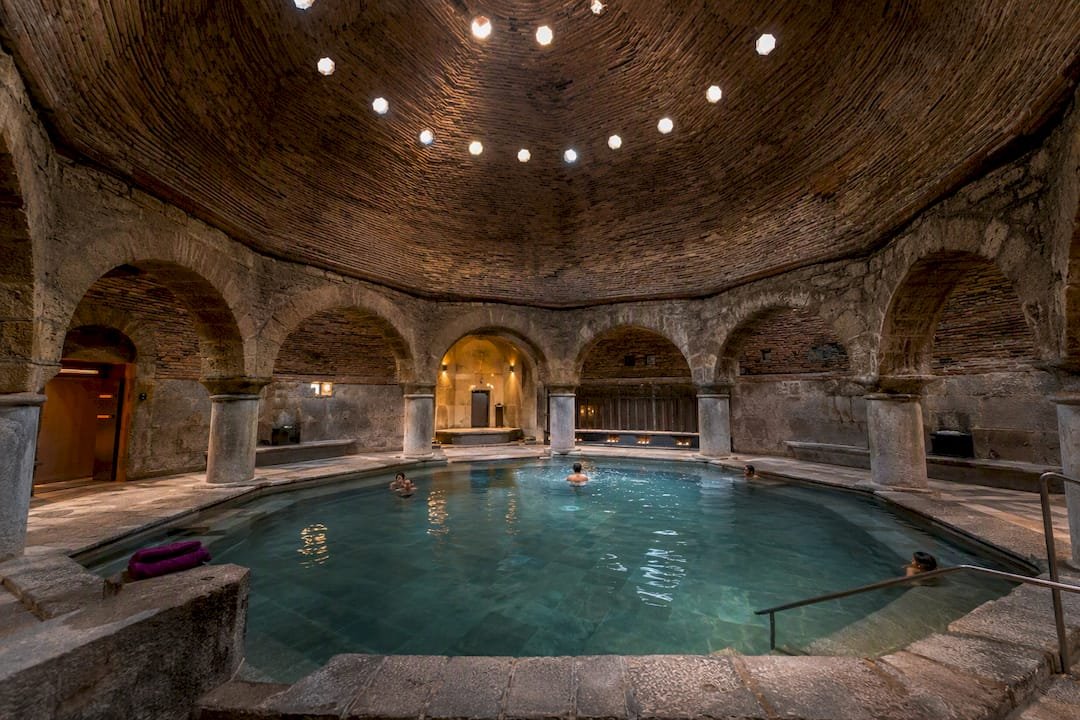
- Best for atmosphere and romance: Rudas. The Ottoman-era octagonal pool under a domed ceiling and the rooftop hot tub overlooking the Danube make this the pick for couples, though the gendered schedule on weekdays means you’ll want to check hours before booking a joint visit. Night bathing sessions here draw a loyal following.
- Best for locals and lower prices: Lukács. This is where Budapest residents go for medicinal soaking and drinking-cure treatments, and it’s noticeably less touristy and less expensive than the big names.
- Best for families and summer trips: Palatinus. This Margaret Island complex is an outdoor water park more than a historic bath, with slides and shallow pools that keep kids entertained.
- Best for an intimate, authentic Ottoman experience: Veli Bej (Császár). Small, quiet, and centuries old, it’s the anti-Széchenyi: fewer crowds, more history per square foot.
Two venues deserve a flag before you plan around them. Gellért is mid-renovation and is closed for visitors, with reopening targeted for around 2028, and Király is currently closed with no reopening date. Neither should factor into a first-time Budapest spa experience right now. Rudas, Lukács, and Veli Bej make fine substitutes if you were hoping for that classic Ottoman-bath feel.
What Happens When You Walk Into a Thermal Bath?
Walking into a Budapest bath for the first time can feel disorienting if you don’t know the sequence. It’s simpler than it looks once you understand the basic flow: check in, change, shower, soak.
Most baths follow the same general layout. You’ll pass through a ticket counter or turnstile, head into a changing area (either open lockers or private cabins), pass through mandatory showers, then move into the pool halls. Indoor sections typically hold the hottest thermal pools and dry or steam saunas, while outdoor areas hold the larger swimming and lounging pools that most visitors remember from photos.
The locker-versus-cabin decision is worth thinking through before you buy your ticket. Lockers are cheaper and fine if you’re comfortable changing in a semi-open room with strangers nearby. Cabins cost a bit more but give you a private, lockable space to change and store your things, and experienced visitors consistently recommend upgrading to a cabin for a first visit, since crowded changing rooms are one of the more common sources of stress for newcomers.
A few rules apply almost everywhere:
- Shower before entering any pool, no exceptions, even if you just showered at your hotel.
- Swimsuits are required in every mixed-gender area, including on the co-ed sections of Rudas.
- Photography is restricted or banned in changing areas and sometimes in pool halls, so check signage before pulling out your phone.
- Children under a certain age (varies by venue, often 14) may be restricted from single-sex Turkish sections.
Beyond the pools themselves, most major baths offer massage services, medical consultations, and poolside food and drink stands, so you can turn a quick dip into a half-day wellness stop if you want.
Pro Tip: Bring a small waterproof pouch for your phone and cash. Cabins lock, but you’ll still want a way to carry money to the poolside bar without getting it wet.
Which Budapest Baths Should You Actually Visit?
Here’s a closer look at the venues worth your time, plus the two you should skip for now.
Széchenyi Thermal Bath is the one everyone recognizes from postcards, and for good reason. It’s one of Europe’s largest thermal bath complexes, with three large outdoor pools (including a chess-playing pool that’s become an unofficial local landmark) and over a dozen indoor thermal and steam rooms. Crowds build fast after mid-morning, especially on weekends, and the venue also runs Sparties, adult-only night events with music and light shows that require separate tickets and tend to sell out. If your main goal is the classic outdoor photo, this is the bath to prioritize, and it’s worth booking a session in advance rather than risking a sold-out day.
Rudas Thermal Bath carries the most genuine Ottoman character of any bath still fully open to visitors. The octagonal pool beneath its original 16th century domed ceiling, with light filtering through small colored glass openings, is unlike anything else in the city. The rooftop hot tub, added in a modern renovation, gives you a Danube view that’s become one of Budapest’s most photographed vantage points. Its schedule runs on a mix of single-sex and mixed sessions across the week, which we’ll cover in detail below.
Lukács Bath trades spectacle for substance. It’s the bath locals actually use for ongoing treatment, with medicinal pools and a drinking hall tied to specific mineral-water cures. Prices are generally lower than Széchenyi or Rudas, and the crowd is more local, which some travelers find more relaxing and others find less “Instagrammable.” Either way, it’s a legitimate option if you want a genuine local guide to Budapest spas rather than a tourist checklist.
Veli Bej (Császár) Bath is easy to miss and worth seeking out anyway. It’s smaller than the other four, capacity is limited, and tickets are typically sold on-site rather than through big booking platforms, so lines can form if you arrive at a popular hour. What you get in return is one of the most architecturally intact Ottoman bath interiors in the city, with a much quieter atmosphere than Rudas or Széchenyi.
Palatinus shifts the tone entirely. It’s a seasonal, outdoor, summer-only complex on Margaret Island built around water slides, wave pools, and family-friendly shallow sections rather than historic architecture or mineral therapy. If you’re traveling with kids and need them to burn energy for a few hours, this is your venue. It simply is not the place to go if you’re chasing the “ancient Ottoman bath” experience.
As for the two you’ll see mentioned everywhere else: Gellért remains closed for renovation with reopening targeted around 2028, and Király has had extended access issues. Plan your Budapest thermal baths guide itinerary around the five above and you won’t miss anything essential.
How Much Do Budapest Thermal Baths Cost, and How Do You Book Them?
Buying tickets online before your trip beats walking up to the counter, for three reasons: better prices in most cases, guaranteed entry during peak season, and access to night sessions that frequently sell out at the door. Széchenyi in particular can sell out weeks ahead during high season and for Sparty nights, so booking early isn’t just a convenience tip, it’s the difference between getting in and not.
Here’s how 2026 pricing shapes up across the main venues:
- Széchenyi: weekday locker entry starts around 13,200 HUF (roughly $35), with weekend prices running higher and Sparty tickets sold separately.
- Rudas: weekday day tickets start around 12,000 HUF, with night sessions and weekend entry priced above that and typically bookable online only.
- Lukács: generally the most affordable of the major baths, reflecting its local, treatment-focused clientele rather than tourist demand.
- Veli Bej: modestly priced, though tickets are mostly sold at the door rather than online, so arrive with a backup time slot in mind.
- Palatinus: priced for a summer day out rather than a spa visit, with seasonal hours running roughly late spring through early fall.
Opening hours vary by venue and season, and special sessions (Rudas night bathing, Széchenyi Sparties) run on their own separate schedules with earlier ticket cutoffs. Always check last-entry times online before you go, since most baths stop admitting new visitors 60 to 90 minutes before closing. On lockers versus cabins: lockers work fine for a quick, no-frills visit, but a cabin buys you privacy and a secure place for valuables, which matters more than the price difference suggests once you’re standing in a crowded changing hall.
What to Pack and How to Behave at a Budapest Bath
Pack light but pack right. Your list should cover: swimsuit, towel, flip-flops or waterproof sandals, a hair tie, a small waterproof bag for your phone, minimal toiletries, and a card or small cash for extras like drinks or a locker deposit.
Towel rental has gotten less reliable across the city. Many baths now expect you to bring your own rather than count on rentals, and Széchenyi is one of the few venues where towel rental is still consistently available. If you forget yours, most venues sell them on-site, just expect to pay a premium.
A short etiquette rundown will save you an awkward moment:
- Shower before entering any pool. This one gets enforced.
- Keep noise down in the historic Ottoman-style rooms; they’re built for quiet soaking, not conversation.
- Follow posted signage carefully around single-sex hours, especially at Rudas.
- Don’t photograph other bathers, and assume changing rooms are camera-free zones.
On health: limit stretches in the hottest pools to short intervals, drink water between soaks, and if you have a heart condition, are pregnant, or have any circulatory issue, check with a doctor before extended thermal bathing.
Pro Tip: Bring a hair tie even if your hair is short. Steam rooms get humid fast, and you’ll be glad you can pull hair back before it sticks to your face.
How Long Should You Stay, and When’s the Best Time to Go?
A single visit works best at 1.5 to 2 hours. That’s enough time to move between a few pools and a sauna without feeling like you’re racing the clock, and experts recommend soaking in short stretches, roughly 20 minutes in, 20 minutes cooling off, repeated a few times, rather than one long sit in the hottest water.
- For calm, empty pools: go early on a weekday morning, right at opening.
- For atmosphere: book a Friday or Saturday night session at Rudas, when the rooftop and lit pools draw a lively but manageable crowd.
- For photos: visit Széchenyi in winter, when steam rising off the outdoor pools against cold air creates the dramatic shots you’ve seen online.
- For families: stick to Palatinus in summer, since it’s not open the rest of the year.
- To avoid the worst crowds generally: skip weekend midday entirely and book online ahead of time.
Why Rudas Is the Bath to Book for Atmosphere
If you only add one bath beyond Széchenyi, make it Rudas. The Ottoman-era octagonal pool, capped by a centuries-old domed ceiling with light filtering through small colored glass panels, is the closest thing Budapest has to time travel. The rooftop hot tub above it, added during a modern renovation, gives you an open-air Danube view that regularly rates higher with visitors than Széchenyi’s grand scale, despite the far smaller footprint.
- Weekday day tickets start around 12,000 HUF, with night sessions and weekends priced higher and typically requiring online booking.
- The historic Turkish section runs single-sex hours on most weekdays (commonly women on Tuesdays, men on other weekdays), switching to mixed access on weekends and during night bathing.
- Book night tickets online in advance, and aim for an early evening or late slot if the rooftop view is your priority.
- Plan for 1.5 hours, and reserve a cabin if you’re visiting during a mixed session with a partner or friend.
How Do You Choose the Right Bath for Your Trip?
Three quick steps will get you to a decision faster than scrolling ten more articles.
- Match the bath to your main goal. Photos and scale point to Széchenyi. Atmosphere and history point to Rudas. A local, low-key experience points to Lukács. Family time points to Palatinus.
- Apply your real constraints. How much time do you actually have, what’s your budget, are you traveling with young kids, and does anyone in your group have mobility needs? These narrow the list fast.
- Lock in logistics. Book online, pack your swimsuit and towel, and plan to arrive at or near opening time.
Watch for three red flags before you finalize anything: don’t plan around Gellért or Király, both currently inaccessible; don’t assume a night session will have walk-up availability, especially at Rudas or during a Széchenyi Sparty; and don’t assume towels are provided, since fewer venues offer them than a few years ago.
Pro Tip: If you’re short on time in Budapest, pick one bath and go deep rather than trying to squeeze in two. Rushing a thermal bath experience defeats the point of it.
Getting to Each Bath From Central Budapest
Public transit covers every major bath well, and none require a long trip from the city center. Széchenyi sits right at the Széchenyi fürdő stop on the M1 metro line, the yellow line that runs under Andrássy Avenue, making it the easiest bath to reach if you’re staying anywhere near downtown Pest.
Rudas sits on the Buda side of the Danube, close to the Elizabeth Bridge, reachable by tram 19 or 41 along the river, or a flat walk across the bridge from central Pest. Lukács is a short tram or bus ride north along the Buda embankment, and it’s an easy add-on if you’re already exploring the Buda Castle district. Veli Bej sits nearby, close enough to combine with a Lukács visit if you want to compare the two on the same day.
Palatinus, out on Margaret Island, is reachable by tram 4 or 6 to the Margaret Bridge, followed by a walk or a short bus ride onto the island itself. If you’re staying near Deák Ferenc tér or the Danube promenade, most of these baths sit within a 20 to 30 minute transit ride, which makes it realistic to combine a bath visit with a full day of sightseeing rather than treating it as a separate trip.
Pro Tip: Buy a 24 hour transit pass if you’re planning to hit a bath and a few other sights the same day. It usually pays for itself after two or three rides.

Eating and Drinking In and Around the Baths
Every major bath complex includes some kind of on-site food service, though don’t expect fine dining. Széchenyi’s poolside snack bars and cafés cover the basics: sandwiches, ice cream, beer, and soft drinks, priced for convenience rather than value. Rudas has a smaller café setup near the entrance and rooftop area, useful for a quick coffee or water bottle between soaks.
Lukács, given its more local and treatment-focused clientele, has a modest drinking hall tied to its mineral-water tradition rather than a full café setup. Palatinus, being a summer water park at heart, has the most extensive food offerings of the group: multiple snack stands, ice cream carts, and casual restaurant-style seating suited to a full day outdoors.
For a proper meal, step outside. Széchenyi sits inside City Park, surrounded by cafés and casual restaurants along Andrássy Avenue within a short walk. Rudas puts you within easy reach of the Buda Castle district’s restaurants, and a walk across the Elizabeth Bridge lands you in central Pest’s dense restaurant scene in about 15 minutes. Bring cash or a card for on-site snacks either way. Card acceptance has improved but isn’t universal at every kiosk.
Are the Baths Good for Families and Kids?
Palatinus is your best bet if you’re traveling with children. It’s built for exactly this: shallow pools, water slides, and open outdoor space that lets kids move around without the quiet, adults-only atmosphere you’ll find in the historic Ottoman sections of other baths.
Széchenyi works reasonably well for families too, particularly the outdoor pools, though the indoor thermal and steam sections skew toward an adult clientele and adult behavior expectations. Rudas is generally not the right choice for young kids. Its single-sex historic sections restrict entry by age at most venues (commonly 14 and under), and the atmosphere leans toward couples and adult travelers rather than family groups.
A few practical notes for parents: bring extra towels since kids tend to need more of them, pack sandals for slippery pool decks, and check each venue’s specific age policy before you buy tickets, since rules do vary and change. If you’re managing multiple kids solo, a cabin (rather than a shared locker) makes wrangling towels, clothes, and snacks considerably easier. Palatinus in particular gets busy on summer weekends, so arriving near opening time is worth it if you want space to actually spread out.
Are Budapest Baths Accessible for Limited Mobility?
Accessibility varies more than most guides admit, and it’s worth checking directly with each venue before booking if mobility is a concern. Széchenyi, being the largest and most modernized complex, generally offers the most accessible infrastructure: ramps, accessible changing facilities, and pool access points designed for easier entry.
Rudas and Veli Bej, given their historic Ottoman architecture, present more challenges. Original stone floors, steps between sections, and older changing areas weren’t built with modern accessibility standards in mind, even where some accommodations have since been added. Lukács sits somewhere in between, with a mix of older and updated sections.
If accessibility is a priority, contact the specific bath directly before your visit to confirm current facilities, since renovations and accommodations change over time and aren’t always reflected in general guides. Staff at the ticket counters can usually advise on the easiest entry points and whether pool lifts or accessible changing rooms are currently available.
How a Guided Visit Changes the Bath Experience
A local guide strips out the friction that trips up most first-timers: which ticket type to buy, when the single-sex hours fall, how to ask for a cabin. It also adds context you won’t get from a locker room sign, like why Rudas’s dome matters architecturally or why Lukács still runs on medicinal tradition. Next View Tours builds that kind of local framing into its Budapest offerings for travelers who’d rather skip the guesswork.
Another Option: A Guided Budapest Experience
If you’d rather hand off the logistics, that’s a legitimate choice, not a shortcut. Figuring out Rudas’s single-sex schedule, comparing 2026 prices across five venues, and timing your visit around Sparty nights takes real planning, and getting it wrong means a wasted afternoon or a sold-out ticket window.

Certain tour providers build private and small-group tours around Budapest that include local context, ticketing assistance, and practical timing to simplify your experience. A guide who already knows which morning slot avoids the Rudas crowds, or which entrance at Széchenyi cuts your wait, saves you more time than any amount of pre-trip research. Browse trip types to see private and group formats, check out the dedicated Budapest destination page for what’s currently on offer, or look into a private tour if you want your Budapest day, baths included, built around your own pace. Reach out to get a quote for your travel dates and start locking in the details.
Sources
- Rudas Baths Budapest: Rooftop, Prices & Tips (2026)
- A skincare expert’s guide to the five best thermal bath experiences in Budapest
- Visiting Széchenyi Thermal Baths: An Actually Useful Guide
FAQ
Is a Thermal Bath in Budapest Worth It?
Yes, especially if you pick one that matches your travel goal. Széchenyi delivers the classic postcard scale, and Rudas offers a more intimate, historically rich experience that many visitors rate as the more memorable of the two.
Which Are the Best Thermal Baths to Visit in Budapest?
Széchenyi, Rudas, and Lukács cover the three most useful categories: scale and photos, atmosphere and history, and a local, budget-friendly soak. Veli Bej and Palatinus round out the list for an intimate Ottoman visit or a family-friendly summer day, while Gellért remains closed for renovation.
Do You Wear Clothes in Budapest Baths?
You wear a swimsuit in all mixed-gender pools and areas, and swimsuits are required, not optional, even in the historic sections. Rudas runs single-sex hours in its Turkish section on most weekdays, and rules there can differ from the mixed weekend and night sessions.
How Much Does a Thermal Bath Cost in Budapest?
Prices vary by venue: Rudas weekday tickets start around 12,000 HUF, while Széchenyi weekday locker entry starts around 13,200 HUF, with weekends and night sessions priced higher at both. Lukács and Veli Bej generally cost less, reflecting their smaller size and more local clientele.
What Should You Bring to Budapest Baths?
Pack a swimsuit, towel, flip-flops, a hair tie, a small waterproof bag, minimal toiletries, and a card or cash for extras, since towel rental is no longer guaranteed at most venues.


Comments are closed