
 News & Tips
Most American and British travelers are surprised to learn that careful planning can lead to savings of over 30 percent on typical European trips. When every dollar or pound counts, understanding your travel goals and setting clear budget limits is key. This guide reveals smart strategies for choosing affordable flights, budget friendly lodging, and custom tours so you can enjoy Europe for less while making every experience count.
Table of Contents
- Step 1: Assess Travel Goals And Set Budget Limits
- Step 2: Research Cost-Saving Flights And Transport Options
- Step 3: Evaluate Affordable Lodging And Dining Choices
- Step 4: Select Tailored Tours And Daily Activities Wisely
- Step 5: Monitor Spending And Adjust Your Travel Plan
Quick Summary
| Key Takeaway | Explanation |
|---|---|
| 1. Define priorities and budget | Assess your travel goals and establish a budget to allocate funds effectively across categories. |
| 2. Research transport options | Explore various transportation methods and comparison tools to find cost-effective travel solutions. |
| 3. Choose affordable lodging | Consider hostels, guesthouses, or rentals for unique, budget-friendly accommodations. |
| 4. Plan culturally rich activities | Select smaller group tours or free walking tours to enhance cultural experiences without overspending. |
| 5. Track expenses regularly | Monitor your spending in real-time to adjust your budget and stay financially disciplined during your trip. |
Step 1: Assess travel goals and set budget limits
Planning a European adventure starts with understanding your travel goals and establishing realistic budget boundaries. Your trip isn’t just about destinations it’s about creating meaningful experiences that match your financial comfort zone. Global tourism development insights reveal that strategic planning can transform your journey from a simple vacation to an economically smart cultural exploration.
Begin by asking yourself key questions: What experiences matter most to you? Are you seeking historical sites, culinary adventures, outdoor activities, or urban exploration? Write down your top three priorities and rank them by importance. This helps you allocate your budget strategically. For instance, if architectural tours are your primary interest, you might choose to spend more on museum passes and guided walking tours while economizing on accommodations or dining.
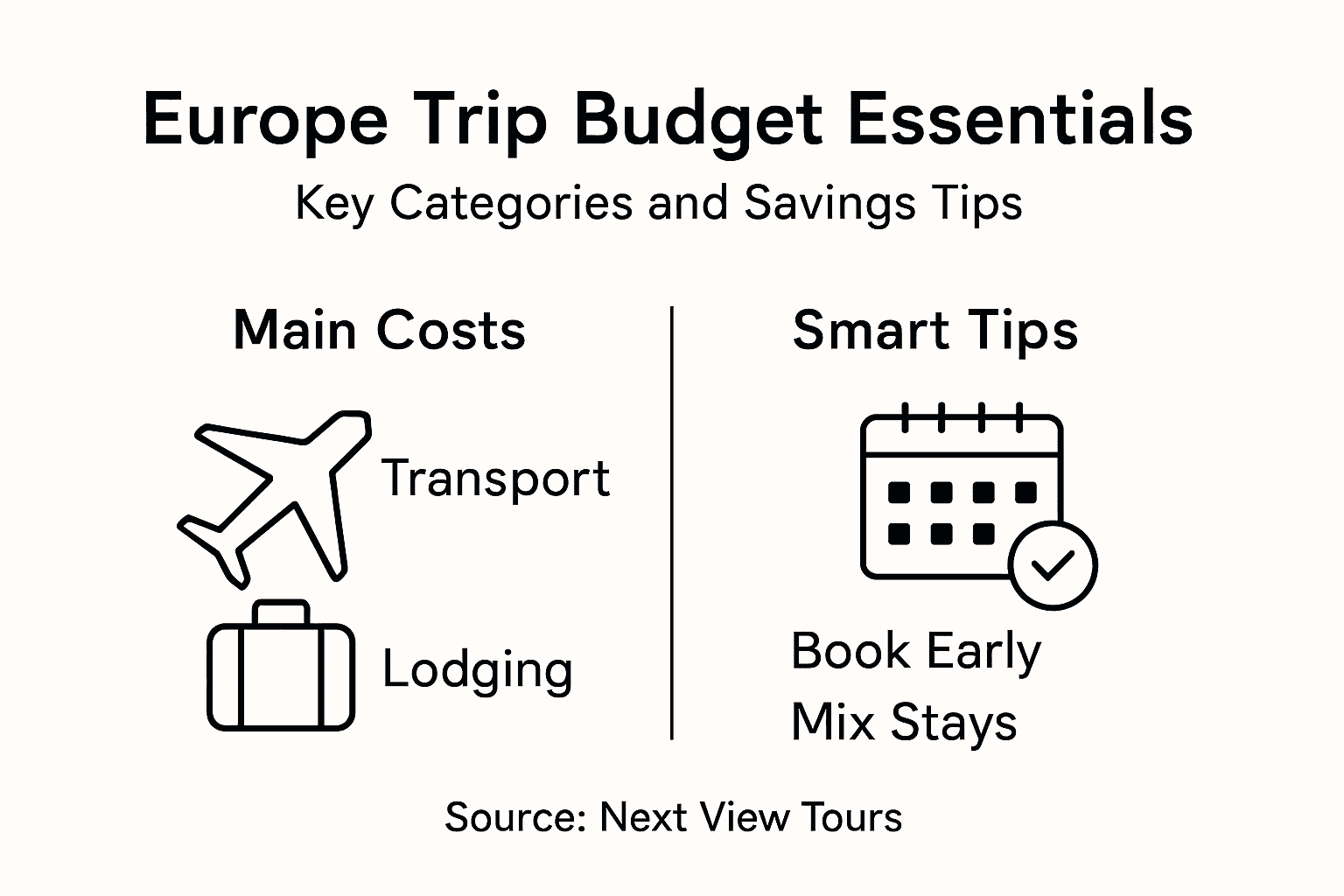
Calculate your total trip budget by breaking down expenses into categories: transportation, lodging, food, activities, emergency funds, and miscellaneous costs. A good rule of thumb is allocating 40% for accommodations, 25% for transportation, 20% for food, 10% for activities, and 5% as a buffer for unexpected expenses. Cultural exchange principles suggest that meaningful travel isn’t about spending more but spending wisely to support local communities and create genuine connections.
Here’s a summary of typical European travel budget categories and example cost ranges per day:
| Expense Category | Typical Allocation (%) | Example Cost Range (USD/day) | Budget-Saving Tips |
|---|---|---|---|
| Lodging | 40 | $40 – $150 | Book in advance, use hostels |
| Transportation | 25 | $20 – $80 | Use passes, off-peak travel |
| Food | 20 | $15 – $50 | Eat local, shop markets |
| Activities | 10 | $10 – $40 | Free tours, city passes |
| Emergency/Misc. | 5 | $5 – $20 | Set aside contingency fund |
Pro tip: Use budgeting apps or spreadsheets to track expenses and set daily spending limits, helping you stay financially disciplined during your European adventure.
Step 2: Research cost-saving flights and transport options
Reducing travel expenses starts with smart research into transportation options that balance cost and convenience. Global transport demand analysis reveals multiple strategies for budget-conscious European travelers to minimize transportation costs while maximizing travel experiences.
Begin your research by exploring multiple transportation platforms and comparison websites. Look beyond traditional airline booking sites to include budget carriers, train networks, and multimodal transportation options. European travel often benefits from flexible transport solutions like Eurail passes, which can significantly reduce per-trip expenses compared to individual flight or train tickets. Consider overnight trains or buses that combine transportation and accommodation costs strategically. Compare prices across different platforms using incognito browser modes to avoid price tracking and potentially find lower rates.
Transportation affordability insights suggest timing plays a crucial role in securing affordable travel. Book flights during off peak seasons typically from November to March (excluding holiday periods). Use price alert tools on platforms like Skyscanner or Google Flights to track fare fluctuations. Consider alternative airports near your destination that might offer substantially cheaper arrival and departure options. Flexible date searches can reveal significant price variations that help you optimize your travel budget.
Pro tip: Sign up for airline newsletters and budget travel reward programs to access exclusive discounts and accumulate points for future European adventures.
Step 3: Evaluate affordable lodging and dining choices
Making smart choices about accommodations and meals can dramatically reduce your overall travel expenses without sacrificing comfort or experience. Affordable housing insights reveal strategic approaches to finding budget friendly lodging across European destinations.
Start by exploring diverse accommodation options beyond traditional hotels. Hostels boutique guesthouses and apartment rentals often provide more affordable alternatives with unique local experiences. Use platforms like Booking.com Airbnb and Hostelworld to compare prices and read traveler reviews. Consider staying slightly outside city centers where accommodation rates are typically lower while still maintaining good public transportation connections. For dining look into local markets street food vendors and smaller family owned restaurants that offer authentic meals at reasonable prices. Many European cities have excellent lunch specials or prix fixe menus that provide substantial meals at significantly reduced rates.
European budget travel resources recommend mixing accommodation styles to optimize your budget. Consider combining affordable hostels for a few nights with occasional budget hotel stays. Leverage membership programs student discounts and off season travel periods to reduce lodging expenses. For meals research local grocery stores and markets where you can purchase ingredients for picnic style lunches or simple breakfasts. Many European destinations offer incredible street food and casual dining options that provide delicious experiences without breaking your budget.
Here’s a quick comparison of popular European accommodation options and their key attributes:
| Accommodation Type | Average Price (USD/night) | Typical Location | Unique Benefits |
|---|---|---|---|
| Hostel | $20 – $50 | Near city centers | Social atmosphere, low cost |
| Guesthouse | $40 – $100 | Residential areas | Local charm, homey feeling |
| Hotel (Budget) | $60 – $120 | Tourist districts | Private rooms, amenities |
| Apartment Rental | $50 – $150 | Varies | Space, kitchen access |
Pro tip: Download apps like Hostelworld and Booking.com and set price alerts to catch last minute deals and unexpected discounts on accommodations.
Step 4: Select tailored tours and daily activities wisely
Crafting the perfect European adventure requires strategic planning of tours and daily activities that balance your interests with budget constraints. International travel guidelines emphasize the importance of selecting experiences that provide meaningful cultural engagement without overspending.
Start by researching tour options that align with your specific interests and travel goals. Look for small group tours or walking tours that offer in depth experiences at lower costs compared to large commercial excursions. Websites like Viator GetYourGuide and local tourism boards often feature budget friendly options that provide authentic experiences. Consider free walking tours available in many European cities these typically operate on a tip basis and offer excellent introductions to local history and culture. Mix paid guided experiences with self guided exploration to maximize value. For museums and attractions look into city passes or tourist cards that bundle multiple attractions at discounted rates often including public transportation.
Travel and tourism policy insights recommend prioritizing activities that offer the most cultural value for your investment. Schedule one or two special guided tours that provide deep cultural insights balanced with plenty of free or low cost exploration time. Look for unique experiences like local cooking classes walking tours with historians or small group art workshops that provide immersive experiences at reasonable prices. Always check for student discounts youth rates and early booking promotions that can significantly reduce activity costs.
Pro tip: Download tourism apps specific to your destination cities to access real time discounts and last minute tour availability.
Step 5: Monitor spending and adjust your travel plan
Staying financially disciplined during your European adventure requires consistent tracking and strategic adjustments to your budget. Real-time expenditure tracking techniques can help travelers maintain financial control and prevent unexpected overspending.
Implement a digital tracking system using smartphone apps or spreadsheet tools that allow you to log expenses immediately after each purchase. Apps like Trail Wallet TravelSpend and Splitwise offer user friendly interfaces for categorizing expenses by type transportation meals accommodations and activities. Create daily budget limits for each category and track your spending in real time. When you notice you are approaching or exceeding a specific category budget start making immediate adjustments such as choosing more affordable dining options or switching to free walking tours instead of paid experiences.
Personal money management strategies recommend building flexibility into your travel budget. Set up an emergency fund of about 10% of your total trip budget to handle unexpected expenses or opportunities. Review your spending every evening and make proactive adjustments. If you spent less on transportation one day you can reallocate those funds to a special dining experience or unique tour. Be prepared to modify your itinerary based on real time financial insights keeping your overall trip experience enjoyable and financially sustainable.
Pro tip: Use a dedicated travel credit card with no foreign transaction fees and track your spending through its companion mobile app for seamless financial monitoring.
Plan Your Perfect Budget-Friendly European Adventure with Next View Tours
Budgeting for a European trip can feel overwhelming when you face decisions about transportation, lodging, and activities that must fit your financial plan. This guide highlights key challenges like allocating funds wisely and choosing cost-effective yet enriching experiences. If you want to transform your budget into unforgettable memories explore our City Tour – Next View Tours and Adventure Tours – Next View Tours options tailored to deliver authentic cultural experiences without breaking the bank.

Take control of your travel spending by booking with a trusted European tour provider offering private and group tours from iconic cities including Vienna, Salzburg, and Prague. At Next View Tours, you get flexible itineraries designed to maximize value and local charm giving you peace of mind and more time to enjoy your trip. Start planning today and secure your spot on tours that align perfectly with your budget and travel goals before availability runs out.
Frequently Asked Questions
How can I set a realistic budget for my Europe trip?
To set a realistic budget for your trip, assess your travel goals and categorize expenses into lodging, transportation, food, activities, and emergency funds. Start by calculating your total budget based on how much you can afford and allocate percentages to each category. For example, aim to spend 40% on lodging and 25% on transportation.
What are some effective strategies to find affordable flights and transport in Europe?
Effective strategies include using comparison websites to explore various transportation options like budget airlines and train services. Consider booking during off-peak seasons and utilize flexible date searches to identify the cheapest fares. Aim to book flights about 2-3 months in advance to maximize savings.
How can I reduce accommodation costs while traveling in Europe?
To reduce accommodation costs, consider staying in hostels, guesthouses, or renting apartments, which often offer more affordable rates. Additionally, look for properties slightly outside of city centers and book accommodations in advance to secure better prices. Aim to keep your lodging expenses within 40% of your travel budget.
What types of activities should I prioritize for a budget-friendly European trip?
Prioritize activities that provide authentic cultural experiences without overspending, such as free walking tours and local festivals. Mix paid experiences with self-guided explorations to optimize value. Schedule one or two special guided tours while allowing for ample time to explore independently.
How can I effectively monitor my travel spending during my trip?
To effectively monitor your spending, use a tracking system like a mobile app or a simple spreadsheet to log expenses in real time. Set daily spending limits for each budget category and make adjustments if you approach your limits. Review your spending every evening to maintain control over your budget.
What should I include in my emergency fund while budgeting for Europe travel?
Your emergency fund should cover unexpected expenses, ideally around 10% of your total trip budget. Include costs for potential emergencies like transportation changes or medical issues. By setting aside this buffer, you can ensure financial security throughout your travels.


Comments are closed