
 Uncategorized
TL;DR:
- Creating a personalized, criteria-based checklist improves packing efficiency and trip confidence.
- Planning wardrobe blocks, laundry, and day-bag essentials is crucial for a smooth European tour.
- Focusing on lightweight packing and situational gear prevents overpacking and enhances flexibility.
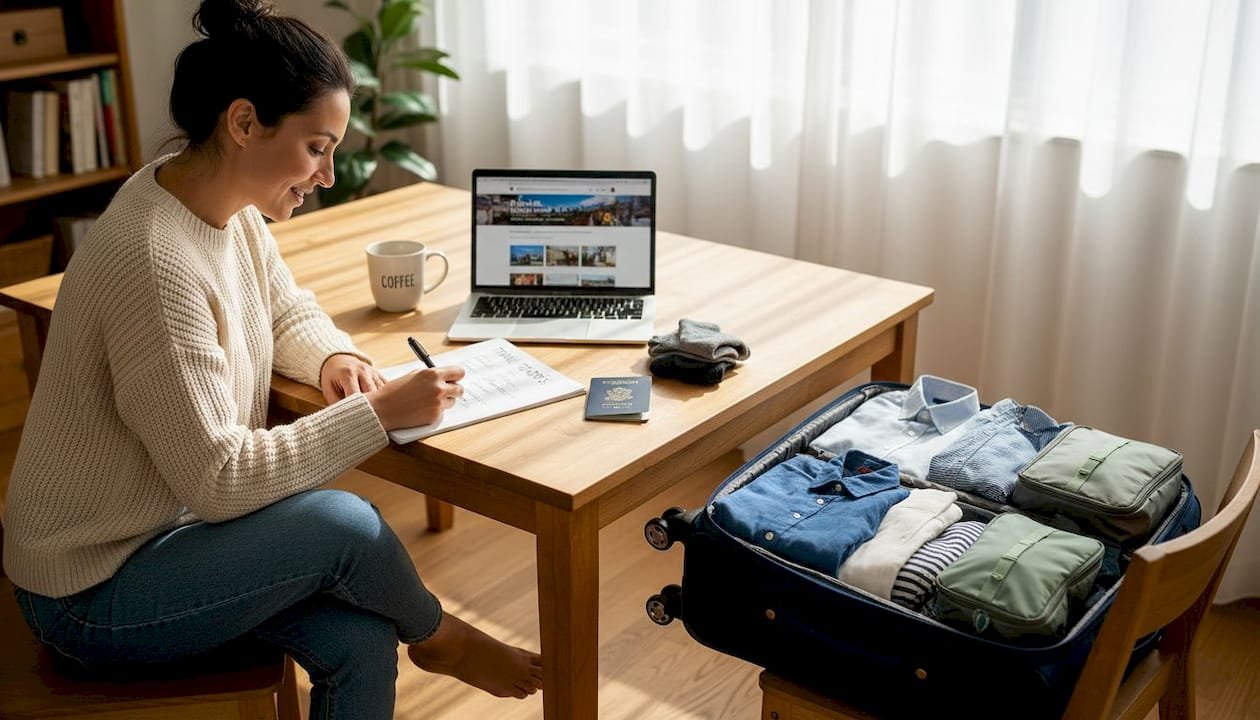
Packing for a multi-day European tour sounds straightforward until you’re standing at a train station in Vienna with a crammed bag and no clean socks. Forgetting one critical item, whether it’s a travel adapter, prescription medication, or a rain jacket, can shift an incredible trip into a stressful one fast. The difference between travelers who glide through Europe with confidence and those who scramble at every stop often comes down to one thing: a smart, intentional checklist. This article walks you through everything you need to build that checklist, from clothing strategy to day-bag essentials and location-specific gear.
Table of Contents
- Criteria for building your multi-day tour checklist
- Wardrobe essentials: Clothing blocks and laundry tips
- Day-bag and daily access essentials
- Situational checklist: Miscellaneous and location-dependent items
- What travelers often get wrong about multi-day tour checklists
- Upgrade your European adventure with expert planning
- Frequently asked questions
Key Takeaways
| Point | Details |
|---|---|
| Packing strategy | A 5–7 day wardrobe plan with scheduled laundry boosts flexibility and minimizes overpacking. |
| Day-bag importance | Keep essential travel documents and daily needs in your day-bag for hassle-free transit. |
| Situational preparedness | Adapt your checklist for climate, activities, and health requirements at each stop. |
| Expert workflow | Treat daily access and laundry as core parts of your checklist, not afterthoughts. |
Criteria for building your multi-day tour checklist
Before you start listing items, you need to think about the framework behind your checklist. What works for a solo backpacker on a two-week rail route through Central Europe is very different from what a family needs on a five-day guided tour through Austria and the Czech Republic. Getting the criteria right from the start saves you from repacking in a hotel lobby.
Here are the key factors to evaluate before you write down a single item:
- Transit style: Are you traveling by rail, coach, rental car, or a mix? Rail travelers need compact bags that fit in overhead compartments. Car-based tours allow more flexibility. Walking-heavy itineraries demand lighter loads and comfortable footwear.
- Trip length and laundry planning: For rail-based tours, packing 5-7 days of clothing and planning for laundry midway is the most efficient approach. Packing for the full trip duration leads to oversized, heavy luggage.
- Climate and weather variation: Multi-day tours in Europe often cross through multiple climate zones. A trip from Budapest to Salzburg in spring can mean warm afternoons and cold mornings. Layers are your best friend.
- Day-bag access frequency: How often will you be pulling things out of your bag mid-transit? If you’re boarding trains multiple times a day, you need a well-organized day bag separate from your main luggage.
- Personal health and prescriptions: Any medications, allergy treatments, or mobility aids need to be on a dedicated sub-list. These can’t be improvised at a pharmacy in a foreign country.
Thinking through these variables before you shop for packing cubes or print a generic template makes your checklist genuinely yours. If you want a structured approach to multi-day trip organization, that resource breaks down itinerary-specific packing logic by tour type.
Pro Tip: Build your checklist at least two weeks before departure. That gives you time to realize you’ve outgrown your walking shoes or your travel adapter is for the wrong region.
Wardrobe essentials: Clothing blocks and laundry tips
Clothing consistently takes up the most space in any travel bag, yet most travelers either over-pack or forget a crucial piece. The solution is the 5-7 day block method, a simple but powerful framework for keeping your wardrobe lean without sacrificing comfort.
Here’s how to apply it step by step:
- Define your 7-day block. Choose 7 outfits that mix and match easily. Neutral colors (navy, gray, white, black) let you re-wear pieces without looking repetitive.
- Identify your laundry midpoint. If your tour is 12 days, plan for laundry around day 6 or 7. This lets you reuse the same block for the second half.
- Choose fast-drying fabrics. Merino wool, synthetic blends, and lightweight cotton dry quickly after hand-washing, a key feature if hotel laundry services are unavailable.
- Pack versatile shoes. One comfortable walking shoe and one slightly smarter option cover 95% of European tour scenarios.
- Don’t forget the in-between layers. A packable down vest or thin fleece adds warmth without bulk.
For laundry mid-trip, plan to do laundry midway on multi-day European tours to keep your load manageable. Your options include hotel laundry services (usually available but pricier), local laundromats (affordable and often near transit hubs), or a small DIY travel laundry kit with a sink-wash bag and quick-dry soap.
Don’t let laundry be an afterthought. It’s one of the most practical logistics decisions you’ll make, and planning it in advance is what separates a smooth trip from a chaotic one.
| Packing approach | Pros | Cons |
|---|---|---|
| Capsule wardrobe (5-7 items) | Lightweight, versatile, easy to manage | Requires thoughtful planning upfront |
| Bulk packing (full trip supply) | No laundry needed | Heavy bag, limited mobility, extra fees |
| Mix approach (8-10 items + laundry kit) | Flexible and practical | Slightly more planning required |
For more detailed wardrobe planning tips tailored to specific tour styles, or to explore how clothing needs shift across different multi-day tour packing scenarios, both resources offer itinerary-specific guidance.
Pro Tip: Packing cubes are a game-changer. Use one cube per category (tops, bottoms, layers) so you can pull out exactly what you need without unpacking everything.
Day-bag and daily access essentials
Your main luggage stays at the hotel. Your day-bag lives with you. That distinction matters more on a multi-day European tour than almost anywhere else, because the day-bag is the most-used item on rail journeys, and what you put in it shapes your entire travel experience.
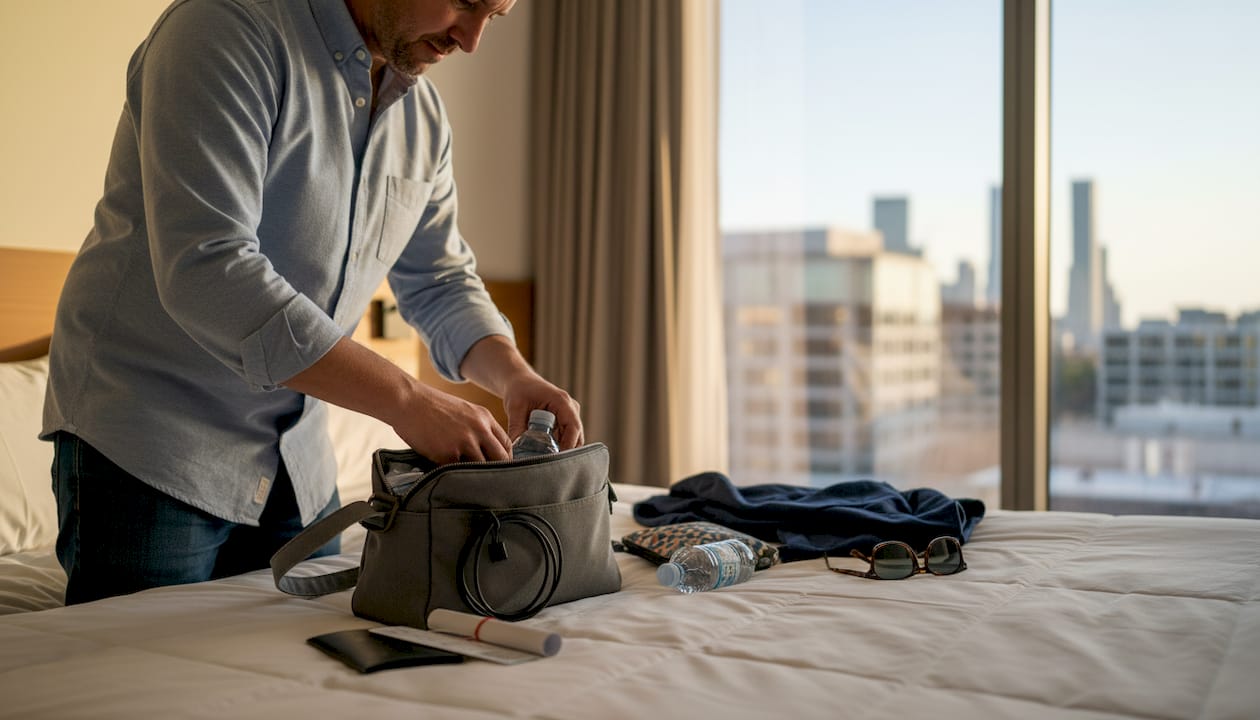
Choose a bag between 15 and 25 liters with padded straps, a hidden zip pocket, and RFID-blocking lining if possible. Anti-theft features like lockable zippers and slash-resistant panels are worth considering, especially in high-traffic tourist areas.
Here’s what belongs in your day-bag at all times:
- Passport and travel documents (or digital copies saved to cloud storage)
- Rail passes, tour tickets, or booking confirmations (printed backup recommended)
- Phone charger and a small power bank
- Water bottle (refillable; most European cities have excellent tap water)
- Snacks for long transit stretches
- Small toiletry pouch with lip balm, hand cream, and any daily-use items
- Earbuds or headphones
- Light layer or scarf that packs flat
| Must-have day-bag items | Nice-to-have extras |
|---|---|
| Passport and ID | Collapsible tote bag |
| Tickets and bookings | Travel pillow |
| Phone charger and power bank | Portable umbrella |
| Water bottle | Notebook or journal |
| Snacks | Travel guidebook |
| Daily medications | Reusable cutlery set |
For group tour essentials, your day-bag checklist may also include shared items like portable speakers or group map downloads. If you’re working through a broader travel planning workflow, day-bag organization is a step that deserves its own dedicated checklist.
Pro Tip: Use digital travel documents wherever possible, but always carry one printed backup for your accommodation and return transport. Technology fails at the worst moments.
Situational checklist: Miscellaneous and location-dependent items
Once your core packing is settled, the next layer involves items that shift based on where you’re going, what you’re doing, and when you’re traveling. A checklist methodology that accounts for situational and transit-specific needs protects you from the gaps a generic list misses.
Start with weather and seasonal gear:
- Compact travel umbrella (foldable, under 200g)
- Waterproof outer layer or packable rain jacket
- Thermal base layers for winter tours through Central Europe
- Sunscreen and a light hat for summer itineraries
For activity-specific needs:
- Hiking boots or trail shoes for nature-based tours
- Swimwear if your route includes thermal baths (Budapest’s Széchenyi is a popular stop)
- Formal or smart-casual outfit for evening dining at upscale venues
Health and safety essentials that often get forgotten:
- Prescription medications (at least a 3-day surplus beyond trip length)
- Basic first aid kit: plasters, pain reliever, antacids, motion sickness tablets
- Hand sanitizer and a small mask
Here are location-specific add-ons for popular European destinations:
- Vienna: A city card for transit, an umbrella for spring showers, and smart-casual wear for opera or concert visits.
- Prague: Comfortable walking shoes for cobblestone streets, cash in Czech koruna, and a portable charger for long sightseeing days.
- Budapest: Swimwear for thermal baths, a city transit pass, and an EU power adapter.
- Salzburg: Layers for alpine weather, a reusable bag for market shopping, and waterproof shoes.
- Hallstatt: Lightweight rain gear, a camera or phone with extra storage, and comfortable walking footwear.
For travelers exploring customized tour advantages, having a situational checklist that adapts to your unique itinerary makes each stop feel well-prepared rather than improvised.
What travelers often get wrong about multi-day tour checklists
Most packing guides tell you what to bring. Fewer tell you how to think about bringing it. After working with travelers across dozens of European itineraries, we’ve noticed a consistent pattern: the problem isn’t usually forgetting items. It’s misunderstanding priorities.
The biggest mistake is treating laundry and day-bag access as secondary concerns. You can have the perfect wardrobe and still struggle if you haven’t thought through when and where you’ll wash clothes. Treat laundry and day-bag access as core planning elements, not afterthoughts. They shape how the entire trip flows.
The second mistake is over-packing out of anxiety. More items don’t equal more comfort. They equal more weight, more decisions, and more time spent reorganizing at every stop. Intelligent packing with fewer, well-chosen items consistently outperforms the “just in case” approach.
The counter-intuitive truth is that a lighter, better-organized bag gives you more freedom, not less. You move faster, board trains more easily, and arrive at each destination with energy to explore rather than energy spent managing gear. If you’re looking at how to organize adventure tours with a checklist-first mindset, that’s where real travel confidence starts.
Upgrade your European adventure with expert planning
A well-built checklist is a great foundation, but pairing it with an expertly designed tour takes your experience to a completely different level. When the logistics are handled professionally, you can focus entirely on the moments that matter.
At Next View Tours, we design planning your adventure with exactly this kind of traveler in mind. Whether you’re exploring European adventure examples across Vienna, Salzburg, Prague, Budapest, or Hallstatt, our team handles itinerary logistics so your checklist stays clean and focused. Browse our full trip types overview to find a format that fits your travel style, from private family tours to group adventures through Central Europe.
Frequently asked questions
What is the ideal number of clothing items for a multi-day European tour?
Pack a 5-7 day wardrobe and plan to do laundry halfway through your trip. This approach keeps your bag light while ensuring you have everything you need for the full journey.
What should I keep in my day-bag for quick access?
Your passport, tickets, phone charger, snacks, water, and daily medications should always be within easy reach. The day-bag is the most-used item during multi-day rail tours, so prioritize items you’ll need multiple times a day.
How can I plan for laundry during multi-day tours?
Research whether your accommodations offer laundry services before you depart, and pack a small travel laundry kit as a backup. Laundry planning is key for keeping your bag manageable and your wardrobe functional throughout the trip.
Which miscellaneous items are commonly forgotten?
Travel adapters, local SIM cards, a portable umbrella, prescription medications, and destination-specific items like swimwear for Budapest’s thermal baths or sturdy shoes for Prague’s cobblestones are frequently overlooked when building a checklist.


Comments are closed