

 News & Tips
More than half of European and American travelers now favor custom itineraries over fixed packages. Whether you want the expert storytelling of a guide or the freedom to follow your own path, choosing between guided and self-guided tours shapes your travel experience through Austria, Czech Republic, and Hungary. Understanding these options can help you design journeys packed with discovery, comfort, and the right balance of autonomy and support.
Table of Contents
- Guided And Self-Guided Tours Defined
- Types And Formats Of European Tours
- Key Features And How Each Works
- Planning, Logistics, And Legal Aspects
- Comparing Costs, Risks, And Pitfalls
Key Takeaways
| Point | Details |
|---|---|
| Guided Tour vs. Self-Guided Tour | Guided tours offer structured experiences with professional insights, while self-guided tours provide flexibility for independent exploration. |
| Tour Formats | European tours come in various formats, such as cultural, adventure, and biking tours, catering to different interests and comfort levels. |
| Planning Responsibilities | Guided tours manage logistics completely, whereas self-guided travelers must handle their own arrangements and navigate local laws. |
| Cost and Risk Evaluation | Guided tours have predictable costs and reduced risks, while self-guided tours can be more variable and require careful planning to manage potential challenges. |
Guided and Self-Guided Tours Defined
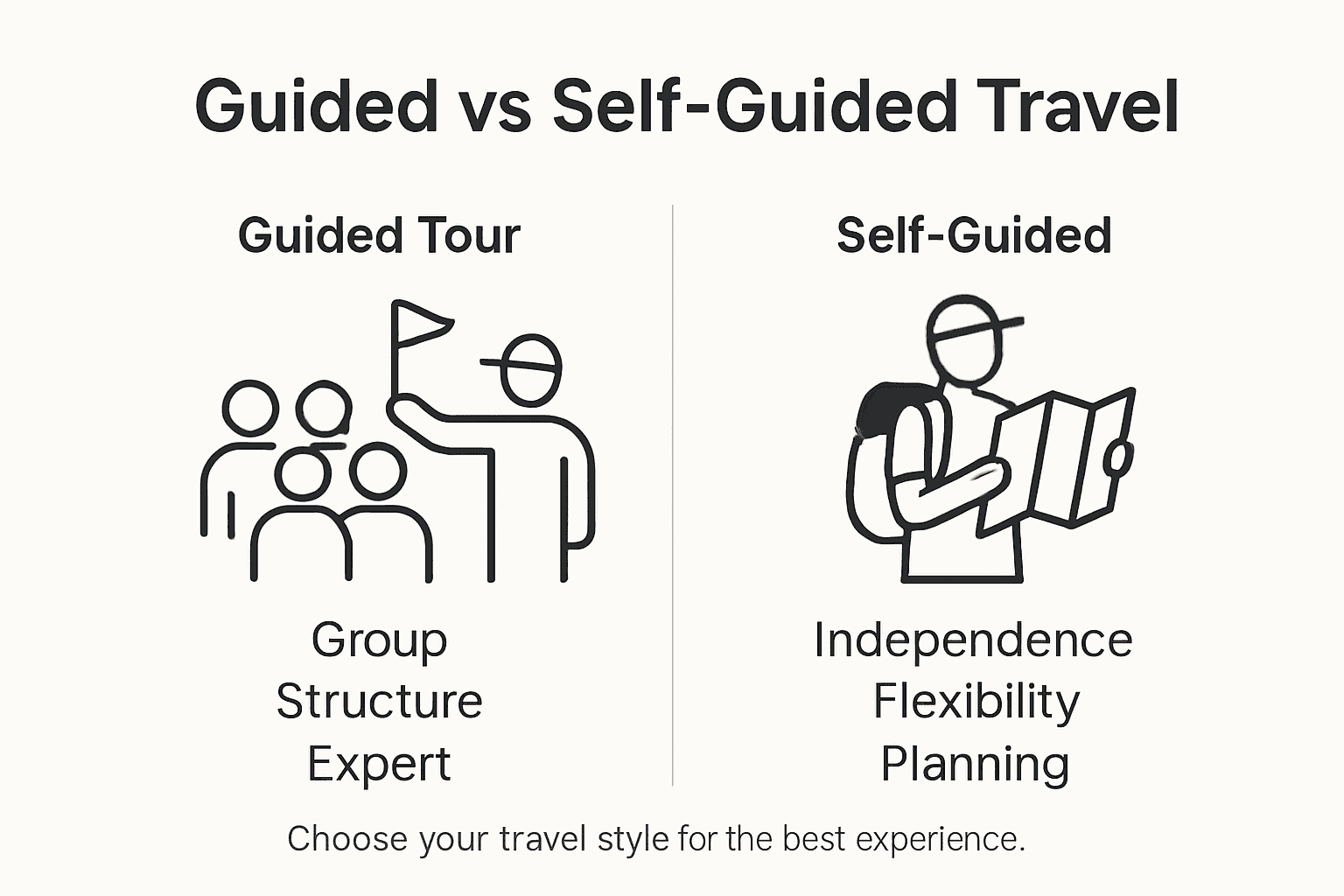
Travel experiences come in two primary formats: guided tours and self-guided tours, each offering distinct advantages for exploring destinations across Europe. A guided tour typically involves a professional tour guide leading travelers around places of interest, providing structured experiences with educational and social support.
In contrast, a self-guided tour allows travelers to explore independently without an accompanying guide, utilizing resources like audio guides, digital maps, and smartphone apps. These tours offer maximum flexibility, enabling participants to set their own pace and create personalized travel experiences tailored to individual interests.
The key differences between guided and self-guided tours center on structure, expertise, and autonomy. Guided tours provide professional insights, historical context, and group dynamics. They’re ideal for travelers seeking comprehensive information and social interaction. Self-guided tours, meanwhile, appeal to independent adventurers who prefer spontaneity and personal exploration.
Pro tip: Consider your travel style, comfort level with navigation, and desire for in-depth information when choosing between guided and self-guided experiences in Europe.
Here’s a side-by-side overview of guided and self-guided tours in Europe:
| Aspect | Guided Tour | Self-Guided Tour |
|---|---|---|
| Decision-Making | Guide-led schedule | Traveler chooses timing |
| Social Experience | Group interaction emphasized | Mostly independent exploration |
| Information Delivery | Oral, real-time commentary | Digital, app-based content |
| Flexibility | Fixed daily itinerary | Route and pace adjustable |
| Local Support | On-site guide assistance | Remote support via apps or contacts |
| Accessibility | Suitable for newcomers to region | Best for confident travelers |
Types and Formats of European Tours
European tours offer diverse travel experiences tailored to different preferences and interests. In Europe, tour formats typically include walking, biking, cultural immersion, and adventure tours, each designed to provide unique perspectives on regional landscapes and cultures.
Guided Tour Formats encompass several specialized categories:
- Cultural heritage tours exploring historical sites
- Adventure tours featuring outdoor activities
- Educational tours with expert historians and local guides
- Themed tours focusing on specific interests like wine, architecture, or music
Self-Guided Tour Options provide travelers with structured yet independent experiences. These tours often include pre-booked accommodations and carefully planned routes that allow independent exploration, enabling travelers to customize their journey while maintaining logistical support.
Key tour formats range from city exploration packages to multi-day countryside adventures, with options designed for solo travelers, couples, families, and groups. The flexibility of modern European tours means travelers can select experiences matching their comfort level, budget, and personal travel style.

Pro tip: Research tour formats that align with your interests and physical capabilities before booking to ensure the most enjoyable travel experience.
Key Features and How Each Works
Guided Tours represent a comprehensive travel experience where a tour guide manages the group itinerary, interprets cultural heritage, and facilitates social interaction. These tours provide structured experiences with several key characteristics:
- Professional leadership and expertise
- Comprehensive cultural interpretation
- Guaranteed group social dynamics
- Immediate access to local knowledge
- Simplified logistics and planning
Self-Guided Tours offer a different approach to exploration. These tours enable travelers to explore destinations independently using digital apps or devices with multimedia content triggered by GPS or geofencing technology, providing travelers with unprecedented flexibility.
The technical infrastructure of self-guided tours typically includes:
- Digital mapping systems
- Audio and visual content triggers
- GPS-enabled route tracking
- Interactive multimedia explanations
- Pre-planned but flexible itineraries
Both tour formats aim to provide rich, immersive travel experiences, with guided tours offering structured group interactions and self-guided tours delivering personalized, technology-enhanced explorations. The choice depends entirely on individual travel preferences, comfort levels, and desired engagement with the destination.
Pro tip: Evaluate your personal travel style, technological comfort, and desired level of social interaction before selecting between guided and self-guided tour formats.
Planning, Logistics, and Legal Aspects
Self-guided urban tours increasingly rely on technology and smart city infrastructure for planning and navigation, transforming how travelers explore destinations across Europe. The planning process differs significantly between guided and self-guided experiences, with each format presenting unique logistical considerations.
Guided Tour Logistics typically include:
- Complete transportation arrangements
- Pre-booked accommodations
- Meal planning
- Entrance ticket coordination
- Professional guide services
- Group insurance coverage
Self-Guided Tour Planning requires more personal responsibility. Travelers must handle their own logistics, understanding local laws, visas, and safety regulations to avoid potential travel complications. This approach demands more personal research and preparation but offers greater flexibility.
Legal considerations vary dramatically between tour types. Guided tours often include comprehensive insurance and certified guides, while self-guided travelers must independently verify their legal protections. Important legal aspects include travel insurance, regional entry requirements, and understanding local transportation and safety regulations specific to each European destination.
Pro tip: Always verify travel insurance coverage and local legal requirements before embarking on either a guided or self-guided European tour.
The following table summarizes primary planning requirements for each tour format:
| Planning Element | Guided Tour Includes | Self-Guided Traveler Manages |
|---|---|---|
| Transportation | Yes, pre-arranged | Must research and book individually |
| Accommodation | Fully organized | Select and reserve as desired |
| Meals | Often included | Plan and arrange independently |
| Legal Requirements | Guide ensures compliance | Must verify personally |
| Insurance | Typically provided | Must purchase as needed |
Comparing Costs, Risks, and Pitfalls
Self-guided tours create unique challenges in managing safety, navigation, and emergency responses, requiring travelers to carefully evaluate potential risks and financial implications. The cost structures and risk profiles of guided and self-guided tours differ significantly across multiple dimensions.
Cost Considerations:
- Guided Tours:
- Higher upfront expenses
- Comprehensive package pricing
- Includes most travel-related costs
- Predictable total expenditure
- Self-Guided Tours:
- Lower initial investment
- Pay-as-you-go model
- More variable expenses
- Potential for unexpected costs
Risk Management involves understanding potential pitfalls. Guided tours minimize risks through professional leadership and structured itineraries, while self-guided tours demand more personal responsibility and preparedness. Key risk factors include:
- Language barriers
- Navigation challenges
- Cultural misunderstandings
- Emergency response capabilities
- Personal safety management
Financial and personal risk tolerance play crucial roles in determining the most appropriate travel approach. Some travelers prioritize predictability, while others value flexibility and potential cost savings. The optimal choice depends on individual comfort levels, travel experience, and specific destination characteristics.
Pro tip: Conduct a thorough personal risk assessment and budget analysis before selecting between guided and self-guided tour formats.
Discover Your Perfect European Tour Experience with Next View Tours
Choosing between guided tours and self-guided travel can be challenging when you want a seamless and enriching journey through Europe’s rich history and vibrant culture. Many travelers face uncertainty about how much structure they need or how to balance expert insight with personal freedom. Whether you seek professional guidance that brings cultural heritage to life or crave the flexibility to explore at your own pace, Next View Tours offers tailored solutions to meet your unique travel style.
Explore our extensive range of City Tour – Next View Tours offerings that blend expert-led experiences with options that allow independent discovery. For nature lovers, our Wildlife Tours – Next View Tours provide immersive journeys guided by passionate experts. At Next View Tours, we create memories across Austria, the Czech Republic, Slovakia, and beyond. Trust us to handle the logistics so you can focus on experiencing every moment with confidence.
Ready to decide which tour style suits you best and start your unforgettable European adventure today Visit Next View Tours now to explore our diverse packages and find the perfect fit for your travel personality Connect with us and transform your trip into the experience of a lifetime
Frequently Asked Questions
What is a guided tour?
A guided tour is a travel experience led by a professional tour guide who provides structured itineraries, educational insights, and social interaction among travelers.
What are the benefits of self-guided tours?
Self-guided tours offer maximum flexibility, allowing travelers to explore at their own pace, personalize their itinerary, and utilize digital resources for navigation and information.
How do costs compare between guided and self-guided tours?
Guided tours typically have higher upfront costs due to comprehensive package pricing, while self-guided tours often have lower initial investments but can result in variable expenses depending on personal choices.
What should I consider when choosing between guided and self-guided tours?
Consider your travel style, preferred level of independence, comfort with navigation, and desire for social interaction when deciding which tour format suits you best.


Comments are closed