
 Uncategorized
TL;DR:
- Proper outdoor trip planning involves organizing permits, gear, and safety measures months before the journey. Setting clear purpose, researching conditions, and building in extra time help ensure a safe and enjoyable experience. Carry essential navigation, communication, and emergency equipment to stay protected in remote areas.
Nature trip preparation steps are the essential actions you take before any outdoor excursion to make it safe, organized, and genuinely enjoyable. Proper preparation covers everything from permits and packing to emergency planning and itinerary design. The National Park Service and CDC travel safety standards both confirm that most outdoor incidents trace back to inadequate planning, not bad luck. Whether you are heading out on a day hike from Vienna, a multi-day alpine trek, or a wilderness camping trip across Central Europe, the steps you take before you leave determine the quality of the experience you have.
How to plan your nature trip from start to finish
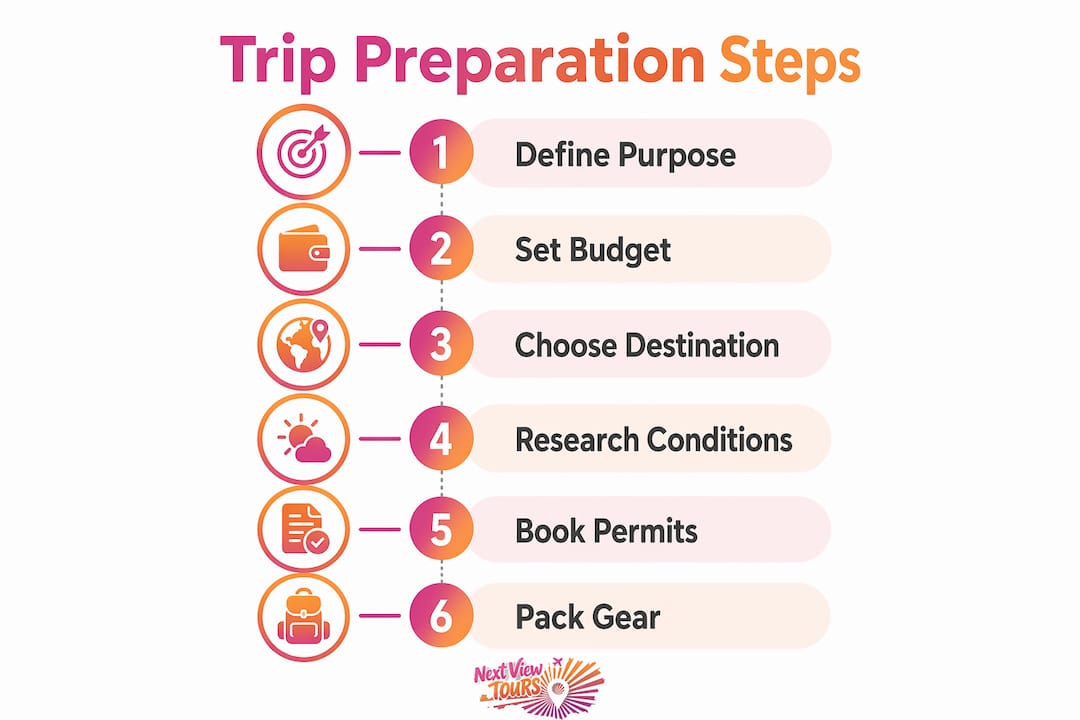
The most effective outdoor adventure planning starts with purpose, not destination. Decide first whether you want a day hike, a multi-day camping trip, or a guided nature experience. That decision shapes every choice that follows, from budget to gear to booking timelines.
Start with your trip purpose, then set a budget, then choose a destination. This sequence prevents the most common planning mistake: falling in love with a location before you know what it will actually cost. A solid budget covers transportation, lodging, food, activities, gear, travel insurance, and a contingency buffer of at least 10–15% for unexpected costs.
Research your destination’s conditions thoroughly. Check seasonal weather patterns, trail difficulty ratings, and any access restrictions. Permits and reservations are increasingly required for peak-season hikes and backcountry access. Arriving at a trailhead without the right permit means being turned away, regardless of how far you traveled.
Begin planning popular trips 3–6 months in advance and book permits and high-risk logistics 2–4 months ahead. For less-visited destinations, a 6–8 week lead time is often enough. The key is booking the items with the highest failure risk, such as permits, guided activities, and transport, before anything else.
Pro Tip: A hybrid booking model works well for most travelers. Manage your own transport and lodging for flexibility, but book guided experiences through a specialist like Nextviewtours to get local expertise without losing independence. Learn more about guided vs. self-guided travel to find the right balance for your trip style.
| Planning Phase | Timeline | Priority Actions |
|---|---|---|
| Destination and budget | 3–6 months out | Set trip purpose, research conditions, confirm budget |
| Permits and transport | 2–4 months out | Book permits, flights, and guided activities |
| Gear and packing | 4–6 weeks out | Purchase, test, and organize all equipment |
| Final logistics | 1–2 weeks out | Confirm bookings, share itinerary, charge devices |
What gear belongs on your nature travel checklist?
The updated 10 Essentials list is the industry standard for outdoor packing. It covers navigation, sun protection, insulation, illumination, first aid, fire starting, repair tools, nutrition, hydration, and emergency shelter. Every item on that list has saved lives in real wilderness situations.
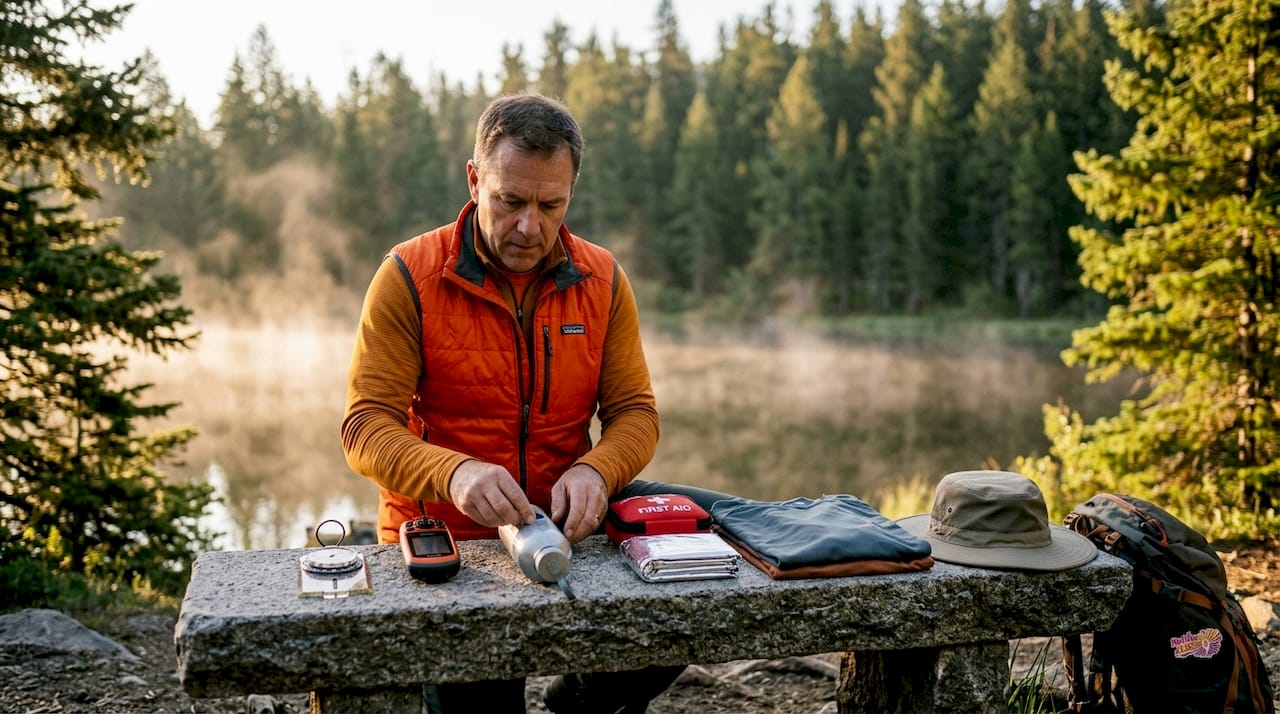
The modern version of this list includes GPS devices, tourniquets, emergency blankets, moisture-wicking synthetic clothing, personal locator beacons (PLBs), power banks, and trekking poles. These are not luxury additions. They are the baseline for any trip that takes you more than a few miles from a road.
Packing decisions depend on your trip type, climate, and activity level. A day hiker in the Austrian Alps needs different layers than a camper in the Czech highlands in october. Always pack for the worst expected conditions, not the best forecast.
If you are flying to your starting point, the TSA 3-1-1 rule limits carry-on liquids to containers of 3.4 ounces or less in a single quart-size bag. Pack sunscreen, insect repellent, and water treatment drops in your checked bag or buy them at your destination to avoid checkpoint delays.
Pro Tip: Test your gear before the trip. Wear your boots on a local walk for at least two weeks before a major hike. Set up your tent in the backyard. Blisters and broken zippers are avoidable problems.
Here is a core camping trip essentials checklist organized by category:
- Navigation: GPS device, paper map, compass
- Shelter and warmth: tent, sleeping bag rated for the expected low temperature, emergency blanket
- Clothing: moisture-wicking base layer, insulating mid-layer, waterproof outer shell, hat, gloves
- Hydration: water filter or UV purifier, collapsible water bottles, electrolyte tablets
- Nutrition: high-calorie snacks, camp meals, stove and fuel
- First aid: blister care, tourniquet, antiseptic, personal medications
- Communication: PLB or satellite messenger, fully charged phone, power bank
- Tools: headlamp with spare batteries, multi-tool, repair tape, fire starter
For a complete nature travel checklist tailored to 2026 conditions, Nextviewtours offers a detailed packing guide built around real European terrain.
How do you build a flexible nature trip itinerary?
A good itinerary guides your trip without controlling it. The goal is a framework that keeps you on track while leaving room for weather delays, slower-than-expected pacing, and unexpected discoveries.
Structure each day into three blocks: movement, rest, and camp or accommodation setup. Movement blocks cover your main activity, whether hiking, cycling, or paddling. Rest blocks protect your energy and reduce injury risk. Setup blocks give you time to organize camp before dark, which matters more than most first-timers expect.
Buffer 20–30% extra time into every day’s plan. If a trail segment is estimated at four hours, plan for five. Elevation gain, wet trails, and altitude all slow pace significantly. Experienced adventurers also add staging nights to absorb transit delays and weather changes, which prevents the cascading failures that ruin multi-day trips.
Factor in water sources, daylight hours, and elevation changes when sequencing your days. Ascending to high camp early in the day and descending in the afternoon is safer and more comfortable than the reverse. Always identify alternate routes in case your primary trail is closed or conditions deteriorate.
| Day | Morning | Afternoon | Evening |
|---|---|---|---|
| Day 1 | Travel to trailhead, gear check | First trail segment (light) | Camp setup, meal prep |
| Day 2 | Main ascent or long segment | Rest, explore, photograph | Camp, review next day |
| Day 3 | Buffer day or alternate route | Flexible activity | Early camp or town stay |
| Day 4 | Final segment | Descent or exit | Return transport |
Share your itinerary with a trusted contact before you leave. Tell them your planned check-in times and what to do if they do not hear from you by a specific hour. That single step reduces rescue response times dramatically in real emergencies.
What safety steps protect you on a nature trip?
Safety preparation is not optional. It is the part of wilderness preparation that determines whether a difficult situation becomes a manageable inconvenience or a life-threatening emergency.
Basic survival skills including fire starting with multiple methods, water purification, and emergency shelter building are the foundation of outdoor safety. These skills take hours to learn and can save your life. Take a wilderness first aid course before any remote trip. The Wilderness Medical Society offers recognized training programs that cover the most common backcountry emergencies.
Share your itinerary and check-in plan with a trusted contact and carry a satellite messenger or PLB for areas without cell service. Cell coverage disappears quickly outside of urban areas in most of Central and Eastern Europe. A PLB costs less than a single night in a hotel and works anywhere on Earth.
Safety rule: Never rely on a single communication method in the wilderness. Carry a charged phone, a satellite messenger or PLB, and a written emergency plan with local rescue numbers. If one fails, the others keep you connected. Leave No Trace principles also protect the environment and other travelers by requiring proper waste disposal, wildlife respect, and minimal campfire impact.
- Research local emergency numbers before you arrive (they vary by country across Europe)
- Carry a whistle, signal mirror, and bright-colored emergency poncho
- Know the symptoms of hypothermia, heat exhaustion, and altitude sickness
- Drink water before you feel thirsty; dehydration impairs judgment before you notice it
- Never hike alone in remote areas without a communication device
Pro Tip: Physical fitness preparation matters as much as gear. Start a training program 6–8 weeks before a demanding trip. Focus on the specific movements your trip requires: uphill walking with a loaded pack, sustained cardio, and ankle stability exercises.
Key Takeaways
Successful nature trips result from systematic preparation across planning, packing, itinerary design, and safety, with flexibility built into every stage.
| Point | Details |
|---|---|
| Plan 3–6 months ahead | Book permits and high-risk logistics early to avoid access problems. |
| Pack the 10 Essentials | Include navigation, shelter, first aid, communication, and hydration for every trip. |
| Build buffer time in | Add 20–30% extra time to daily plans to absorb weather and pace changes. |
| Share your emergency plan | Give a trusted contact your itinerary and check-in schedule before you leave. |
| Test gear before you go | Wear boots, set up tents, and check all equipment at home before the trail. |
What I have learned from years of nature trip planning
The most common mistake I see is treating preparation as a checklist to complete rather than a system to build. Travelers rush through the planning phase, skip gear testing, and write itineraries with zero buffer time. Then they wonder why the trip felt stressful.
The real value of preparation is that it frees your attention once you are out there. When you know your gear works, your permits are confirmed, and someone at home has your check-in schedule, you stop managing logistics and start actually experiencing the place you traveled to reach. That shift in attention is the whole point.
Overpacking is the second most common mistake, and it is just as damaging as underpacking. A heavy pack changes your pace, increases injury risk, and makes every uphill stretch miserable. I have watched experienced hikers abandon gear on the trail because they packed for every possible scenario instead of the most likely ones. Pack for your actual trip, not your worst fears.
The best planning systems I have seen are repeatable. Travelers who go out regularly build a base kit they trust, a planning timeline they follow, and a set of questions they ask about every new destination. That repeatability removes the anxiety from preparation and makes each trip easier to organize than the last. Nextviewtours’ nature trip planning guide is a good starting point for building that kind of system.
— Next
Nextviewtours makes nature trip planning easier
Planning a nature trip across Europe involves more moving parts than most travelers expect. Permits, transport, accommodation, and guided activities all need to align, and getting one wrong can affect the whole experience.
Nextviewtours offers nature and adventure trip types across Austria, the Czech Republic, Slovakia, Hungary, and beyond, covering day trips, multi-day adventures, private tours, and customized itineraries. Whether you want a guided alpine hike from Salzburg or a multi-day nature experience through the Bohemian forests, Nextviewtours handles the logistics so you can focus on the experience. For travelers who prefer structure with flexibility, solo adventure options are also worth exploring as a complement to guided bookings.
FAQ
What are the first nature trip preparation steps to take?
Start by defining your trip type and purpose, then set a budget and research your destination. Book permits and high-risk logistics 2–4 months in advance for popular routes.
How far ahead should I plan a nature trip?
Begin planning 3–6 months before your departure date for popular destinations. Less-visited areas may require only 6–8 weeks of lead time.
What should every hiker carry as camping trip essentials?
The 10 Essentials cover navigation, sun protection, insulation, illumination, first aid, fire starting, repair tools, nutrition, hydration, and emergency shelter. Add a PLB or satellite messenger for remote areas.
How do I make a nature trip itinerary flexible?
Buffer 20–30% extra time into each day and identify alternate routes before you leave. Treat the itinerary as a guide, not a fixed schedule, and build in at least one full buffer day on multi-day trips.
What safety gear is non-negotiable for wilderness trips?
A PLB or satellite messenger, a fully stocked first aid kit, and a written emergency plan shared with a trusted contact are the three items that matter most when cell service fails.


Comments are closed