

 Uncategorized
TL;DR:
- Exposure to natural environments significantly improves mental health, especially when combined with physical activity. Incorporating movement, slowing, and challenge enhances transformational benefits, making each trip more meaningful. Virtual nature offers some relief but cannot substitute the full sensory and physiological effects of real outdoor engagement.
Most people assume a nature trip is really just an extended exhale — fresh air, scenic views, and a welcome break from screens. That framing sells the experience short. Systematic review evidence now confirms that exposure to natural environments produces measurable improvements in depression, anxiety, and overall well-being, and the effect grows stronger when you add movement and challenge to the mix. Whether you are planning a solo hiking escape through Austria’s alpine valleys, a family adventure in the Czech countryside, or a gentle forest walk near Vienna, understanding the science behind nature’s power will help you get far more out of every trip.
Table of Contents
- What research tells us: Nature trips and mental well-being
- Adventure vs relaxation: Which activities maximize nature’s effects?
- Key factors for planning: Location, duration, and dynamic engagement
- Can virtual nature offer similar benefits?
- Why most nature trips miss the mark — and how to get more out of them
- Discover personalized nature adventures and guided tours in Europe
- Frequently asked questions
Key Takeaways
| Point | Details |
|---|---|
| Nature trips boost well-being | Scientific evidence shows nature trips measurably improve mental health outcomes for individuals and families. |
| Adventure adds lasting value | Adventure-oriented activities foster meaning, self-efficacy, and transformational benefits beyond relaxation. |
| Activity format matters | Combining movement and immersive slowing amplifies mental and physical health effects. |
| Smart planning reduces risks | Careful selection of location, activity, and duration helps maximize benefits while minimizing risks like tick exposure. |
| Virtual nature is a backup | Virtual nature experiences offer temporary relief but lack the full and lasting benefits of real-world nature engagement. |
What research tells us: Nature trips and mental well-being
Having set the stage, let’s look at what scientific research actually reveals about nature and the mind.
The evidence base has grown considerably in recent years. A Nature Cities meta-analysis drawing on hundreds of studies confirmed that contact with urban nature, including parks, forests, and waterways, delivers consistent, measurable benefits across multiple mental health outcomes. These include reductions in depression and anxiety as well as improvements in life satisfaction and emotional resilience. The findings hold across age groups and income levels, making nature therapy one of the most broadly accessible well-being tools available.
What is perhaps more surprising is how physical activity in natural settings amplifies those benefits. Research published as a Frontiers systematic review found that “green exercise,” meaning physical activity performed outdoors in natural environments, produced significantly stronger improvements in mental well-being compared to both indoor exercise and sedentary non-exercise. So a brisk hike through a beech forest is not just good for your legs. It is doing something qualitatively different for your mind than the same workout on a treadmill.
The mechanisms behind these effects are well-described. Biopsychological pathways include stress hormone reduction, improved attention restoration, and the activation of positive emotional states triggered by natural sensory stimuli. Birdsong, dappled light through canopy, the smell of damp earth — these inputs work on the nervous system in ways that built environments simply cannot replicate.
Top mental health outcomes improved by nature trips:
- Reduced cortisol levels and physiological stress markers
- Lower scores on standardized depression and anxiety measures
- Improved attention, focus, and cognitive flexibility
- Greater emotional resilience and capacity to manage daily pressure
- Higher reported life satisfaction and sense of meaning
- Better sleep quality following time spent outdoors
| Condition | Nature trip group | Indoor exercise group | Sedentary group |
|---|---|---|---|
| Well-being score improvement | High | Moderate | Minimal |
| Anxiety reduction | Significant | Moderate | Low |
| Depression score change | Strong improvement | Moderate improvement | Negligible |
| Mood elevation | Strong and lasting | Moderate | Temporary |
“Green exercise in natural environments consistently outperforms indoor exercise for mental well-being outcomes, with effects observed across diverse populations and geographic settings.” — Frontiers in Psychology, 2026 systematic review
If you are curious about how these principles apply to eco travel in Europe, the variety of landscapes across the continent, from Slovakian mountain ranges to Hungarian plains to Bohemian forests, creates an extraordinary range of settings for this kind of purposeful nature engagement.
Adventure vs relaxation: Which activities maximize nature’s effects?
With the science clear, the next question is which activities actually deliver these benefits most effectively.
Not all nature activities are equal. Forest therapy interventions — structured programs of guided sensory immersion in woodland settings — show strong improvements in mood, particularly when sessions are tailored in duration and intensity. Short, passive walks produce some benefit. But longer, more intentional sessions that include mindful pauses, breathing exercises, and sensory attention produce significantly stronger results.
Adventure-based activities add another layer. Nature-based sport activities have been shown to improve perceived health outcomes and psychological well-being across families and adults, with the social dimension of shared challenge adding an important layer of meaning and connection. When families hike together, paddle a lake, or navigate a trail, they build shared memories and trust alongside the physiological benefits.
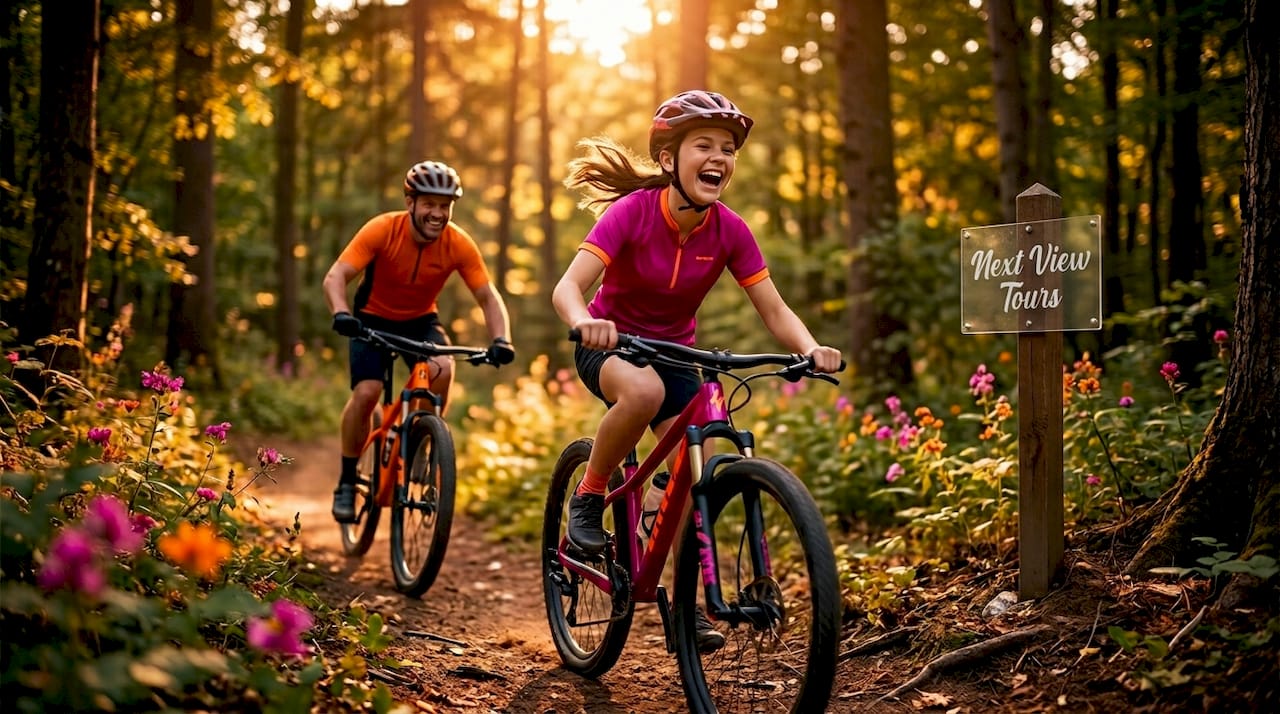
There is also compelling evidence that challenge itself is a core ingredient. A PMC qualitative study found that adventure engagement supports mental and physical health, self-efficacy, and even identity development — particularly in adolescents and young adults. Overcoming a difficult stretch of trail or reaching a mountain summit does something to a person’s sense of capability that a relaxed stroll, while valuable, does not.
Comparison of nature activity types:
| Activity | Mental health benefit | Best for | Intensity level |
|---|---|---|---|
| Forest bathing | Stress reduction, mood lift | All ages, beginners | Low |
| Guided nature hiking | Cognitive restoration, resilience | Families, adults | Moderate |
| Adventure trekking | Self-efficacy, identity, resilience | Teens, active adults | High |
| Slow nature travel | Meaning, emotional connection | Couples, reflective travelers | Low to moderate |
| Wildlife immersion tours | Awe, curiosity, well-being | Families, curious travelers | Low |
Steps to blend adventure and relaxation on a nature trip:
- Start with a moderate-intensity activity such as a guided hike to build physical engagement and open the mind to the environment.
- Build in at least one intentional pause per session — sit by a stream, observe the canopy, or simply breathe without agenda for five to ten minutes.
- Add one challenge element per day, something with a clear goal and a mild stretch of effort, whether a summit, a longer trail, or a river crossing.
- Close each day with low-stimulation time outdoors — an evening walk, outdoor dining, or simply sitting in an open space.
- Reflect briefly on what you noticed and felt. This closing loop helps consolidate the psychological benefits of the day.
For family-friendly nature trip planning, the key is calibrating intensity so that every member of the group, including children and older adults, experiences genuine engagement without exhaustion. For adventure tourism seekers, adding measurable challenge is what lifts the experience beyond a pleasant outing into something genuinely transformative. And for those drawn to slower, more mindful formats, forest therapy experiences offer a structured path into the restorative power of woodland environments.
Pro Tip: For families with younger children or older participants, shorter but more frequent nature sessions of 45 to 90 minutes tend to deliver better cumulative benefits than a single exhausting full-day excursion. Frequency matters as much as duration.
Key factors for planning: Location, duration, and dynamic engagement
Now that you know which activities matter, it is time to look at the practical details of planning your nature trip effectively.
Location shapes outcomes in ways that are easy to overlook. While rural forests and mountain environments are powerfully restorative, urban and peri-urban nature settings should not be dismissed. Research shows that positive mental health impacts from nature are often experienced more frequently in city parks and urban green corridors simply because access is easier and visits happen more often. For travelers based in or passing through Vienna, Prague, Budapest, or Salzburg, the green spaces around these cities are genuinely effective settings for well-being-focused experiences.

That said, deeper immersion in rural or wilderness environments does appear to produce stronger effects per session. A day in a dense beech forest in Slovakia or a full morning on a trail in the Austrian Alps delivers a qualitatively richer dose of restorative input than a city park walk, even if both contribute positively.
Planning also requires honest awareness of edge-case risks. Forest structure and ecosystem variables can introduce trade-offs, including tick and Lyme disease risk in dense, humid woodland areas across Central Europe. This is a real consideration for families with children, not a reason to avoid forests, but a factor that warrants preparation.
Key planning factors for a well-designed nature trip:
- Location: Match setting (urban park, peri-urban forest, rural wilderness) to participant age and mobility
- Duration: Plan sessions of 45 minutes to 3 hours for optimal benefit; multi-day trips amplify cumulative gains
- Activity type: Blend at least one movement-based and one slower, sensory-focused activity per day
- Intensity: Calibrate effort to the least capable participant to ensure full group engagement
- Safety: Check tick risk in forested areas, carry appropriate repellent, and wear covered footwear
- Weather contingency: Have a backup plan for high-altitude or exposed terrain in unpredictable European weather
For broader guidance on nature tour selection tips, thinking through these factors before you book saves frustration and ensures the trip actually delivers the well-being outcomes you are aiming for.
Pro Tip: In Central European forests, peak tick season runs from April through October. Long sleeves, tucked trousers, and a post-walk tick check are simple habits that protect the whole family without limiting your enjoyment of the forest.
Can virtual nature offer similar benefits?
But what if getting outdoors is not possible? Let’s look at how virtual options compare.
Virtual nature — including nature documentaries, VR forest environments, and nature-soundscape audio — has received serious research attention in recent years. Meta-analytic evidence shows that virtual nature can reduce anxiety, stress, and depression in healthy adults, particularly in the short term. For people facing mobility barriers, severe weather, or scheduling constraints, these tools offer a genuine, if partial, alternative.
When virtual nature may be a reasonable option:
- Recovering from illness or injury that prevents outdoor access
- During winter months when outdoor access is significantly limited
- As a preparation tool before a planned nature trip, building familiarity with an environment
- For short daily stress-relief sessions when time does not allow for outdoor excursions
The limitations are real and worth naming plainly. Virtual nature does not replicate the full sensory experience of physical immersion. Physiological markers like cortisol reduction and immune function improvements are consistently weaker in virtual settings than in real ones. Long-term psychological resilience gains, the kind associated with nature trip impact, require actual embodied experience in outdoor environments.
Think of virtual nature as a bridge, useful for maintaining a connection to natural environments during gaps, but not a substitute for the real thing. The goal is always to get outside.
Why most nature trips miss the mark — and how to get more out of them
Here is something we have observed through years of guiding people through Europe’s most beautiful natural landscapes: most travelers leave far too much value on the table.
The typical nature trip is designed around scenery. You drive to a beautiful location, take photographs, walk a well-marked trail, and return to the hotel feeling pleasantly tired. That experience is genuinely good. But it is about 40 percent of what is available to you.
The research points clearly toward a three-part framework for unlocking the full benefit. First, you need movement — sustained physical engagement that gets the heart rate up and builds a genuine physical relationship with the landscape. Second, you need immersive slowing — deliberate pauses where you stop performing the activity and simply receive the environment through your senses. Third, and most importantly for lasting well-being gains, you need meaningful challenge — a goal or difficulty that asks something of you, stretches your capacity, and gives you the satisfaction of accomplishment.
Most tours and most travelers deliver only the first element, or skip it entirely in favor of a passive experience. The ones who return home genuinely changed — calmer, clearer, more themselves — are the ones who combined all three. A morning hike to a viewpoint (movement), a thirty-minute sit in silence at the summit (immersive slowing), and the choice to take the harder trail back (meaningful challenge). This framework applies equally to an eight-year-old discovering a forest for the first time and to a fifty-five-year-old looking for a mental reset.
Immersive countryside experiences designed around this three-part structure are where we see the strongest transformations in the people we guide. It is not about intensity. It is about intentionality.
Discover personalized nature adventures and guided tours in Europe
You now have a clear picture of what makes a nature trip genuinely transformative rather than simply pleasant. The next step is finding the right experience for you and your family.
At Next View Tours, we design customized tours across Austria, Slovakia, the Czech Republic, Hungary, and beyond with exactly this framework in mind. Our expert guides understand how to blend movement, mindful pauses, and meaningful challenge into itineraries that work for solo travelers, couples, families, and groups. From day trips departing Vienna, Salzburg, Prague, or Budapest to multi-day nature adventures through alpine and forested regions, every experience is built around your pace and your goals. Whether you are seeking an active escape or a gentler immersion in Europe’s extraordinary natural landscapes, we will help you plan a trip that delivers lasting well-being, not just a nice memory.
Frequently asked questions
What mental health benefits can nature trips provide?
Nature trips can improve mood, reduce stress and anxiety, and boost overall well-being, as shown by hundreds of peer-reviewed studies. Benefits include lower depression scores, improved cognitive focus, and stronger emotional resilience.
Are adventure activities more effective for mental health than relaxing nature trips?
Both have distinct value. Adventure engagement builds self-efficacy, identity, and lasting resilience, while relaxation-focused nature experiences are particularly effective for acute stress reduction and mood restoration. Combining both yields the strongest outcomes.
What planning factors should families consider for nature trips in Europe?
Families should weigh location, activity intensity, trip duration, and safety considerations including tick and Lyme disease risk in Central European forests, particularly between April and October.
Does virtual nature provide the same benefits as real nature trips?
Virtual nature reduces anxiety and stress in the short term but does not replicate the full physiological and psychological benefits of real outdoor immersion. Use it as a supplement, not a replacement.


Comments are closed