
 Uncategorized
TL;DR:
- A three-day stay covers Prague’s main sights, but four days allow for deeper exploration. Visiting in May, June, September, or October offers better weather and fewer crowds, while shoulder seasons reduce costs. Using public transport and early visits enhance convenience and authentic experiences.
Prague is the capital of the Czech Republic and one of Europe’s most rewarding cities for travelers who love history, architecture, and authentic culture. Unlike many Western European capitals, Prague survived World War II largely intact, leaving behind a skyline of Gothic spires, Baroque palaces, and medieval bridges that feel genuinely lived in. This guide covers everything a first-time visitor needs: how long to stay, when to go, how to get around, which neighborhoods to prioritize, and how to eat well without overpaying. Think of it as your practical Prague wikitravel resource, updated for 2026.
How many days do you need in Prague to see the essential sights?
Three days is the optimal minimum for a first-time visitor to cover Prague Castle, Charles Bridge, and the Old Town without feeling rushed. That timeframe gives you enough breathing room to walk slowly, stop for coffee, and actually absorb what you are seeing rather than sprinting between checkpoints.
Here is how a three to four day Prague itinerary guide breaks down in practice:
- Day 1: Old Town, Old Town Square, the Astronomical Clock, and the Jewish Quarter. Spend the afternoon in the Jewish Quarter, which holds six historic synagogues and the Old Jewish Cemetery.
- Day 2: Prague Castle district in the morning, St. Vitus Cathedral, and the Golden Lane. Cross Charles Bridge in the late afternoon when the light is softer and crowds thin slightly.
- Day 3: Vinohrady or Žižkov neighborhoods for local cafes, street art, and a slower pace. Visit Petřín Hill for panoramic city views.
- Day 4 (optional): A day trip from Prague to Kutná Hora, home to the famous Bone Church, is one of the most memorable half-day excursions in Central Europe.
Pro Tip: Book skip-the-line tickets for the Jewish Quarter and timed entry for Prague Castle well before your trip. Both sell out during peak season and long queues will eat into your day.
A fourth day also opens up Vyšehrad, a fortress south of the city center with a cemetery holding the graves of Czech composers Antonín Dvořák and Bedřich Smetana. Most visitors skip it entirely, which means you will have it nearly to yourself.
What is the best time to visit Prague for good weather and fewer crowds?
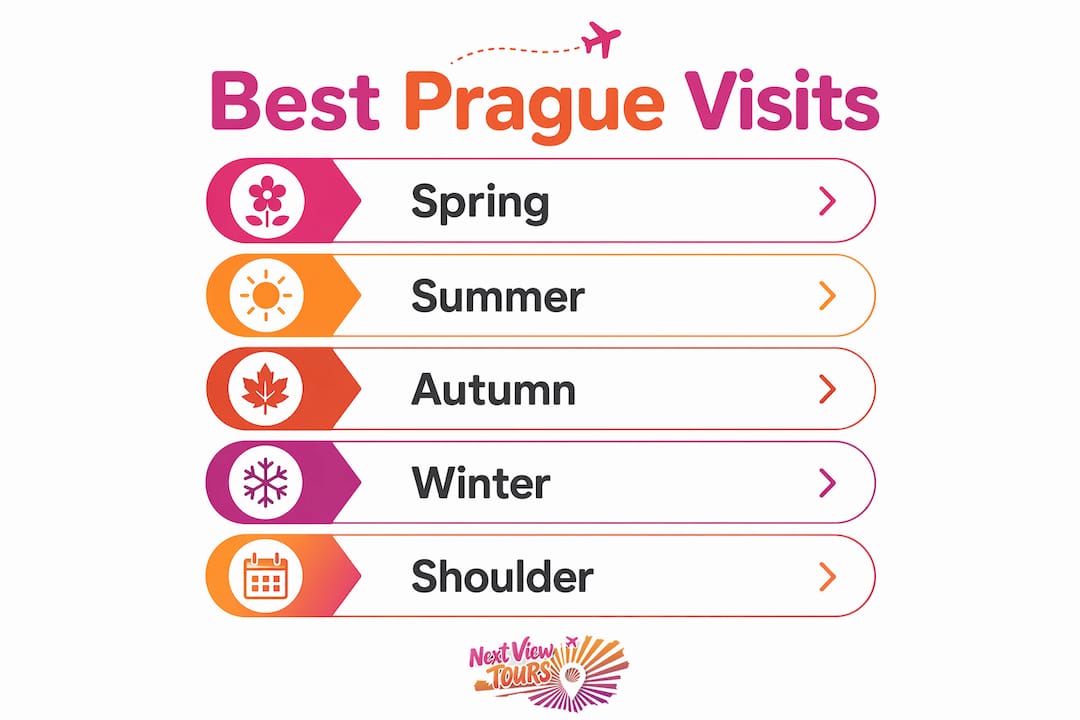
The best months to visit Prague are may, june, september, and october. Weather is mild, daylight hours are long, and tourist density stays manageable compared to the summer peak.
Here is a quick seasonal breakdown:
- May and June: Warm temperatures, blooming parks, and outdoor terraces open. Crowds build toward late June but remain tolerable.
- September and October: Arguably the best combination of weather and atmosphere. Fewer visitors, lower accommodation prices, and the city takes on a golden autumn tone.
- July and August: Peak crowds and the highest prices of the year. August in particular brings dense tourist traffic around Old Town Square and Charles Bridge.
- November through February: Cold and occasionally gray, but Prague’s Christmas markets in december are genuinely beautiful. Prices drop significantly and the city feels more local.
Timing your visit strategically also affects your budget. Traveling in shoulder season (may or september) rather than peak summer can reduce accommodation costs noticeably. For a deeper look at how seasonal pricing affects travel costs, the patterns that apply across Europe apply directly to Prague.
Pro Tip: If you visit in winter, pack layers and check which attractions reduce their hours. Some smaller museums close or operate on limited schedules from november through march.
What are the best ways to get around Prague efficiently in 2026?
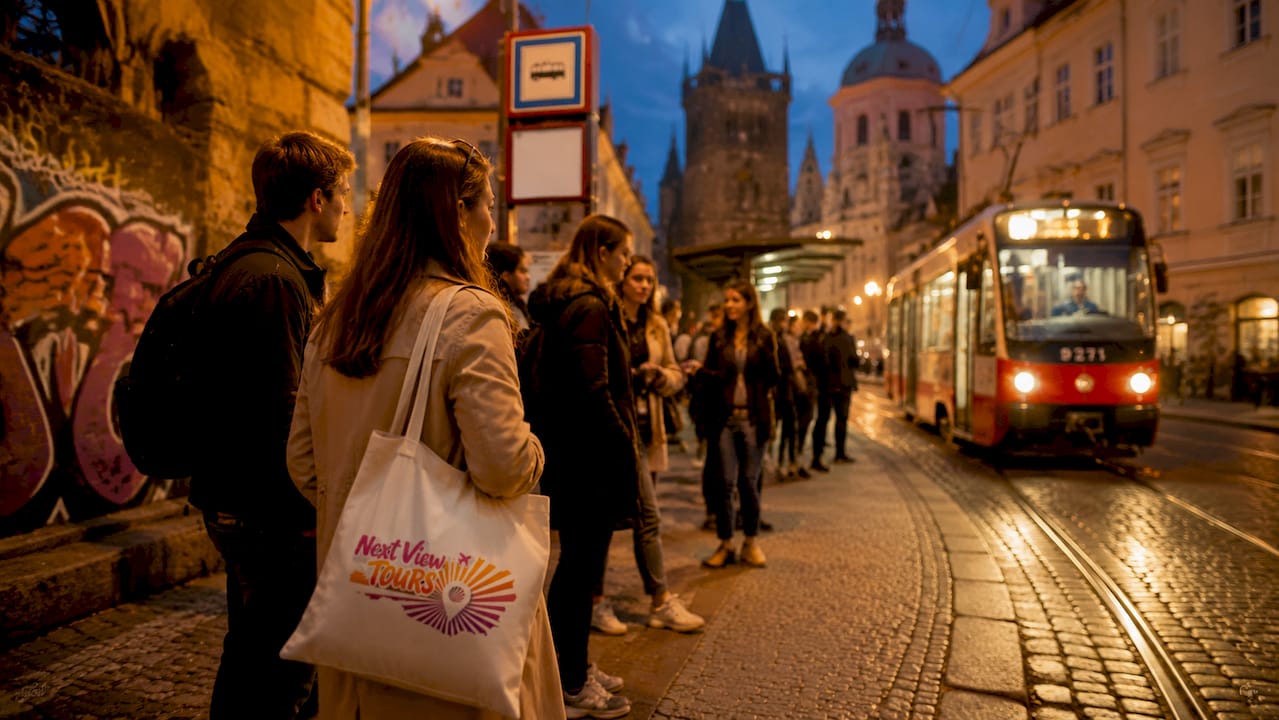
Prague’s public transport system is one of the most affordable in Europe, and it covers the city thoroughly. The network integrates metro, trams, and buses under a single ticketing system.
- Buy a 24-hour pass. A 30-minute ticket costs 30 CZK and a 24-hour pass costs 120 CZK. For a full day of sightseeing, the pass pays for itself after three or four rides.
- Download the PID Lítačka app. The PID Lítačka app lets you buy digital tickets, plan routes in real time, and track trams and buses live. It replaces paper tickets entirely and is the method locals use.
- Use Bolt or Uber instead of street taxis. Ride-sharing apps like Bolt and Uber are cheaper and more transparent than hailing a cab on the street. Traditional street taxis near tourist areas have a well-documented history of overcharging.
- Take Tram 22 to Prague Castle. Rather than hiking uphill from the river, Tram 22 to Pohořelec drops you near the castle entrance and saves real energy for exploring inside.
- Validate your ticket every time. Inspectors check tickets regularly on trams and metro platforms. Fines for unvalidated tickets are issued on the spot and are not negotiable.
Pro Tip: The metro runs until midnight on weekdays and slightly later on weekends. After midnight, night trams take over. Line N91 covers much of the central city and runs every 30 minutes.
Which Prague neighborhoods and sights should first-time visitors prioritize?
The city divides naturally into districts with distinct characters. Knowing which ones to prioritize saves you from spending all your time in the most crowded zones.
Early morning visits to Charles Bridge before 7:00 AM offer a peaceful experience. After 9:00 AM, crowds on the bridge can reach upwards of 30,000 visitors during peak season. That single fact changes how you plan your mornings.
| Neighborhood | Character | Best for |
|---|---|---|
| Old Town (Staré Město) | Medieval architecture, tourist center | Astronomical Clock, Jewish Quarter |
| Malá Strana | Baroque palaces, quiet lanes | Prague Castle access, garden walks |
| Vinohrady | Residential, local cafes | Authentic dining, art nouveau buildings |
| Žižkov | Bohemian, creative | Street art, local bars, TV Tower views |
| Petřín Hill | Green space, panoramic views | Walking, the Petřín Lookout Tower |
Malá Strana sits directly below Prague Castle and connects to Charles Bridge on its western end. The streets here are quieter than Old Town and lined with embassies, small galleries, and garden restaurants. Vinohrady, a 15-minute tram ride from the center, is where Prague residents actually eat and socialize. You will find better coffee, more honest menus, and prices that reflect local rather than tourist demand. For Prague sightseeing planning, balancing the historic core with at least one residential neighborhood makes the trip feel complete rather than purely transactional.
How to save money and enjoy authentic dining in Prague
The single most effective dining rule in Prague is simple: walk two blocks away from any major tourist square before sitting down. Dining two blocks from Old Town Square delivers better food at significantly lower prices. The food-to-price ratio improves quickly the moment you leave the main tourist corridors.
Practical tips for eating and spending well:
- Avoid restaurants with picture menus near Old Town Square. These target tourists and charge two to three times local rates for average food.
- Try svíčková and goulash at a local pub. These Czech classics cost a fraction of what tourist restaurants charge and taste better when prepared for a local clientele.
- Drink Czech beer. Prague is one of the few cities where a half-liter of quality draft lager costs less than a bottle of water at a tourist café. Brands like Pilsner Urquell, Kozel, and Bernard are widely available.
- Use ATMs from reputable Czech banks. Select payment in CZK and avoid dynamic currency conversion. Banks like Komerční banka, Česká spořitelna, and Raiffeisenbank offer the best exchange rates. Airport and hotel exchange counters are the worst option.
- Eat lunch as your main meal. Many Czech restaurants offer a daily lunch menu (denní menu) with soup and a main course for 150–200 CZK. The same dish at dinner costs significantly more.
For travelers who want to save more by timing travel wisely, visiting Prague in shoulder season compounds these dining savings with lower accommodation costs across the board.
Key Takeaways
Prague rewards visitors who plan ahead, arrive early at key sights, and step even slightly off the main tourist path for better food, lower prices, and more authentic experiences.
| Point | Details |
|---|---|
| Optimal trip length | Three days covers the essentials; add a fourth for Kutná Hora or deeper neighborhood exploration. |
| Best time to visit | May, June, September, and October offer the best balance of weather, crowds, and pricing. |
| Getting around | The PID Lítačka app and a 24-hour transit pass are the cheapest and most convenient options. |
| Dining savings | Walk two blocks from tourist squares for better food at significantly lower prices. |
| Advance booking | Book skip-the-line tickets for the Jewish Quarter and Prague Castle before peak season arrives. |
What I have learned from spending real time in Prague
Prague is one of those cities that punishes visitors who over-schedule and rewards those who leave gaps. The travelers who get the most out of it are not the ones who tick every sight off a list. They are the ones who wander into Malá Strana at dusk, find a wine bar they were not looking for, and end up talking to a local architect about the building they are sitting in.
The Tram 22 tip sounds minor until you have watched a group of tourists trudge uphill to Prague Castle in August heat while you glide past them. Small logistical decisions compound across a multi-day trip. The same logic applies to Charles Bridge. Visiting at 6:30 AM on a weekday morning is a completely different experience from arriving at 11:00 AM. The bridge is the same. The experience is not.
One thing most travel guides understate: Prague Castle is enormous. It is not a single building but a complex covering 70,000 square meters, making it one of the largest castle complexes in the world. Budget at least three hours and prioritize St. Vitus Cathedral, the Old Royal Palace, and the Golden Lane. Trying to see everything in one pass leads to fatigue and missed details.
My honest recommendation for cultural depth: book a classical concert in one of Prague’s Baroque churches or palaces. These performances happen nightly, cost 400–700 CZK, and take place in venues that most visitors only photograph from the outside. Sitting inside St. Nicholas Church in Malá Strana during a live concert is one of the most memorable experiences the city offers, and it is almost never mentioned in standard itinerary guides.
— Next
Plan your Prague experience with Nextviewtours
Prague is a city that rewards good planning and the right company. Nextviewtours offers private tours, group tours, and fully customized experiences built around what you actually want to see, not a generic checklist.
Whether you are traveling as a couple, a family, or a small group, Nextviewtours designs trips that fit your pace and interests. From day trips out of Prague to multi-day Central European itineraries, every option is built with local knowledge and flexibility in mind. Explore the full range of Prague tour options and find the format that works for your trip. For travelers who want a fully personalized experience, private tour planning with Nextviewtours removes the guesswork and puts local expertise at the center of your visit.
FAQ
How many days is enough for a first visit to Prague?
Three days covers the essential sights including Prague Castle, Charles Bridge, and the Old Town without rushing. A fourth day is recommended for a day trip to Kutná Hora or deeper neighborhood exploration.
What is the cheapest way to get around Prague?
A 24-hour public transport pass costs 120 CZK and covers the metro, trams, and buses. Download the PID Lítačka app to buy digital tickets and track routes in real time.
When should I avoid visiting Prague?
August brings peak crowds and the highest prices of the year. Visiting in may, june, september, or october gives you better weather, manageable crowds, and lower accommodation costs.
Is Prague expensive for food and drink?
Prague is affordable by European standards, especially if you eat away from Old Town Square. A full Czech lunch with soup costs 150–200 CZK at a local restaurant, and draft beer is widely available for under 60 CZK per half-liter.
Do I need to book Prague attractions in advance?
Yes. Skip-the-line tickets for the Jewish Quarter and timed entries for Prague Castle sell out during peak season. Book at least two to three weeks ahead if you are visiting between may and september.


Comments are closed