
 Adventure Tours
Most travelers underestimate just how many details shape a flawless European tour. The difference between an average getaway and an unforgettable adventure often comes down to preparation, not luck. Studies show that even seasoned American tourists are often caught off guard by hidden costs and complex local regulations in Austria and Central Europe. Here you will discover how thoughtful planning, regional insights, and smart strategies turn daunting logistics into seamless experiences tailored to your travel style.
Table of Contents
- Tour Planning Basics And Misconceptions
- Major Tour Types In Central Europe
- Essential Steps For Efficient Trip Design
- Legal Rules, Safety, And Entry Requirements
- Cost Factors, Mistakes, And What To Avoid
Key Takeaways
| Point | Details |
|---|---|
| Strategic Planning is Essential | Effective tour planning involves complex decision-making that considers multiple factors like budget, preferences, and logistics. A structured approach is crucial for a satisfying travel experience. |
| Diverse Tour Types in Central Europe | Central Europe offers various tourism experiences, including cultural, urban, nature-based, and historical tours. Selecting the right tour type enhances the travel experience. |
| Cost Management is Critical | Travelers should avoid common budgeting mistakes by researching costs thoroughly and creating comprehensive budgets, including contingency funds to manage unexpected expenses. |
| Understanding Legal Requirements | Knowing the legal entry requirements and safety regulations in European countries is vital for a smooth journey. Make sure to stay informed about necessary documents and regulations before traveling. |
Tour Planning Basics and Misconceptions
Tour planning is far more complex than most travelers realize. Unlike simplistic assumptions about spontaneous travel, strategic tourism planning requires sophisticated cognitive strategies and careful decision-making. Travelers must navigate intricate challenges involving activity selection, time management, logistical constraints, and personal preferences.
Most people misconceive tour planning as a straightforward process of choosing destinations and booking tickets. In reality, effective tour planning involves assembling fragmented information from multiple sources, analyzing potential routes, understanding regional transportation systems, and balancing diverse traveler needs. Successful European journeys demand meticulous preparation that goes beyond basic itinerary creation.
The core of effective tour planning lies in understanding complex decision-making frameworks. Travelers must consider multiple variables simultaneously: budget constraints, seasonal variations, cultural events, transportation options, accommodation availability, and personal comfort levels. Each decision creates a ripple effect that impacts the entire travel experience, making systematic planning crucial for maximizing enjoyment and minimizing potential complications.
Pro Tip: Create a flexible planning template that allows for spontaneity while maintaining a structured overall framework, ensuring you can adapt to unexpected opportunities without losing your primary travel objectives.
Major Tour Types in Central Europe
Central Europe offers a remarkably diverse landscape of tourism experiences, with multiple specialized tour types catering to different traveler interests. Tourism in Central European countries encompasses several distinctive categories that provide unique perspectives on the region’s rich cultural and geographical tapestry.
The primary tour types in Central Europe include cultural tourism, urban exploration, nature-based adventures, and historical journeys. Cultural tours typically focus on immersive experiences in cities like Prague, Vienna, and Budapest, where travelers can explore museums, architectural landmarks, and local traditions. Urban tourism allows visitors to dive deep into the vibrant metropolitan landscapes, experiencing contemporary life alongside historical contexts.
Nature and adventure enthusiasts find extensive opportunities through ecotourism and rural tourism options. These tour types showcase Central Europe’s stunning landscapes, from the Carpathian Mountains to the Bohemian forests, offering travelers experiences ranging from hiking and wildlife observation to exploring traditional rural communities. Each tour type provides a unique lens through which travelers can understand the complexity and diversity of Central European regions.
Pro Tip: Select tour types that align with your personal interests and combine multiple categories to create a comprehensive and enriching travel experience.
Here’s how major tour types in Central Europe compare:
| Tour Type | Typical Activities | Best For | Notable Destinations |
|---|---|---|---|
| Cultural Tourism | Museums, local festivals | History enthusiasts | Vienna, Prague, Budapest |
| Urban Exploration | City walks, food tours | Modern city lovers | Warsaw, Bratislava |
| Nature Adventure | Hiking, wildlife observation | Outdoor adventurers | Carpathians, Bohemian forests |
| Historical Journey | Castles, battlefields | Heritage seekers | Krakow, Dresden |
Essential Steps for Efficient Trip Design
Designing an efficient travel itinerary requires strategic planning and systematic approach. Tourist trip design modeling involves complex decision-making processes that help travelers optimize their experiences while managing practical constraints like time, budget, and personal preferences.
The essential steps for creating an efficient trip design begin with comprehensive research and preference mapping. Travelers must first identify their primary interests, whether cultural exploration, historical sites, natural landscapes, or urban experiences. This initial phase involves scoring potential destinations based on individual priorities, understanding transportation logistics, and evaluating the feasibility of connecting different points of interest.

Effective trip design also requires careful consideration of dynamic constraints such as seasonal variations, opening hours of attractions, travel times between locations, and potential unexpected challenges. Advanced planning techniques now incorporate artificial intelligence and optimization algorithms that help travelers create personalized itineraries that maximize experiences while minimizing logistical complications. The goal is to create a flexible yet structured travel plan that allows for spontaneity while maintaining overall trip objectives.
Pro Tip: Create a digital spreadsheet with color-coded tabs for different trip aspects like transportation, accommodations, attractions, and budget to maintain comprehensive yet organized trip planning.
Legal Rules, Safety, and Entry Requirements
Traveling to European destinations requires understanding complex legal frameworks and entry regulations. EU travel entry requirements have become increasingly sophisticated, with new systems designed to enhance border security and streamline traveler experiences.
The Schengen Area presents specific legal challenges for international travelers. Most non-European visitors are subject to a 90-day visa-free stay limitation, with strict regulations governing entry and exit. Travelers must now prepare for the upcoming European Travel Information and Authorization System (ETIAS), which will mandate pre-travel authorization for visa-exempt nationals. This system represents a significant shift in border control, requiring travelers to obtain digital clearance before entering most European countries.
Safety considerations extend beyond documentation requirements. Travelers must carry multiple forms of identification, ensure passport validity for at least six months beyond their planned return date, and maintain comprehensive travel insurance. Different countries within Central Europe may have nuanced entry requirements, making it crucial to research specific regulations for each destination. Understanding these legal intricacies helps prevent potential travel disruptions and ensures a smooth, stress-free journey across European borders.
Pro Tip: Create a digital travel folder with scanned copies of all essential documents, including passport, visa, insurance, and authorization certificates, and store them securely in multiple cloud storage platforms.
Cost Factors, Mistakes, and What to Avoid
Navigating the financial landscape of European travel requires strategic planning and careful consideration. Tourism economic impact analysis629200_EN.pdf) reveals critical insights into common budgeting mistakes that can significantly inflate travel expenses and diminish overall trip satisfaction.
Travelers frequently encounter several costly pitfalls that can quickly derail their budget. These include overlooking hidden fees, failing to research seasonal pricing variations, and neglecting to account for transportation costs between destinations. Unexpected expenses like local transportation, tourist taxes, meal variations, and spontaneous activities can add up rapidly. Experienced travelers recommend creating a comprehensive budget that includes a 15-20% contingency fund to accommodate unexpected costs and provide financial flexibility.
Smart cost management involves more than just tracking expenses. Travelers should prioritize strategic spending by understanding value propositions, leveraging off-season travel opportunities, and making informed choices about accommodations and dining. Avoiding tourist traps, comparing prices across multiple platforms, and being willing to mix budget-friendly experiences with select premium options can help create a balanced and economically sustainable travel experience. Understanding local economic contexts and pricing structures can provide significant savings and more authentic travel experiences.
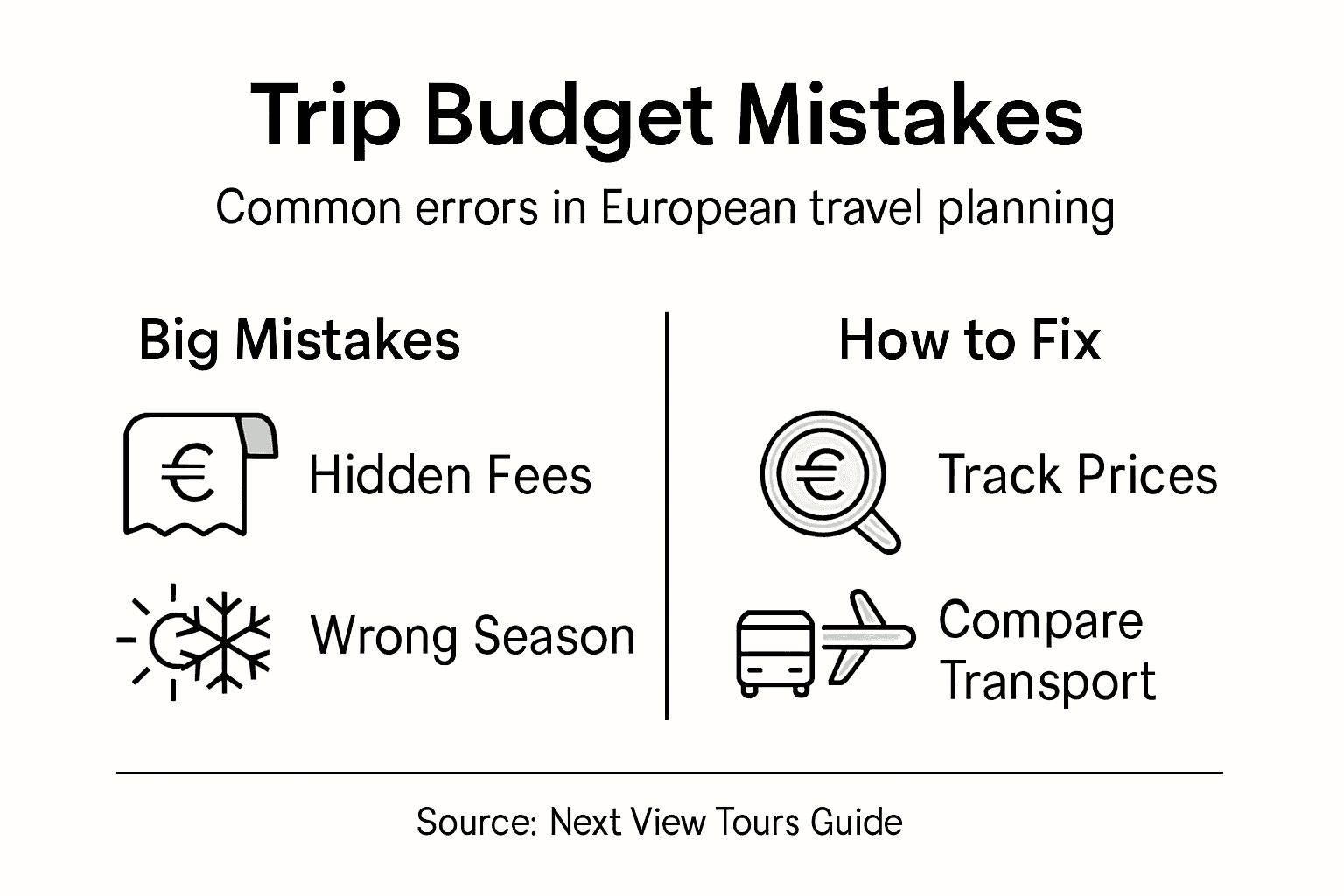
The following table summarizes key cost pitfalls and strategies for European trips:
| Mistake to Avoid | Why It Happens | Proactive Solution |
|---|---|---|
| Overlooking hidden fees | Not reading small print | Ask for all-in pricing upfront |
| Ignoring seasonal price swings | Lack of advance research | Use price trend trackers |
| Underestimating transportation | Only budgeting major routes | Map all transfers and local fares |
| Forgetting contingency fund | No buffer for surprises | Set aside 15-20% extra budget |
Pro Tip: Use price tracking apps and set up currency exchange alerts to optimize your travel budget and capture the most favorable exchange rates during your trip planning.
Master Your European Tour Planning with Next View Tours
Planning an enriching and smooth European journey requires more than just booking tickets and picking destinations. If you want to avoid hidden fees, manage seasonal changes, and optimize your itinerary while balancing your personal interests and logistics then expert guidance is essential. Next View Tours offers expertly crafted City Tour options and custom tour experiences that align perfectly with your travel priorities and help you skip common planning challenges.

Discover the ease of well-structured day trips, multi-day adventures, and private or group tours across iconic locations like Vienna, Prague, and Budapest. Visit Next View Tours today and unlock seamless travel planning with tailored trips designed to maximize your time and enjoyment. Start your unforgettable European journey now and see how smart planning and trusted local expertise can transform your travel experience.
Frequently Asked Questions
What is the importance of strategic tourism planning?
Strategic tourism planning is essential for making informed decisions that balance personal preferences, budget constraints, and logistical considerations, ultimately enhancing the overall travel experience.
How can I create an effective travel itinerary?
To create an effective travel itinerary, start with comprehensive research, map your interests, consider seasonal variations, and use digital tools like spreadsheets for organized planning.
What common mistakes should I avoid when budgeting for a trip?
Common budgeting mistakes include overlooking hidden fees, ignoring seasonal pricing changes, and underestimating transportation costs. Setting aside a contingency fund of 15-20% can help manage unexpected expenses.
How do legal rules and entry requirements affect travel planning?
Understanding legal rules and entry requirements is crucial as they can dictate travel documentation needed, visa regulations, and safety measures, ensuring a smooth journey without potential disruptions.


Comments are closed