
 City Tour
Over a billion overnight trips happen across Europe annually, yet many travelers underestimate the complexity of transportation logistics that can make or break their tour experience. EU residents made 1.2 billion trips with overnight stays in 2024, showing massive demand for travel. This guide explains how transportation shapes every aspect of your European adventure, from comfort and timing to overall satisfaction. Understanding these logistics helps you plan smarter and enjoy more.
Table of Contents
- How Transportation Influences The Tour Experience
- Common Transportation Challenges And Misconceptions
- Innovations Improving European Tour Transportation
- Maximizing Efficiency And Satisfaction Through Smart Transport Choices
- Enhance Your European Tour Experience With Next View Tours
- Frequently Asked Questions
Key takeaways
| Point | Details |
|---|---|
| Transportation shapes experience | Your chosen transport mode directly affects comfort, timing, and tour success. |
| Planning prevents pitfalls | Proper preparation avoids underestimated travel times and missed connections. |
| Modern solutions reduce stress | Digital ticketing and coordinated logistics increase flexibility and ease. |
| Professional coordination matters | Tour operators partnering with transport providers deliver seamless experiences. |
How transportation influences the tour experience
The mode of transport you choose fundamentally shapes your physical comfort and emotional state throughout your journey. Modern European coach tours prioritize comfort and convenience, offering features like smaller group sizes, centrally located hotels, and all-inclusive packages to reduce stress for travelers. When you select the right transport option, you eliminate the constant worry about logistics and focus on enjoying destinations.
Coach tours emphasize hassle-free travel by handling meal arrangements, entrance fees, and accommodation bookings as part of comprehensive packages. This all-inclusive approach means you board knowing every detail is managed professionally. The result is more mental energy for exploration and less time troubleshooting problems.
Tour operators coordinate transport details meticulously to maximize your satisfaction throughout multi-day adventures. They schedule departures to optimize sightseeing hours and minimize transit fatigue. When you explore tour experience types in Europe, you’ll notice how transportation choices align with activity intensity and group dynamics.
“The quality of transportation directly correlates with traveler satisfaction scores, with premium coach services receiving 40% higher ratings than budget alternatives.”
Professional coordination between operators and transport providers creates seamless transitions between destinations. This partnership ensures vehicles arrive on time, luggage transfers happen smoothly, and backup plans exist for unexpected delays. Understanding the role of tour operators in Europe reveals how these logistics partnerships enhance your travel experience.
Key transport features that improve tour quality include:
- Climate-controlled vehicles with reclining seats and ample legroom
- Onboard WiFi and charging ports for staying connected
- Professional drivers familiar with optimal routes and local conditions
- Regular rest stops at clean facilities with refreshment options
Common transportation challenges and misconceptions
Travelers frequently underestimate total travel time by failing to account for transfers, security checks, and waiting periods between connections. 60% of first-time visitors to Italy underestimated travel times by at least 2 hours per journey, leading to overpacked itineraries and less time at destinations. This miscalculation creates rushed experiences and missed opportunities to fully appreciate each location.
Navigational errors pose another significant challenge, particularly in rural European areas where address systems differ from North American standards. Americans often get stranded in rural Europe because they trust address search results without verifying the exact location pin in Google Maps. Small villages may have duplicate street names or imprecise digital mapping that leads to wrong destinations.
Pro Tip: Always verify map pins by cross-referencing with satellite view and official destination websites before departure.
Overpacking your itinerary with too many stops creates transit fatigue that diminishes enjoyment at each location. When you spend more time moving between places than exploring them, the tour becomes exhausting rather than enriching. Quality experiences require adequate time at each destination to absorb the atmosphere and engage meaningfully.
Local transport systems and signage conventions vary dramatically from U.S. standards, causing confusion for international travelers. Consider these common differences:
- Train platforms may change at the last minute without clear announcements in English
- Bus routes often use alphanumeric codes rather than descriptive destination names
- Ticket validation machines require specific procedures that aren’t always intuitive
- Payment systems may not accept all international credit cards at automated kiosks
- Timetables display 24-hour format rather than AM/PM designations
Understanding these differences before arrival helps you navigate confidently and avoid stressful situations. Familiarizing yourself with key terms in European travel provides essential vocabulary for reading signs and asking questions. Building buffer time between connections accounts for unfamiliar systems and prevents missed departures.
The best approach involves researching specific transport systems for your destinations and downloading offline maps. When you understand tour planning in Europe, you can anticipate challenges and prepare solutions in advance.
Innovations improving European tour transportation
Open Multimodal Mobile Ticketing (OMMT) revolutionizes cross-border travel by standardizing ticketing and booking processes across different transport modes and countries. OMMT enables service providers to adopt standardized, internationally recognized, secure specifications, reducing implementation costs and safeguarding investments. This standardization means you can book complex multi-country journeys through single platforms rather than juggling multiple apps and websites.
The technology reduces costly system integrations for transport providers, which accelerates service availability and keeps prices competitive. Operators spend less time on technical development and more resources on improving customer experience. For travelers, this translates to faster booking processes and more transparent pricing structures.
Dematerialization replaces physical tickets with central digital records, offering flexibility and opening new opportunities for seamless travel. You no longer worry about losing paper tickets or standing in long queues at station counters. Digital systems allow instant modifications to bookings and real-time updates about delays or platform changes.
Pro Tip: Look for tours using modern digital ticketing systems for smoother connections and instant confirmation of reservations.
| Feature | Traditional System | OMMT System | Benefit |
|---|---|---|---|
| Booking Process | Multiple platforms | Single interface | Saves 30+ minutes per trip |
| Ticket Storage | Physical paper | Digital wallet | Eliminates loss risk |
| Multi-country Travel | Separate tickets | Integrated pass | Reduces complexity |
| Real-time Updates | Manual checking | Push notifications | Immediate awareness |
| Modification Flexibility | Station visit required | Instant app changes | Maximum convenience |
These innovations support various travel models that adapt to different touring styles:
- Prepaid packages that lock in pricing and guarantee seat availability
- Pay-as-you-go options providing maximum flexibility for spontaneous travelers
- Integrated tickets combining multiple transport modes under single fare systems
- Dynamic pricing that rewards early booking and off-peak travel choices
When planning group adventures, understanding group travel planning workflows helps you leverage these technologies effectively. The digital transformation of ticketing aligns perfectly with modern approaches to organizing adventure tours for multi-day success.
Maximizing efficiency and satisfaction through smart transport choices
Comparing multi-country rail passes versus individual tickets requires careful analysis of your specific itinerary and travel patterns. Passes offer unlimited travel within timeframes but may cost more than point-to-point tickets for limited journeys. Calculate the break-even point by pricing individual routes you plan to take, then compare against pass costs including mandatory reservation fees.
Always reserve seats on high-speed trains even when holding valid passes to avoid boarding denial at departure. 18% of Eurail pass holders experience boarding denial due to failed seat reservations on high-speed routes. Popular trains like France’s TGV and Italy’s Frecciarossa require advance seat bookings that aren’t included in standard pass prices.
Validating tickets or passes correctly prevents expensive fines that vary by country and transport system. Ticket validation fines average around 120 euros across Europe, emphasizing the need to check passes properly before boarding. Some countries require validation at platform machines, while others use onboard systems or conductor verification.
Planning buffer time between connections becomes critical at large stations where platforms may be far apart and signage confusing. Allow minimum 20 minutes for small stations and 45 minutes for major hubs like Paris Gare du Nord or Munich Hauptbahnhof. This cushion accounts for delays, navigation challenges, and unexpected platform changes.
| Transport Option | Best For | Advantages | Disadvantages |
|---|---|---|---|
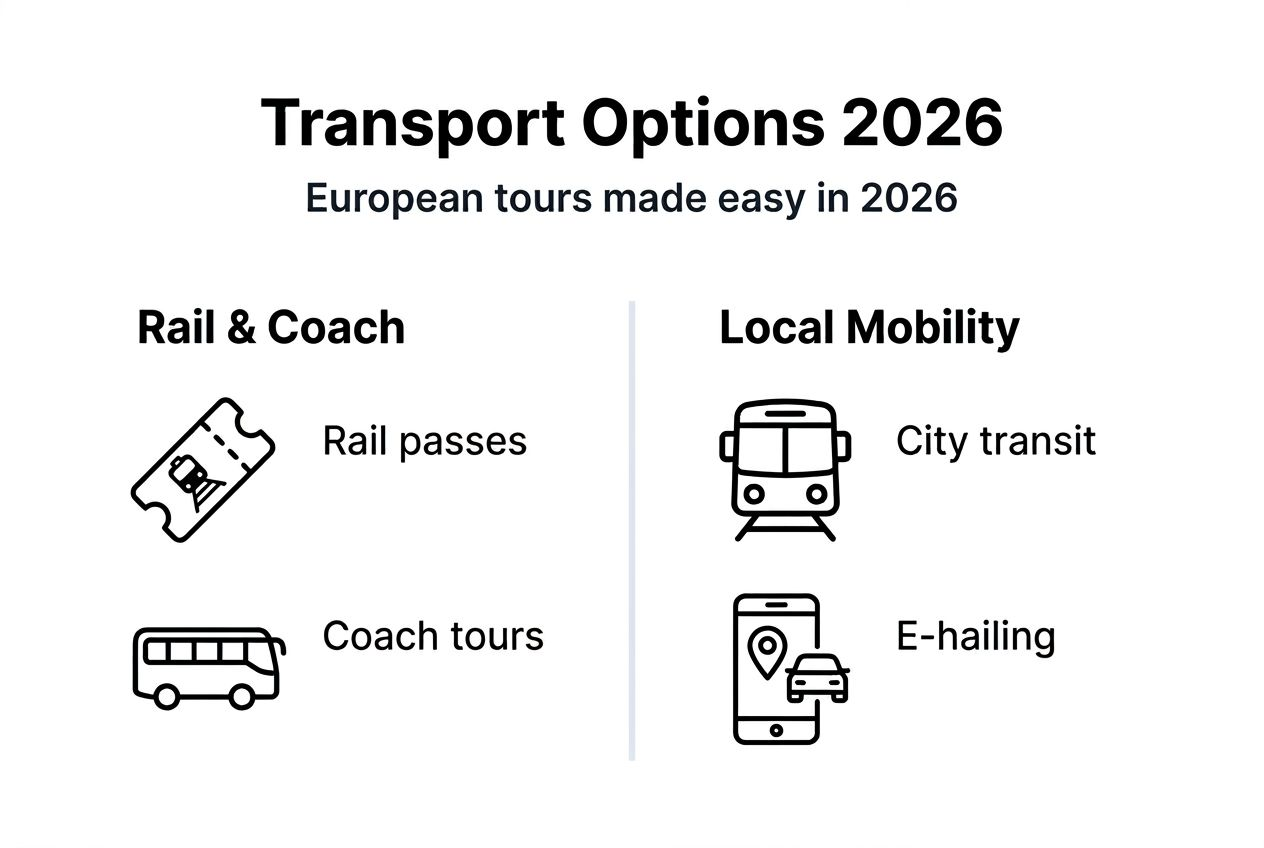
| Coach Tours | Multi-destination packages | All-inclusive, guided, stress-free | Less flexible timing |
| Rail Passes | Frequent train travelers | Unlimited rides, spontaneous changes | Reservation fees, validation rules |
| Private Transfers | Families or small groups | Direct routes, luggage convenience | Higher per-person cost |
| Public Transit | Budget-conscious solo travelers | Lowest cost, authentic experience | Language barriers, crowded |
| Rental Cars | Rural exploration | Maximum flexibility, remote access | Parking challenges, toll complexity |
Smart transport choices consider these practical factors:
- Luggage restrictions and storage options for each mode
- Accessibility features if traveling with mobility challenges
- Child-friendly amenities and family seating configurations
- Pet policies if bringing animals on your European adventure
- Environmental impact preferences for eco-conscious travelers
When you choose group tours wisely, transport logistics are handled by experienced coordinators who know optimal routes and timing. Professional operators build relationships with transport providers that result in priority boarding and dedicated vehicles. Following proven European travel workflows for group adventures ensures every transport element supports your tour goals.
Enhance your European tour experience with Next View Tours
Navigating European transportation complexities becomes effortless when you partner with experienced tour operators who handle every logistical detail. Next View Tours offers diverse trip types tailored to your preferences, whether you seek cultural immersion, outdoor adventure, or relaxed sightseeing. Each package emphasizes seamless transport coordination that eliminates stress and maximizes enjoyment.

Our group tour packages across Europe feature professional drivers, comfortable vehicles, and carefully timed itineraries that optimize your travel experience. We coordinate with premium transport providers to ensure punctual departures, smooth connections, and contingency plans for unexpected situations. This attention to detail transforms potentially stressful logistics into effortless transitions between incredible destinations.
Pro Tip: Use professional tour operators to handle complex transport details for stress-free travel that lets you focus on experiences rather than logistics.
Comprehensive guides on organizing adventure tours for multi-day success reveal how proper transport planning enhances every aspect of your journey. From Vienna to Prague, Salzburg to Budapest, our team manages routes, schedules, and vehicle selection based on decades of European touring experience.
Frequently asked questions
How much buffer time should I plan between European train connections?
Allow minimum 45 minutes at major hubs and 20 minutes at smaller stations to account for platform distances, potential delays, and navigation time. Large stations like Frankfurt or Brussels require extra time due to complex layouts and multiple terminal buildings.
Do I need seat reservations if I have a rail pass?
Yes, high-speed and international trains require separate seat reservations even with valid passes. Without confirmed seats, conductors can deny boarding on popular routes during peak seasons, wasting your travel day.
What’s the biggest navigation mistake tourists make in Europe?
Trusting GPS coordinates without verifying the exact pin location causes travelers to arrive at wrong addresses, especially in rural areas. Always cross-reference with satellite view and official venue websites before departure.
Which transport option offers best value for multi-country tours?
Coach tours provide best value when visiting multiple countries because packages include accommodation, meals, entrance fees, and professional guidance alongside transportation. Individual tickets may seem cheaper initially but total costs exceed organized tours when adding hotels and logistics.
How do ticket validation systems differ across European countries?
Italy and Austria require platform validation before boarding, France validates automatically at turnstiles, Germany trusts passengers but conducts spot checks, and Spain uses conductor verification. Research specific country requirements to avoid fines.
Can I rely on public transit for day trips from major cities?
Public transit works well for accessible destinations with frequent service, but remote locations require private transfers or organized tours. Regional trains may run infrequently, and language barriers complicate ticket purchasing at rural stations.
Recommended
- Complete Guide to European Summer Tours 2026 – Next View Tours
- Benefits of European Tours: Complete Guide for 2024 – Next View Tours
- Tour Planning Explained: Unlocking Better European Journeys – Next View Tours
- Trend in Europe Tours 2025: Immersive, Sustainable, Social – Next View Tours
- Small Group Travels to Europe are Best | Elite Travel


Comments are closed