
 Uncategorized
TL;DR:
- Central Europe offers a rich mix of history, culture, and adventure across its top cities.
- The key to an enriching trip is balancing major cities with smaller towns and strategic timing.
- Planning with core criteria and local guides enhances memorable experiences beyond typical sightseeing.
Narrowing Central Europe down to a short list of must-see cities feels almost impossible. The region packs ancient castles, thermal baths, alpine panoramas, and centuries of layered history into a relatively compact geography, and every city makes a compelling case for your time. Whether you are drawn to the grandeur of imperial palaces, the pulse of vibrant street culture, or the thrill of hiking ridgelines above a medieval fortress, Central Europe delivers it all. This guide cuts through the noise, applies clear selection criteria, and walks you through the cities that genuinely deserve a place on your itinerary.
Table of Contents
- How we chose the must-see cities
- Top 5 must-see cities and their unique highlights
- Beyond the big five: Bratislava and smart side trips
- Must-see cities comparison: What’s best for you?
- Our take: How to maximize your Central Europe city adventure
- Ready for your Central Europe city adventure?
- Frequently asked questions
Key Takeaways
| Point | Details |
|---|---|
| Curated city shortlist | Stick to five core cities for an essential mix of culture, history, and adventure. |
| Plan with your priorities | Choose destinations that fit your interests—whether castles, thermal baths, or music. |
| Season matters | Travel during spring or fall for the best weather and fewer crowds. |
| Efficient travel links | Use trains for fast, scenic connections between top Central European cities. |
| Blend highlights and side trips | Add side excursions like Bratislava to experience more beyond the big names. |
How we chose the must-see cities
Picking a shortlist of cities is not a casual exercise. We weighed each destination against four core criteria: cultural richness, historical depth, ease of access, and diversity of experiences. A city needed to score well on all four to earn its place. A stunning skyline alone is not enough. You also need walkable neighborhoods, memorable day trip options, and experiences that range from quiet contemplation in a medieval square to active adventure in surrounding landscapes.
The cities that consistently float to the top of expert-curated lists are Prague, Vienna, Budapest, Kraków, and Salzburg. As trusted sources like Rick Steves confirm, these cities are ideal for both cultural exploration, think castles, historic squares, and classical music, and hands-on adventure through hikes, thermal baths, and guided day trips. Our tour planning explained resource breaks down how we approach building itineraries around destinations like these.
Key criteria we used for selection:
- Cultural richness: Does the city offer museums, music, architecture, and food that tell a unique story?
- Historical depth: Is there a narrative arc that goes beyond surface-level sightseeing?
- Accessibility: Can you reach it easily by train or flight from other major hubs?
- Adventure potential: Are there hikes, river trips, or active experiences nearby?
- Affordability: Does the city offer genuine value without sacrificing quality?
Our step-by-step Europe trip guide walks through how to apply these same criteria to your own planning process, especially if you are working with a tight window of time.
“The best Central European itinerary is not the one with the most cities. It is the one where each city earns its place by offering something the others cannot.”
Pro Tip: If you are traveling between May and September, book accommodations at least 8 to 10 weeks in advance for Prague and Vienna. These cities see heavy visitor traffic in summer, and early bookings can save you both money and the frustration of settling for inconvenient locations.
Top 5 must-see cities and their unique highlights
With criteria set, let’s tour each must-see city and what makes it special.
Prague, Czech Republic
Prague is, without question, the crown jewel of Central European city travel. It holds the largest ancient castle complex in the world, along with preserved medieval architecture that survived World War II largely intact. The Astronomical Clock in Old Town Square is one of the most photographed landmarks in Europe, but the real magic is in the details: the Gothic spires of Týn Church rising behind the square, the lantern-lit walkways of Charles Bridge at dawn, and the compact but profoundly moving Jewish Quarter. Prague rewards slow travel. Every alley seems to hold a baroque doorway or a courtyard that most visitors walk past.
Prague also offers strong adventure connections. Day trips to Bohemian Switzerland National Park or the medieval town of Český Krumlov add natural beauty and wilderness to what might otherwise feel like an entirely urban experience.
Vienna, Austria
Vienna operates at a different emotional register than Prague. It is measured, imperial, and deeply self-assured. The city’s palaces and coffee house culture create an atmosphere of refined grandeur that is genuinely hard to replicate anywhere else in Europe. Schönbrunn Palace alone could occupy an entire day, from the ornate state rooms to the sweeping views from the Gloriette hilltop. Hofburg Palace, the winter residence of the Habsburg emperors, anchors the city center with centuries of political and cultural history.
Vienna is also a city that rewards budget-conscious travelers who know where to look. Our budget stay in Vienna tips highlight practical strategies for experiencing the city’s grandeur without paying palace-level prices for accommodation.
What sets Vienna apart is the classical music scene. Attending even a small chamber concert in one of the city’s historic halls connects you to a living tradition that shaped Western music for three centuries.
Budapest, Hungary
Budapest is the adventure capital of the Central European must-see list. The city stands out for thermal baths like Széchenyi, Danube river cruises, Parliament building views, legendary ruin bars, and the physical thrill of hiking up to Buda Castle. It straddles the Danube beautifully, with the hilly Buda side offering hiking trails and fortress views, and the flat Pest side delivering a vibrant street food scene, nightlife, and cultural institutions.
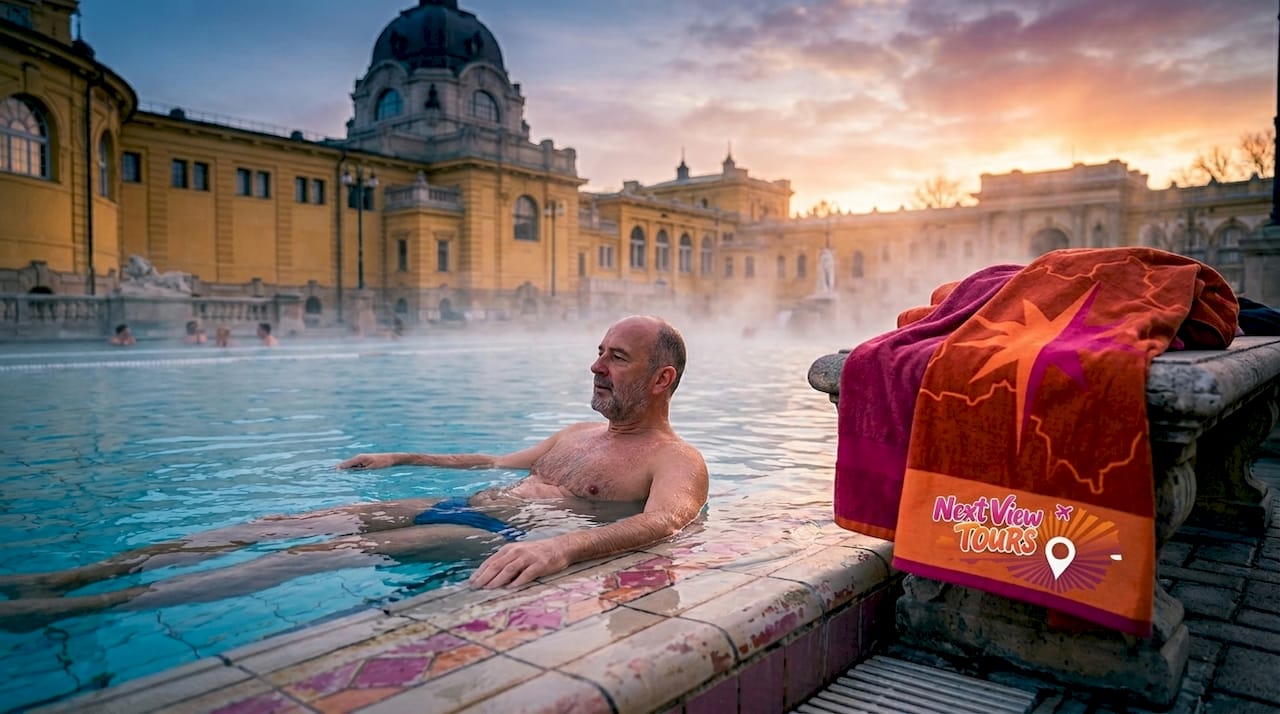
The thermal bath experience deserves special mention. Soaking in a 100-year-old Art Nouveau bathhouse fed by natural hot springs is not something you can replicate in Prague or Vienna. It is distinctly, irreplaceably Budapest.
Kraków, Poland
Kraków carries a weight of history that is both inspiring and sobering. Wawel Castle, perched above the Vistula River, anchors the city’s skyline and holds centuries of Polish royal history. Rynek Główny, one of the largest medieval market squares in Europe, buzzes with life day and night. The Kazimierz district, the historic Jewish quarter, adds deep cultural layering that sets Kraków apart from more homogeneous city centers.
The proximity to Auschwitz-Birkenau Memorial and Museum makes Kraków a destination for meaningful, reflective travel. This is not light sightseeing. It is an encounter with history that stays with you.
Salzburg, Austria
Salzburg sits where alpine adventure meets baroque culture. The city offers Hohensalzburg Fortress, Sound of Music filming locations, Mirabell Gardens, and extraordinary access to the surrounding lake district, including the iconic village of Hallstatt. It is smaller and more intimate than the other cities on this list, which works in its favor. You can walk almost everywhere, and the combination of mountain views and ornate architecture creates a visual contrast that is genuinely breathtaking.
For day trips, you can book a day trip from Vienna that connects multiple highlights across the region.
Pro Tip: In Salzburg, skip the crowded Sound of Music tour buses and instead walk the Kapuzinerberg hill trail for panoramic city views with almost no crowds. The trail starts near Steingasse and takes about 45 minutes at an easy pace.
Key highlights at a glance:
- Prague: Prague Castle, Charles Bridge, Jewish Quarter, Bohemian day trips
- Vienna: Schönbrunn, Hofburg, coffee houses, classical music concerts
- Budapest: Thermal baths, Buda Castle hike, Danube cruise, ruin bars
- Kraków: Wawel Castle, Rynek Główny, Kazimierz, Auschwitz proximity
- Salzburg: Hohensalzburg Fortress, Sound of Music sites, Hallstatt day trips
Beyond the big five: Bratislava and smart side trips
While the headline cities draw most attention, don’t overlook these side-trip opportunities.
Bratislava, the Slovak capital, is one of the most underrated stops in the entire region. It is an easy day trip between Vienna and Budapest, with a compact Old Town that you can explore thoroughly in half a day. The castle offers views over three countries on clear days, and the city’s cafe scene and lack of mass tourism create an experience that feels refreshingly authentic. Most travelers speed past it, which makes it all the more rewarding for those who stop.
For efficient routing across the region, train travel is your best tool. Vienna to Prague runs in roughly four hours. Vienna to Budapest takes about two and a half hours. Budapest to Prague clocks in around six hours. Planning your route in a logical arc, rather than backtracking between cities, saves time and energy.
Our expanded destination ideas page maps out how to combine cities and side trips into coherent, experience-rich journeys. If Prague is on your list, our Vienna to Prague day tour option gives you a guided introduction before you settle in for a longer stay.
Top side trip combinations worth considering:
- Vienna + Bratislava + Budapest: A classic three-city arc along the Danube, manageable in five to seven days
- Prague + Český Krumlov + Salzburg: A mix of Gothic, medieval, and baroque beauty with strong nature connections
- Budapest + Lake Balaton: Hungary’s “inland sea” adds beach culture and wine country to the Budapest experience
- Kraków + Zakopane: Polish mountain culture and hiking in the Tatra range, just 100 kilometers from Kraków
“Don’t plan your Central Europe trip as a checklist race from city to city. Build in at least one smaller town or side trip per major city to find the texture that the famous squares cannot give you.”
Must-see cities comparison: What’s best for you?
To help you narrow things down, here’s how Central Europe’s top cities stack up for different types of travelers.
| City | Cultural depth | Adventure options | Crowd level | Relative cost | Best fit |
|---|---|---|---|---|---|
| Prague | Very high | Moderate | Very high | Moderate | History lovers, architecture fans |
| Vienna | Very high | Low to moderate | High | Higher | Classical culture, couples, first-time visitors |
| Budapest | High | Very high | Moderate | Lower | Adventure seekers, budget travelers |
| Kraków | High | Low to moderate | Moderate | Low | History-focused travelers, reflective trips |
| Salzburg | Moderate to high | High | Moderate | Moderate | Nature lovers, families, Sound of Music fans |
| Bratislava | Moderate | Low | Low | Low | Quick stops, off-the-beaten-path travelers |
Timing matters as much as destination choice. Spring and fall, specifically May through June and September through October, offer the best combination of mild weather and manageable crowd levels. Summer peaks bring significant overcrowding to Prague and Vienna in particular, which can reduce the quality of the experience unless you plan very carefully.
On the question of value, Prague has shifted toward a premium price point in recent years, but it remains more affordable than comparable Western European cities like Paris or Amsterdam. The key is booking tours and accommodations well ahead of your travel window, especially if you plan to visit between June and August.
Top picks by travel style:
- For cultural immersion: Vienna or Kraków
- For adventure and active travel: Budapest or Salzburg
- For history and architecture: Prague
- For budget-conscious travelers: Kraków or Budapest
- For a quick, crowd-free stop: Bratislava
Our multi-city tour options are designed to help you combine these cities in a way that flows naturally and makes the most of your time.
Our take: How to maximize your Central Europe city adventure
Here is where most travel guides get it wrong. They hand you a city-by-city breakdown, wish you good luck, and send you off with a checklist. What they skip is the harder, more valuable advice: how to actually move through a region like this in a way that leaves you with genuine memories rather than a photo album full of the same landmarks you could have seen on Google.
Our strong belief, earned from years of guiding travelers across this region, is that the real richness of Central Europe comes from contrast. You need the grandeur of Vienna to appreciate the intimacy of Bratislava. You need the weight of Kraków’s history to understand why Budapest’s thermal bath culture feels like such a vital, celebratory counterpoint. Pairing major cities with smaller towns does not dilute the experience. It deepens it.
Timing your visits within each city also transforms the quality of what you see. Prague Castle at 8 a.m. is a completely different experience than Prague Castle at noon. The light is better, the crowds are thinner, and the atmosphere is closer to what those stones were actually built to evoke. We recommend scheduling your most iconic site visits for the first hour after opening, then shifting to outdoor walks, market browsing, or cafe time during the busy midday window.
There is also a real argument for slowing down. Most travelers try to cover five cities in eight days and end up exhausted and underwhelmed. Three cities in eight days, done properly with guided context and one or two well-chosen day trips, will give you stories worth telling for years.
Pro Tip: Use our flexible tour planning resource to build a custom itinerary that mixes guided experiences with free exploration time. The best Central Europe trips balance structure with spontaneity.
The cities are extraordinary. But how you move between them, how much time you give each one, and how willing you are to wander past the top attraction and into the street behind it, that is what separates a good trip from a genuinely great one.
Ready for your Central Europe city adventure?
Inspired to experience Central Europe for yourself? Here’s how Next View Tours helps you turn inspiration into action.
We specialize in turning well-researched inspiration into real, living travel experiences. Whether you want a guided multi-day adventure trip that connects Prague, Vienna, and Budapest with expert local guides, or you need help choosing the right adventure format for your group, we have options built for every travel style. Our tours cover day trips, private journeys, family-friendly itineraries, and fully customized routes across Austria, the Czech Republic, Hungary, Slovakia, and beyond. You bring the curiosity. We handle the logistics, the local expertise, and the unforgettable moments in between.
Frequently asked questions
What is the best time of year to visit Central Europe’s must-see cities?
May to June and September to October offer mild weather and fewer crowds, making them the ideal windows for visiting Prague, Vienna, Budapest, and the rest of the region.
What’s the easiest way to travel between top Central European cities?
Train travel is the most efficient and scenic option. Vienna to Prague takes four hours, Vienna to Budapest runs about two and a half hours, and trains avoid the backtracking that road trips often require.
Is Prague still good value despite its popularity?
Prague has become more expensive in recent years, but it remains affordable compared to Western European capitals like Paris or Zurich, especially outside of peak summer months.
Which must-see city is best for adventure travel?
Budapest is the standout choice for adventure travelers, offering Buda Castle hikes, thermal baths, Danube cruises, and a nightlife and food scene that rivals any city in the region.


Comments are closed