

 Uncategorized
TL;DR:
- A 12-day Europe trip allows travelers to explore three to four cities across two or three countries without feeling rushed. Proper planning involves selecting connected destinations, reserving accommodations early, and balancing travel with rest days for a memorable experience.
A 12 day Europe trip is the ideal length for visiting 3–4 cities across 2–3 countries without feeling rushed or exhausted. Twelve days gives you enough time to absorb each destination’s culture, history, and food while still covering meaningful ground. Travelers who try to squeeze in more cities often spend more time on trains than in museums. This guide covers destination selection, itinerary planning, budgeting, and the practical tips that separate a great trip from a stressful one.
What makes a 12 day Europe trip work?
A well-structured multi-city trip limits you to 3–4 cities across 2–3 countries. That number is not arbitrary. Travel planning guidelines confirm that 12 days supports 3–4 cities comfortably, while 10 days suits 2–3 and 14 days opens up 4–5. Staying within that range keeps travel days manageable and leaves time for the slower moments that make a trip memorable.
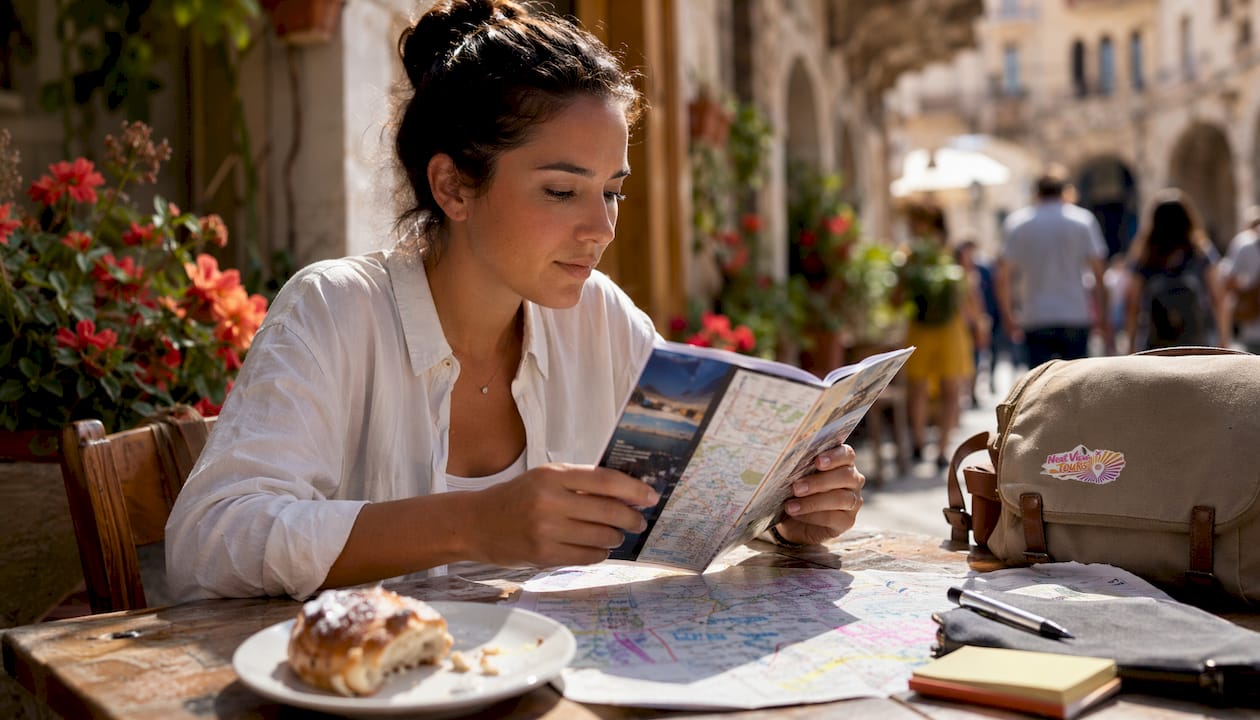
The biggest mistake travelers make is treating Europe like a checklist. Spending 3 full days in a major city, as travel writer Marcus Hale recommends, lets you see key landmarks without rushing and actually experience local culture. A single night in Paris or Vienna is a waste of the train ticket that got you there.
How to choose the best destinations for a 12 day itinerary
The right cities depend on your interests, but connectivity matters just as much as appeal. Europe’s high-speed rail network links most major cities in under 4 hours, which is the threshold experts recommend for keeping travel days manageable. Choosing cities along a logical corridor eliminates backtracking and saves both time and money.
Three route combinations work especially well for 12 days:
- France, Italy, and Switzerland: Paris (4 days), then Milan or Florence (3 days), then the Swiss Alps or Zurich (3 days). This sample 12-day itinerary balances urban culture with alpine scenery and connects smoothly by train and short flights.
- Central Europe circuit: Prague, Vienna, and Budapest form a natural triangle. All three cities are under 3 hours apart by train, and each offers a distinct architectural and cultural identity.
- Western Europe sweep: London, Amsterdam, and Paris cover three of Europe’s most iconic capitals with strong rail and Eurostar connections.
Balance matters within each route. Pairing a dense capital like Rome with a smaller city like Siena or Salzburg gives you breathing room. Not every day needs to be a museum marathon.
Pro Tip: Book an open-jaw flight, flying into one city and out of another. This strategy saves 1–2 full days you would otherwise spend backtracking to your arrival airport.
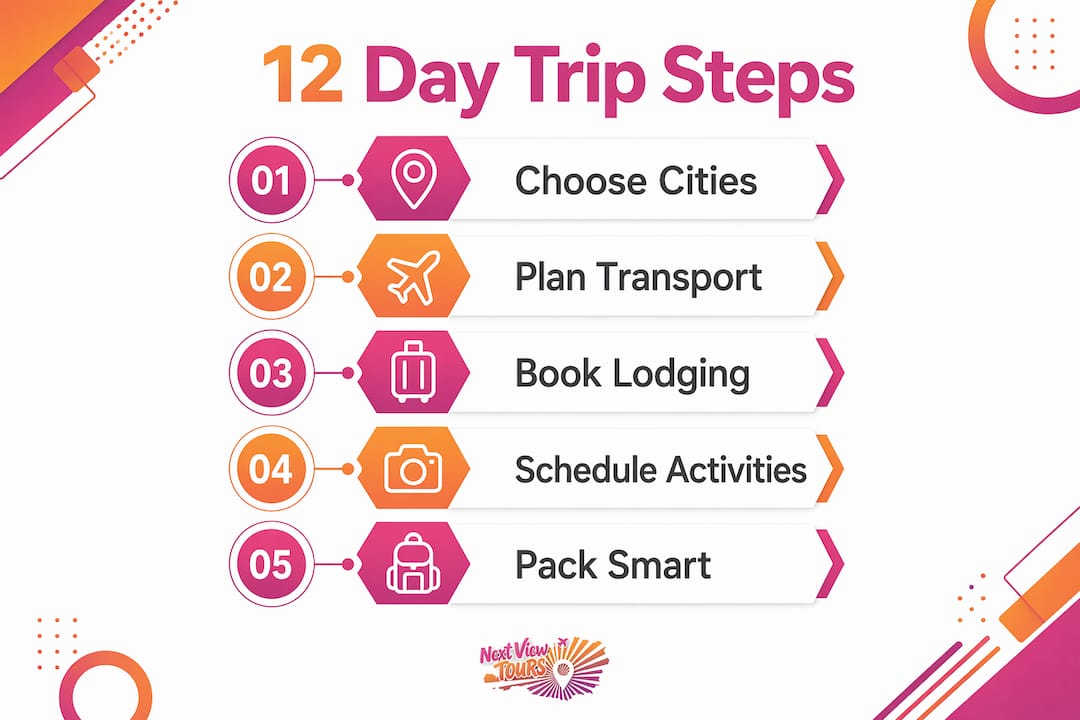
How to build your 12 day travel plan step by step
Planning a 12 day travel plan for Europe works best when you build it from the inside out. Start with your non-negotiables, then fit transport and rest days around them.
- List your must-see experiences. Write down the three or four things you absolutely cannot miss. These anchor your city choices.
- Assign cities to experiences. Match each experience to a destination, then check the rail or flight connections between them.
- Allocate time per city. Give major capitals at least 3 full days. Smaller cities need 2 days minimum to feel worthwhile.
- Plan travel days carefully. Keep transit under 4 hours per leg. A 6-hour travel day eats your afternoon and drains your energy.
- Book trains and flights early. Rail tickets across Europe cost significantly less when purchased weeks in advance. A 5-stop multi-city rail pass can cost approximately $206 per person when booked early.
- Reserve accommodation 2+ months ahead. Booking hotels early is non-negotiable for peak summer travel. City-center options fill fast, and last-minute rates are punishing.
- Build in one free day. A rest day mid-trip prevents burnout and creates space for spontaneous discoveries.
Pro Tip: Use a shared digital calendar or a simple spreadsheet to map each day. Seeing the full 12 days laid out visually helps you spot gaps, back-to-back travel days, and over-packed city schedules before you book anything.
The table below shows a sample time allocation for a France-Italy-Switzerland route:
| Day | Location | Focus |
|---|---|---|
| Days 1–4 | Paris, France | Louvre, Eiffel Tower, Montmartre, day trip to Versailles |
| Days 5–7 | Florence or Milan, Italy | Uffizi Gallery, Duomo, local food markets |
| Days 8–9 | Cinque Terre or Lake Como | Coastal villages, hiking, scenic rail |
| Days 10–12 | Zurich or Lucerne, Switzerland | Old Town, alpine views, Rhine Falls day trip |
What does a 12 day Europe trip actually cost?
Budget planning separates a comfortable trip from a stressful one. Daily expenses in Western Europe run roughly €140–€210 per person, covering accommodation, food, local transport, and entrance fees. That figure climbs in cities like Zurich and London, and drops in Prague or Budapest.
Key cost categories to plan for:
- Rail tickets: Early booking brings the cost of a 5-stop multi-city route to around $206 per person. Individual high-speed segments range from €45 to €120 depending on the route and booking window.
- Organized tours: Luxury 12-day guided tours start at approximately $5,350 per person. That price includes accommodation, transport, and expert guides, which removes logistical stress entirely.
- Accommodation: Mid-range hotels in city centers average €100–€160 per night. Booking 2+ months ahead locks in better rates and more central locations.
- Food: Budget €30–€50 per day for meals. Eating lunch at local markets or trattorias cuts costs without sacrificing quality.
- Entrance fees: Major museums charge €15–€25 per visit. City museum passes often cover 5–10 attractions for a flat fee and are worth calculating in advance.
Combining smart lodging choices with good dining is one of the most underrated ways to improve a trip. Resources on lodging and dining combinations show how staying near food markets or restaurant districts reduces both cost and daily travel time. For a full breakdown of cost-effective options, Nextviewtours offers a Europe travel budget guide tailored to multi-city trips.
Essential tips and pitfalls to avoid on your European vacation
The most common mistake on a multi-city European vacation is over-scheduling. Fitting six cities into 12 days sounds ambitious. In practice, it means spending half your trip on trains and arriving at each destination too tired to enjoy it.
Practical tips that make a real difference:
- Pack for versatility, not volume. European summers are warm but evenings cool quickly. A light layer and comfortable walking shoes cover most situations. Cobblestone streets are everywhere, and wheeled luggage becomes a liability on them.
- Download offline maps before you arrive. Apps like Google Maps work offline when you download city maps in advance. Data roaming costs add up fast across multiple countries.
- Validate train tickets before boarding. Many European rail systems require ticket validation at platform machines. Skipping this step results in fines, even with a valid ticket.
- Visit major attractions early or late. The Colosseum, the Eiffel Tower, and the Louvre are all significantly less crowded before 9:00 AM or after 4:00 PM.
Traveling slowly through fewer places leaves you with sharper memories and a stronger sense of each city’s character. The travelers who remember their trips most vividly are rarely the ones who saw the most countries.
Summer and late spring offer the best conditions for most European itineraries, with longer daylight hours and reliable weather. December works well for Christmas markets in Vienna, Prague, and Strasbourg, though you trade daylight for atmosphere.
Pro Tip: If you are traveling in july or august, book popular attractions like the Vatican Museums and the Sagrada Família weeks in advance. Timed entry tickets sell out, and walk-up queues can consume 2–3 hours of your day.
What 12 years of European travel planning taught me
Most travelers plan their first European trip the same way: pick the most famous cities, fill every day, and assume the logistics will sort themselves out. That approach produces a trip that looks great on paper and feels exhausting in practice.
The trips I have seen go best share one quality: they leave room. A free afternoon in Vienna where you wander into a coffee house and spend two hours reading is not wasted time. It is the experience you will describe to people when you get home. Rigid itineraries squeeze that out entirely.
I also think travelers underestimate how much destination personality matters. Prague suits travelers who love architecture, history, and a slower pace. Barcelona suits those who want energy, food, and beaches. Matching the city to the traveler, rather than defaulting to the most famous option, produces a much better trip. Nextviewtours builds its customized tour options around exactly this idea, pairing traveler preferences with destinations that actually fit them.
One booking habit that consistently pays off: treat your accommodation as part of the experience, not just a place to sleep. A well-located hotel in the old town of Salzburg or the Marais district in Paris saves you 30–45 minutes of transit per day and puts you in the middle of the city’s best streets the moment you step outside.
— Next
How Nextviewtours can help you plan your 12 day Europe trip
Planning a multi-country European trip involves dozens of decisions, and the logistics alone can consume hours of research. Nextviewtours offers structured tour packages designed specifically for 12-day multi-country itineraries, covering Central Europe circuits, Western Europe sweeps, and alpine routes.
Whether you prefer a private tour with a dedicated guide or a small-group format that keeps costs lower, Nextviewtours builds the itinerary, handles the bookings, and provides expert support throughout. Customizable options mean you can adjust the pace, add a day trip, or swap a city to match your interests. For a full overview of what is included and what each format costs, the Europe tour packages page covers options, pricing, and benefits in detail.
FAQ
How many cities can you visit on a 12 day Europe trip?
A 12 day Europe trip comfortably covers 3–4 cities across 2–3 countries. Visiting more than four cities typically means spending too much time in transit and too little time in each destination.
What is the best route for a 12 day Europe itinerary?
The France-Italy-Switzerland route and the Prague-Vienna-Budapest circuit are two of the most popular and logistically efficient options. Both minimize backtracking and connect well by high-speed train.
When is the best time to plan a European vacation for 12 days?
Late spring and summer offer the best weather and longest daylight hours for sightseeing. December works well for Christmas market experiences in Central Europe, particularly in Vienna and Prague.
How much does a 12 day Europe trip cost?
Daily expenses in Western Europe average €140–€210 per person for accommodation, food, and activities. A 5-stop rail itinerary booked early costs approximately $206 per person in train tickets alone.
Should you book a guided tour or plan independently for 12 days in Europe?
Guided tours remove logistical stress and often include accommodation and transport, with luxury options starting around $5,350 per person. Independent travel costs less but requires significantly more planning time and flexibility.
Key takeaways
A 12 day Europe trip works best when you limit yourself to 3–4 cities, keep travel days under 4 hours, and book accommodation at least 2 months before peak season.
| Point | Details |
|---|---|
| Limit city count | Visit 3–4 cities across 2–3 countries to balance sightseeing and avoid travel fatigue. |
| Book early | Reserve trains and hotels at least 2 months ahead to secure availability and lower rates. |
| Use open-jaw flights | Flying into one city and out of another saves 1–2 full days of backtracking. |
| Budget realistically | Plan for €140–€210 per person per day in Western Europe, plus rail and entrance fees. |
| Build in rest | One free day mid-trip prevents burnout and creates space for unplanned experiences. |


Comments are closed