

 Uncategorized
What are the top cities to visit in Europe right now?
Europe rewards every kind of traveler, but some cities belong on every list. Whether you have two weeks or two months, the destinations below represent the continent’s finest mix of history, culture, food, and sheer visual drama. Edinburgh ranked as the best city in Europe in Time Out’s 2026 rankings, with London holding the top spot in Resonance Consultancy’s 2026 report. Both lists confirm what experienced travelers already know: Europe’s appeal is wide, deep, and constantly evolving.
The 13 cities below span Western, Central, Southern, and Northern Europe. Each one earns its place for a distinct reason, not just popularity.
Table of Contents
- 1. Paris, France
- 2. Rome, Italy
- 3. Venice, Italy
- 4. Budapest, Hungary
- 5. Prague, Czech Republic
- 6. London, England
- 7. Edinburgh, Scotland
- 8. Dublin, Ireland
- 9. Strasbourg, France
- 10. Athens, Greece
- 11. Bruges, Belgium
- 12. Salzburg, Austria
- 13. Ljubljana, Slovenia
- How to choose and plan the best European city trip for you
- What travel experts know about curating a European city experience
- Key Takeaways
- The cities that stay with you longest are rarely the ones you expected
- Plan your European adventure with Nextviewtours
1. Paris, France
Best season: April through June, September through October
Suggested stay: 4–5 days
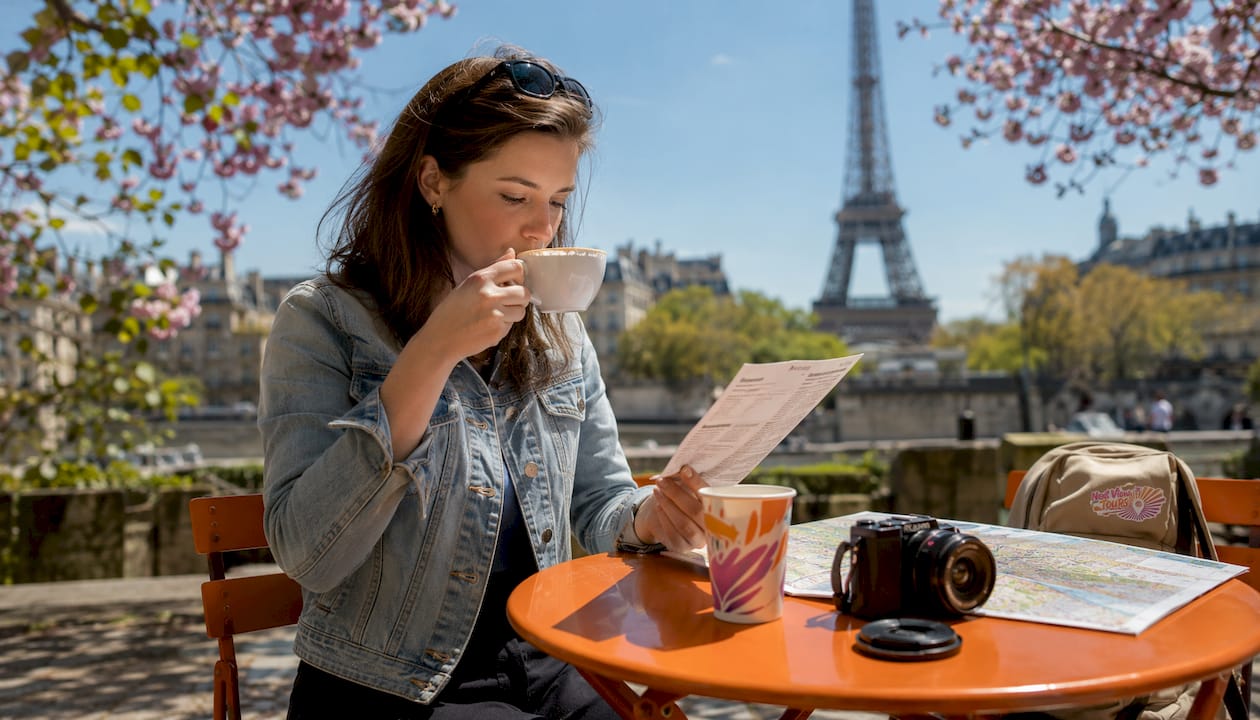
Paris is the only city in the Time Out 2026 rankings to score a perfect mark for arts and culture, and 97% of respondents approved of its food and drink scene. That combination is hard to argue with. The Louvre, the Musée d’Orsay, and the Centre Pompidou sit within a few metro stops of each other, giving you three of the world’s great art collections in a single afternoon of planning.
What most first-time visitors miss is the Marais district, specifically the old Jewish Quarter known as the Pletzl, reachable by walking east along Rue Rivoli to the Saint-Paul Metro stop. The neighborhood trades tourist crowds for independent galleries, centuries-old synagogues, and some of the city’s best falafel. Paris has also added more than 1,000 kilometers of bike lanes and over 100 hectares of new pedestrian space since 2020, making it genuinely easier to move around on foot or by bicycle than it was five years ago.
- Must see: Eiffel Tower, Louvre, Notre-Dame Cathedral (now fully restored), Sainte-Chapelle
- Transport: Charles de Gaulle Airport connects directly to central Paris via the RER B train in roughly 35 minutes
- Local tip: Book timed-entry tickets for the Louvre at least two weeks in advance, especially in summer
2. Rome, Italy
Best season: March through May, September through November
Suggested stay: 4–5 days
Rome operates on a scale that takes time to absorb. The Colosseum, the Roman Forum, and the Palatine Hill form a single archaeological complex that covers centuries of empire in a few city blocks. The Pantheon, one of the most structurally remarkable buildings in human history, still stands remarkably well preserved. Resonance Consultancy placed Rome 4th in Europe for 2026, a position it has held consistently.
The neighborhood of Trastevere, just across the Tiber from the historic center, offers a quieter version of the city. Narrow cobblestone streets, ivy-covered facades, and trattorias that have been feeding locals for generations make it an ideal base. Summer in Rome is hot and crowded; the shoulder months of April, May, September, and October give you the same monuments with far more breathing room.
- Must see: Colosseum, Vatican Museums, Sistine Chapel, Trevi Fountain, Pantheon
- Transport: Leonardo da Vinci International Airport (Fiumicino) connects to Roma Termini station by the Leonardo Express train in 32 minutes
- Local tip: The Vatican Museums require advance booking; walk-up lines can stretch to three hours in peak season
3. Venice, Italy
Best season: November through March (for quiet), April through May (for mild weather)
Suggested stay: 2–3 days
Venice is unlike any other city on earth, and that is not hyperbole. Built across 118 islands connected by 400 bridges, it has no cars, no traffic lights, and no straight lines. The Grand Canal is the main artery, lined with Gothic and Byzantine palaces that have been slowly sinking for centuries. The urgency to visit is real.
Most travelers spend their time around San Marco and the Rialto Bridge, both worth seeing. But the sestiere of Dorsoduro, on the southern side of the city, offers a completely different experience. It holds the Peggy Guggenheim Collection and the Gallerie dell’Accademia, and its quieter calli (streets) fill with students and locals rather than tour groups. Staying in Dorsoduro rather than near the train station puts you in a neighborhood that actually feels like Venice lived in, not Venice performed.
- Must see: St. Mark’s Basilica, Doge’s Palace, Grand Canal by vaporetto, Peggy Guggenheim Collection
- Transport: Venice Marco Polo Airport connects to the city by water taxi or the ACTV bus to Piazzale Roma; the train station Santa Lucia sits at the edge of the historic center
- Local tip: Visit St. Mark’s Square before 8:00 AM to see it without crowds; the basilica opens at 9:30 AM and lines form quickly
Pro Tip: Book a room in Dorsoduro or Cannaregio instead of near the train station. You pay less, sleep better, and wake up in a neighborhood that actually belongs to Venetians.
4. Budapest, Hungary
Best season: April through June, September through October
Suggested stay: 3–4 days
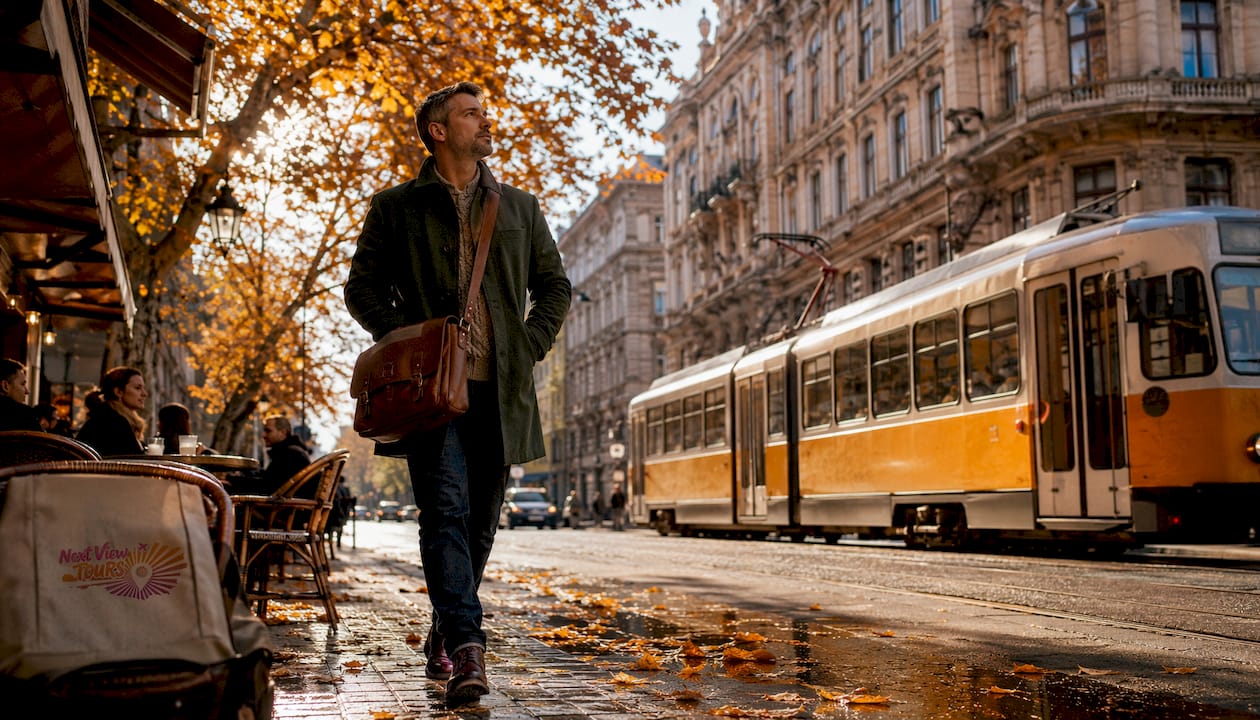
Budapest is two cities in one, literally. Buda sits on the hilly western bank of the Danube, and Pest spreads flat across the eastern side. The Castle District in Buda, a UNESCO World Heritage Site, gives you the best panoramic views of the river and the Hungarian Parliament Building below. The area around Viziváros (Watertown), at the foot of Castle Hill, holds some of the city’s finest restaurants.
The thermal bath culture here is not a tourist gimmick. Budapest sits on more than 100 natural hot springs, and the Széchenyi and Gellért baths have been operating for over a century. An evening soak in Széchenyi, with its Neo-Baroque architecture lit up after dark, is one of those experiences that stays with you. The city is also a three-hour train ride from Vienna, making it a natural pairing on any Central European itinerary.
- Must see: Hungarian Parliament Building, Castle Hill, Fisherman’s Bastion, Széchenyi Thermal Bath, Ruin Bars in the Jewish Quarter
- Transport: Budapest Ferenc Liszt International Airport is 30 minutes from the city center by the 100E express bus or taxi
- Local tip: The ruin bars in the VII district (Erzsébetváros) are open late and deeply local; Szimpla Kert is the most famous, but smaller bars nearby are less crowded
5. Prague, Czech Republic
Best season: May through June, September through October
Suggested stay: 3–4 days
Prague’s Old Town Square, framed by the Church of Our Lady Before Týn and the Old Town Hall with its famous Astronomical Clock, ranks among the most photogenic public spaces in Europe. The clock performs a mechanical display every hour, and the cafés directly beneath it offer a front-row seat. Prague’s architecture spans Gothic, Romanesque, Baroque, and Art Nouveau styles, often within a single street.
The city rewards those who wander beyond the Old Town. The Vinohrady and Žižkov neighborhoods, a short tram ride east, have a completely different character: tree-lined streets, local wine bars, and almost no tour groups. Prague also dropped from 9th to 15th in Resonance’s 2026 European rankings, which some read as a concern but actually reflects how competitive the field has become rather than any decline in the city itself.
- Must see: Prague Castle, Charles Bridge, Old Town Square, Josefov (Jewish Quarter), Wenceslas Square
- Transport: Václav Havel Airport Prague connects to the city center by the 119 bus to Nádraží Veleslavín metro station in about 40 minutes
- Local tip: Cross Charles Bridge at dawn; by 9:00 AM it is wall-to-wall tourists
6. London, England
Best season: May through September
Suggested stay: 5–7 days
London topped Resonance Consultancy’s Europe’s Best Cities ranking for 2026 for the fourth consecutive year, scoring first for livability and economic appeal. The city’s art and culture scene earned a near-perfect approval rating from London residents in Time Out’s survey, ranking 4th globally. Those numbers reflect a city that keeps reinventing itself without losing what makes it distinctly London.
The South Bank of the Thames, accessible from Waterloo Station, is one of the city’s most rewarding stretches. The Tate Modern, the Globe Theatre, Borough Market, and the Southbank Centre sit within a 20-minute walk of each other. It is the kind of area where you can spend an entire day without a plan and still come away with a full experience. Beyond the South Bank, the neighborhoods of Shoreditch, Peckham, and Brixton each offer a version of London that the guidebooks are only beginning to catch up with.
- Must see: British Museum, National Gallery, Tower of London, St. Paul’s Cathedral, Hyde Park, South Bank
- Transport: Heathrow connects to central London via the Elizabeth line in about 40 minutes; Gatwick via the Gatwick Express in 30 minutes
- Local tip: The permanent collections at the British Museum, National Gallery, and Tate Modern are free; budget your money for food and neighborhoods instead
7. Edinburgh, Scotland
Best season: May through September; August for the Edinburgh Festival Fringe
Suggested stay: 3–4 days
Edinburgh earned third place globally and the top spot in Europe in Time Out’s 2026 city rankings, with 91% of residents saying they find joy in their everyday experiences there. That figure says something real about the city’s character. Edinburgh is compact, walkable, and layered with history in a way that feels organic rather than curated.
The Royal Mile connects Edinburgh Castle at the top to the Palace of Holyroodhouse at the bottom, and almost everything worth seeing sits within a short walk of that spine. The Grassmarket, just south of the castle, is a historic square lined with pubs and independent restaurants. Locals consistently recommend it over the tourist-heavy stretches of the Royal Mile, and they are right to. Arthur’s Seat, an ancient volcano rising above the city, offers a 45-minute hike with views that stretch to the Firth of Forth.
- Must see: Edinburgh Castle, Royal Mile, Arthur’s Seat, Scottish National Museum, Holyrood Palace
- Transport: Edinburgh Airport connects to the city center by tram in about 35 minutes
- Local tip: August is extraordinary for the Fringe Festival but also the most crowded and expensive month; May and June offer long daylight hours with far fewer visitors
8. Dublin, Ireland
Best season: May through September
Suggested stay: 3–4 days
Dublin is a city that earns affection quickly. The Georgian architecture, the literary history, and the pub culture combine into something that feels genuinely welcoming rather than performed for tourists. Trinity College and the Book of Kells sit in the heart of the city, a short walk from the National Museum of Ireland and St. Stephen’s Green, a 27-acre park that Dubliners use as a daily living room.
The Temple Bar area is lively but can feel like a theme park version of Irish culture. The neighborhoods of Portobello and Stoneybatter, both a 20-minute walk from the center, offer a more honest version of the city: independent coffee shops, local pubs, and residents who actually live there. Dublin also appeared in Time Out’s top 50 cities for 2026, placing 45th globally.
- Must see: Trinity College and the Book of Kells, Guinness Storehouse, St. Patrick’s Cathedral, Phoenix Park, National Gallery of Ireland
- Transport: Dublin Airport is about 30 minutes from the city center by the Airlink Express bus
- Local tip: Pub etiquette matters here. Rounds are taken seriously; if someone buys you a drink, you buy the next one
9. Strasbourg, France
Best season: November through December for the Christmas market; April through June otherwise
Suggested stay: 2–3 days
Strasbourg sits on the French-German border and carries the cultural DNA of both countries. The Grande Île, the historic island at the city’s center, is a UNESCO World Heritage Site and one of the most intact medieval urban cores in Europe. The Strasbourg Cathedral, built in pink Vosges sandstone, took over 400 years to complete and still dominates the skyline.
The Petite France quarter, with its half-timbered houses reflected in the canals of the Ill River, is the city’s most photographed area and deservedly so. Strasbourg also hosts one of Europe’s oldest and most celebrated Christmas markets, running from late November through December 24. If you visit then, arrive on a weekday morning to experience it before the weekend crowds arrive.
- Must see: Strasbourg Cathedral, Petite France quarter, Palais Rohan, European Parliament (free tours available)
- Transport: Strasbourg is a major TGV hub; Paris is 1 hour 45 minutes by high-speed train
- Local tip: The city is extremely bikeable; rent a Vélhop bike for a day and cover the historic center and the European Quarter in a single loop
10. Athens, Greece
Best season: April through June, September through November
Suggested stay: 3–4 days
Athens is one of the oldest continuously inhabited cities in the world, and the Acropolis makes that history physically present in a way that no museum can replicate. The Parthenon, built in the 5th century BC, sits above the city on a limestone plateau visible from almost every neighborhood. The Acropolis Museum at the base of the hill holds the sculptures and friezes that once adorned the temples, displayed with exceptional clarity and context.
The neighborhood of Monastiraki, below the Acropolis, blends ancient ruins with a lively flea market and some of the best street food in Greece. Psiri and Koukaki, two adjacent neighborhoods, have become the city’s creative center over the past decade, with independent restaurants and galleries that reflect a city very much in the middle of its own reinvention. Athens appeared in Time Out’s global top 50 for 2026, placing 40th.
- Must see: Acropolis and Parthenon, Acropolis Museum, Ancient Agora, National Archaeological Museum, Monastiraki
- Transport: Athens International Airport (Eleftherios Venizelos) connects to the city center by metro in about 40 minutes
- Local tip: The Acropolis is best visited at opening time (8:00 AM) or in the last hour before closing; midday in summer is genuinely brutal
11. Bruges, Belgium
Best season: March through May, October through November
Suggested stay: 2–3 days
Bruges is widely regarded as one of the most beautiful cities in Europe, and the medieval canal network at its center makes that reputation easy to understand. The Markt square, the Belfry tower, and the Basilica of the Holy Blood sit within a few minutes’ walk of each other in a historic core that has remained largely unchanged since the 15th century. The city is also, without question, one of the world’s great destinations for chocolate and Belgian beer.
What makes Bruges work as a travel destination is its scale. The entire historic center is walkable in a day, which means you can cover the main sights and still spend an afternoon in a canal-side café without feeling rushed. The local food culture here runs deep; the chocolatiers along Steenstraat and Simon Stevinplein are not tourist shops but serious craft producers with generations of expertise behind them.
- Must see: Markt Square, Belfry of Bruges, Basilica of the Holy Blood, Groeningemuseum, Canal boat tour
- Transport: Bruges is 1 hour from Brussels by direct train; Brussels Airport is the nearest international hub
- Local tip: Stay overnight rather than visiting as a day trip from Brussels; the city transforms after the day-trippers leave
12. Salzburg, Austria
Best season: July through August for festivals; December for Christmas markets; April through June for mild weather
Suggested stay: 2–3 days
Salzburg is the birthplace of Mozart and the filming location of “The Sound of Music,” but it earns its place on this list on its own architectural and cultural merits. The Baroque old town, a UNESCO World Heritage Site, sits at the foot of the Hohensalzburg Fortress, one of the largest and best-preserved medieval castles in Europe. The Salzburg Festival, held each July and August, draws world-class opera, theater, and concert performances to the city.
The city also serves as an ideal base for day trips into the surrounding Salzkammergut lake district, including Hallstatt, one of the most photographed villages in Austria. Nextviewtours operates day trips from Salzburg into the surrounding region, making it straightforward to combine the city with the alpine landscapes that surround it.
- Must see: Hohensalzburg Fortress, Mirabell Palace and Gardens, Mozart’s Birthplace, Getreidegasse, Hellbrunn Palace
- Transport: Salzburg Airport W.A. Mozart is 20 minutes from the city center by bus; direct trains connect to Vienna (2.5 hours) and Munich (1.5 hours)
- Local tip: The Mirabell Gardens are free and open daily; they offer one of the best views of the fortress without paying an entrance fee
13. Ljubljana, Slovenia
Best season: May through September
Suggested stay: 2–3 days
Ljubljana is one of Europe’s most genuinely underrated capitals. The city of roughly 300,000 people has a compact, walkable old town centered on a medieval castle, a river promenade lined with outdoor cafés, and a car-free historic core that makes wandering feel effortless. The Triple Bridge (Tromostovje), designed by the Slovenian architect Jože Plečnik, is one of the most elegant urban structures on the continent.
Slovenia’s commitment to sustainable tourism is real and visible. Ljubljana was named a European Green Capital, and the city’s emphasis on cycling infrastructure, local food markets, and low-impact tourism makes it a natural fit for travelers who want eco-friendly travel choices without sacrificing cultural depth. The nearby Lake Bohinj, about 90 minutes by bus, offers one of the quietest and most beautiful natural settings in Central Europe, particularly outside peak summer months.
- Must see: Ljubljana Castle, Triple Bridge, Prešeren Square, Central Market, Metelkova (alternative cultural center)
- Transport: Ljubljana Jože Pučnik Airport is 25 minutes from the city center by shuttle bus; direct buses connect to Vienna, Zagreb, and Venice
- Local tip: The Sunday morning open-air market along the Ljubljanica River is one of the best in Central Europe for local produce, crafts, and conversation
How to choose and plan the best European city trip for you
Picking the right cities comes down to three things: your interests, your pace, and your timing. A traveler who wants to spend mornings in museums and evenings at the opera has different needs than one who wants to hike to a castle and eat at a market stall. Both are valid, and Europe accommodates both.
Considerations for building your city list:
- Match cities to your interests. Art-focused travelers will find Paris, Florence, and Vienna rewarding in ways that beach-oriented travelers might not. History travelers tend to prioritize Rome, Athens, and Prague. Food-driven travelers consistently rank San Sebastián, Bologna, and Lyon alongside the obvious capitals.
- Think in geographic clusters. Central Europe works well as a single trip: Vienna, Salzburg, Prague, and Budapest connect by train in under three hours each. Western Europe has its own cluster: Paris, Brussels, Bruges, and Amsterdam are all within a few hours by rail.
- Use shoulder seasons deliberately. April through June and September through October offer the best balance of good weather, manageable crowds, and reasonable prices across most of Europe. Shoulder seasons also open up smaller destinations that feel genuinely magical when they are not overrun.
- Balance iconic cities with quieter ones. Spending every night in a major capital is exhausting and expensive. Mixing cultural capitals with smaller regional towns gives your trip texture and your budget breathing room.
- Check infrastructure developments. Cities like Paris are actively expanding transit access through the Grand Paris Express, which will reshape how visitors move around the metropolitan area. Knowing what is under construction helps you plan around disruptions or take advantage of newly accessible areas.
Pro Tip: Stay in a residential neighborhood rather than the tourist center of each city. You pay less, sleep better, and eat at restaurants that locals actually choose. In Venice, that means Dorsoduro. In London, it might mean Peckham or Stoke Newington.
On local etiquette:
Every city has its own unwritten rules. In Rome, dress codes at churches are enforced; shoulders and knees must be covered at the Vatican and most major basilicas. In Prague, speaking loudly in residential areas late at night draws real irritation from locals. In Paris, greeting shopkeepers with “Bonjour” before asking for anything is not optional politeness; it is expected. In Budapest, tipping 10% at restaurants is standard. Small gestures of cultural awareness go a long way in every city on this list.
What travel experts know about curating a European city experience
The best travel experiences in Europe tend to share a common quality: they are shaped by the city’s actual character, not just its famous monuments. Resonance Consultancy’s 2026 report identifies green spaces, transit quality, and sustainability as the defining factors separating Europe’s top cities from the rest. Those are not abstract metrics; they describe how a city actually feels to walk around in.
The cities that keep climbing in global rankings are the ones where people can picture themselves living, not just visiting. Quality of life, connectivity, and cultural authenticity drive that perception more than any single landmark.
Travelers who get the most out of Europe tend to follow a few consistent patterns. They spend more time in fewer places. They stay in neighborhoods rather than hotel districts. They eat where locals eat, which usually means walking two streets away from the main square. And they treat cultural experiences as the core of the trip rather than a backdrop for photographs.
Insider recommendations by traveler profile:
- History and archaeology: Rome, Athens, and Prague offer the densest concentration of ancient and medieval sites. Add Salzburg for Baroque architecture and a UNESCO-listed old town.
- Food and gastronomy: Paris leads on fine dining and market culture. Bruges delivers on chocolate and Belgian beer. The role of local cuisine in shaping a city’s identity is nowhere more visible than in these two cities.
- Nature and outdoor access: Ljubljana is the gateway to Slovenia’s Julian Alps and Lake Bohinj. Edinburgh puts you within an hour of the Scottish Highlands.
- Art and museums: London’s free national collections, Paris’s concentration of world-class galleries, and Budapest’s underrated Fine Arts Museum all reward dedicated museum days.
- Couples and romance: Venice, Paris, and Salzburg consistently top romantic travel lists for good reason; the combination of architecture, food, and atmosphere is hard to replicate.
- Families: London and Edinburgh both offer free museums, manageable scale, and English-language accessibility that makes them natural choices for families traveling with children.
Urban redevelopment is also worth tracking as a traveler. Berlin’s transformation of Tegel Airport into an innovation and residential district, and Paris’s ongoing Grand Paris Express expansion, are both reshaping city access in ways that will benefit visitors over the next several years. Getting ahead of those changes means discovering emerging neighborhoods before they appear in every travel magazine.
Key Takeaways
Europe’s best cities reward travelers who plan with intention: matching destinations to personal interests, timing visits to shoulder seasons, and staying long enough in each place to move past the surface.
| Point | Details |
|---|---|
| Edinburgh leads Europe in 2026 | Time Out ranked Edinburgh among the top globally (3rd worldwide) and first in Europe, with 91% of residents reporting everyday joy. |
| London tops the Resonance ranking | Resonance Consultancy placed London first in Europe for the fourth consecutive year, scoring highest for livability and prosperity. |
| Shoulder seasons change everything | April through June and September through October offer the best balance of weather, crowds, and price across most European cities. |
| Mix capitals with smaller cities | Pairing iconic cities like Paris or Rome with quieter destinations like Ljubljana or Strasbourg gives trips more depth and lower costs. |
| Nextviewtours for Central Europe | Nextviewtours offers private, group, and customized tours from Vienna, Salzburg, Prague, and Budapest, covering the cities in this guide. |
The cities that stay with you longest are rarely the ones you expected
Most travelers build their first European itinerary around the obvious names: Paris, Rome, London. Those cities deserve their reputations, and nothing in this guide argues otherwise. But the cities that tend to leave the deepest impression are often those that catch you off guard.
Edinburgh does this consistently. The combination of volcanic geology, medieval architecture, and a genuinely warm pub culture creates something that feels unlike any other European capital. Ljubljana does it too, in a quieter way: a city so livable and so beautiful that you spend your last morning there already planning a return. Strasbourg surprises travelers who arrive expecting a French city and find something that belongs equally to two cultures and fully to neither.
The conventional wisdom says to see the big cities first and save the smaller ones for later trips. That logic has it backward. Mixing a major capital with a less-visited city on the same trip gives you contrast, and contrast is what makes travel memorable. A week in Rome followed by two days in a Slovenian lake town teaches you more about Europe than two weeks in Rome alone.
The other thing worth saying: the “best” city is always the one that matches what you actually want from a trip. Authentic experiences and local atmosphere drive traveler satisfaction more reliably than rankings do. Use the rankings as a starting point, then let your own curiosity take over.
Plan your European adventure with Nextviewtours
You have the list. Now comes the part that most travelers find genuinely difficult: turning a collection of cities into a trip that actually flows, fits your schedule, and delivers the experiences you came for.
Nextviewtours specializes in exactly this. As a European tour and experience provider operating across Austria, the Czech Republic, Hungary, Slovenia, and beyond, Nextviewtours offers private and group tours built around the cities and experiences in this guide. Whether you want a private day trip from Vienna to Salzburg, a multi-day itinerary through Central Europe, or a fully customized family tour that combines Budapest with the Slovenian Alps, the team builds it around your timeline and interests, not a fixed template.
The difference between a good European trip and a great one often comes down to local knowledge: knowing which neighborhoods to stay in, which trains to book in advance, and which experiences are worth the early alarm. That is what Nextviewtours brings. Browse the full range of trip types and itineraries to find the format that fits your travel style, and reach out to start planning your 2026 European adventure.


Comments are closed