
 Adventure Tours
The Prague–Vienna–Budapest loop is the best central Europe itinerary for most international travelers, and it works for trips ranging from 7 to 21 days. These three cities share a deep Habsburg cultural thread, they connect by fast and affordable trains, and each one rewards two to three nights of exploration without feeling rushed. Trips around 10 days often include a Český Krumlov day trip and a night in Salzburg. Trips lasting about two weeks typically include Munich and Hallstatt as extensions. Longer three-week itineraries may extend to Kraków or Ljubljana.
Quick match by goal:
- First-time visitors (7 days): Prague → Vienna → Bratislava → Budapest
- Culture and food (10 days): Budapest → Vienna → Salzburg → Prague with a Český Krumlov day trip
- Alpine scenery (14 days): Munich → Salzburg → Hallstatt → Vienna → Prague
- Slow travel (21 days): Full circuit adding Kraków, Wachau Valley, and Lake Bled
Start/finish airports: Vienna VIE and Prague PRG are the most flexible hubs for open-jaw flights. A rental car is not necessary for the core loop; trains handle every major city-to-city connection.
Pro Tip: Book an open-jaw flight into Prague and out of Budapest (or vice versa) to avoid backtracking and cut a full travel day from your schedule.
Key Takeaways
The Prague–Vienna–Budapest loop, traveled by train with popular day-trip add-ons, is a widely recommended Central Europe itinerary for international travelers.
| Point | Details |
|---|---|
| Core route | The Prague–Vienna–Budapest loop works for 7 to 21 days and connects by fast, affordable trains. |
| Best timing | Late April–June and September–October offer the best weather-to-crowd balance across all three capitals. |
| Book trains early | Advance fares on ÖBB and RegioJet are substantially cheaper than walk-up prices; book 3–6 weeks out. |
| Top day trips | Český Krumlov, Wachau Valley, Hallstatt, and Bratislava each add high value without requiring a hotel change. |
| Nextviewtours | Private and customised multi-day tours departing from Vienna, Prague, and Budapest handle all logistics for you. |
Table of Contents
- What does a great Central Europe itinerary look like day by day?
- Which direction should you travel, and where should you start?
- How do you get between cities: trains, cars, or flights?
- Quick reference: intercity train times and approximate fares
- When is the best time to visit Central Europe?
- How much does a Central Europe trip cost, and what should you book first?
- Which day trips are worth adding to your route?
- How do you pick the right itinerary for your travel style?
- Why a guided multi-day tour can simplify your Central Europe trip
- A few planning notes from the operator side
- Nextviewtours makes your Central Europe itinerary ready to book
- Useful planning resources
- Sources
What does a great Central Europe itinerary look like day by day?
7-day itinerary: Prague → Vienna → Bratislava → Budapest
This 7-day Central Europe route is the most efficient first-time circuit, covering four countries with manageable train legs and two to three nights per anchor city.
- Day 1 — Prague: Arrive, settle into the Old Town, walk Charles Bridge at dusk.
- Day 2 — Prague: Prague Castle complex in the morning (book timed entry), Josefov Jewish Quarter in the afternoon, craft beer in the evening.
- Day 3 — Prague → Vienna: Morning train (roughly 4 hours). Afternoon arrival, Ringstrasse walk, Naschmarkt for dinner.
- Day 4 — Vienna: Schönbrunn Palace (book the first morning slot), Belvedere Museum, Prater in the evening.
- Day 5 — Vienna → Bratislava → Budapest: Morning train to Bratislava (1 hour), half-day in the Old Town and Bratislava Castle, afternoon train to Budapest (2 hours).
- Day 6 — Budapest: Hungarian Parliament (book in advance), Fisherman’s Bastion, Széchenyi Thermal Bath.
- Day 7 — Budapest: Ruin bars, Great Market Hall, depart from Budapest BUD.
Travel note: Pre-book Schönbrunn and Prague Castle timed entries at least two weeks out. Bratislava functions well as a half-day stop rather than an overnight, keeping your accommodation count low.
10-day itinerary: Budapest → Vienna → Salzburg → Prague
The 10-day central Europe itinerary running Budapest to Prague balances three capitals with a Český Krumlov day trip and a Salzburg night.
- Day 1 — Budapest: Arrive, Heroes’ Square, evening on the Danube promenade.
- Day 2 — Budapest: Parliament tour, Buda Castle, thermal bath afternoon.
- Day 3 — Budapest → Vienna: Morning train (2.5 hours). Afternoon: Kunsthistorisches Museum.
- Day 4 — Vienna: Schönbrunn Palace morning slot, Belvedere, Naschmarkt.
- Day 5 — Vienna (Wachau day trip): Train to Krems, bike or boat through the Wachau Valley vineyards, return by evening.
- Day 6 — Vienna → Salzburg: Train (2.5 hours). Afternoon: Mirabell Gardens, Getreidegasse.
- Day 7 — Salzburg: Hohensalzburg Fortress, Mozart’s birthplace, half-day trip to Hallstatt (1 hour each way by train and ferry).
- Day 8 — Salzburg → Prague: Train via Linz or Passau (roughly 5–6 hours). Place this longest leg here to preserve full sightseeing days in Prague.
- Day 9 — Prague (Český Krumlov day trip): Bus from Prague (3 hours each way), UNESCO old town, Baroque castle gardens.
- Day 10 — Prague: Old Town Square, Josefov, depart from PRG.
Travel note: Sequence your longest rail leg early — placing the Salzburg–Prague run on Day 8 means you arrive with two full Prague days still ahead. Book the Hallstatt ferry in advance during summer.
14-day itinerary: Munich → Salzburg → Hallstatt → Vienna → Prague
Two-week Central Europe trips gain the most by opening in Munich and threading through the Austrian Alps before landing in Vienna and Prague.
- Days 1–2 — Munich: Arrive at MUC, Marienplatz, English Garden, Deutsches Museum, Nymphenburg Palace.
- Days 3–4 — Salzburg: Train from Munich (1.5 hours). Fortress, Old Town, Sound of Music locations.
- Day 5 — Hallstatt: Day trip from Salzburg (train + ferry, 1.5 hours each way). Walk the lakeside promenade, visit the salt mine.
- Days 6–7 — Vienna: Train from Salzburg (2.5 hours). Schönbrunn, Belvedere, Vienna State Opera, Naschmarkt.
- Day 8 — Wachau Valley: Day trip from Vienna by train to Krems, wine tasting, Melk Abbey.
- Day 9 — Vienna → Bratislava: Train (1 hour). Half-day in Bratislava’s compact Old Town, overnight.
- Days 10–11 — Budapest: Train from Bratislava (2 hours). Parliament, thermal baths, ruin bars.
- Days 12–14 — Prague: Train from Budapest (6–7 hours, or overnight). Prague Castle, Charles Bridge, Josefov, Český Krumlov day trip on Day 13.
Travel note: The Munich entry point lets you use MUC as your arrival hub, which often has competitive transatlantic fares. Pre-book Melk Abbey and Hallstatt salt mine tickets online.
21-day itinerary: Full circuit with Kraków and Ljubljana
Three weeks gives you room to breathe and add Eastern and Southern extensions without feeling rushed.
- Days 1–3: Kraków (Wawel Castle, Kazimierz Jewish Quarter, Auschwitz-Birkenau memorial day trip)
- Days 4–5: Warsaw or direct overnight train to Vienna
- Days 6–8: Vienna (full city program plus Wachau day trip)
- Days 9–10: Bratislava and Budapest (split nights)
- Days 11–13: Budapest (thermal baths, ruin bars, Danube Bend day trip)
- Days 14–15: Salzburg (Hallstatt day trip)
- Days 16–17: Ljubljana and Lake Bled (train from Salzburg via Villach, roughly 4 hours)
- Days 18–20: Prague (city core plus Český Krumlov)
- Day 21: Depart from PRG
Pacing advice: Build in one full rest day per week. After Day 10, most travelers hit a fatigue wall if they have not had a slow morning. Ljubljana and Lake Bled naturally serve as that reset point.
Which direction should you travel, and where should you start?
Direction and entry point shape the entire feel of your trip. Each major hub has a distinct advantage.
- Start in Prague (PRG): PRG handles strong transatlantic connections via London Heathrow, Amsterdam, and Frankfurt. Starting here lets you tackle the most walkable, compact city while your energy is highest, then move south and east toward warmer, more expansive Budapest.
- Start in Vienna (VIE): VIE is the best-connected hub in the region for direct US flights (Austrian Airlines, United, and Delta all serve it). Vienna also sits geographically central, making it easy to go north to Prague or east to Budapest with equal efficiency.
- Start in Budapest (BUD): A good choice if you find cheaper transatlantic fares into BUD or if you want to end in Prague, which many travelers find the most photogenic farewell city.
- Start in Munich (MUC): The strongest option for 14-day and 21-day trips that include alpine stops. MUC often has competitive fares from the US East Coast and opens the Salzburg–Hallstatt corridor naturally.
Open-jaw vs. loop flights: An open-jaw ticket (fly into Prague, out of Budapest, or vice versa) eliminates backtracking and is usually priced similarly to a round-trip. For 7-day trips, a round-trip into Vienna works well since Vienna sits between the other two cities.
Pro Tip: Place your longest train leg early in the itinerary. If you are traveling Prague to Budapest, do it on Day 1 or 2 rather than Day 6, so you arrive with full sightseeing days ahead rather than behind.
- Reverse the route for price: If Budapest flights are $200 cheaper than Prague flights on your dates, reverse the itinerary without hesitation. The loop works equally well in either direction.
- Multi-city fares: Check Google Flights’ multi-city tool or Kayak’s multi-destination search to compare open-jaw pricing against round-trips before committing.
How do you get between cities: trains, cars, or flights?
Trains: the default and best choice
Train travel across Central Europe is comfortable, city-center to city-center, and almost always faster than flying once you account for airport transfers. The regional rail network connects Prague, Vienna, Budapest, Bratislava, Salzburg, and Munich with frequent departures and reliable service.
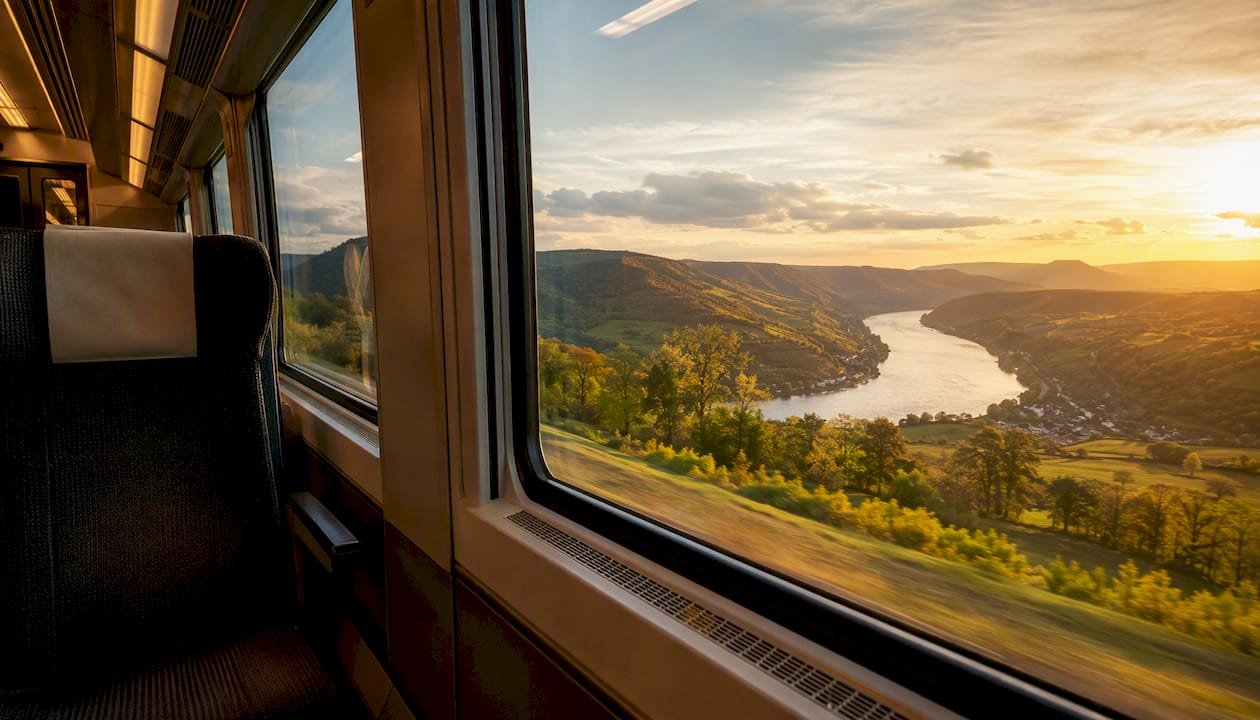
Book through Omio, Trainline, Rail Europe, or directly with national operators: ÖBB (Austria), ČD (Czech Republic), MÁV (Hungary), and RegioJet (a popular budget operator on Czech and Slovak routes). Advance fares drop significantly when booked 3–6 weeks out. ÖBB’s “Sparschiene” fares and RegioJet’s early-bird tickets are the two best deals in the region.
Rental car: useful for alpine detours
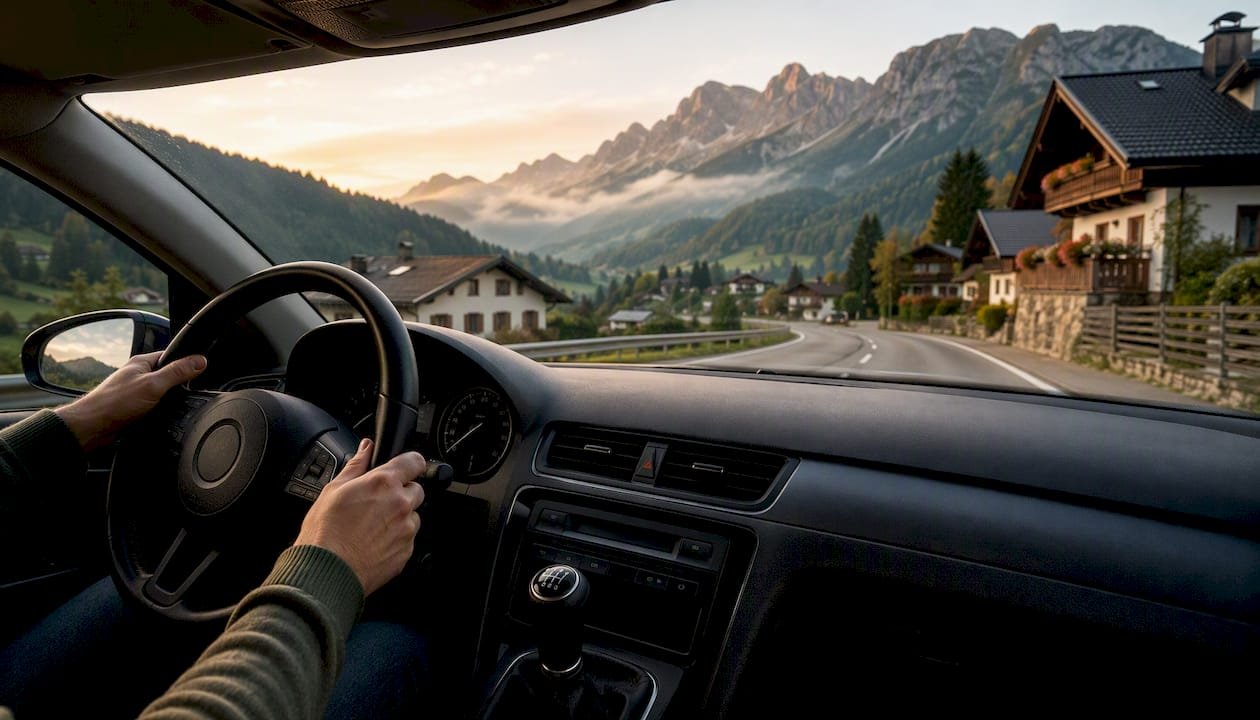
A car makes sense when you want to drive the Wachau Valley at your own pace, reach Hallstatt without coordinating ferry times, or explore smaller Austrian villages off the rail network. The downsides are real: city parking in Prague and Budapest is expensive and stressful, cross-border paperwork adds cost, and road tolls apply in Austria and Czech Republic (vignette stickers required). For a pure city loop, skip the car entirely.
Short flights: rarely worth it on this route
Flights between Prague, Vienna, and Budapest save almost no time once you add airport check-in, security, and transfer time into the city. The only case where a short flight makes sense is if you are adding a distant city like Kraków or Ljubljana and the train routing is inconvenient on your specific dates.
Booking tips:
- Check Omio first for side-by-side train and bus comparisons.
- Book ÖBB Railjet tickets directly on ÖBB.com for the best Sparschiene fares.
- RegioJet often undercuts national operators on the Prague–Vienna and Prague–Budapest corridors.
- For multi-country rail passes, compare a Eurail Select Pass against point-to-point tickets; on short routes, point-to-point is usually cheaper.
Quick reference: intercity train times and approximate fares
Fares fluctuate with season and booking lead time. The ranges below reflect economy advance fares booked 3–6 weeks out. Always verify current pricing on Omio, ÖBB, or the relevant national operator before booking.
| Route | Typical Duration | Approx. Advance Fare (Economy) | Best Booking Platform |
|---|---|---|---|
| Prague → Vienna | 4 hours | $30–$55 | ÖBB, Omio |
| Vienna → Budapest | 2.5 hours | $15–$30 | MÁV, Omio |
| Prague → Budapest | 6–7 hours | $30–$55 | RegioJet, Omio |
| Vienna → Bratislava | 1 hour | $10–$20 | ÖBB, Omio |
| Vienna → Salzburg | 2.5 hours | $20–$45 | ÖBB direct |
| Prague → Český Krumlov | 3 hours (bus) | $8–$15 | FlixBus, RegioJet |
| Munich → Salzburg | 1.5 hours | $15–$30 | DB, Omio |
Overnight trains between Prague and Budapest or Vienna and Kraków are worth considering for 14-day and 21-day trips; they save a hotel night and preserve a full sightseeing day.
When is the best time to visit Central Europe?
Spring and autumn offer the best balance of weather and manageable crowds, a pattern that holds across Prague, Vienna, and Budapest.
Spring (late April–June)
- Mild temperatures (55–75°F), long daylight hours, and blooming gardens in Vienna and Prague.
- Crowds build through June but remain lighter than July–August.
- Best for: first-time visitors who want good weather without peak-season prices.
Summer (July–August)
- Peak season: Charles Bridge and Schönbrunn are at their most crowded by 10 AM.
- Thermal baths in Budapest are lively and enjoyable; outdoor festivals are plentiful.
- Book accommodation and major attraction tickets two to three months in advance.
Autumn (September–October)
- Golden light, harvest festivals, and wine season in the Wachau Valley.
- Crowds thin noticeably after mid-September; prices drop.
- Best for: slow travelers, food and wine enthusiasts, and photographers.
Winter (November–February)
- Vienna and Prague Christmas markets (late November through December) are genuinely magical and worth the cold.
- Book market-season accommodation early; popular hotels sell out by October.
- January and February are the quietest months, with the lowest prices and shortest queues at every major sight.
Pro Tip: Visit Charles Bridge before 8 AM or after 7 PM in summer. Schönbrunn’s first morning slot (usually 9 AM) is the least crowded entry of the day, and the palace gardens are almost empty before 10 AM.
How much does a Central Europe trip cost, and what should you book first?
Ballpark budget ranges
These are per-person ground costs (accommodation, local transport, food, and attraction entry) excluding international flights. Costs vary with season and accommodation class.
- Economy (hostels, budget hotels, self-catering): $80–$110/day, roughly $560–$770 for 7 days, $800–$1,100 for 10 days, $1,120–$1,540 for 14 days.
- Mid-range (3-star hotels, sit-down meals, guided tours): $150–$220/day, roughly $1,050–$1,540 for 7 days, $1,500–$2,200 for 10 days, $2,100–$3,080 for 14 days.
- Splurge (4–5-star hotels, private guides, fine dining): $300–$500+/day.
Budapest is the most affordable of the three capitals; Vienna is the most expensive. Prague sits comfortably in between.
What to book in advance
Book immediately after confirming dates:
- International flights and open-jaw tickets.
- Advance train fares (3–6 weeks out for the best prices on ÖBB, MÁV, and RegioJet).
- Accommodation in Vienna and Prague for summer and Christmas market season.
Book 2–4 weeks out:
4. Hungarian Parliament timed-entry tickets (sell out fast, especially in summer).
5. Schönbrunn Palace morning slots.
6. Prague Castle timed entry (less critical but worth securing for peak season).
7. Hallstatt salt mine and ferry tickets in summer.
8. Széchenyi Thermal Bath entry (online booking skips the queue).
Predeparture checklist:
- Travel insurance: Get a policy that covers trip interruption and medical evacuation; Central Europe is generally safe but medical costs vary.
- Currency: Prague uses Czech koruna (CZK), Budapest uses Hungarian forint (HUF), Vienna uses euros (EUR). Bratislava also uses euros. A Wise or Charles Schwab debit card avoids foreign transaction fees at ATMs.
- Plug adapters: Central Europe uses Type C and Type F outlets (220V). US travelers need a universal adapter.
- Visa and entry: American passport holders enter the Schengen Area without a visa for stays up to 90 days within any 180-day period. Note that the EU’s ETIAS travel authorization system is expected to launch; check the official EU ETIAS page for the current status before you travel.
- Schengen basics: All countries on this itinerary (Czech Republic, Austria, Hungary, Slovakia, Germany) are Schengen members. Your 90-day clock starts on your first entry.
Which day trips are worth adding to your route?
Day trips are the fastest way to diversify a city-heavy itinerary without the friction of repeated hotel check-ins. These are the highest-value options on the Central Europe circuit.
- Český Krumlov from Prague (3 hours by bus): A UNESCO-listed medieval town with a Baroque castle and river bends that look like a film set. Best for history lovers and photographers. Book the bus through RegioJet or FlixBus; the castle gardens are free to walk.
- Wachau Valley from Vienna (1 hour by train to Krems): Austria’s most celebrated wine region, with vineyard terraces, Melk Abbey, and Danube river views. Best for food and wine travelers. A bike rental in Krems lets you ride between villages at your own pace.
- Hallstatt from Salzburg or Vienna (1–1.5 hours by train and ferry): The lakeside village that inspired a Disney backdrop. Arrive before 10 AM to beat tour groups. Best for nature and outdoors travelers. The salt mine tour adds a half-day of genuine history.
- Bratislava from Vienna (1 hour by train): A compact, walkable capital with a hilltop castle and a relaxed café culture. Works as a half-day stop or an overnight. Bratislava fits naturally into a 7-day circuit between Vienna and Budapest.
- Kutná Hora from Prague (1 hour by train): Home to the Sedlec Ossuary, a medieval cathedral decorated with human bones. Unusual and genuinely memorable. Best for travelers who want something off the standard tourist trail.
- Lake Bled from Ljubljana (45 minutes by bus): A glacial lake with a cliff-top castle and a church on an island. Best suited to 21-day trips that extend into Slovenia. Rent a rowboat to reach the island church independently.
For family travelers, Český Krumlov and Wachau Valley are the most manageable day trips. For independent travelers, Kutná Hora and Lake Bled reward those willing to go slightly off-script.
How do you pick the right itinerary for your travel style?
The right Central Europe travel itinerary depends on four decisions: pace, interests, transport preference, and who you are traveling with.
-
First-time visitors: Prioritize Prague, Vienna, and Budapest. Seven to ten days covers all three without rushing. Add Bratislava as a half-day stop between Vienna and Budapest. Skip alpine detours on your first trip unless Hallstatt is a specific goal.
-
Culture and museum lovers: Vienna deserves three nights minimum. The Kunsthistorisches Museum, Belvedere, and Vienna State Opera alone fill two full days. Prague’s Jewish Quarter and Budapest’s Hungarian National Museum round out a culturally dense 10-day plan.
-
Outdoors and alpine travelers: Build your trip around Salzburg and Hallstatt, with Munich as the entry point. A 14-day itinerary that opens in Munich and closes in Prague gives you four alpine days without sacrificing the city highlights.
-
Food and wine enthusiasts: The Wachau Valley wine region and Vienna’s Naschmarkt are the two highest-value food stops. Budapest’s Great Market Hall and ruin bar scene add a different, more bohemian flavor. Pair with a culinary and cultural immersion experience for a deeper connection to local food traditions.
-
Families with children: Shorter daily programs work better. Plan two sights per day maximum, build in park time (Vienna’s Prater, Prague’s Letná Park), and consider a private tour to avoid the logistics of navigating public transit with luggage and young children. A family travel planning approach that pre-selects child-friendly accommodations close to city centers saves significant daily stress.
-
Solo travelers and couples: The core loop works perfectly self-guided. Couples often find that adding one slow day (a Wachau boat trip, a Hallstatt morning) transforms a good trip into a memorable one. Solo travelers benefit from the social atmosphere of Budapest’s ruin bars and Prague’s hostel scene.
When a guided multi-day tour adds the most value: complex multi-country logistics, family travel with young children, travelers with limited planning time, and anyone who wants local historical context delivered in real time rather than through a guidebook. Nextviewtours’ customised tours and private tour options are particularly well-suited to these situations.
Why a guided multi-day tour can simplify your Central Europe trip
Self-guiding the Prague–Vienna–Budapest loop is genuinely achievable, but there are specific situations where a guided or operator-supported approach saves time, money, and frustration.
What a guided tour handles for you:
- Transfers between cities and to day-trip destinations, pre-arranged and timed.
- Vetted accommodations selected for location and value, already booked.
- Local guides who know which museum wing to skip and which café has been feeding locals for 80 years.
- Skip-the-line access at high-demand sights like Schönbrunn and the Hungarian Parliament.
- Seasonal adjustments: a good operator knows when Hallstatt is overrun and routes you to arrive at 8 AM instead of noon.
When guided is the stronger choice:
- Family travel with children under 12, where logistics multiply quickly.
- Groups of six or more, where coordinating individual train bookings becomes a project in itself.
- Travelers with 10 days or fewer who want maximum depth without spending evenings researching the next day’s transport.
- First-time international travelers who want the confidence of a structured plan.
When self-guided works better:
- Flexible independent travelers who want to change plans mid-trip.
- Budget travelers who can tolerate the research time in exchange for lower costs.
- Travelers who have already visited one or two cities on the loop and want to move at their own pace.
Pro Tip: One of the most common self-guided pitfalls is buying train tickets at the station on the day of travel. Set a calendar reminder to book 3–6 weeks before each leg.
Museum closures are the other frequent surprise: most major Central European museums close on Mondays. Build your itinerary so Monday falls on a travel day or a day trip rather than a museum-heavy city day.
A few planning notes from the operator side
Three sights per day is the practical ceiling for most travelers before quality of experience drops. Two anchor sights plus one neighborhood walk tends to produce better memories than four rushed museum visits. Prague’s Old Town and Josefov together fill a full morning; save the castle for a separate day.
Charles Bridge is best before 8 AM in summer, full stop. By 9:30 AM it is a shoulder-to-shoulder crowd. Schönbrunn’s first morning slot rewards early risers with near-empty state rooms and a palace garden that feels genuinely grand rather than crowded.
City metros in Prague, Vienna, and Budapest are fast, clean, and cheap. Always validate your ticket before boarding; inspectors in Prague and Budapest are frequent and fines are immediate. Vienna’s U-Bahn uses a zone system; a 24-hour or 48-hour pass is almost always better value than single tickets for a full day of sightseeing.
Packing for variable Central European climates: Central Europe spans a wide temperature range across seasons. A layering system (base layer, mid-layer fleece, waterproof shell) handles everything from a warm Prague September to a cold Vienna December. Rain gear is non-negotiable in spring and autumn. Comfortable walking shoes matter more than almost anything else; Prague’s cobblestones are beautiful and hard on feet.
Plug adapters: Type C and Type F, 220V. A single universal adapter with USB ports covers every device.
If you want to adapt any of the sample itineraries above into a private or customized plan, Nextviewtours’ customised tours guide walks through exactly how that process works.
Nextviewtours makes your Central Europe itinerary ready to book
Planning a multi-city Central Europe trip from scratch takes real time: researching train connections, securing timed-entry tickets, vetting hotels across four countries, and coordinating day-trip logistics. Nextviewtours removes that entire layer of work.

Nextviewtours offers private tours, group tours, and fully customised multi-day itineraries departing from Vienna, Prague, Budapest, Salzburg, and Hallstatt. Whether you want a 7-day private circuit for two or a 14-day group tour with alpine day trips built in, the team handles transfers, local guides, accommodation, and attraction logistics. The pace is yours to set. Nextviewtours can deliver any of the sample itineraries in this article as a ready-to-book private or group experience, from a focused 7-day loop to a 21-day full circuit. View the full range of trip types and formats and request a tailored plan that fits your dates, group size, and travel style.
Useful planning resources
Use these platforms and pages to book transport, check attraction hours, and build your final itinerary.
- ÖBB (Austrian Federal Railways): best source for Sparschiene advance fares on Vienna–Salzburg and Vienna–Budapest routes.
- RegioJet: competitive fares on Prague–Vienna, Prague–Budapest, and Prague–Český Krumlov corridors.
- Omio: side-by-side comparison of trains, buses, and flights across the region.
- Trainline: useful for booking multi-operator routes in a single transaction.
- Rail Europe: good for US-based travelers booking European rail passes or point-to-point tickets before departure.
- Nextviewtours multi-country touring guide: step-by-step planning for multi-country European trips.
- Must-see Central European cities: detailed city highlights for Prague, Vienna, Budapest, and regional add-ons.
- Why visit Central Europe: cultural context and destination depth for travelers deciding which cities to prioritize.
Always verify attraction opening hours and ticket availability directly on official attraction websites before your trip. Museum hours and timed-entry rules change seasonally, and some sights close for maintenance without advance notice.
Sources
- The Perfect 7-Day Central Europe Itinerary (2026)
- 10 Day Central Europe Itinerary: Budapest, Vienna, & Prague
- Krakow, Vienna & the Best of Central Europe by Train: A 10-Day Itinerary | Discover Eastern Europe
- 10 Day Central Europe Itinerary: Prague, Vienna & Budapest Itinerary: Central Europe Self-Guided


Comments are closed