
 Uncategorized
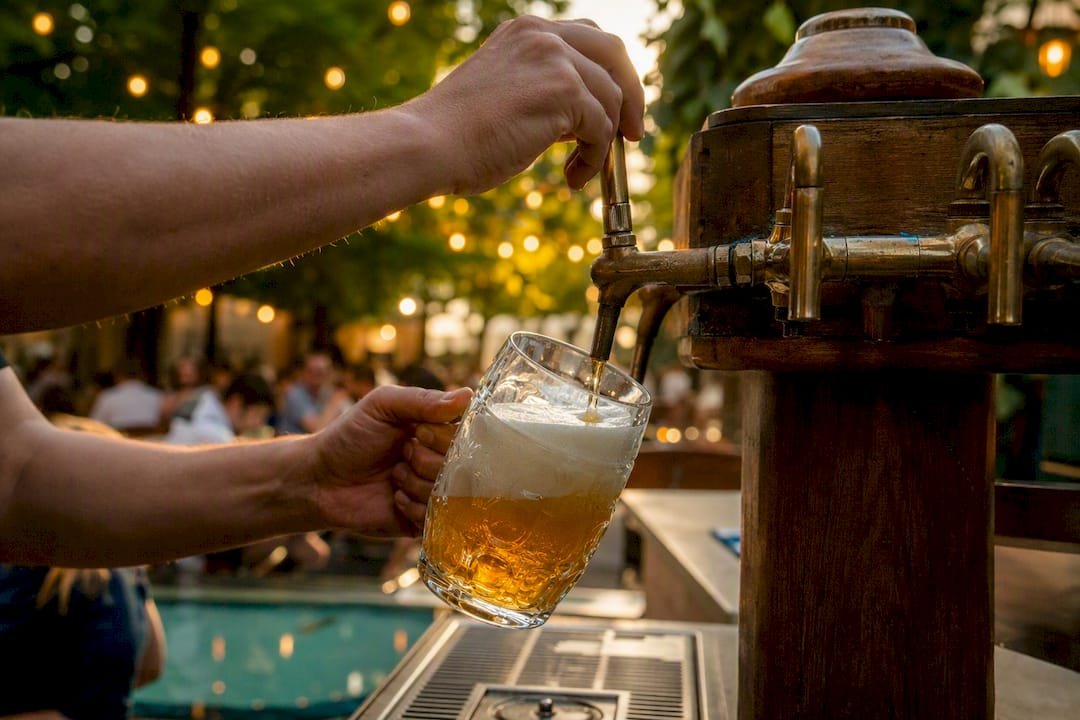
Prague’s beer culture is a living social institution built around the hospoda, the neighborhood pub where beer arrives fresher and cheaper than almost anywhere else on earth. At the center of it sits tankové beer, unpasteurized lager delivered to pubs in refrigerated tanks rather than kegs, and Pilsner Urquell, the pale lager that started the entire style in 1842. If you want to experience this culture correctly on your first night in Prague, do one thing: find a pub advertising tankové or nefiltrované on its menu, or join a guided beer tour that already knows where the good tanks are.
A few facts orient you fast:
- Most everyday Czech lagers fall into two strength categories, 10° and 12°, based on the Balling degree scale rather than direct alcohol percentage.
- Tank beer is turned over roughly weekly at serious pubs, which is why it tastes rounder and less bitter than the bottled version of the same brand.
- A half liter at a real neighborhood hospoda often costs a third of what you’d pay at an Old Town terrace.
Key Takeaways
Authentic Prague beer culture comes down to finding tankové pours, ordering by degree number, and following pub etiquette that locals have used for generations.
| Point | Details |
|---|---|
| Seek tankové first | Look for visible tanks and menu labels like nefiltrované to find the freshest beer. |
| Order by degree | A 12° Pilsner Urquell runs about 4.4% ABV and is the standard local choice. |
| Learn one pour style | Saying “hladinka” at the bar signals you understand Czech ordering etiquette. |
| Budget realistically | Expect 40 to 65 crowns per half liter locally versus 120 to 160 in Old Town. |
| Consider a guided evening | Nextviewtours’ Prague pub walks route travelers directly to tank pubs and skip tourist markups. |
Table of Contents
- Understanding Prague Beer Culture: The Hospoda and Its Modern Revival
- Czech Beer Degrees Explained: What 10° and 12° Actually Mean
- How to Order Beer the Czech Way: Pour Styles and Pub Etiquette
- Where to Find Authentic Beer in Prague: Pubs, Tanks, and Beer Gardens
- Pairing Czech Pub Food With Your Beer Order
- Prague Beer Prices and How to Avoid Overpaying
- Why a Guided Beer Tour Gets You to the Good Tanks Faster
- A Publisher’s Note on Prague’s Pub Nights
- Skip the Guesswork With a Local-Led Prague Beer Evening
- Sources
Understanding Prague Beer Culture: The Hospoda and Its Modern Revival
The hospoda isn’t a bar in the American sense. It’s closer to a living room the whole neighborhood shares, where regulars have a “their” table, bartenders remember your usual pour, and strangers get folded into conversation without much ceremony. This social function shapes almost everything about how Czech pubs operate, from communal seating to how quickly a fresh beer appears at your elbow without you asking for it.
Three things matter if you want to understand why Prague treats beer differently than most cities:
- The hospoda predates modern hospitality norms. It functioned as the neighborhood’s social public square long before “gastropub” was a marketing term, and that history still governs etiquette around shared tables and how servers track your tab.
- Pilsner’s origin gives Prague its pride. Pilsner Urquell was first brewed in 1842 in nearby Plzeň, and its clean, hoppy pale lager style became the template that most of the world’s beer, including most American lagers, eventually copied.
- Tankové is a genuine revival, not a gimmick. Pubs spent decades serving kegged and bottled beer almost exclusively; the return of tank delivery over the last fifteen years is a deliberate quality move, not nostalgia marketing.
That revival matters because it changed the on-trade experience without changing retail shelves much at all. You can buy Pilsner Urquell in any grocery store, but the bottled version and the tank version at a proper pub are noticeably different animals, one designed for shelf stability and one designed for a glass poured minutes after arrival.
Czech Beer Degrees Explained: What 10° and 12° Actually Mean
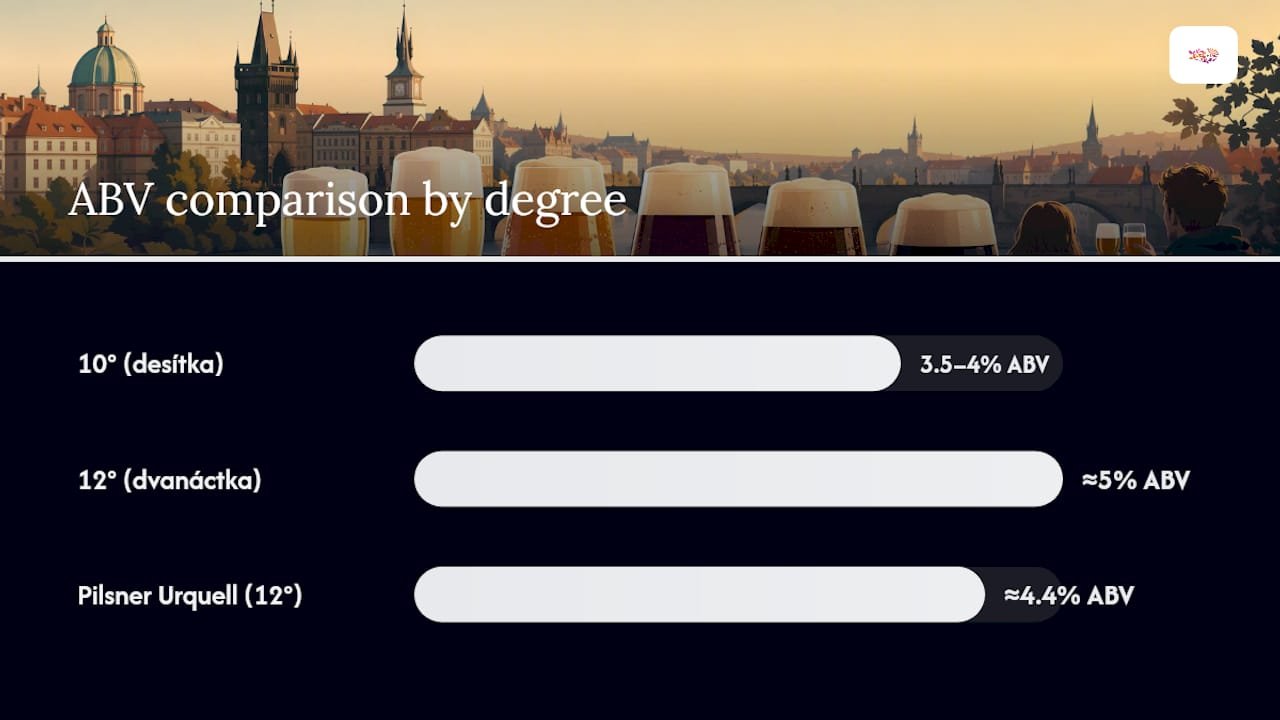
Czech menus label beer by degree rather than percentage, and this confuses almost every first-time visitor. The number refers to the Balling (or Plato) scale, which measures the sugar content of the wort before fermentation, not the final alcohol level. A 10° beer (desítka) typically lands around 3.5 to 4% ABV and tends to be lighter, thinner bodied, and easier to drink through a long afternoon. A 12° beer (dvanáctka) runs closer to 5% ABV, carries more malt backbone, and is what most Czechs mean when they just say “beer” without qualifying it.
Pilsner Urquell’s flagship pour is a 12°, sitting at roughly 4.4% ABV, which is the number worth memorizing before you order anything else.
Beyond strength, you’ll see style labels that describe color and filtration rather than degree:
- Světlé — pale lager, the default style and the one most tourists picture when they think “Czech beer.”
- Tmavé — dark lager, roastier and slightly sweeter, often lower in bitterness than you’d expect from the color.
- Polotmavé — a half-dark style, a middle ground between světlé and tmavé that’s less common but worth trying if a pub offers it.
- Kvasnicové / nefiltrované — unfiltered, yeasty beer with a cloudier appearance and a fuller, breadier flavor.
- Craft offerings — smaller breweries around Prague now produce IPAs, sours, and other international styles alongside the traditional lineup, especially in Žižkov taprooms.
If you only have one evening, order in this sequence: start with a tank-poured 12° Pilsner Urquell to set your baseline, move to a tmavé dark lager to see the flavor range, then finish with a small kvasnicové pour to taste what unfiltered beer actually does to mouthfeel. That progression teaches you more about Czech beer in ninety minutes than any menu description could.
How to Order Beer the Czech Way: Pour Styles and Pub Etiquette
Ordering correctly in a Prague pub is less about vocabulary and more about signaling that you understand the ritual. Five pour styles come up constantly, and knowing even two or three earns you real goodwill from bartenders who pour hundreds of identical requests from tourists every night.
- Hladinka is the standard pour: a smooth stream down the side of a tilted glass that builds a dense, creamy head roughly a third of the way up. This is the default if you order with no modifier.
- Šnyt is a smaller pour with more foam relative to liquid, served in a shorter glass, meant for slow sipping or a second round when you’re not ready to commit to a full pint.
- Mlíko (“milk”) is almost entirely foam with a small amount of liquid underneath, drunk quickly and traditionally as a way to cleanse the palate or finish a session.
- Čochtan pours the beer more aggressively to knock out carbonation, producing a flatter, maltier glass that some drinkers prefer with darker lagers.
- Naražené describes beer from a freshly tapped keg or tank, prized for being at its most lively and aromatic right after the tap opens.
Pro Tip: Just say “hladinka” or “12 stupňů” (12 degrees) at the bar and the server will know exactly what you want. Overcomplicating your order in broken Czech usually gets a smile, not better service.
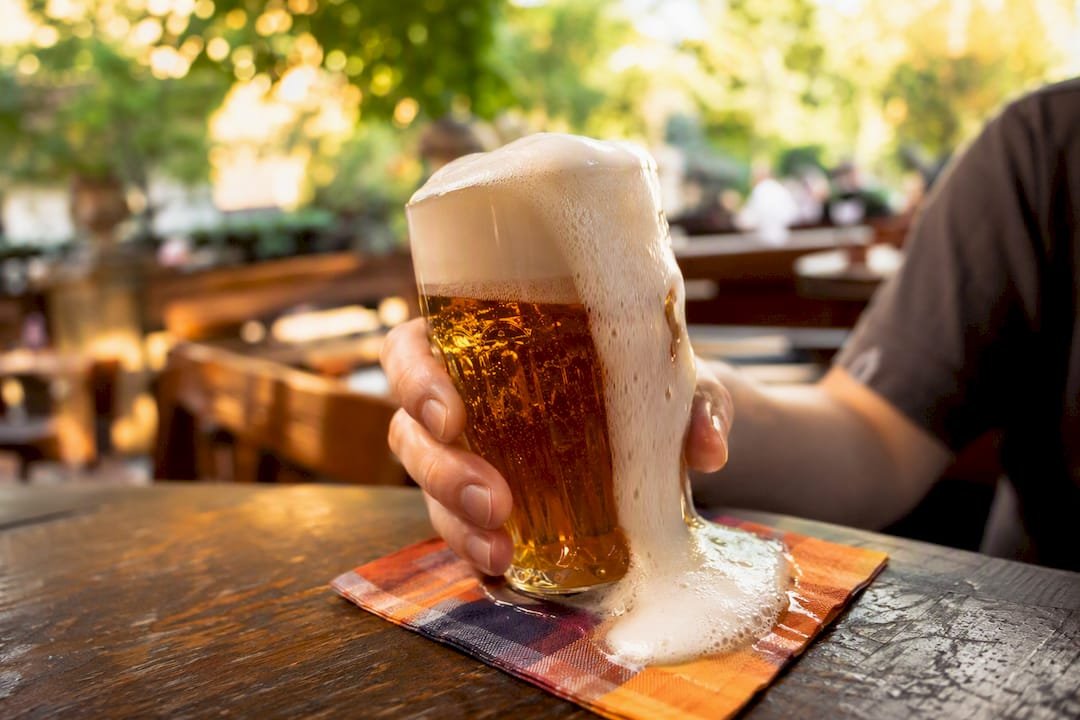
The dense, wet foam you get from a correct Czech pour isn’t decoration. It’s a functional seal that protects the beer’s aroma and carbonation, so a pub that skimps on head is usually skimping on technique too. Servers at busy hospody also track your tab the old way: a pencil mark or tally on a paper coaster or slip left at your table, one line per beer. When you’ve had enough, place your coaster on top of your empty glass. That single gesture ends the automatic refills more reliably than any verbal request. Toasting follows its own small code: raise your glass, make direct eye contact with everyone at the table, say “na zdraví,” and never clink glasses without that eye contact, which is considered rude rather than charming. When you’re ready to leave, a light double tap of your glass on the table or a raised hand signals you want the bill, called the “účet.”
Where to Find Authentic Beer in Prague: Pubs, Tanks, and Beer Gardens
Spotting a real tankovna takes about ten seconds once you know what to look for. Look for a visible stainless steel tank behind or near the bar, menu language that says tankové or nefiltrované, and delivery stickers or chalkboards noting when the tank was last filled. Pubs proud of their setup often display the tank prominently, sometimes with a small window into the cellar where it’s kept cold.
Several venue types offer genuinely different experiences, and knowing which one you’re walking into sets your expectations correctly.
- Historic beer halls like U Fleků run their own brewery on site and serve a dark 13° lager found almost nowhere else, though the scale and tourist volume mean it feels more like a beer hall than a neighborhood hospoda.
- Chain restaurants with tank beer, such as Lokál, have made tankové Pilsner Urquell widely accessible and consistent, and they’re a reliable fallback if you can’t find a smaller independent tankovna.
- Neighborhood hospody in residential areas serve the cheapest, freshest beer with the least tourist markup, but they rarely have English menus or staff.
- Brewery taprooms around Prague pour house-made craft beer alongside standard lagers and usually offer flights so you can compare styles side by side.
- Beer gardens open seasonally, mostly spring through early fall, and trade some pour precision for outdoor seating and a looser, social atmosphere.
- Beer spas, bathing pools infused with hop and yeast extracts, are a genuinely Czech-born novelty rather than a tourist invention, though they’re firmly in the “fun once” category rather than core beer culture.
| Venue type | What to expect | Typical vibe |
|---|---|---|
| Historic beer hall (U Fleků) | House-brewed dark lager, large groups | Loud, tourist-heavy, memorable |
| Chain tankovna (Lokál) | Reliable tank Pilsner Urquell, English menus | Casual, consistent, easy |
| Neighborhood hospoda | Cheapest, freshest local pours | Quiet, regulars, minimal English |
| Brewery taproom | Craft flights, house specialties | Relaxed, exploratory |
| Beer garden (seasonal) | Outdoor seating, social atmosphere | Loose, crowd dependent |
For neighborhoods, Žižkov and Vinohrady hold more genuine, lower-priced hospody per block than almost anywhere else in the city, largely because they stayed residential while Old Town leaned fully into tourism. Visit these areas on a weekday early evening, roughly 5 to 7 p.m., before the after-work crowd fills the good tables. Old Town and the area immediately around Charles Bridge look picturesque but carry the highest prices and the thinnest connection to actual local beer drinking.
Pairing Czech Pub Food With Your Beer Order
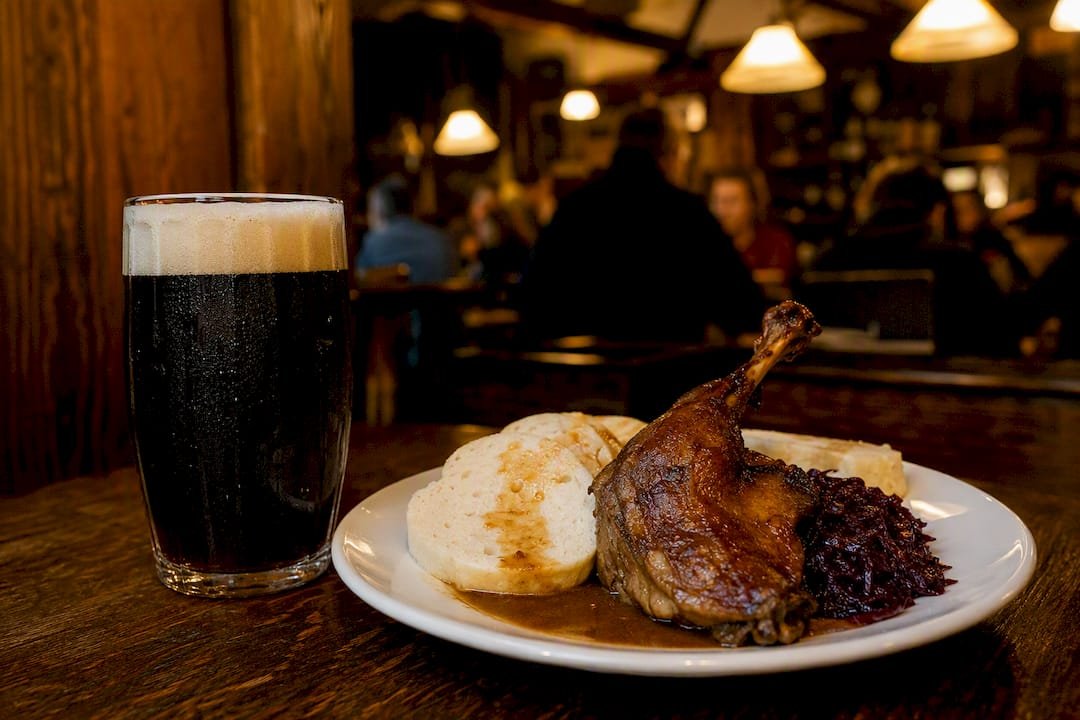
Czech pub food runs heartier than most travelers expect, and matching it to the right beer changes the meal more than you’d think. Roast pork with dumplings and sauerkraut, the closest thing to a national dish, pairs naturally with a tmavé dark lager, whose roasted malt cuts through the fat. Lighter snacks like pickled cheese (nakládaný hermelín) or open sandwiches (chlebíčky) sit better with a crisp světlé pale lager.
Portions run large, and sharing is completely normal. If you only want something small, ask specifically for “utopenci” (pickled sausages) or a bread and cheese plate rather than a full entrée. One seasonal item worth tracking down: svatomartinské beer and goose, released around November 11 each year to mark St. Martin’s Day, a tradition many visitors miss entirely because it’s barely advertised outside Czech-language menus.
Prague Beer Prices and How to Avoid Overpaying
Budgeting for beer in Prague is simple once you know the range. A half liter at a genuine neighborhood hospoda typically runs 40 to 65 Czech crowns, while Old Town terraces charge 120 to 160 crowns for the same pour, a markup of two to three times for the view.
Watch for a few red flags before you sit down:
- No posted prices on the outdoor menu board, which usually means tourist pricing inside.
- Staff steering you toward a “premium” import beer instead of confirming you want the standard local lager.
- Waitstaff opening extra rounds without asking, then relying on the pencil tally to pad your bill.
Safety-wise, Prague’s pub scene is low-risk, but pickpocketing spikes in crowded tourist zones like Wenceslas Square late at night, and the classic scam is a “menu” without prices handed only to obvious tourists. Keep your card or cash where you can feel it, settle tabs before ordering another round if a place feels off, and stick to well-lit streets walking back after dark.
Why a Guided Beer Tour Gets You to the Good Tanks Faster
Finding the right tankovna on your own means guessing at menu language and hoping the tank was filled recently. A guided tour skips that guesswork because the guide already knows which pubs pour fresh and which ones coast on tourist traffic.
A well-run Prague beer tour typically includes:
- Multiple venue types in one evening, from a historic hall to a genuine neighborhood hospoda.
- On-the-spot explanations of degree numbers and pour styles as you order, so terms like hladinka and 12° stop feeling like guesswork.
- Direct access to tank pubs that don’t always show up on tourist-facing map apps.
- Historical context on Pilsner Urquell and the hospoda tradition delivered while you’re standing in the room where it applies.
For travelers who’d rather drink than research, that combination of access and context is the whole point.
A Publisher’s Note on Prague’s Pub Nights
Some of the most memorable evenings we’ve heard about from Prague travelers weren’t planned around a single famous pub. They happened because someone local walked them into three ordinary places in one night and explained what made each one worth the stop. That kind of evening works for a solo traveler with one free night just as well as it does for a group of eight, and it doesn’t require a big budget to feel worth it.
— Next
Skip the Guesswork With a Local-Led Prague Beer Evening
Reading menu labels and hunting for tank stickers gets you partway to authentic Prague beer culture, but a local guide gets you there in one evening instead of three. Nextviewtours runs Prague pub walks and private tastings that route you straight to tankovna pubs and neighborhood hospody most visitors never find on their own, skipping the Old Town markup entirely.

Beyond the city itself, you can extend the trip with a day trip to Plzeň to see where Pilsner Urquell actually began, or build a fully private tour around your own pace and group size, whether that’s two people or twelve. Check available trip types for Prague and Plzeň now and lock in dates before your travel window fills up.
Sources
- Best Beer in Prague (2026): 20 Local Pubs, Tank Beer & Prices – HelloPrague
- Czech Beer: Styles, Breweries & How to Drink It – Prague Frontier
- Czech beer culture: tank pivo, pour styles and pub etiquette · TheExpatCity
- Prague Beer & Breweries Pocket Guide – Beerwanderers
- Czech beer culture explained — how Czechs actually think about beer – Prague Trip


Comments are closed