
 Uncategorized
Yes, Eger works beautifully as a day trip from Budapest, and it rewards history buffs and wine lovers in equal measure. The train ride takes about two hours each way from Keleti Station, leaving you several hours on the ground. That’s enough time to walk the ramparts of Eger Castle, wander Dobó Square, climb the old Ottoman minaret, and still make it out to the Valley of the Beautiful Women for a proper Egri Bikavér tasting before catching the evening train back.
TL;DR:
- Train travel is the most affordable and flexible option, with direct or connecting services from Budapest Keleti taking about two hours each way.
- An early departure around 8:00 AM is recommended to visit Eger’s main sights, including castle tours and the wine valley, before evening trains return.
- Visiting the Valley of the Beautiful Women late in the afternoon offers a more relaxed wine-tasting experience, especially if avoiding large tour groups.
- Staying overnight in Eger is advisable for a more leisurely experience, including thermal baths and longer cellar visits, especially for wine enthusiasts and spa visitors.
- Organizing a guided day trip simplifies logistics, with tours providing transportation, guide services, and tastings, saving time and reducing the need to manage tickets and schedules.
Table of Contents
- How to Get to Eger from Budapest
- What Does a One-Day Eger Itinerary Look Like?
- What Are the Best Things to See in Eger?
- Is the Valley of the Beautiful Women Worth the Detour?
- Practical Tips: Tickets, Fares, and Getting Around
- Should You Stay Overnight in Eger Instead?
- Our Take on the Castle-and-Wine Day Trip Formula
- Skip the Planning with a Guided Eger Day Trip
- Sources
- FAQ
How to Get to Eger from Budapest
Train is the most sensible way to make this trip, and most travelers choose it for good reason. Direct and connecting services leave Budapest Keleti roughly every couple of hours, with some routes changing at Füzesabony, and the ride runs about two hours either way. On InterCity trains, reserving a seat is worth the extra step, especially on weekend departures when carriages fill up fast.
Here’s how the main options stack up:
- Train: Cheapest and most flexible; buy tickets through the MÁVPlusz app, at station ticket machines, or at a counter before boarding.
- Driving: About 90 minutes via the M3 motorway, though parking near the historic center gets tight on weekends.
- Private transfer or minivan: Costs more but cuts dead time and can gain you an extra hour in Eger compared with public transit.
- Organized tour: No planning required, and logistics like tastings and castle entry are handled for you, though you trade away some scheduling freedom.
Whichever mode you pick, check the last comfortable return train before you commit to an afternoon in the wine valley.
What Does a One-Day Eger Itinerary Look Like?
A tight but relaxed schedule is what makes this trip work. Guides consistently recommend leaving Budapest before 9:00 AM to fit both the castle and the wine cellars in comfortably, so build your day around an early departure rather than a leisurely one.
- 8:00 AM — Depart Budapest Keleti.
- 10:00 AM — Arrive in Eger; walk roughly 15 minutes into the historic center.
- 10:15 to 11:45 AM — Tour Eger Castle, including the ramparts and the 1552 siege exhibits.
- 12:00 to 1:00 PM — Lunch on or near Dobó Square to save on walking time.
- 1:15 to 3:00 PM — Visit the minaret, the Basilica, and the Lyceum’s camera obscura.
- 3:30 to 5:30 PM — Head to Szépasszony‑völgy (Valley of the Beautiful Women) for tastings.
- After 6:30 PM — Catch a return train, ideally one you’ve already checked against the day’s timetable.
A private transfer compresses this nicely, since door-to-door pickup shaves off the walk to and from the station on both ends. If you’re running behind by early afternoon, pick one or the other: either the wine valley or one more museum stop, not both. Buying castle tickets online ahead of time also avoids a line that can eat 20 minutes on a busy Saturday.
What Are the Best Things to See in Eger?
The town packs an unusual amount of history into a walkable core, and most sights sit within 15 minutes of each other.
- Eger Castle: The hilltop fortress is famous for withstanding the 1552 Ottoman siege), and the ramparts give you the best panoramic view of the town’s red rooftops. Budget 90 minutes, including the underground casemate tunnels.
- Dobó Square: The town’s baroque heart, lined with cafés and the twin-towered Minorite Church. It’s the natural spot for lunch.
- The minaret: A narrow 97-step spiral staircase climbs to a small platform with sweeping views, but it’s tight and dark. Skip it if you’re claustrophobic or traveling with young kids.
- Eger Basilica and the Lyceum: The Basilica is Hungary’s second-largest church, and the Lyceum next door houses a working camera obscura that projects live images of the town onto a screen.
- Alternatives: The local market and the small Beatles Museum are worth a detour if you’ve already covered the main loop and want something unexpected.
Pro Tip: Climb the minaret before lunch. The stairs are exhausting, and doing it on a full stomach right before wine tastings is a bad combination.
Is the Valley of the Beautiful Women Worth the Detour?
Szépasszony‑völgy is where the day trip earns its reputation, and it’s easily the most memorable stop for wine-focused travelers. The valley holds dozens of small cellars carved into the hillside, most within a 20 to 30 minute walk from the center or a short taxi ride.
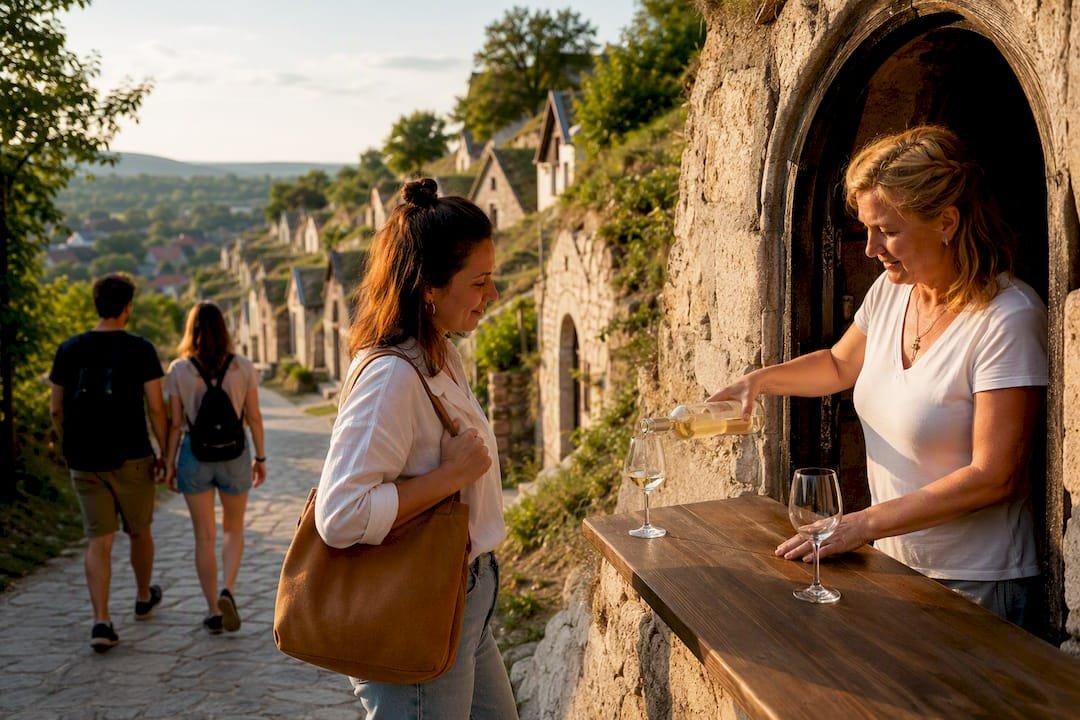
Egri Bikavér, or “Bull’s Blood,” is the region’s signature red blend, built around Kékfrankos and other dark grapes. If you want something lighter, Egri Leányka is a crisp, aromatic white worth trying alongside it.
Glass prices vary by cellar and pour size, so treat any number as a planning range rather than a fixed cost, with tastings generally modestly priced at family-run spots. The valley draws heavy tour traffic earlier in the day, so late afternoon, after the big groups thin out, tends to be the calmer and more pleasant window.
If you’re catching a train home, pace yourself deliberately:
- Visit two or three cellars at most, not a marathon crawl.
- Alternate tastings with water and a light snack.
- Book a taxi back to the station rather than walking after dark.
- Skip the busiest, most touristy cellars near the entrance and ask locals which family-run spots pour the good stuff.
Practical Tips: Tickets, Fares, and Getting Around
Treat every price here as a planning range, since fares and entry fees shift with season and demand. Round-trip train fare, castle admission, and a few tasting glasses together add up to a modest but real daily budget; check current numbers before you go.
Buy train tickets through the MÁVPlusz app, a station ticket machine, or a staffed counter, and reserve an InterCity seat if you’re traveling during a busy weekend window. Note the last practical return train before you finalize your wine valley plans, since missing it means an unplanned overnight.
A few more things worth knowing:
- Leave large luggage in Budapest if you can; Eger’s station has limited storage.
- The minaret’s spiral stairs and some smaller wine cellars have narrow, uneven steps that aren’t wheelchair accessible.
- If you’ve been tasting wine, take a taxi back to the station rather than walking with luggage after dark.
Should You Stay Overnight in Eger Instead?
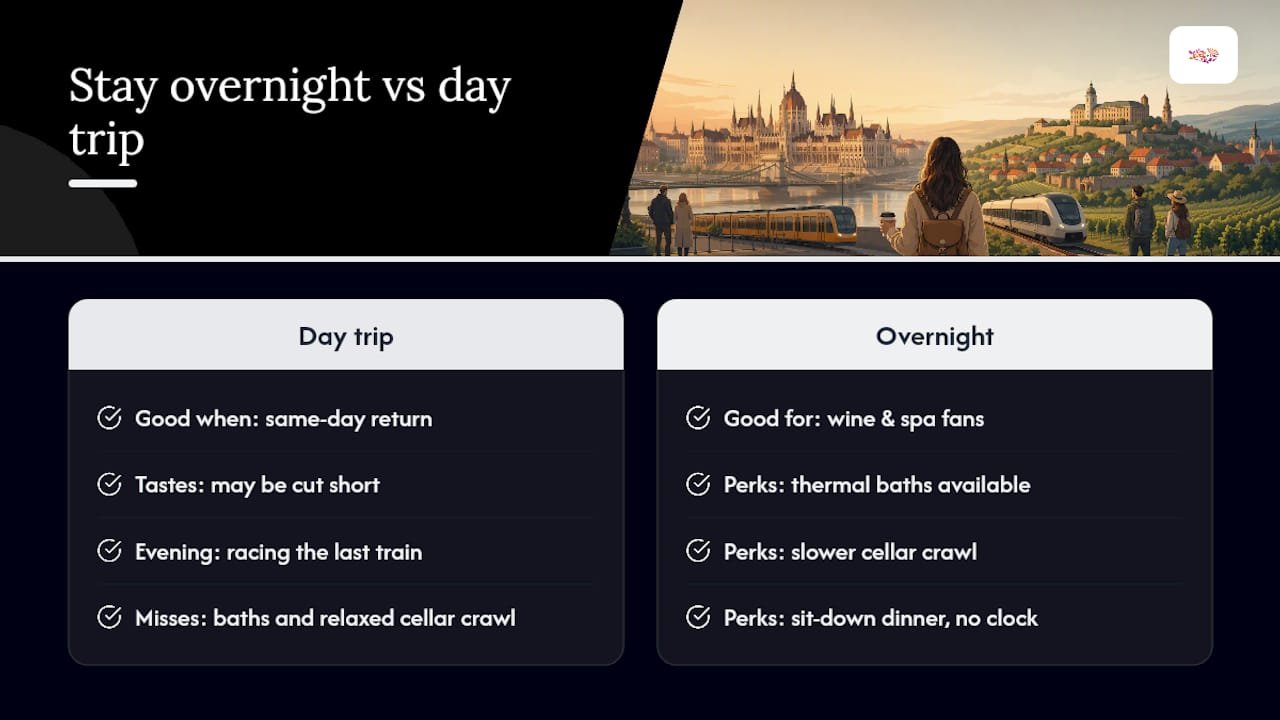
An overnight stay makes sense if you want the town’s thermal baths, a slower cellar crawl, or a proper sit-down dinner without watching the clock. Travel writers note that Eger rewards a longer visit when your schedule allows it, particularly for wine enthusiasts and spa seekers who don’t want tastings cut short by a train timetable. Staying over removes the last-train pressure entirely and lets the afternoon in the valley breathe.
Our Take on the Castle-and-Wine Day Trip Formula
Organizing day trips to Eger consistently shows the same pattern: travelers want history in the morning and wine in the afternoon, in that order, not reversed. The castle sets the context for everything else in town, and arriving at the cellars with that history still fresh makes the tasting mean more than just a pour of Bikavér. What surprises first-timers most is how walkable Eger is. The compact center means you rarely lose time to logistics, only to lingering.
— Next
Skip the Planning with a Guided Eger Day Trip
Coordinating train times, seat reservations, and a last-return-train deadline is doable on your own, but it takes real attention on a day you’d rather spend at a castle wall or a cellar table. Some tour providers arrange the transport, guide, and tasting logistics as one package, so you’re not the one watching the clock while everyone else enjoys a second pour.

This setup suits travelers who’d rather not manage transfers and ticket counters, and it suits groups who want a single, predictable plan instead of several moving pieces. If you’re weighing a private option against the DIY route, our private tours page breaks down what personalized scheduling actually includes. For a full look at how day trips, group departures, and custom itineraries differ, check the available trip types and pick the format that matches how you want to spend the day.
Sources
- Eger Day Trip from Budapest: Castle & Wine (2026) — Budapest Tourism
- Travelbudapest
- Enchanting Eger — Rick Steves
FAQ
Is Eger, Hungary Worth Visiting?
Yes. Eger combines a hilltop castle with real siege history, a walkable baroque old town, and one of Hungary’s best-known wine regions, all within a compact center.
Is There a Day Trip to Eger from Budapest?
Yes, and it’s one of the most popular routes out of the capital. The train from Keleti Station takes about two hours each way, leaving enough time for the castle, the old town, and a wine tasting.
What Is the Best One-Day Trip from Budapest?
Eger consistently ranks among the top choices because it pairs two very different experiences, history and wine, in a single walkable town. Travelers who want a guided version without the scheduling stress can book through Nextviewtours’s trip listings.
How Do I Travel from Budapest to Eger by Train?
Trains leave from Budapest Keleti Station, with some services connecting through Füzesabony, and the trip takes roughly two hours. Buy tickets in advance through the MÁVPlusz app or a station machine, and reserve a seat on InterCity departures.


Comments are closed